



What Is a Number Parking Lot Game?
A number parking lot game is a simple hands-on math activity where kids match toy cars to numbered parking spaces drawn on cardboard or paper. It transforms number recognition, counting, and early addition into playtime rather than worksheet time. You can make one in about 15-20 minutes using materials you likely have around the house, and kids from toddlers through early elementary tend to stay engaged with it far longer than traditional math practice.
The concept works because it meets kids where they already are: playing with cars. Instead of asking them to sit still and memorize numbers, you're inviting them to drive, park, count, and problem-solve. It's sneaky learning at its finest.
Materials You'll Need
| Material | Estimated Cost | Notes |
|---|---|---|
| Cardboard (large piece or box lid) | Free – $2 | Cereal boxes, shipping boxes, or pizza box lids work well |
| Markers or crayons | Free – $3 | Use what you have; multiple colors help |
| Ruler or straight edge | Free | Optional but helpful for neat lines |
| Toy cars | Free – $5 | Matchbox-style cars, or any small vehicles |
| Masking tape (optional) | $1 – $3 | For floor-based versions |
| Stickers with numbers (optional) | $1 – $2 | Can write numbers instead |
Total estimated cost: Under $10, and often completely free with household items
Age Range
Skill-appropriate ages: 2–6 years old
- Toddlers (2–3): Focus on basic number recognition (1–5) and one-to-one counting
- Preschoolers (3–5): Expand to numbers 1–10, introduce simple addition problems
- Kindergarteners (5–6): Add subtraction, number sequencing, or even multiplication for advanced learners
Enjoyment range: Most kids who still play with toy cars will enjoy this activity, typically up to age 7 or 8.
Time Estimate
- Prep time: 15–20 minutes
- Play time: 20–45 minutes (often longer with variations)
- Cleanup: 2 minutes
Step-by-Step Instructions
Step 1: Gather Your Cardboard Base
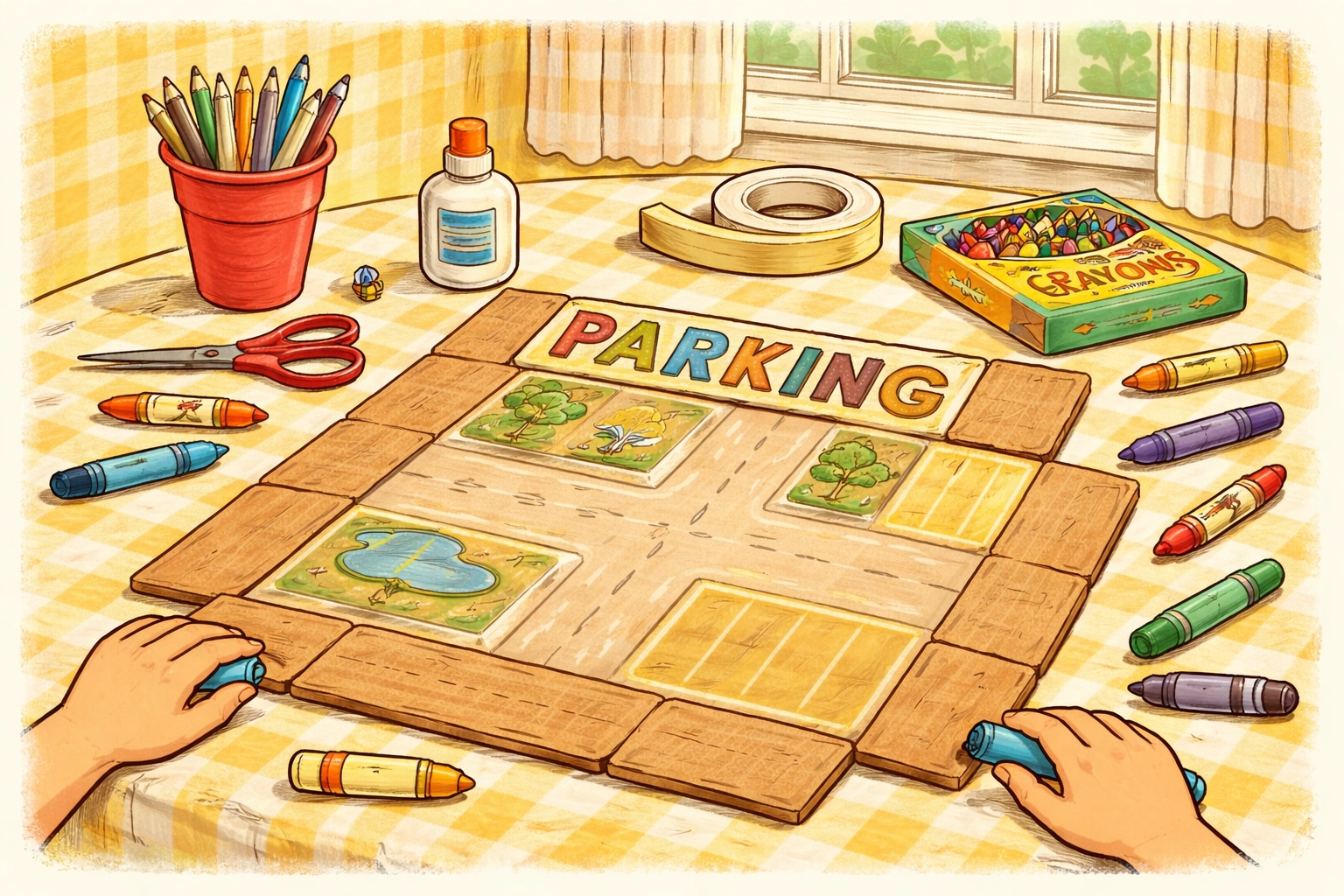
Find a large, flat piece of cardboard. A flattened shipping box, the lid of a board game box, or even a large cereal box opened up works nicely. You want something sturdy enough that it won't flop around when little hands start parking cars.
If you'd rather create a floor-based parking lot, you can skip the cardboard and use masking tape directly on hard floors or a large sheet of butcher paper.
Step 2: Draw Your Parking Spaces
Using a marker and ruler (or just eyeballing it), draw a grid of rectangular parking spaces. Make each space slightly larger than your toy cars so there's room to maneuver.
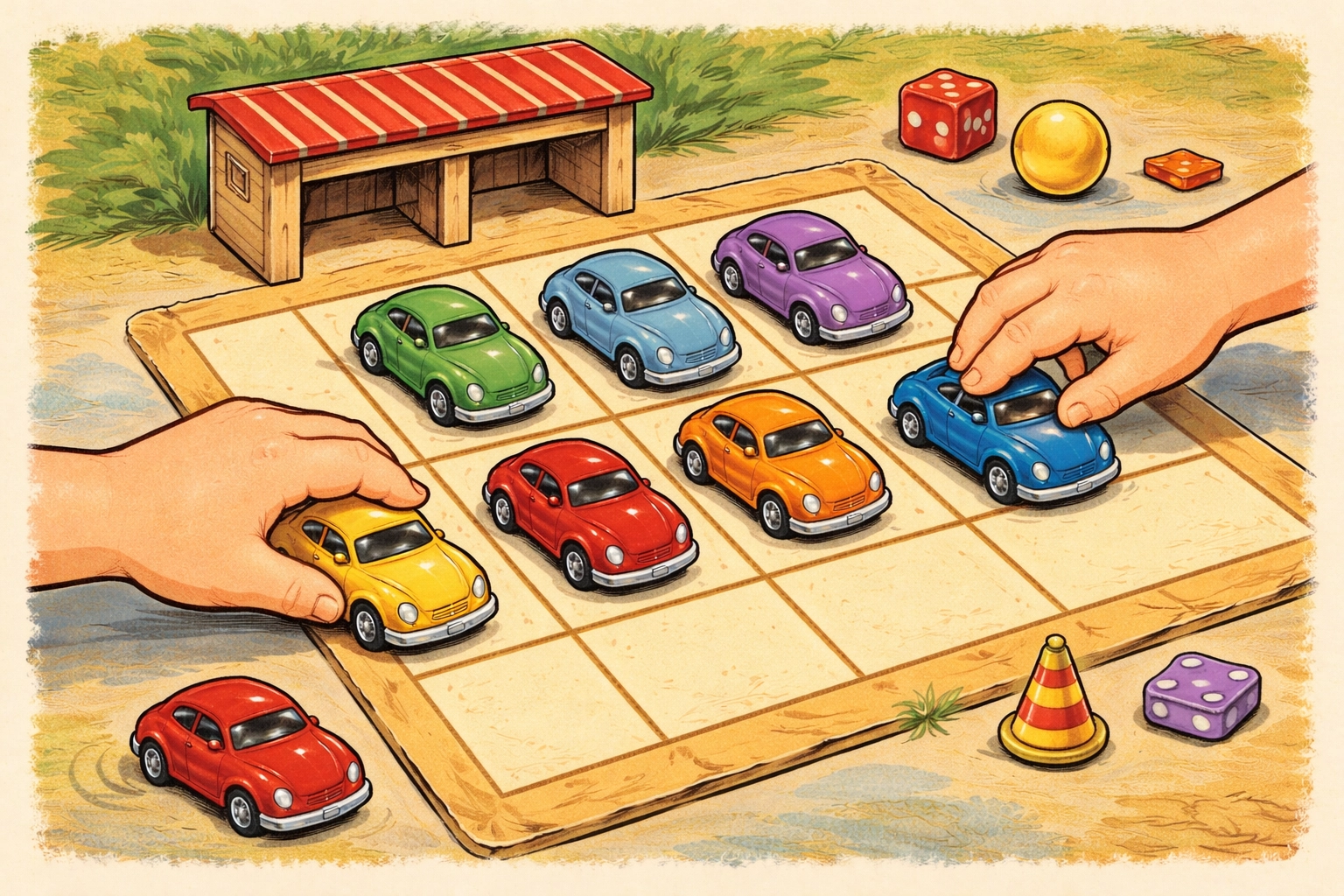
For a standard setup, aim for 5–10 parking spaces. You can arrange them in:
- A single row
- Two rows facing each other (like a real parking lot)
- A grid pattern
Leave a "road" area around the edges so kids can drive their cars into position.
Step 3: Add Numbers or Math Problems
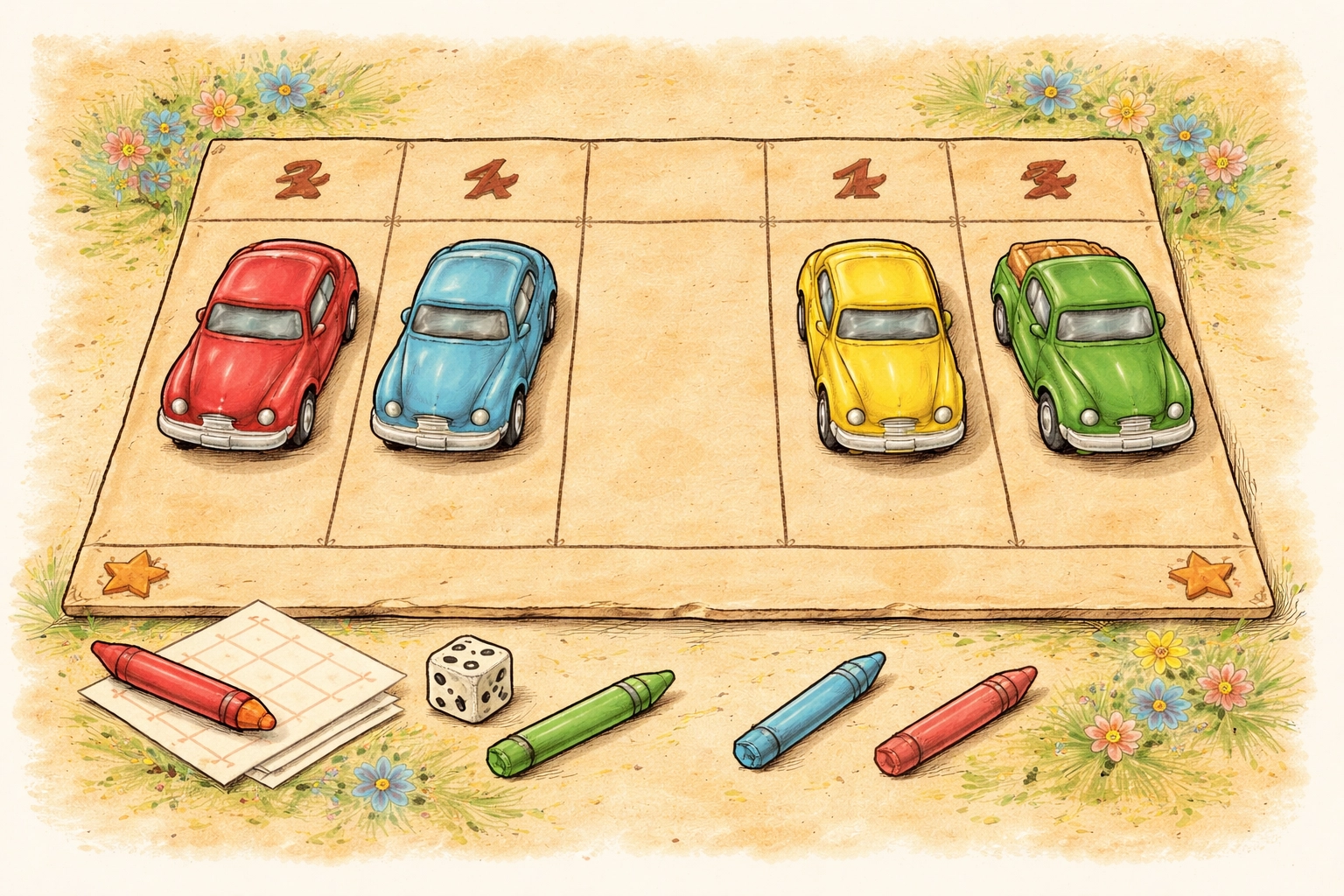
This is where the learning magic happens. Write a number or simple math problem at the top of each parking space.
For younger children: Write single digits (1, 2, 3, 4, 5) so they can practice number recognition.
For older children: Write addition problems like 2+1, 3+2, or 4+1. The answer tells them how many cars to park in that spot.
For a matching game: Put number stickers on your toy cars and write corresponding numbers in the parking spaces. Kids match the numbered car to its "reserved" spot.
Step 4: Introduce the Game
Show your child how the game works by demonstrating with one parking space. If the space says "3," count out three cars together and park them neatly in the spot.
For math problems, work through one example: "This spot says 2+2. Let's count: two cars, plus two more cars. That's four cars in this parking space!"
Let them take over from there. Resist the urge to correct immediately; part of the learning comes from self-checking and trying again.
Step 5: Play and Expand
Once your child understands the basic concept, step back and let them play independently. Many kids will happily repeat the activity multiple times, especially if you switch up the numbers or add new challenges.
Variations to Keep It Fresh
Color-Coded Parking
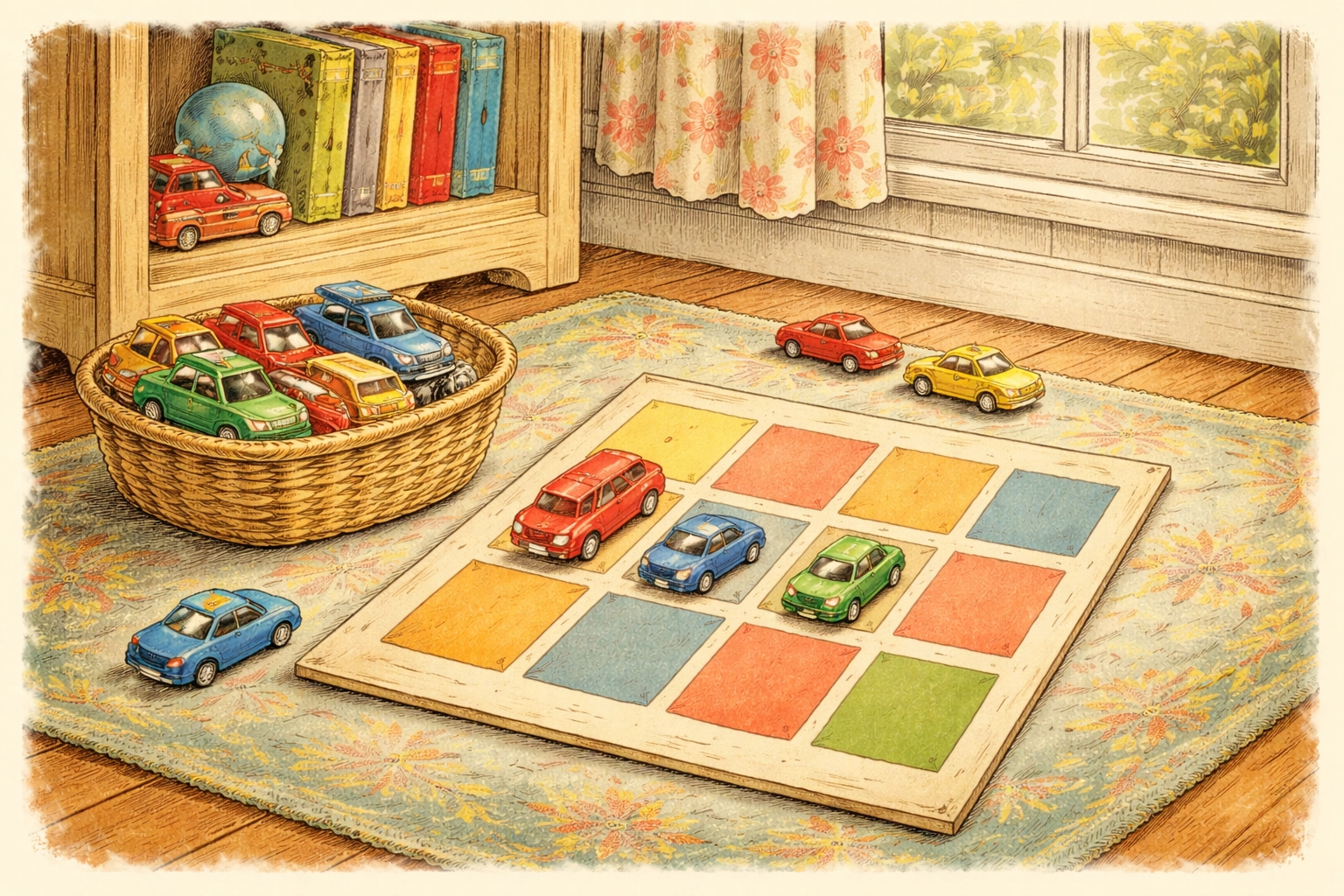
Assign each parking space a color and have kids sort cars by color. This works well for younger toddlers still learning color names.
Subtraction Parking
Write subtraction problems (5-2, 4-1) and have kids figure out how many cars belong in each spot. This tends to work better for kids who've already mastered addition.
Sequential Parking
Number spaces 1–10 (or higher) and challenge kids to park cars in order, counting as they go.
Directional Challenges
Give verbal instructions like "Park the red car in space number 4" or "Put two cars in the spot closest to you." This builds listening skills alongside math practice.
Timed Parking
For older kids who love a challenge, set a timer and see if they can fill all the spots correctly before time runs out.
Tips for Success
Start simple. If your child is new to number recognition, begin with just three or four parking spaces numbered 1–4. You can always add more as they gain confidence.
Use cars they love. If your child has a favorite toy car, make sure it's part of the game. Emotional investment in the "players" tends to increase engagement.
Make it reusable. Laminate your cardboard parking lot or slip it into a large plastic sleeve. Use dry-erase markers so you can change the numbers or problems for each play session.
Store it vertically. Slide the parking lot behind a bookshelf or under a bed so it's easy to pull out for quick learning moments.
Pair with a busy bin. Keep the parking lot, cars, and a small container together as a ready-to-go activity station. Check out more kids crafts for additional busy bin ideas.
Frequently Asked Questions
What age is a number parking lot game appropriate for?
Most children between ages 2 and 6 get the most benefit from this activity. Toddlers can work on basic counting and number recognition, while older preschoolers and kindergarteners can practice addition and subtraction.
Can I use something other than toy cars?
Certainly. Small dinosaurs, animal figurines, or even blocks work just as well. The key is using objects your child already enjoys playing with.
How many parking spaces should I make?
Start with 5–10 spaces for most children. Younger toddlers may do better with just 3–5 spaces, while older kids might enjoy 10–20 for a bigger challenge.
What if my child gets frustrated with the math problems?
Scale back to simpler numbers or switch to a matching game where numbered cars park in numbered spaces. The goal is to build confidence, not create stress.
How do I make this activity reusable?
Cover your cardboard with clear contact paper or laminate it, then use dry-erase markers to write numbers. You can wipe clean and start fresh each time.
Can siblings of different ages play together?
Yes. Give the younger child simpler number-matching tasks while the older child works on addition problems. They can share the same parking lot with different assignments.
What if I don't have toy cars?
Check dollar stores for inexpensive car packs, or use any small objects you have: bottle caps, LEGO minifigures, or small stuffed animals can all "park" in numbered spaces.
How long will my child stay interested in this game?
Most kids stay engaged for 20–45 minutes initially, though interest varies. Rotating the game in and out of your activity options every few weeks tends to keep it feeling fresh.
Can this work as a group activity?
It can. Set up multiple parking lots for a classroom or playdate, or have children take turns being the "parking attendant" who calls out which cars go where.
Few things feel as satisfying as watching your child learn without realizing they're learning. A number parking lot game tucks math practice inside something they'd choose to do anyway: pushing tiny cars around and making engine noises. And honestly, that's the kind of sneaky parenting win we could all use a bit more of.