




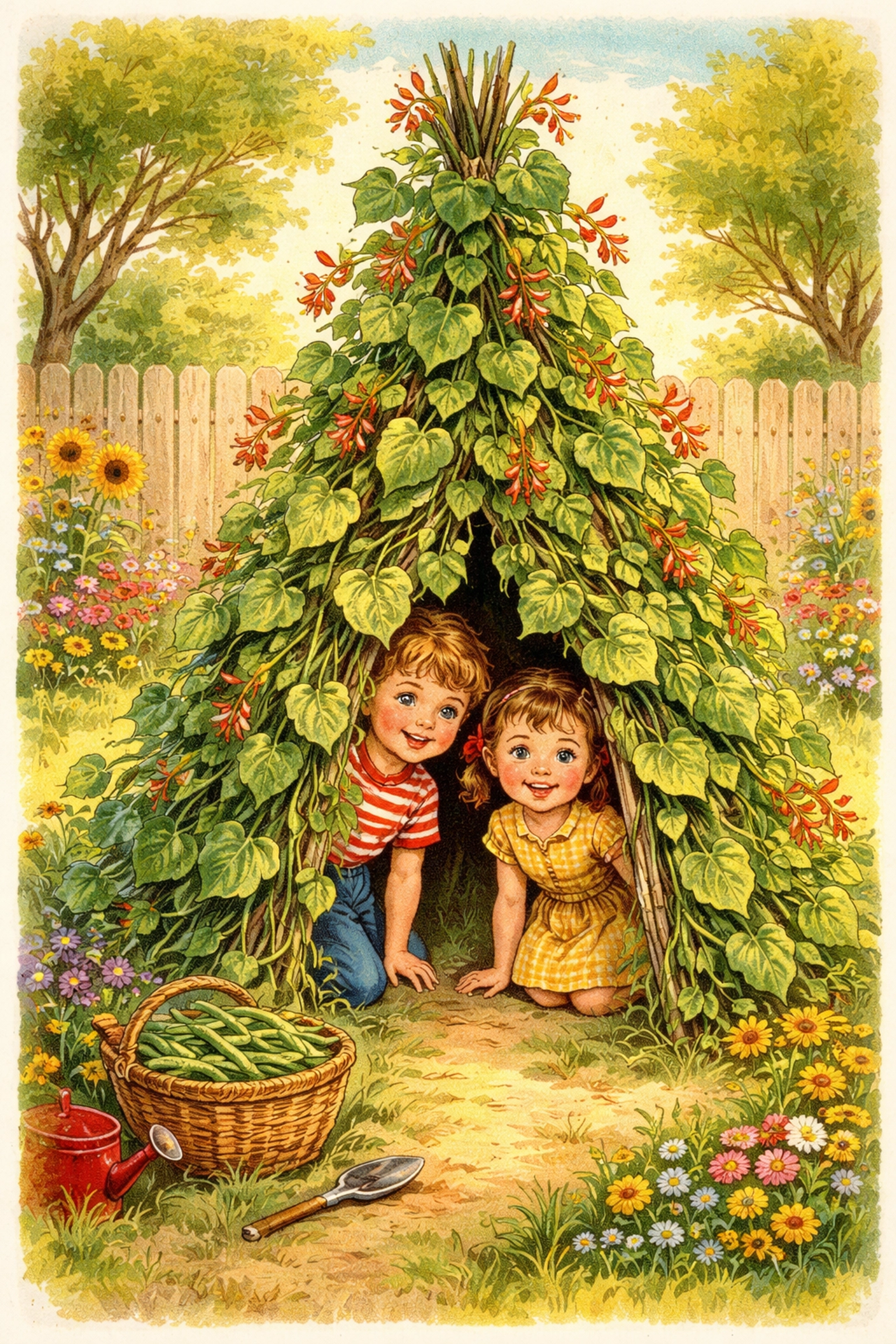
A bean teepee is a magical living play structure you can grow by planting climbing beans around a simple pole framework, typically costing under $10 and taking about 6-8 weeks to fill in with leafy green walls your kids can actually play inside.
Think of it as nature's very own fort. You're essentially tricking bean plants into building a hideaway for your little ones, complete with dappled shade, colorful flowers, and (bonus!) fresh beans to snack on. It's part garden project, part outdoor adventure, and entirely memorable.
Let's build one together.
Why Grow a Bean Teepee?
Before we grab the supplies, here's why this project is worth your Saturday morning:
- Kids get ownership. They plant it, watch it grow, and claim it as their secret space.
- It's genuinely useful. A shady hideout in summer? Yes, please.
- Fresh food happens. Scarlet runner beans, pole beans, and green beans all work, and they're delicious.
- Budget-friendly magic. Most families can pull this off for less than $10.
- Screen-free entertainment. A living playhouse beats a tablet any day.
Budget Breakdown: What You'll Spend
Here's the honest math. You likely have some of these materials already, but even starting from scratch keeps you well under budget.
| Item | Estimated Cost | Notes |
|---|---|---|
| Bamboo poles or garden stakes (6-8) | $0 – $5 | Often free from garden centers or dollar stores |
| Twine or string | $1 – $2 | Jute twine works great |
| Climbing bean seeds | $1 – $3 | One seed packet is plenty |
| Compost (optional) | $0 – $2 | Kitchen scraps or bagged |
| Mulch (optional) | $0 | Grass clippings or dried leaves |
| Total | $2 – $10 |
If you've got bamboo from a previous project or can snag some fallen branches, this project can cost almost nothing.
Materials You'll Need
Gather these before you head outside:
- 5-8 poles (bamboo, wooden stakes, or sturdy branches), each 6-8 feet tall
- Twine, jute string, or garden wire for lashing
- Climbing bean seeds (scarlet runner beans are beautiful and kid-friendly)
- Compost or enriched soil for the planting area
- Mulch (grass clippings, straw, or dried leaves) for the interior floor
- A shovel or trowel
- Optional: Horizontal string for extra climbing support
Step-by-Step Instructions
Step 1: Pick Your Spot
Find a sunny location that gets at least 6 hours of direct sunlight daily. Beans love warmth, so south-facing spots tend to work well. You'll need a circular area roughly 4-5 feet in diameter, big enough for a child or two to sit inside comfortably.
Tip: Avoid areas with tree root competition or heavy shade. Your beans will sulk.

Step 2: Prepare the Soil
Loosen the soil in your circle to about 12-18 inches deep. Mix in compost if you have it, beans aren't too fussy, but they appreciate good drainage and some organic matter.
If your soil is heavy clay, consider building a small raised mound or adding extra compost to improve texture.
Step 3: Build the Frame
Here's where the fun starts:
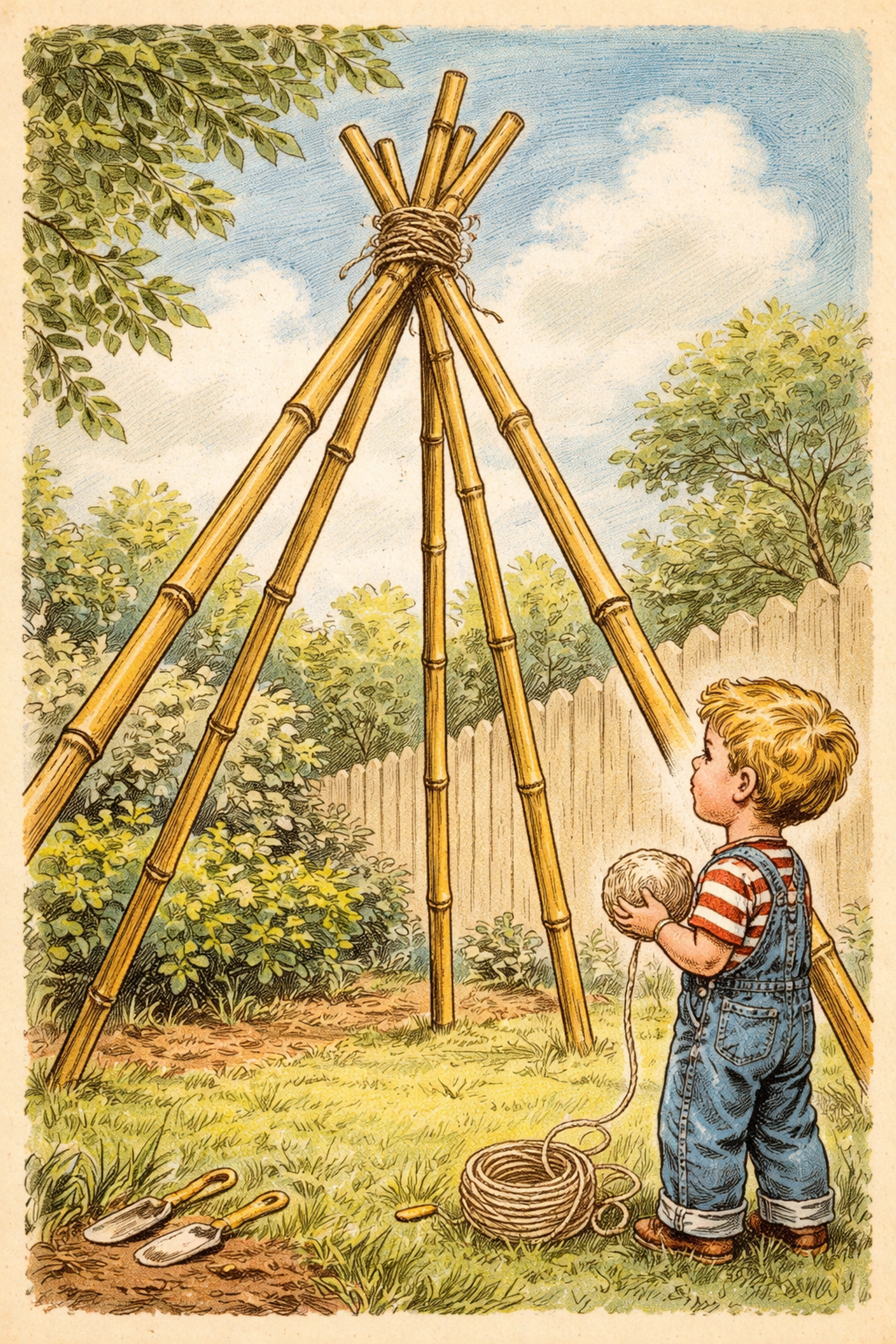
Create your tripod base. Take three of your tallest, sturdiest poles and push them into the ground about 6-8 inches deep, spacing them evenly in a triangle. Lean them together at the top.
Tie the top securely. Use twine or wire to lash the poles together where they meet, about 6-7 feet off the ground. Wrap it several times and tie it tight, this is your structural anchor.
Add remaining poles. Place additional poles around the circle, spacing them roughly 10-12 inches apart. Leave a gap of at least 2 feet for a doorway (very important, kids need to get in!).
Secure everything. Tie each additional pole to the central lashing point or wrap horizontal twine around the structure at 1-foot intervals to create a ladder for the beans to climb.
Pro tip: If you're in a windy area, stake the base of your tripod poles with small wooden stakes and wire before the beans take hold.
Step 4: Plant Your Beans
Wait until after your last frost date, beans don't tolerate cold soil. When nighttime temperatures stay above 50°F (10°C), you're good to go.
- Create small mounds at the base of each pole (except the doorway).
- Plant 2-3 seeds per mound, about 1 inch deep.
- Water gently but thoroughly.
Space your plantings about 4-5 inches apart around the circle. You'll end up with roughly 10-16 bean plants depending on your teepee size.
Step 5: Mulch the Interior
Once your seeds are in, spread 4-6 inches of mulch inside the teepee circle. This does triple duty:
- Keeps the soil moist
- Suppresses weeds
- Creates a soft, comfy floor for sitting
Grass clippings, straw, and dried leaves all work wonderfully. Avoid fresh wood chips right against the stems.
Step 6: Help Them Climb (First Few Weeks)
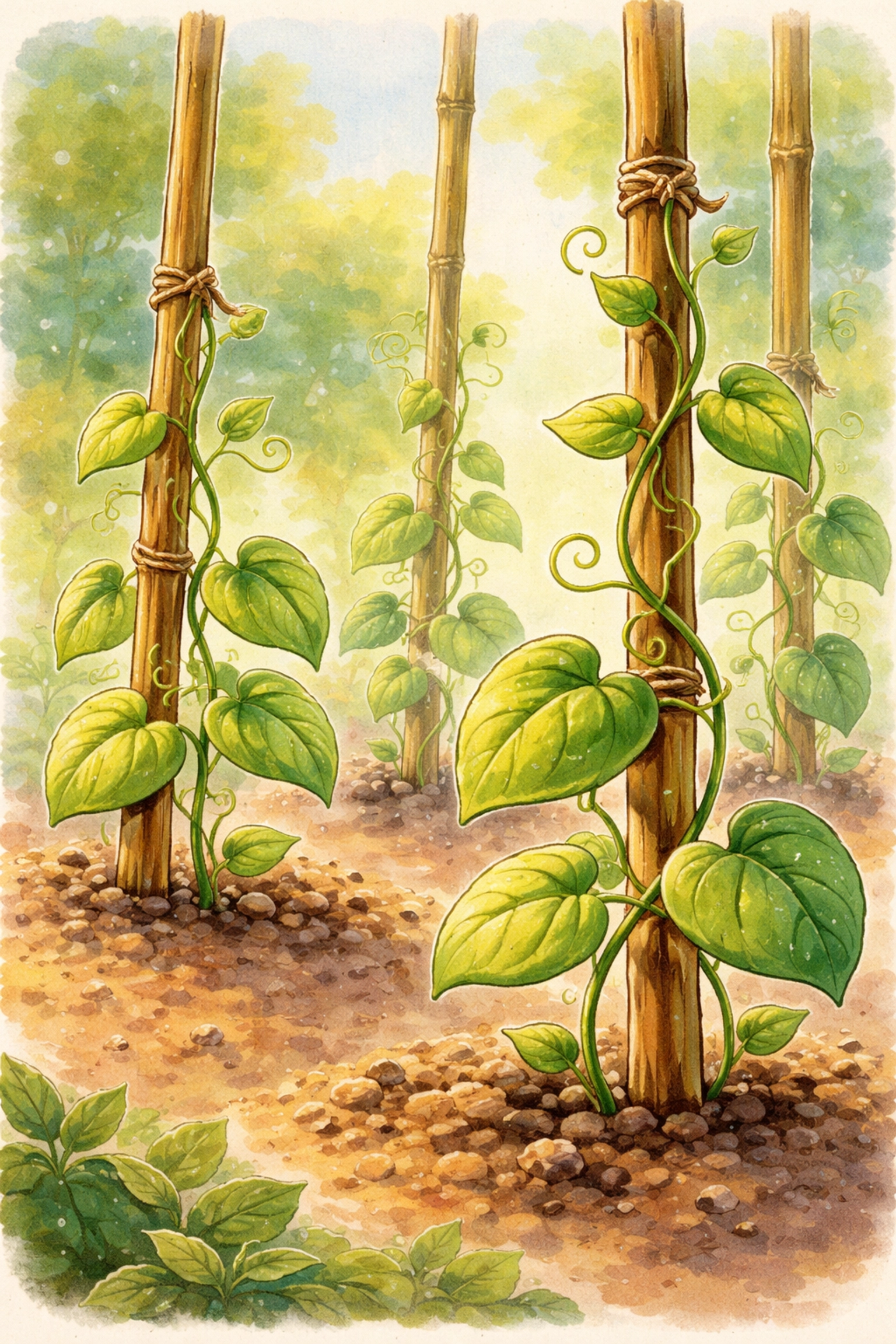
Bean seedlings sometimes need a nudge in the right direction. When your plants are 6-8 inches tall:
- Gently guide wandering vines toward the nearest pole
- Loosely tie any stubborn ones with soft twine
- Add horizontal string "rungs" if your vines need extra grip
Within a week or two, they'll figure it out and start climbing on their own.
Step 7: Watch, Water, and Wait
Keep the soil consistently moist (not soggy) throughout the growing season. Most bean teepees fill in beautifully within 6-8 weeks, creating leafy walls and a shady interior.
As flowers appear, get excited, beans follow shortly after. Scarlet runner beans produce gorgeous red blooms that attract pollinators, making your teepee a little ecosystem.
Harvesting tip: Pick beans regularly to encourage more production. If you let them get too mature on the vine, the plant thinks its job is done and slows down.
Best Bean Varieties for Teepees
Not all beans climb equally. Here are some family favorites:
| Variety | Why It Works |
|---|---|
| Scarlet Runner Beans | Stunning red flowers, vigorous climbers, edible beans |
| Kentucky Wonder | Classic green bean, prolific producer |
| Blue Lake Pole | Tender and sweet, grows tall |
| Rattlesnake Pole | Fun purple-streaked pods, heat tolerant |
| Hyacinth Bean | Beautiful purple flowers and pods (ornamental) |
Scarlet runner beans tend to be the most popular for teepees because they're vigorous, beautiful, and forgiving of beginner mistakes.
Troubleshooting Common Issues
Beans aren't climbing: Add more horizontal strings. Some varieties need extra support to grip.
Yellow leaves at the bottom: Usually normal as the plant matures. If it spreads upward, check for overwatering or poor drainage.
No flowers yet: Be patient, beans typically flower 6-8 weeks after planting. Make sure they're getting enough sun.
Pests nibbling leaves: Handpick larger insects. A gentle spray of water can knock off aphids. Avoid harsh chemicals near play areas.
Frequently Asked Questions
How long does it take to grow a bean teepee?
Most bean teepees fill in enough to create a leafy enclosure within 6-8 weeks of planting, depending on weather and variety.
What age is this project good for?
Kids as young as 3 can help plant seeds and water, while older children (6+) can assist with building the frame. It's a true all-ages project.
Can I grow a bean teepee in a container?
It's tricky. Beans need substantial root space. If you try it, use an extra-large container (at least 15-20 gallons) and expect smaller results.
Do bean teepees come back every year?
Most climbing beans are annuals, so you'll replant each spring. However, the pole structure can often be reused for several seasons.
When should I plant my bean teepee?
After your last frost date, when soil temperatures reach at least 60°F (15°C). For most areas, this means late spring.
Can I eat the beans from a teepee?
Yes! Harvest them young and tender for the best flavor. Regular picking keeps the plants productive.
How big should the teepee be for kids to play inside?
A 4-5 foot diameter base works well for 1-2 children. Larger teepees (6+ feet) can accommodate small groups.
What if my poles fall over?
Stake them more securely at the base, or add wire anchors. Once the beans establish strong root systems, they help stabilize the structure naturally.
Can I use other climbing plants instead of beans?
Morning glories, nasturtiums, and small gourds can work, but beans are fastest, easiest, and provide food: making them the classic choice.
Final Thoughts
A bean teepee is one of those rare projects that delivers on every promise: it's cheap, educational, beautiful, and genuinely fun for kids. By midsummer, you'll have a living hideaway that grew from seeds your family planted together.
That's the kind of memory that sticks.
For more budget-friendly garden projects the whole family can enjoy, check out our guide on how to make a DIY kitchen scrap regrow garden for under $10 or explore our Kids Crafts category for more hands-on adventures.
References
- University of Minnesota Extension – Growing Beans in Home Gardens
- Missouri Botanical Garden – Climbing Bean Structures for Children
- Old Farmer's Almanac – Pole Bean Planting Guide
- Royal Horticultural Society – Bean Wigwams and Teepees