



Quick Answer: To host a nature scavenger hunt for kids, pick a safe outdoor location, create an age-appropriate list of natural items to find (leaves, rocks, feathers, pinecones), gather simple supplies like bags and magnifying glasses, and let your little explorers loose! The whole activity takes about 30-60 minutes and works beautifully in backyards, parks, or nature trails.
Why Nature Scavenger Hunts Are Perfect for Curious Kids
There's something magical about watching a child discover a perfectly smooth river rock or spot a ladybug on a leaf. Nature scavenger hunts tap into that innate curiosity while sneaking in some serious learning, observation skills, classification, and even early science concepts.
The best part? This is one of those kids science experiments at home (or nearby!) that requires almost zero prep and costs absolutely nothing. You're basically turning a walk outside into an adventure, and trust me, kids eat it up.
Whether you've got a sprawling backyard or access to a local park, a nature scavenger hunt adapts to whatever outdoor space you have. Let's break down exactly how to make it happen.
What You'll Need: Materials List
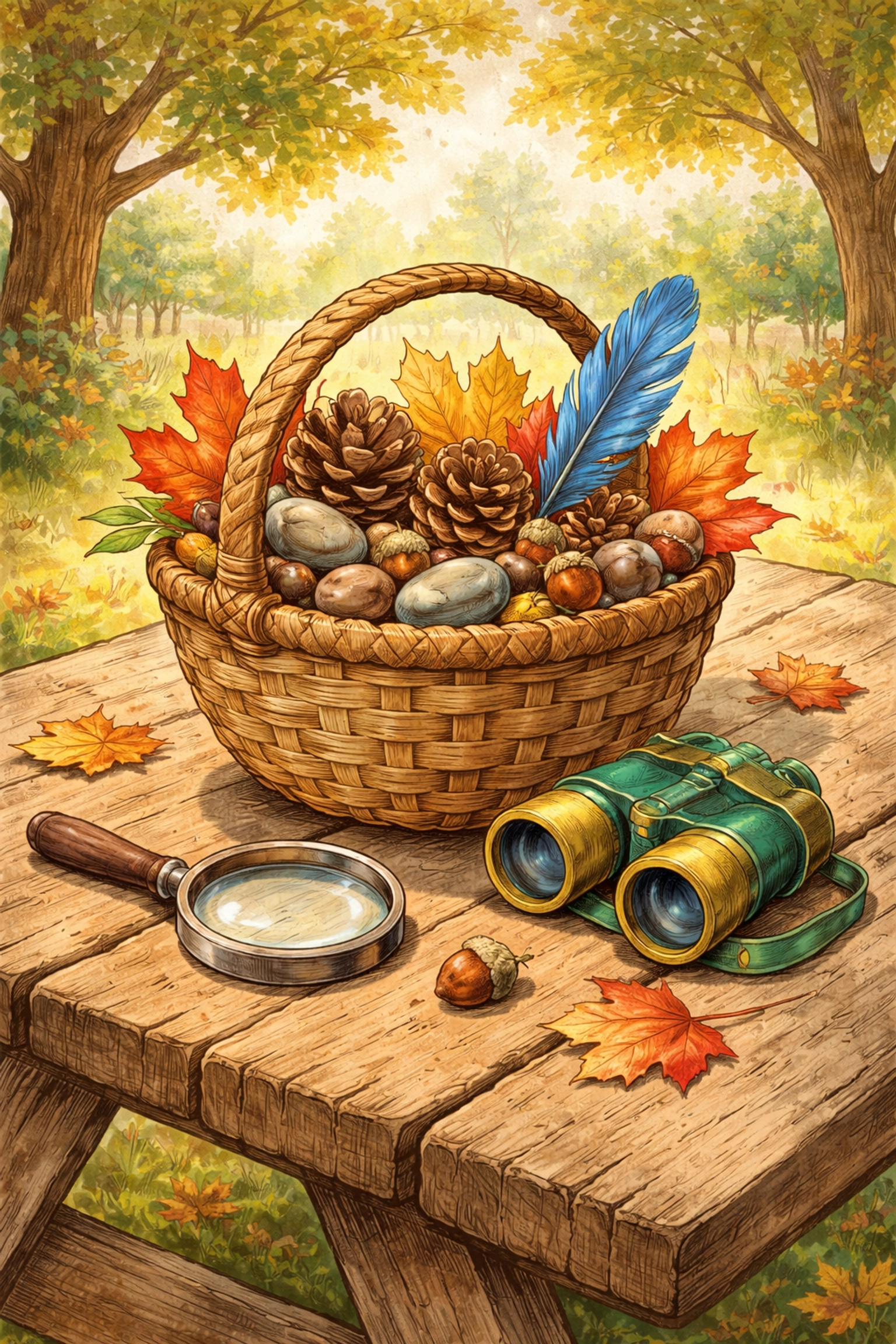
Before you head outside, gather these simple supplies. Nothing fancy required!
| Item | Purpose | Optional? |
|---|---|---|
| Paper bag or basket | Collecting treasures | No |
| Scavenger hunt checklist | Guiding the search | No |
| Pencil or crayons | Marking off finds | No |
| Magnifying glass | Examining tiny discoveries | Yes |
| Binoculars | Spotting birds and distant objects | Yes |
| Small containers | Holding bugs or delicate items | Yes |
| Field guide or nature app | Identifying plants and creatures | Yes |
| Sidewalk chalk | Creating collection zones | Yes |
| Clipboard | Keeping the checklist sturdy | Yes |
Most of these items you probably already have lying around. The checklist is the star of the show, we'll cover how to make one next.
Step 1: Choose Your Location
Your nature scavenger hunt can happen almost anywhere with a bit of greenery. Here are some solid options:
- Your backyard – Perfect for younger kids and quick setups
- A local park – More variety in plants, trees, and wildlife
- A nature trail or hiking path – Great for older kids ready for a longer adventure
- The beach or lakeshore – Shells, driftwood, and unique finds
- Your neighborhood – A simple walk around the block works too
Pick a spot based on your child's age and attention span. For toddlers and preschoolers, keep it contained, your backyard is plenty. For elementary-aged kids, a park or trail adds excitement and challenge.
Step 2: Create Your Scavenger Hunt List
This is where the magic happens. Your list should match what's actually available in your chosen location and the current season. Nothing's more frustrating for a kid than searching for something that doesn't exist!
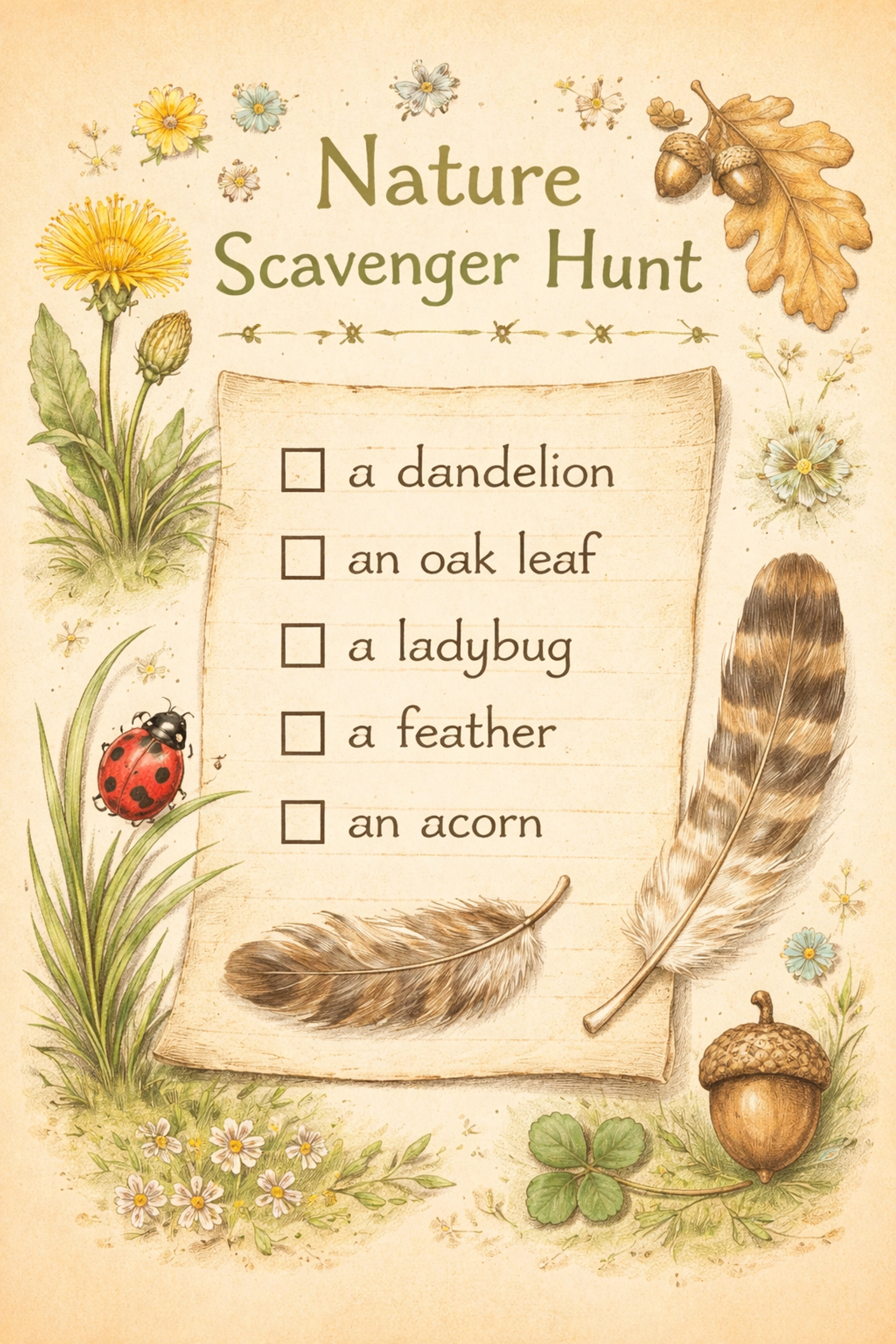
Here's a sample list to get you started:
Nature Scavenger Hunt Checklist
- Something smooth
- Something rough
- A yellow flower
- A pinecone
- A feather
- Three different shaped leaves
- A rock with sparkles
- Something that makes noise
- An insect (observe, don't catch!)
- Something red
- A seed or acorn
- Animal tracks or signs
- Something soft
- A stick shaped like a letter
Pro tip: For very young children (ages 2-4), use pictures instead of words. Draw or print simple images of each item so they can match what they see.
Step 3: Add Some Fun Variations
A basic scavenger hunt is great, but mixing things up keeps kids engaged hunt after hunt. Try these twists:
Color Matching Hunt
Grab some paint chips from the hardware store (free!) in various colors. Challenge kids to find nature items that match each shade. You'd be amazed how many greens exist in a single backyard.
Sensory Hunt
Focus on textures and senses rather than specific items:
- Find something bumpy
- Find something that smells good
- Find something wet
- Find something prickly (careful!)
- Find something you can hear
Counting Hunt
Perfect for preschoolers working on numbers:
- Find 5 small pebbles
- Find 3 pinecones
- Find 4 yellow flowers
- Find 2 large leaves
- Find 1 feather
Photo Safari
For older kids with access to a camera or phone, have them photograph each item instead of collecting it. This works great for things you shouldn't pick (wildflowers) or can't take home (a bird's nest in a tree).
Step 4: Set Up Collection Stations (Optional)
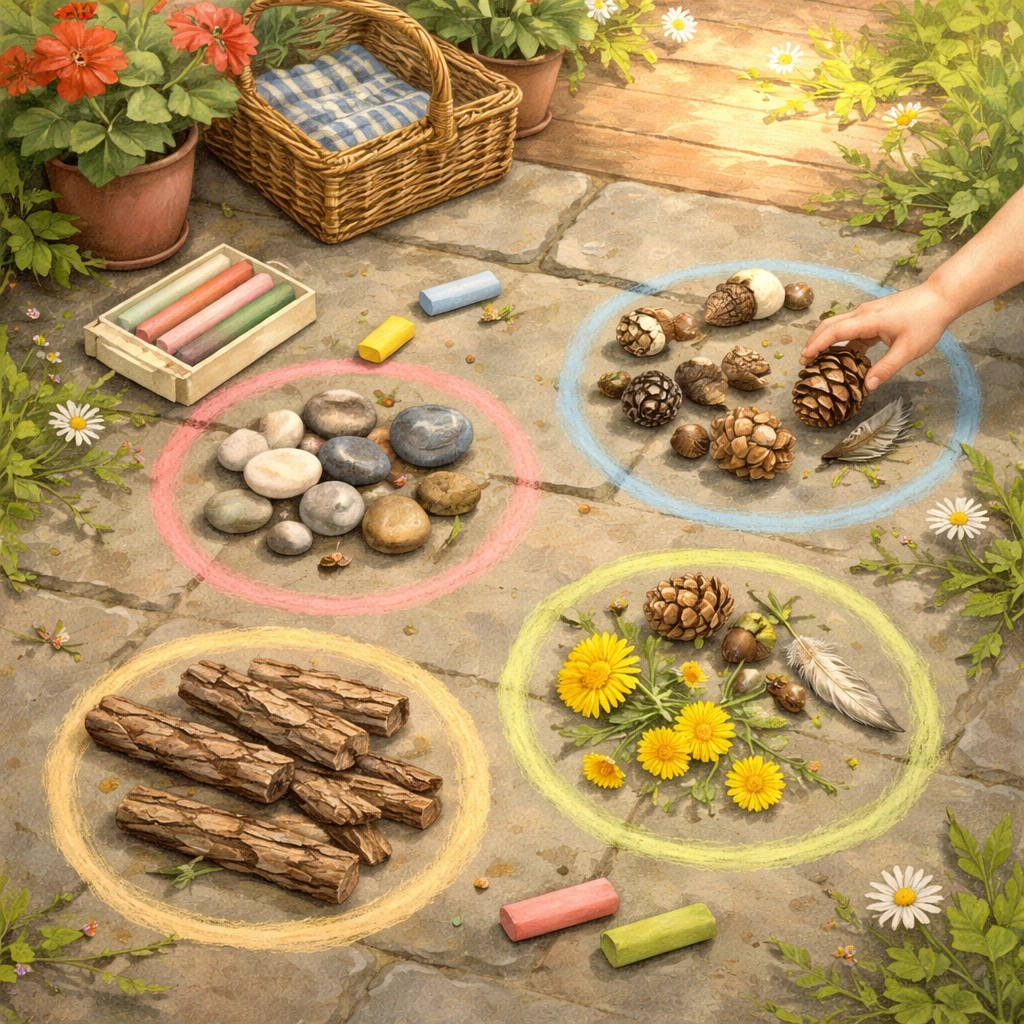
If you're doing this in your backyard, here's a fun idea: use sidewalk chalk to draw large circles or squares on your patio or driveway. Label each one with a different category:
- Smooth things
- Rough things
- Living things
- Brown things
- Treasures
Kids love sorting their finds into the right spots. It adds an extra layer of organization and helps extend the activity.
Step 5: Go Hunting!
Now for the fun part. Hand over the checklist, grab your collection bag, and let the adventure begin.
A few tips for the actual hunt:
Let them lead. Resist the urge to point things out immediately. Give kids time to discover on their own.
Ask questions. "What does that leaf feel like?" "Why do you think this rock is so smooth?" Turn observations into mini science conversations.
Celebrate every find. Even if they bring you a plain old stick, show enthusiasm. To them, it's treasure.
Stay flexible. If they get distracted by an anthill or a cool bug, go with it. The list is a guide, not a strict assignment.
Bring water and snacks. Kids hunt better when they're not hangry.
Step 6: Wrap Up with Discussion and Display
When the hunt winds down, gather together and go through the collection. This is where the learning really sinks in.
Ask questions like:
- What was the hardest thing to find?
- What surprised you?
- Which item is your favorite and why?
- What couldn't we find today? Why might that be?
For a lasting memory, create a nature display. Arrange items on a tray, glue them to cardboard, or press leaves and flowers in a heavy book. Some families keep a "nature journal" where kids can tape or draw their finds from each hunt.
If your kids loved this outdoor exploration, they might also enjoy our DIY worm composting bin project for more hands-on nature learning.
Age-Specific Tips
Toddlers (Ages 2-3)
- Keep the list to 5 items max
- Use picture-based checklists
- Stay close and supervise constantly
- Focus on textures and colors
Preschoolers (Ages 4-5)
- 8-10 items work well
- Include counting elements
- Let them carry their own bag
- Add simple drawing or coloring tasks
Elementary (Ages 6-10)
- Challenge them with 15+ items
- Include identification tasks
- Try photo hunts or nature journaling
- Introduce field guides or apps like iNaturalist
FAQs About Nature Scavenger Hunts
What if we can't find everything on the list?
That's totally fine, and actually a great teaching moment! Discuss why certain items might be missing (wrong season, wrong habitat, etc.). The goal is exploration, not perfection.
How long does a nature scavenger hunt take?
Plan for 30-60 minutes, depending on your list length and your child's age. Younger kids may lose interest after 20 minutes, and that's okay.
Is it okay to collect things from nature?
Stick to items that are already on the ground (fallen leaves, loose feathers, rocks). Never pick living flowers in public parks or disturb active nests. Teach kids to observe living creatures without taking them.
What's the best season for a nature scavenger hunt?
Any season works! Each brings different treasures, spring flowers, summer insects, fall leaves, winter pinecones. Create seasonal lists to match.
Can I do this with multiple kids of different ages?
Absolutely. Give younger kids a simpler list and older kids a more challenging one. Or pair them up as "nature buddies."
What if it rains?
Light rain can actually make a hunt more interesting, look for puddles, worms, wet leaves, and how things change. Just skip it during thunderstorms.
How do I keep collected items without them getting gross?
Rocks and pinecones last forever. Leaves can be pressed in books. Avoid keeping anything that will rot or smell. When in doubt, take a photo instead.
Can a nature scavenger hunt count as homeschool science?
Yes! You're covering observation, classification, ecosystems, and scientific inquiry. Document the hunt in a nature journal for portfolio evidence.
Happy hunting, friends! There's a whole world of discovery waiting right outside your door. 🍂