




You can build a sturdy backyard balance beam for kids using a single 4×6 wooden beam and basic tools in about 2-3 hours, with materials costing between $38 and $50. This simple DIY project creates a low-to-the-ground practice beam that's perfect for developing coordination, building confidence, and burning off energy right in your own backyard.
Balance beams aren't just for gymnasts. They're fantastic tools for helping kids of all ages develop gross motor skills, core strength, and that wonderful sense of "I did it!" accomplishment. And the best part? You don't need fancy equipment or a gym membership to give your little ones this experience.
Let's get building.
Project Overview
| Detail | Information |
|---|---|
| Target Age | 3-10 years old |
| Estimated Cost | $38-$50 |
| Build Time | 2-3 hours |
| Difficulty | Beginner-friendly |
| Adult Supervision | Required during construction and play |
Materials You'll Need
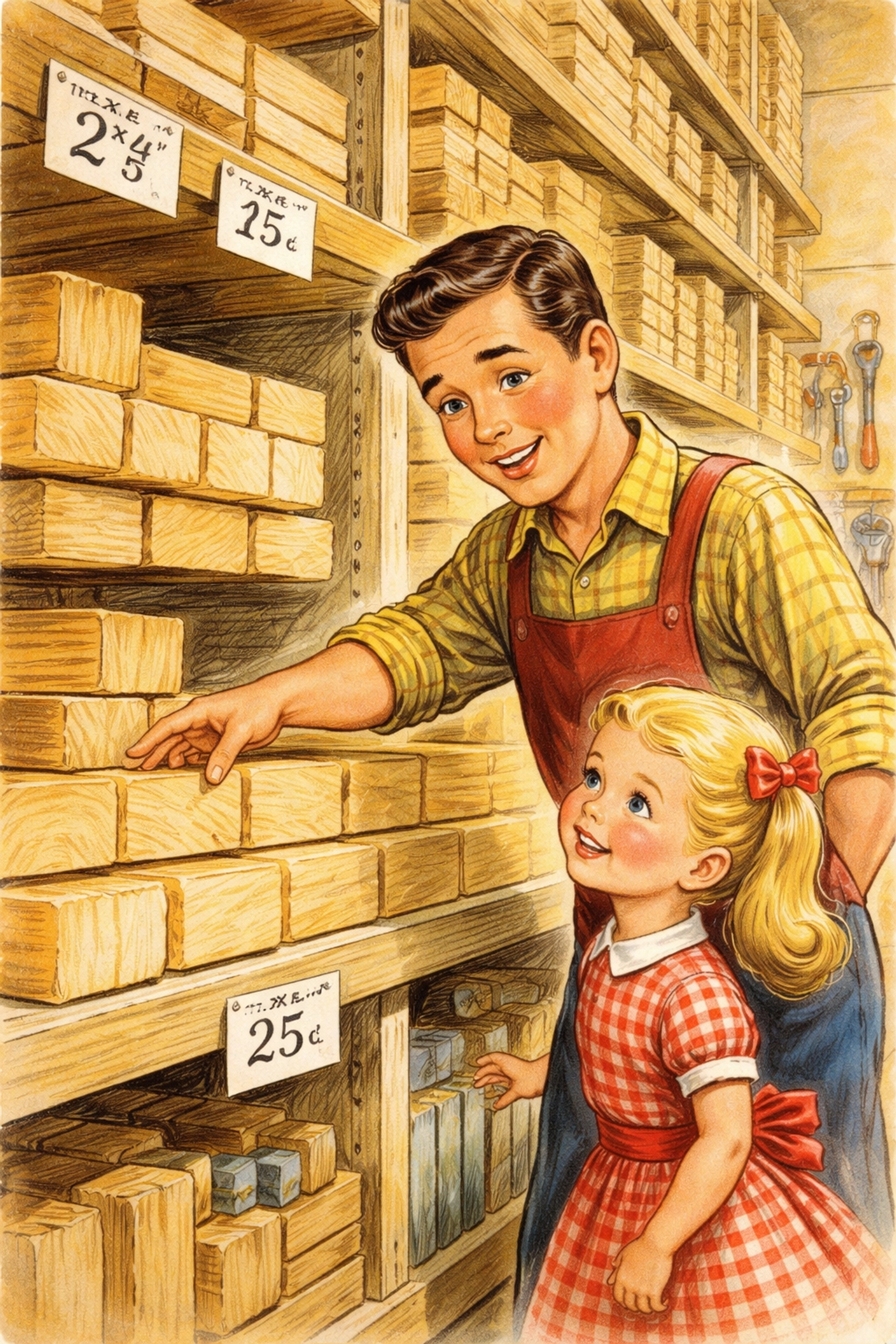
Before you head to the hardware store, here's your shopping list:
- 1 piece of 4x6x8 pressure-treated lumber (the main beam)
- 4 pieces of 4x1x7" wood (for the base supports)
- 16-32 wood screws (2½" length)
- Wood glue (Gorilla Glue works great)
- Sandpaper (80-grit and 120-grit)
- Optional: 3 yards of outdoor sponge padding
- Optional: 3 yards of faux-suede or outdoor fabric for covering
Tools Required
Most of these are probably already in your garage:
- Circular saw or hand saw
- Power drill with bits
- Router with round-over bit (optional but recommended)
- Measuring tape
- Pencil
- Level
- Staple gun (if adding padding)
- Clamps
- Safety glasses and work gloves
Step-by-Step Instructions
Step 1: Cut Your Beam Pieces
Start by measuring your 4x6x8 beam. You'll want to cut two equal pieces from each end: these will become your base supports. For an 8-foot beam, cutting 12-inch sections from each end leaves you with a 6-foot walking surface, which is ideal for most backyard setups.
Mark your cut lines clearly with a pencil and double-check your measurements before sawing.
Step 2: Sand Everything Smooth
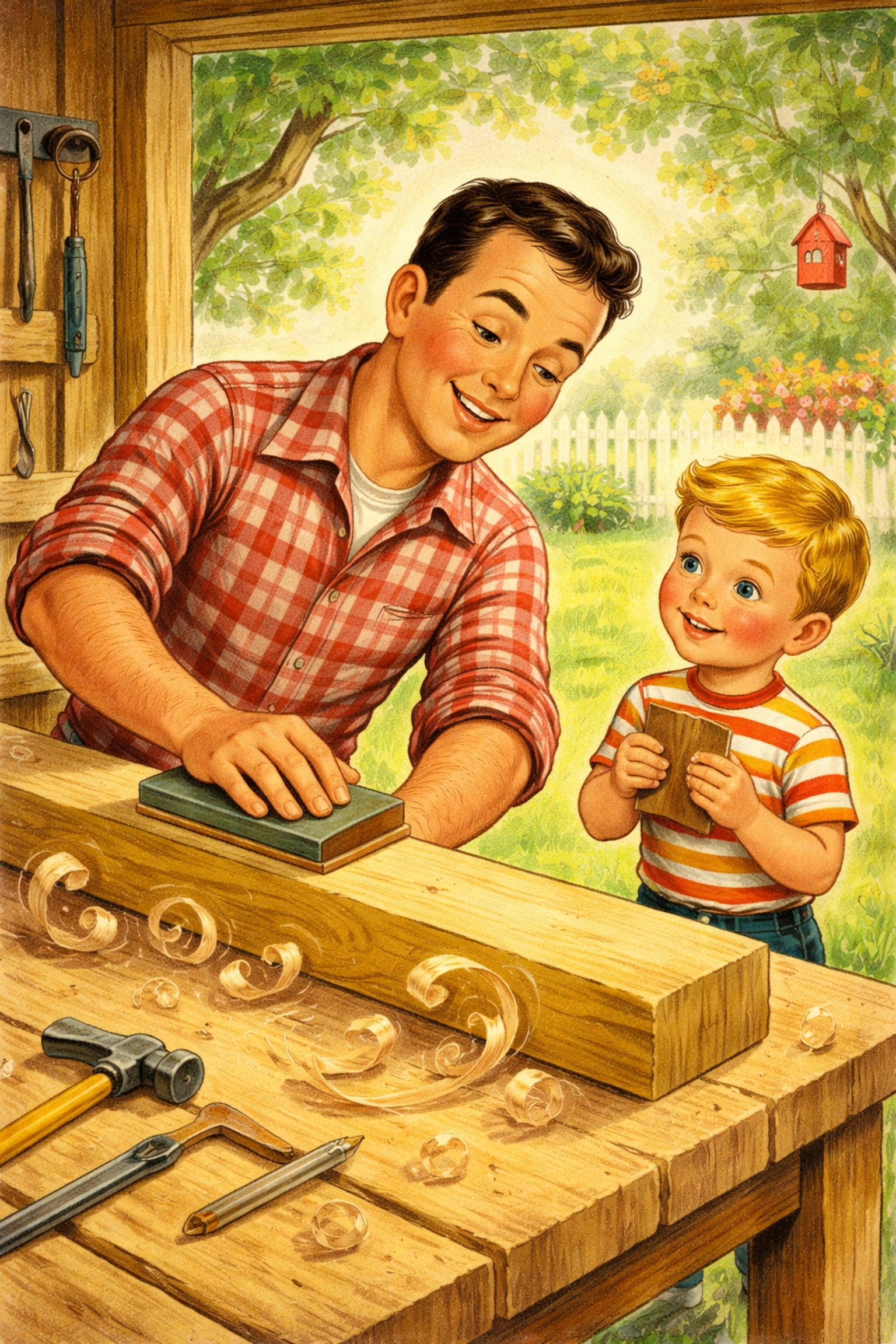
Kids and splinters don't mix well. Grab your 80-grit sandpaper first and work over all surfaces of both the main beam and your base pieces. Pay special attention to the top walking surface and any cut edges.
Follow up with 120-grit sandpaper for a smoother finish. Your little gymnasts' bare feet will thank you.
Step 3: Round the Edges
If you have a router, now's the time to use it. Run a round-over bit along all the top edges of your main beam. This creates a gentler surface that's easier on small feet and reduces the chance of scrapes during tumbles.
No router? No problem. You can achieve a similar effect with aggressive sanding on the corners, or simply leave the edges square if you're planning to pad the beam.
Step 4: Build Your Base Supports
Take your 4x1x7" pieces and create two T-shaped or X-shaped bases. The wider the base, the more stable your beam will be.
Apply wood glue to the joints first, then secure with wood screws. Drill pilot holes before driving your screws: this prevents the wood from splitting and makes the whole process easier.
Let the glue cure according to package directions before moving on.
Step 5: Attach the Beam to the Bases
Position your base supports about 6-12 inches from each end of the main beam. This creates a stable platform that won't wobble during use.
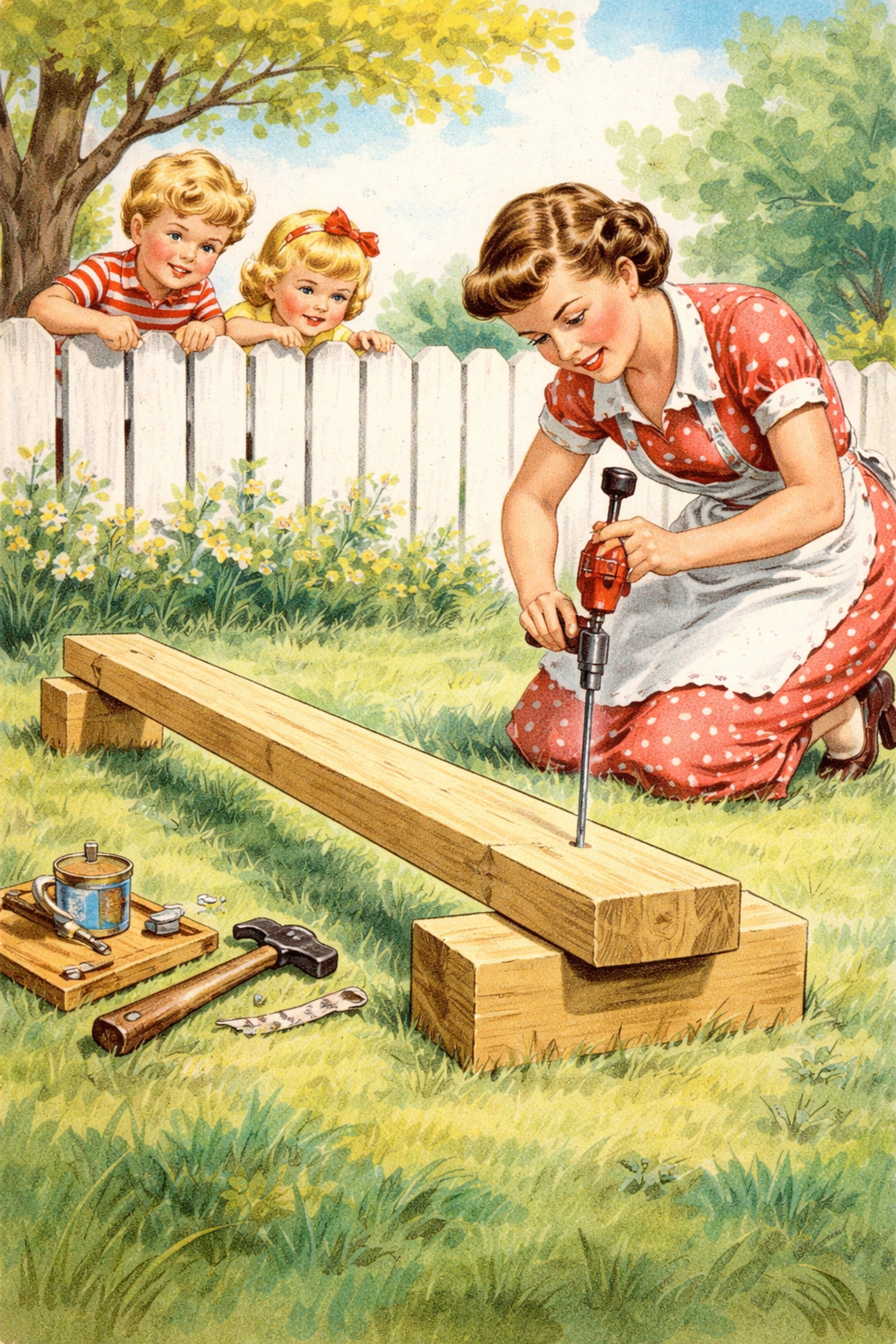
Drill pilot holes through the bottom of your bases up into the main beam. Drive your 2½" screws through these holes, securing everything tightly.
Use a level to check that your beam sits flat. Adjust as needed by sanding down any high spots on the bases.
Step 6: Add Padding (Optional)
For a gymnastics-style beam with better grip, cut your outdoor sponge padding into 6-inch wide strips. Glue these strips along the top of the beam, letting them wrap slightly over the rounded edges.
Once the padding is secure, wrap the entire padded section with your fabric. Pull it taut and staple it firmly to the underside of the beam. Trim any excess fabric for a clean finish.
Keep in mind that non-weatherproof fabric will need to be stored indoors during rain or covered with a tarp.
Step 7: Test and Inspect
Before calling the kids over, give your beam a thorough inspection:
- Check that all screws are fully driven and flush
- Wiggle the beam to test for stability
- Run your hands over all surfaces checking for rough spots
- Step on it yourself to test weight capacity
Safety Tips for Balance Beam Play
A few common-sense precautions go a long way:
- Keep it low. Your beam should sit just a few inches off the ground. This height is perfect for building skills without risking serious falls.
- Create a soft landing zone. Place grass, rubber mulch, or old gym mats around the beam area.
- Supervise young children. Even low beams can lead to tumbles, especially for beginners.
- Check regularly for wear. Outdoor wood can develop cracks or rough spots over time.
- Bare feet often work best. Socks can be slippery, and shoes may be too clunky for balance work.

Fun Variations to Try
Once you've mastered the basic build, consider these modifications:
- Paint it fun colors using outdoor, non-toxic paint
- Add texture strips for sensory play
- Build multiple heights for progressive challenges
- Create an obstacle course connecting the beam to other backyard play stations
Looking for more hands-on projects to do with your kids? Check out our kids crafts collection for more ideas that get little hands busy and imaginations running.
Frequently Asked Questions
What age is appropriate for a backyard balance beam?
Most children can start enjoying a low balance beam around age 3, with supervision. Kids ages 4-10 typically get the most use from backyard beams as they develop coordination and confidence.
How high should a DIY balance beam be for kids?
For safety, keep your beam between 4-8 inches off the ground. This height allows kids to practice without significant fall risk while still providing a genuine balance challenge.
What's the best wood for an outdoor balance beam?
Pressure-treated lumber works well for outdoor use since it resists rot and insects. Cedar and redwood are naturally weather-resistant alternatives, though they cost more.
Do I need to seal or stain the wood?
Sealing or staining helps protect against weather damage and can extend the life of your beam. Use a child-safe, non-toxic outdoor sealant and let it cure completely before use.
How wide should a balance beam be for beginners?
A 4-inch width (like a standard 4×6 beam) is ideal for beginners. It's wide enough to feel manageable but narrow enough to provide a real balance challenge.
Can I leave my balance beam outside year-round?
Pressure-treated wood can handle outdoor conditions, but padded or fabric-covered beams should be stored indoors or under cover during wet weather to prevent mold and deterioration.
How do I make the beam less slippery?
Adding fabric padding provides excellent grip. You can also apply non-slip tape or paint mixed with fine sand for texture on bare wood beams.
What if my yard isn't level?
You can adjust your base supports by sanding one side slightly shorter, or add thin wood shims under the bases until the beam sits level. Check with a level tool during setup.
References
- DIY balance beam building guides and cost estimates
- Hardware store beam-cutting methods
- Gymnastics practice beam construction tutorials