



The Mystery Bag Taste Test Game is a blindfolded sensory activity where children try to identify different foods using only their taste buds, smell, and texture clues. It's a simple kitchen-table game that transforms everyday snacks into an exciting guessing challenge: no special equipment required, and most families can pull it together with items already in their pantry.
This activity works wonderfully for rainy afternoons, birthday parties, or those "I'm bored" moments that seem to pop up right after lunch. Kids get surprisingly competitive about their taste-testing skills, and you might be shocked at how tricky a plain old grape can become when you can't see it.
Quick Facts
| Detail | Info |
|---|---|
| Best Age Range | 3–10 years (adjust food choices by age) |
| Estimated Time | 20–30 minutes |
| Difficulty | Easy |
| Total Cost | Under $5 using pantry staples |
| Skills Developed | Sensory awareness, vocabulary building, patience |
Materials You'll Need
| Item | Estimated Cost | Notes |
|---|---|---|
| Paper cups or small bowls | $1–2 | Disposable or reusable both work |
| Blindfold or bandana | $0–2 | A clean dish towel works great |
| 8–12 bite-sized food items | $0–3 | Use what's already in your kitchen |
| Spoons (optional) | $0 | For messier foods like yogurt |
| Glass of water | $0 | For palate cleansing between tastes |
| Paper and pencil | $0 | To track guesses and points |
Total: Usually under $5 (often free if you raid the pantry)
How to Set Up the Mystery Bag Taste Test
Step 1: Choose Your Mystery Foods
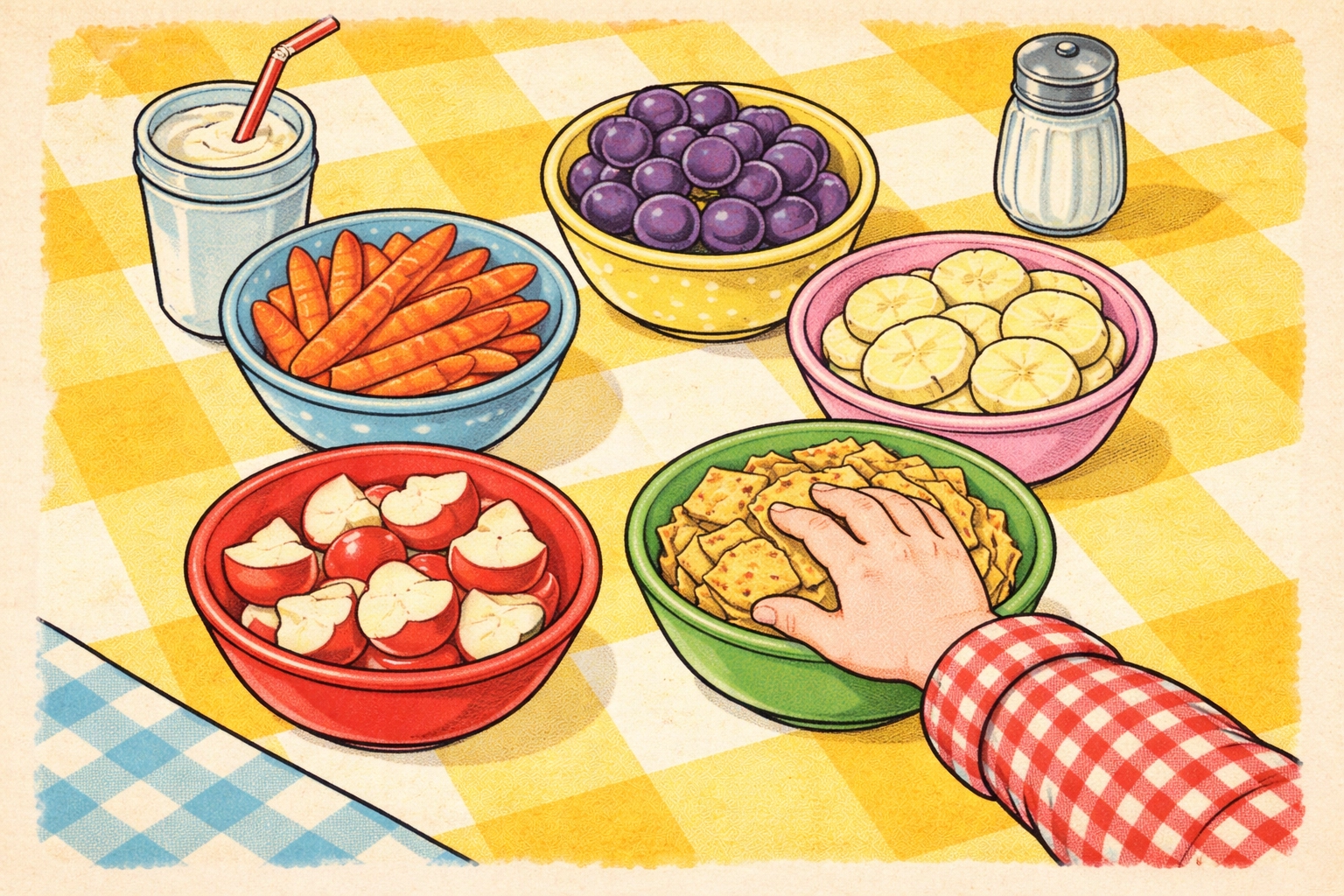
Select 8–12 different foods with a variety of flavors and textures. The key is picking items that are familiar enough to identify but surprising when you can't see them.
Great options for younger kids (ages 3–5):
- Apple slices
- Banana pieces
- Cheese cubes
- Crackers
- Raisins
- Carrot sticks
- Grapes (halved for safety)
- Bread cubes
More challenging options for older kids (ages 6–10):
- Pickle slices
- Olives
- Cream cheese
- Lemon wedges
- Different types of crackers
- Celery with peanut butter
- Various fruits they don't eat often
Pro tip: Avoid foods that are choking hazards for your child's age group, and check for allergies if you're hosting friends.
Step 2: Prepare Your Testing Station
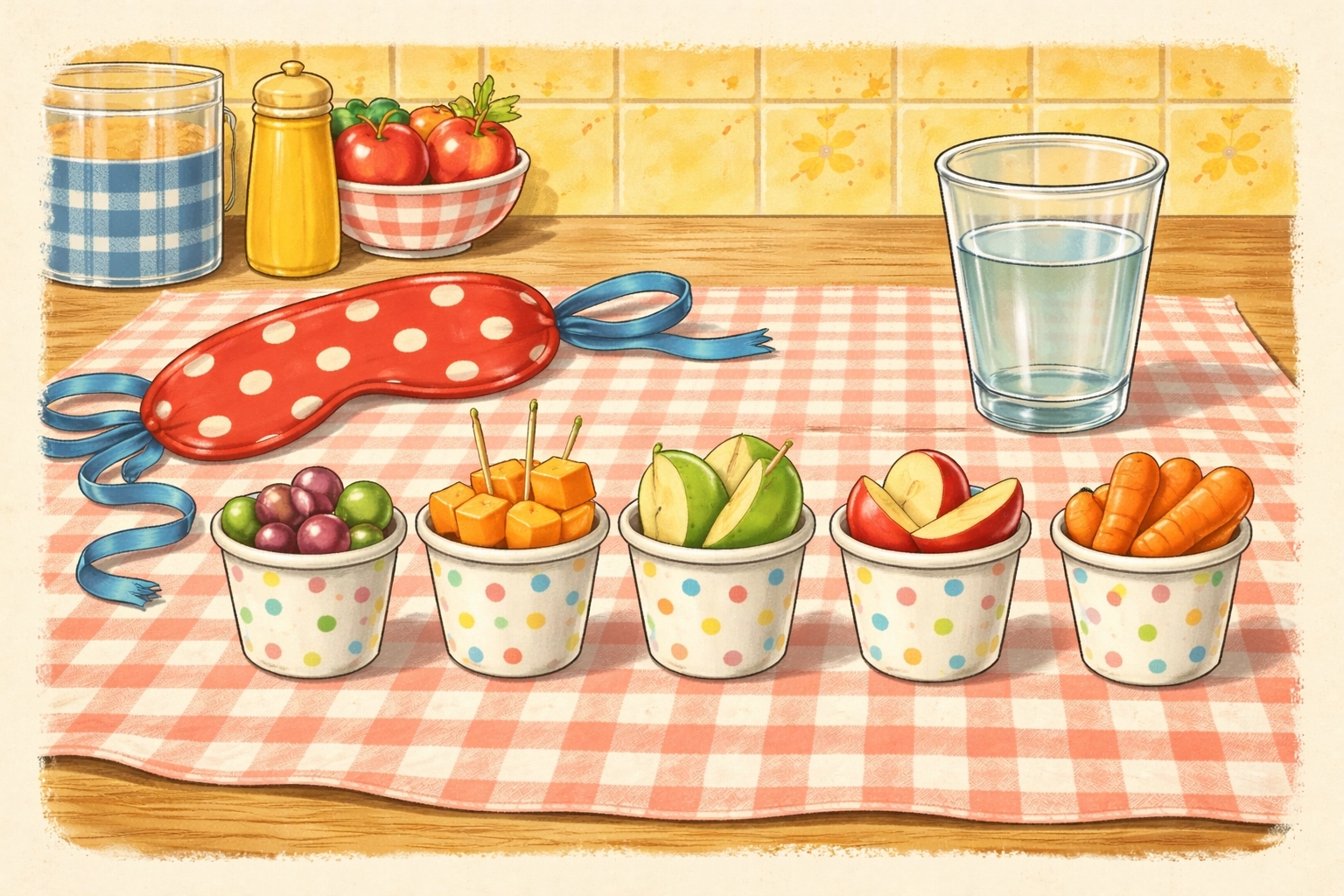
Set up at a kitchen table or clean floor space. Place each food item in a separate paper cup or small bowl, keeping them hidden from view. Number each cup on the bottom so you can track which food is which.
Have a glass of water ready for sipping between tastes: this helps reset the taste buds and makes each new food easier to identify.
Step 3: Explain the Rules
Keep instructions simple, especially for younger players:
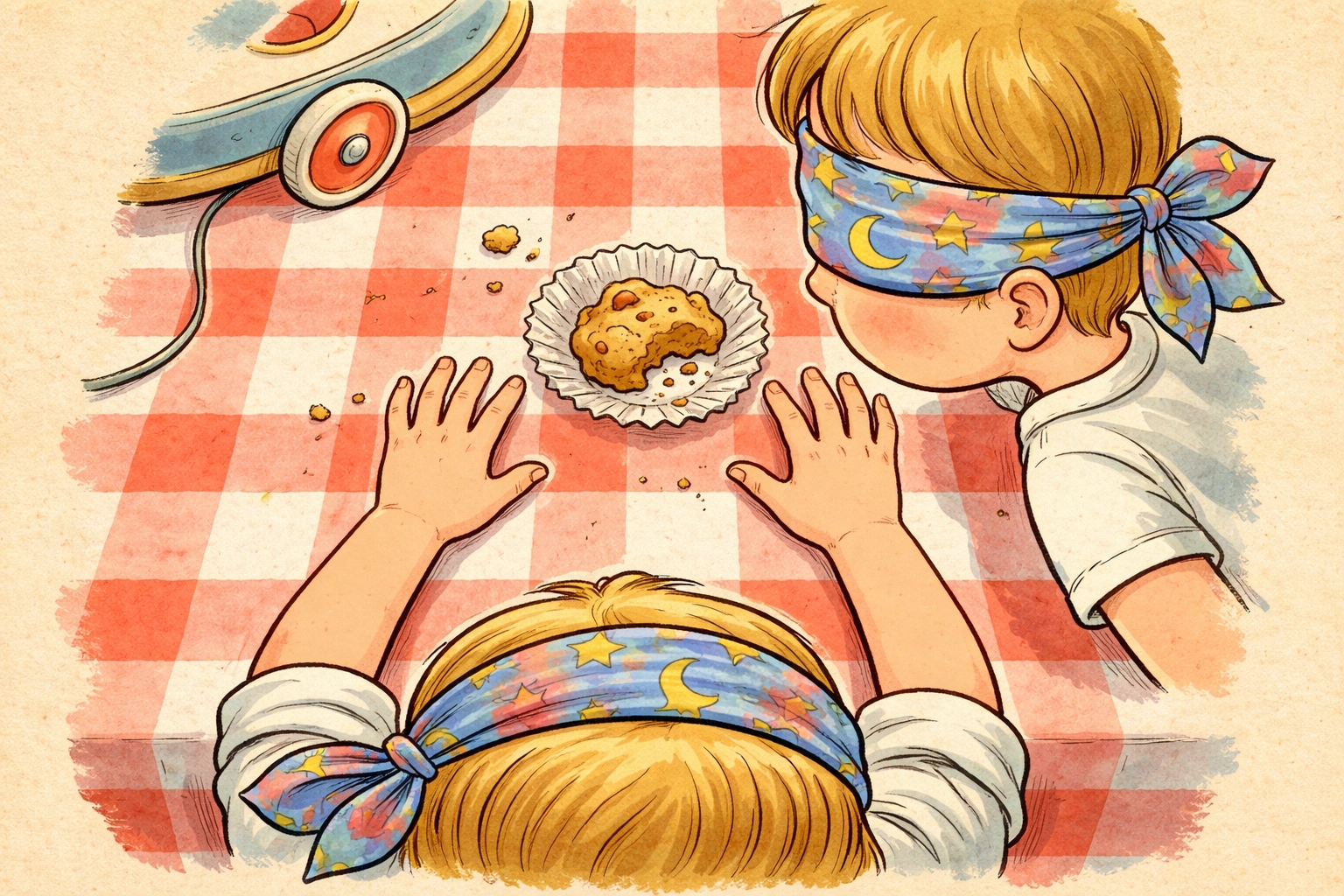
- Put on the blindfold (or close eyes tightly: honor system works for many kids)
- You'll receive a small piece of mystery food
- Use your senses: How does it feel? How does it smell? How does it taste?
- Make your guess out loud
- Take a sip of water before the next round
Let kids know there are no "wrong" answers: the fun is in the guessing, and even grown-ups get stumped sometimes.
Step 4: Start the Taste Test
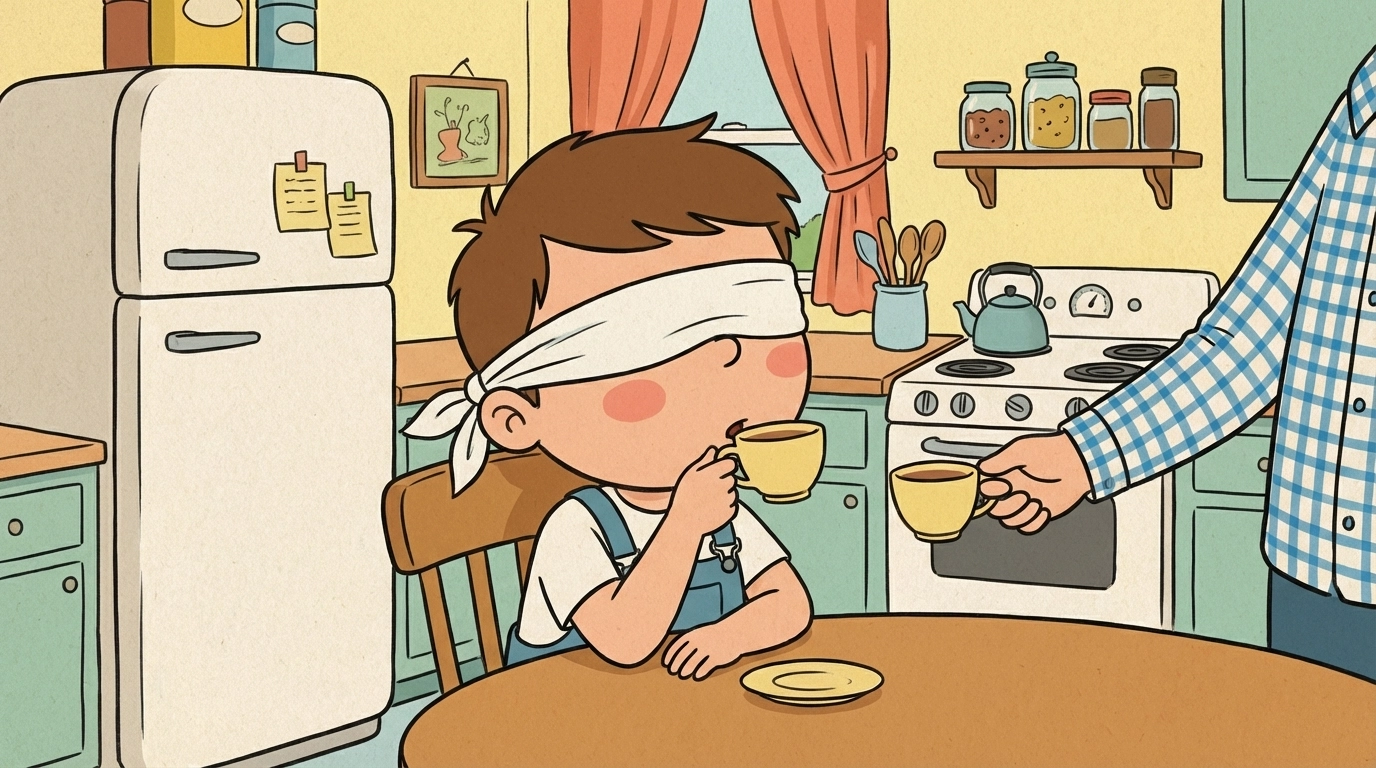
Hand the first mystery food to your blindfolded player. Encourage them to take their time and really think about what they're tasting.
Ask guiding questions like:
- "Is it sweet or sour?"
- "Is it crunchy or soft?"
- "Does it remind you of anything?"
Award one point for each correct guess if you're keeping score, or simply play for the fun of discovery without competition.
Step 5: Rotate Through Players
If you have multiple kids, take turns so everyone gets a chance to guess. You can use the same foods for each player or mix it up to keep things interesting.
Most games work well with 3–5 rounds per player, which usually takes about 20–30 minutes total.
Tips for a Successful Taste Test
Start easy, then get tricky. Begin with obvious foods like banana or apple to build confidence, then introduce more challenging items like pickle or plain yogurt.
Engage multiple senses. Encourage kids to smell the food before tasting, feel its texture, and even listen to the crunch. This turns a simple game into a full sensory exploration.
Keep portions tiny. A single bite is plenty for guessing purposes, and smaller portions mean kids don't fill up before the game ends.
Have a "pass" option. Some kids might encounter a food they really don't want to try. That's okay: let them pass without penalty to keep the game fun rather than stressful.
Consider teams for parties. If you're hosting a group, divide kids into teams and let them work together on guesses. This adds a collaborative element and helps shy kids participate.
Variations to Try
Themed taste tests: Focus on one category like "all fruits," "foods that are red," or "breakfast items."
Texture challenge: Choose foods with similar tastes but different textures (like fresh apple vs. applesauce) and see if kids can tell the difference.
Smell-only round: Before tasting, have kids guess based purely on smell. You might be surprised how many foods are recognizable just by their scent.
Grown-up participation: Kids often love watching parents struggle to identify foods. Taking turns keeps everyone engaged and levels the playing field.
What Kids Learn from This Activity
Beyond the giggles and competitive spirit, the Mystery Bag Taste Test actually builds some valuable skills:
- Vocabulary expansion: Kids learn words like "sour," "tangy," "smooth," and "crunchy" through direct experience
- Mindful eating: Focusing on taste and texture encourages kids to slow down and pay attention to their food
- Sensory processing: The activity strengthens connections between different senses
- Adventurous eating: Some kids become more willing to try new foods after discovering they actually like something they thought they wouldn't
Frequently Asked Questions
What age is best for the mystery taste test game?
Most children enjoy this activity starting around age 3, though you'll want to choose very familiar foods for younger players. Kids ages 6–10 often get the most competitive about it and can handle trickier food choices.
How do I handle picky eaters during the game?
Offer a "pass" option so kids don't feel forced to eat anything. You might also let picky eaters help prepare the game or be the "game host" who hands out foods instead of tasting.
Can I play this game with just one child?
Definitely. One-on-one taste tests work great: you can take turns being the taster and the host, which doubles the fun.
What foods should I avoid?
Skip anything that's a choking hazard for your child's age, foods with allergens that affect your players, and anything extremely spicy or unpleasant. The goal is fun, not torture.
How many foods should I prepare?
Eight to twelve different items usually provides enough variety for a good game without overwhelming anyone. You can always add more if players want to keep going.
Do I need actual blindfolds?
Not necessarily. A clean bandana, sleep mask, or dish towel works fine. Some kids prefer simply closing their eyes tightly, which works on the honor system.
How can I make it more educational?
Talk about where different foods come from, discuss the five taste categories (sweet, sour, salty, bitter, umami), or have kids describe foods using as many adjectives as possible.
What if my child doesn't like a food they taste?
Keep a napkin handy for polite spitting, and remind kids that the point is guessing, not finishing everything. A quick sip of water usually helps clear unwanted tastes.
Can this work for a birthday party?
It's a party favorite. Set up teams, offer small prizes for correct guesses, and prepare a few "surprise" items that might get funny reactions.
How do I keep foods fresh during the game?
Prepare items right before playing, keep everything at room temperature (refrigerated items taste different cold), and cover cups with paper towels until serving.
Looking for more kitchen-table activities to try with your kids? Browse our full collection of hands-on projects for ideas that keep little ones busy and learning.
References:
- Group Games: Mystery Taste Test Activity Guide
- Sensory Play Resources for Early Childhood Education