



The Shape Challenge Game is a simple, active game where you draw shapes on the ground and call out instructions for kids to jump, hop, or step onto the correct shape. It combines movement with geometry learning, making it one of those rare activities that burns energy while sneaking in some genuine education. You can play it indoors with tape or outdoors with sidewalk chalk, and the whole setup typically takes about ten minutes with materials you likely already have at home.
This game works particularly well because it gets kids physically moving rather than just pointing at flashcards. When a child has to think "triangle" and then actually leap onto one, the learning tends to stick a bit better than passive memorization.
What You Need to Play the Shape Challenge Game
| Material | Estimated Cost | Notes |
|---|---|---|
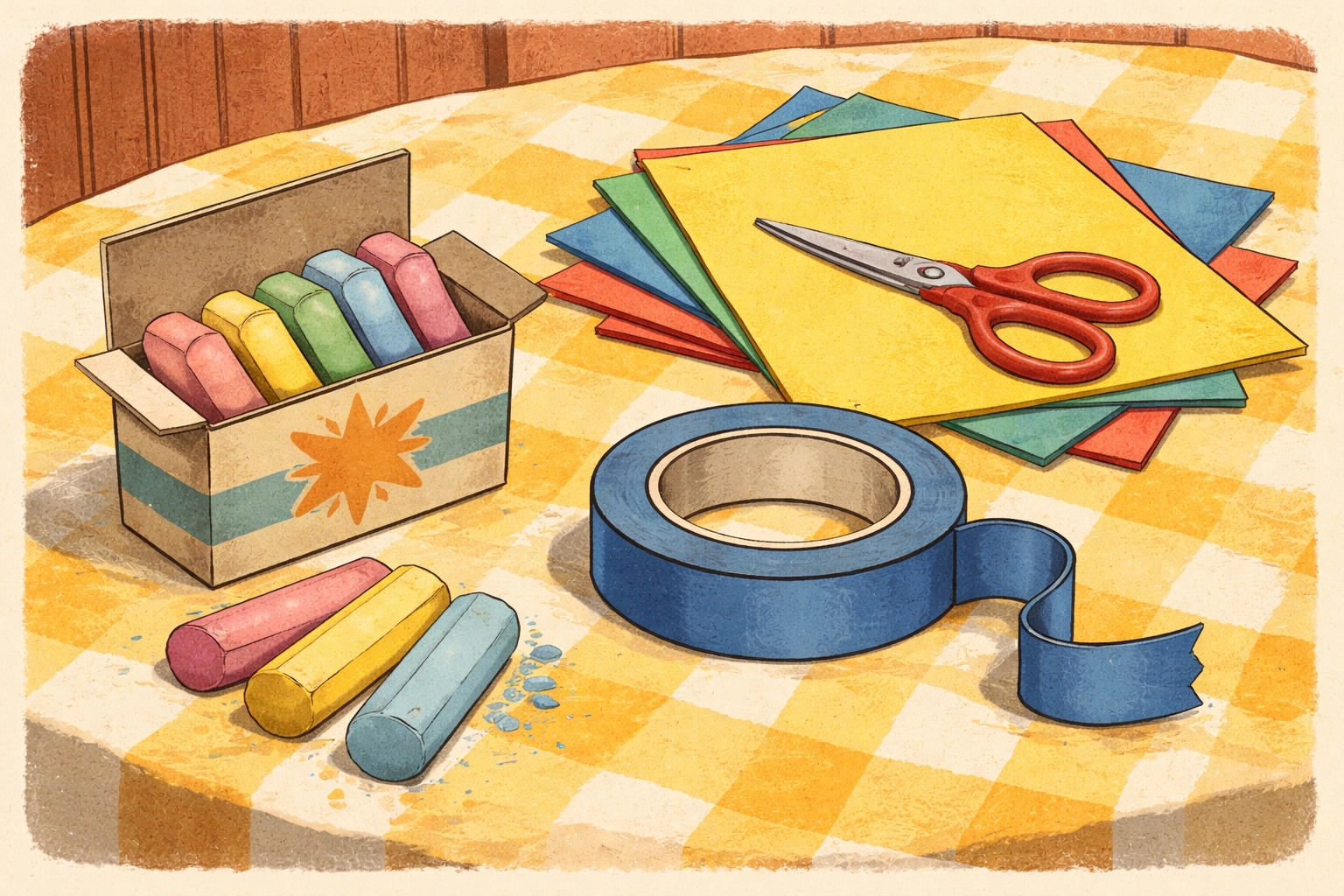
| Sidewalk chalk (outdoor) | $3–$5 | A basic pack works great |
| Painter's tape (indoor) | $4–$6 | Removes cleanly from most floors |
| Construction paper | $2–$4 | Optional for indoor shape cutouts |
| Scissors | Already own | For cutting paper shapes |
| Total | Under $10 | Most families have these on hand |
You really only need one of these options: chalk for outside or tape for inside. The construction paper route is nice if you want shapes you can reuse and store for future game sessions.
Best Age Range for the Shape Challenge Game
Recommended ages: 3 to 8 years old
This game scales surprisingly well across different developmental stages:
- Ages 3–4: Focus on basic shapes like circles, squares, and triangles. Keep instructions simple: "Jump on the circle!"
- Ages 5–6: Add more shapes (rectangles, ovals, diamonds, hexagons) and start asking about attributes: "Find a shape with four sides!"
- Ages 7–8: Introduce geometry vocabulary like "parallel sides," "right angles," and "vertices." Challenge them to explain their choices.
Younger toddlers around age 2 can participate with help, though they may treat it more like a jumping activity than a learning game: which is perfectly fine.
Time Estimate
| Phase | Duration |
|---|---|
| Setup (drawing shapes) | 10–15 minutes |
| Active play | 15–30 minutes |
| Total activity time | 25–45 minutes |
The beauty of this game is that setup becomes part of the fun. Kids often enjoy helping draw or tape the shapes, which extends the activity naturally.
How to Set Up the Shape Challenge Game
Step 1: Choose Your Play Area
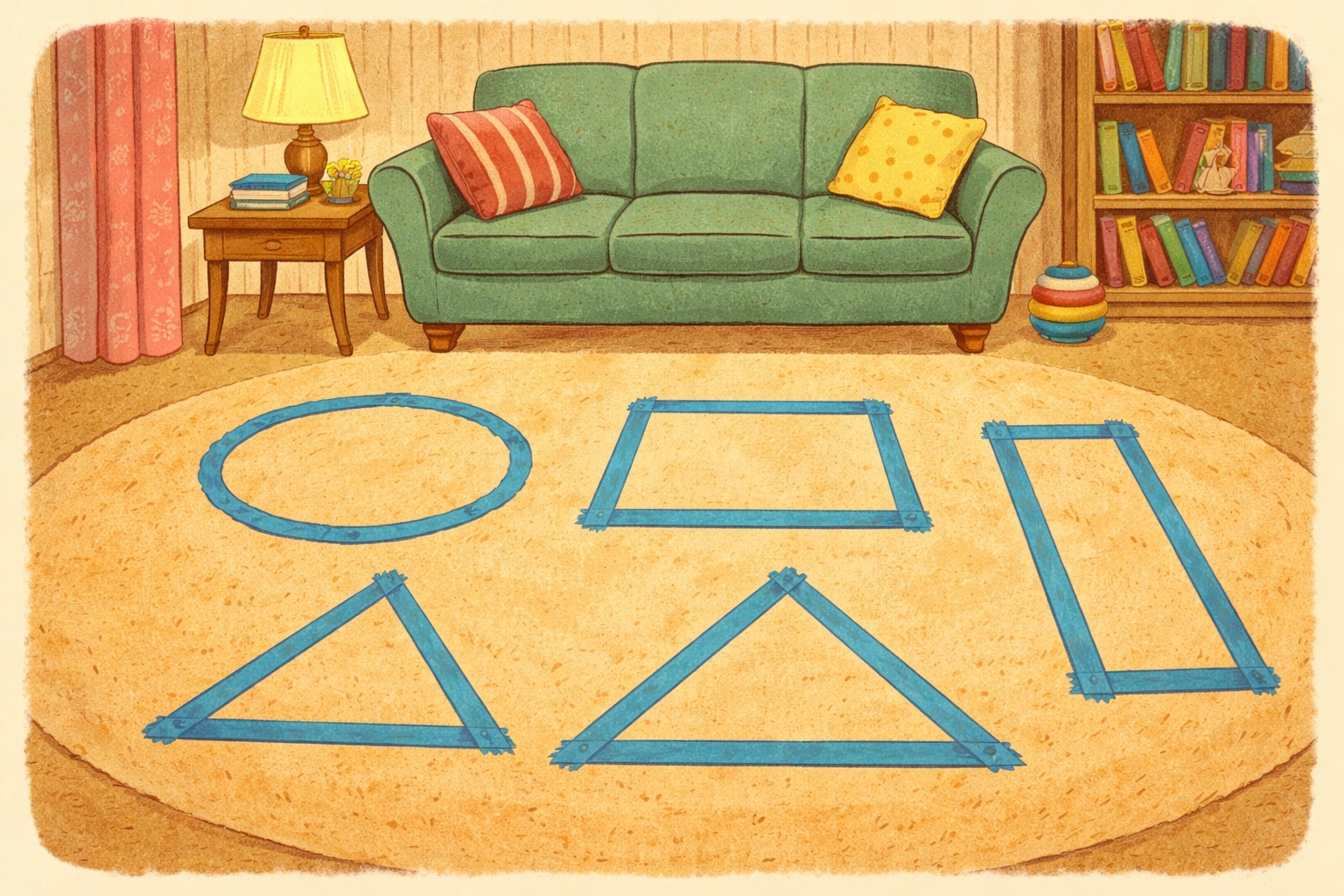
Find a space where kids can safely jump around. Outdoors, a driveway or sidewalk works well. Indoors, a living room with furniture pushed back, a hallway, or a basement floor gives you enough room.
Make sure the surface is flat and free of tripping hazards. If playing on hard floors indoors, you might want kids in socks or barefoot for better grip.
Step 2: Draw or Create Your Shapes
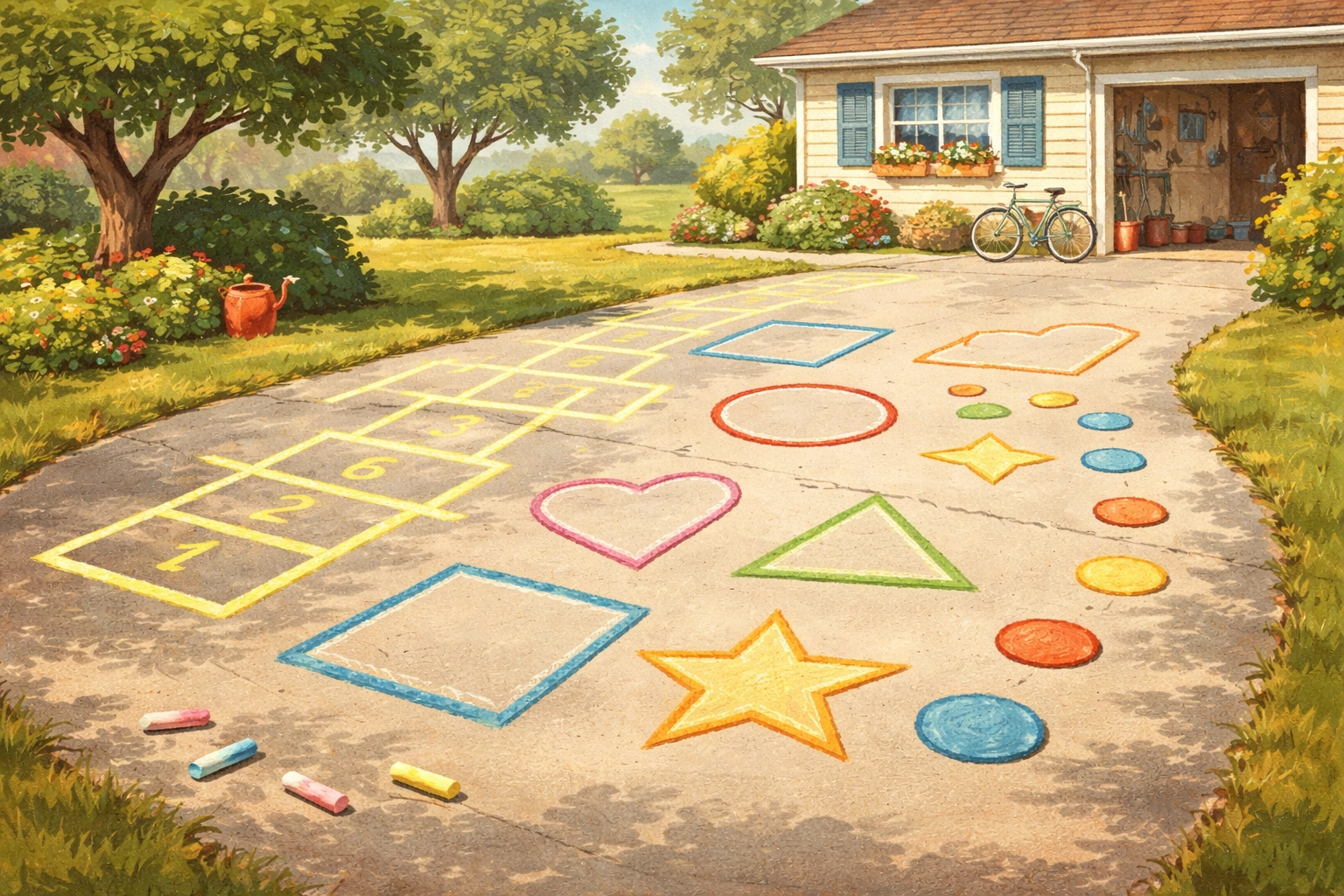
Create at least 6–10 shapes spread across your play area. Make them large enough for a child to stand inside comfortably: roughly 12 to 18 inches across works for most kids.
Basic shapes to include:
- Circle
- Square
- Triangle
- Rectangle
- Oval
- Diamond (rhombus)
For older kids, add:
- Hexagon
- Pentagon
- Trapezoid
- Parallelogram
Space shapes about 2–3 feet apart so kids can jump between them without colliding with each other or nearby furniture.
Step 3: Explain the "Hot Lava" Rule
Here's where the game gets exciting. Tell your kids that the floor between shapes is "hot lava" (or quicksand, or a river: whatever captures their imagination). The only safe spots are the shapes themselves.
When you call out a shape or description, they have to jump to that shape to avoid "burning" their feet. This simple premise transforms geometry practice into an adventure.
How to Play the Shape Challenge Game
Round 1: Basic Shape Calling (Beginner Level)
Start by simply calling out shape names:
- "Jump to a triangle!"
- "Find a circle!"
- "Hop to something square!"
Give kids a few seconds to look around and make their choice. If multiple kids are playing, they can race to see who reaches the correct shape first, or you can have them each find their own matching shape.
Tip: After each successful jump, ask your child to confirm their answer. "How did you know that was a triangle?" This reinforces the learning without feeling like a quiz.
Round 2: Attribute Challenges (Intermediate Level)
Once kids master basic shape names, shift to describing attributes instead:
- "Jump to a shape with three sides!"
- "Find something with four corners!"
- "Hop to a shape with no straight edges!"
This level requires kids to think about what makes each shape unique rather than just memorizing names. It's a subtle but meaningful jump in geometric thinking.
Round 3: Property Challenges (Advanced Level)
For older kids ready for real geometry vocabulary:
- "Find a shape with exactly one pair of parallel sides!" (trapezoid)
- "Jump to something with a right angle!" (square, rectangle)
- "Which shape has the most vertices?" (hexagon or pentagon, depending on your setup)
Don't worry if you need to refresh your own geometry knowledge before this round: we've all been there.
Variations to Keep the Game Fresh
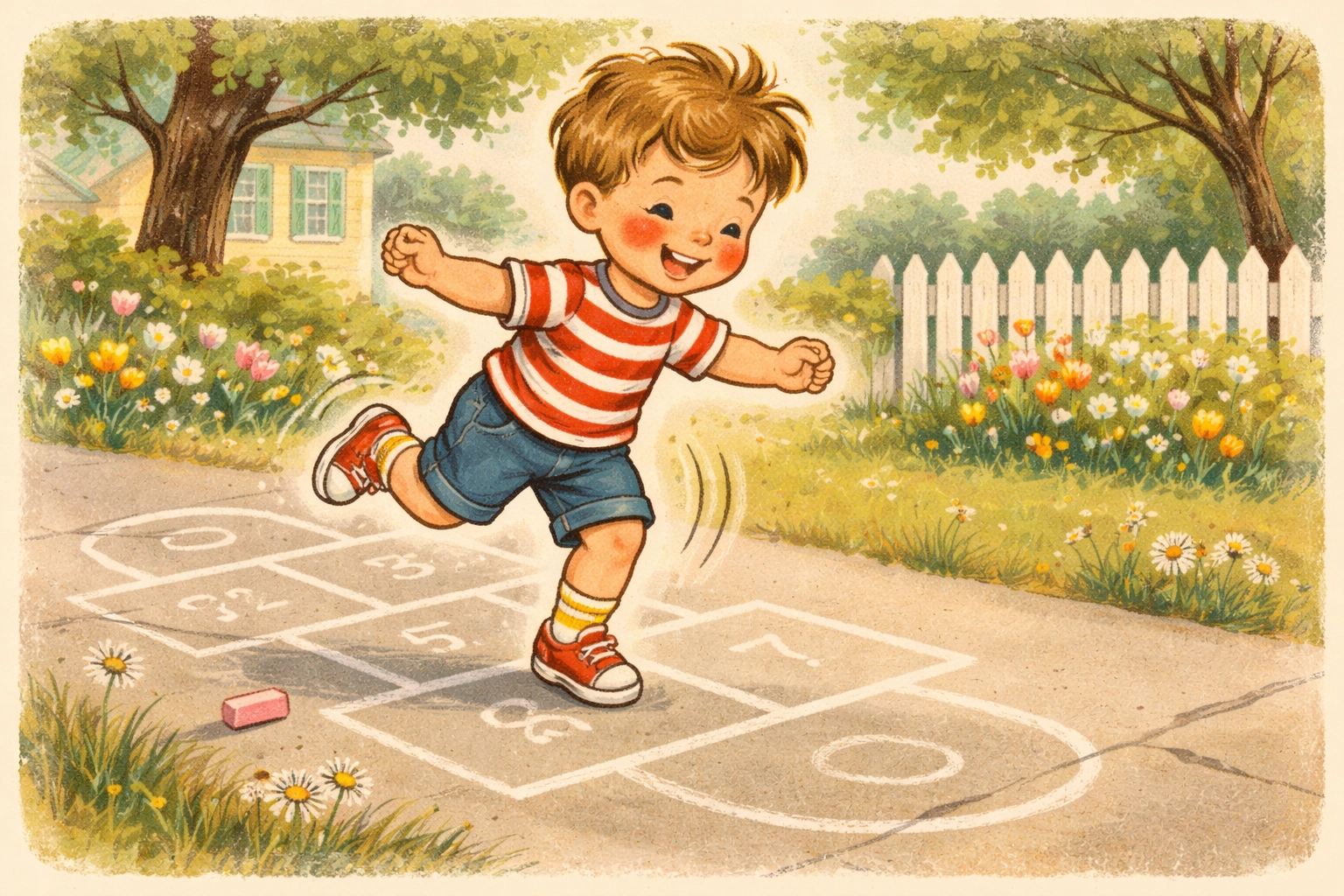
Shape Maze Hopscotch: Arrange shapes in a winding path. Kids must navigate from start to finish by only stepping on shapes you call out. Time them for added excitement.
Freeze Dance Shapes: Play music while kids dance around the shapes. When the music stops, call out a shape: everyone has to freeze on that shape or they're out for one round.
Shape Relay Race: Divide into teams. Call out a shape, and one player from each team races to touch it and return. First team back earns a point.
Bean Bag Toss: Instead of jumping, kids toss a bean bag or soft ball onto the shape you call out. Great for younger children still developing their jumping coordination.
Tips for Parents and Caregivers
Start easier than you think necessary. It's better for kids to feel confident and successful than frustrated. You can always increase difficulty as they warm up.
Celebrate wrong answers as learning moments. If a child jumps to a rectangle when you called for a square, use it as a chance to compare the two shapes together. "Great jump! Let's count the sides on this one and see if it's a square or something else."
Let kids take turns being the caller. This role reversal helps reinforce their learning and gives them ownership of the game. Plus, it's entertaining to see what challenges they come up with.
Rotate shape positions between sessions. Kids sometimes memorize locations rather than actually identifying shapes. Moving things around keeps them thinking.
Frequently Asked Questions
What if my child doesn't know their shapes yet?
Start with just two or three shapes and introduce them before playing. Point to each one, name it, trace the edges together, and count the sides. Then play a very simple version with those shapes only.
Can I play this game with just one child?
Absolutely. Time their jumps, challenge them to beat their own records, or play alongside them as a teammate rather than just calling out instructions.
How do I make shapes stick to carpet indoors?
Painter's tape works on most low-pile carpets. For thicker carpet, cut shapes from construction paper and use small pieces of double-sided tape underneath.
What if my play space is too small?
Scale down the shapes and make them closer together. Kids can step or hop rather than leap. Even a hallway can work if you arrange shapes in a line.
Is this game appropriate for classrooms or playgroups?
Very much so. It works well with groups up to about 8–10 children. With larger groups, create multiple shape stations or have kids take turns in smaller batches.
How do I introduce more advanced geometry concepts?
Build vocabulary gradually. Start using terms like "sides," "corners," and "edges" consistently. Then add "parallel," "perpendicular," and "vertices" as kids show readiness.
Can older kids still enjoy this game?
Older elementary kids often enjoy being the caller or creating trick questions for adults. You can also add math challenges: "Jump to a shape where the number of sides times two equals eight!"
What's the best surface for playing outdoors?
Concrete driveways and sidewalks work best for chalk. Avoid asphalt if it's too rough: chalk wears down quickly and drawings become hard to see.
For more hands-on activities your family can enjoy together, explore our full collection of kids crafts at Tierney Family Farms.