



What's the Best Way to Create a Pasta Construction Site for Kids?
To set up a mini construction site with dry pasta, fill a shallow bin or container with various dried pasta shapes, add toy construction vehicles like dump trucks and diggers, and let your little builders scoop, haul, and dump to their heart's content. This sensory-rich activity typically costs under $5, keeps kids engaged for 30 minutes or more, and transforms ordinary pantry staples into an imaginative work zone that develops fine motor skills and creative thinking.
If you've ever watched a toddler become absolutely mesmerized by a real construction site, the trucks, the digging, the controlled chaos, you already know the appeal. This DIY version brings that fascination right to your kitchen table without the noise complaints from neighbors.
Why Dry Pasta Makes an Ideal Construction Material
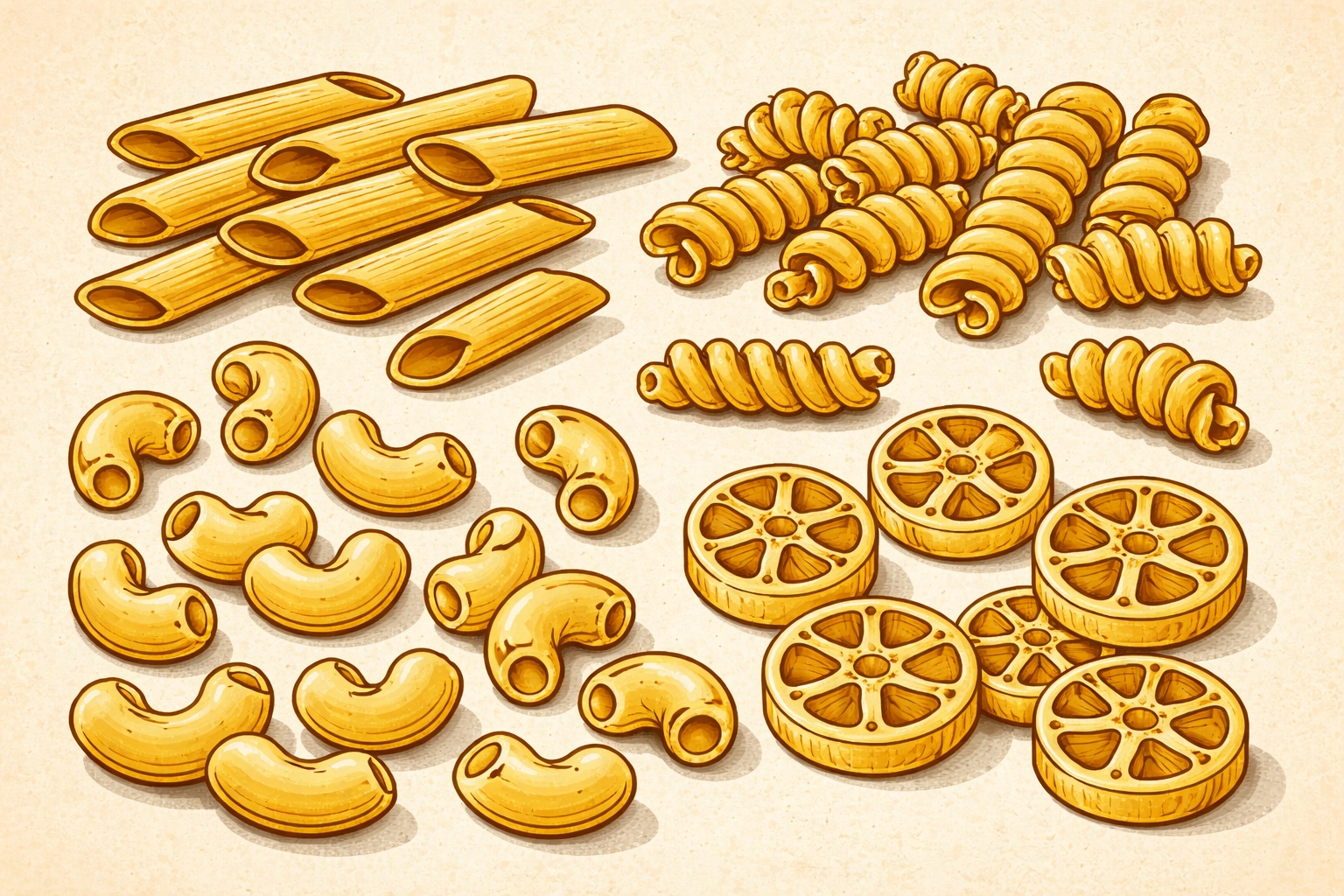
Pasta might seem like an unusual choice for a play material, but it's actually one of the most versatile sensory fillers you can find in your pantry. Different pasta shapes create varied textures and sounds, penne rolls differently than elbow macaroni, and wagon wheels stack in ways that rigatoni simply can't.
The weight and feel of dry pasta provides satisfying tactile feedback for little hands. Kids can scoop it, pour it, rake through it, and listen to it tumble into dump trucks. Unlike sand, it's relatively easy to sweep up. Unlike rice, the larger pieces are less likely to end up in tiny ears or noses.
Materials You'll Need
Here's everything you'll need to get this construction site up and running:
| Material | Estimated Cost | Notes |
|---|---|---|
| Dry pasta (2-3 boxes, mixed shapes) | $2-4 | Penne, rotini, elbow, and wagon wheels work well |
| Shallow bin or container | $0-3 | Use a baking dish, storage bin, or even a cardboard box lid |
| Toy construction vehicles | $0-5 | Dump trucks, excavators, bulldozers, whatever you have |
| Measuring cups and spoons | $0 | From your kitchen drawer |
| Small containers or bowls | $0 | For loading and dumping stations |
| Optional: Food coloring and rubbing alcohol | $0-2 | For dyeing pasta different colors |
Total estimated cost: $2-10 (often free if you have pasta and toys on hand)
Age Range and Time Investment
Best enjoyed by ages: 2-6 years old
Skill development benefits: Fine motor control, imaginative play, cause-and-effect understanding, vocabulary building (scoop, dump, haul, load)
Setup time: 5-10 minutes
Play time: 20-45 minutes (often longer with older kids)
Cleanup time: 5-10 minutes
Younger toddlers tend to enjoy the pure sensory experience, scooping and pouring pasta between containers. Preschoolers and early elementary kids often create elaborate storylines, building roads, making delivery routes, and constructing entire imaginary worksites.
Step-by-Step Setup Instructions
Step 1: Choose Your Container
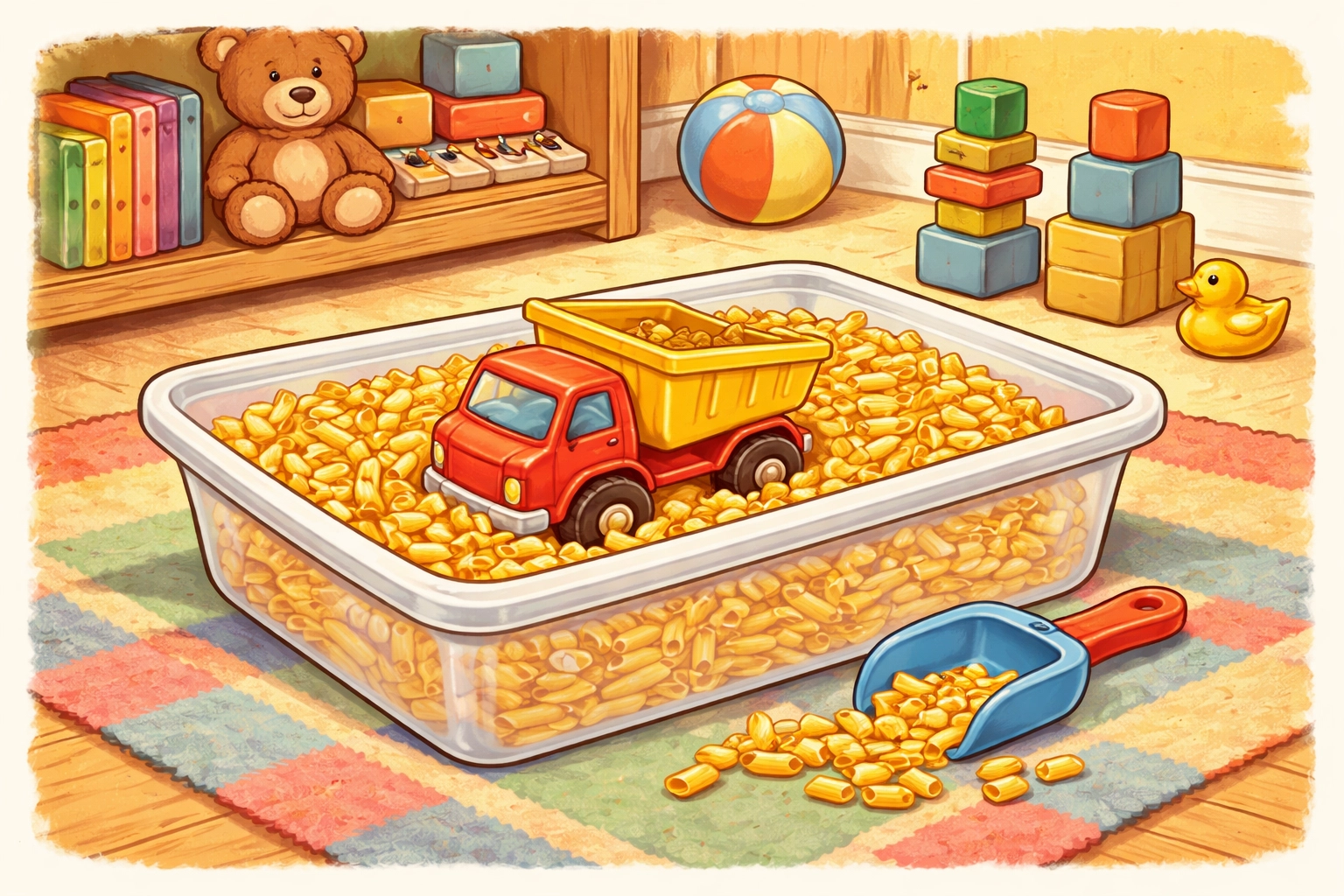
Select a bin that's large enough for vehicles to move around but shallow enough for small arms to reach across. A 9×13 baking dish works beautifully for tabletop play. A large under-bed storage container creates a more expansive worksite. For really ambitious projects, a plastic kiddie pool in the backyard can become a full-scale operation.
Consider where you'll set up, a table, the floor, or outside. Wherever you choose, placing an old sheet or tablecloth underneath can make cleanup much simpler.
Step 2: Mix Your Pasta Varieties
Pour 2-3 boxes of different pasta shapes into your container. The variety matters here, mixing shapes creates visual interest and different handling experiences. Larger shapes like rigatoni or shells work well as "boulders" to move. Smaller shapes like elbow macaroni feel more like gravel or sand.
Fill the container about 2-3 inches deep. You want enough pasta that vehicles can actually dig and scoop, but not so much that it constantly spills over the edges.
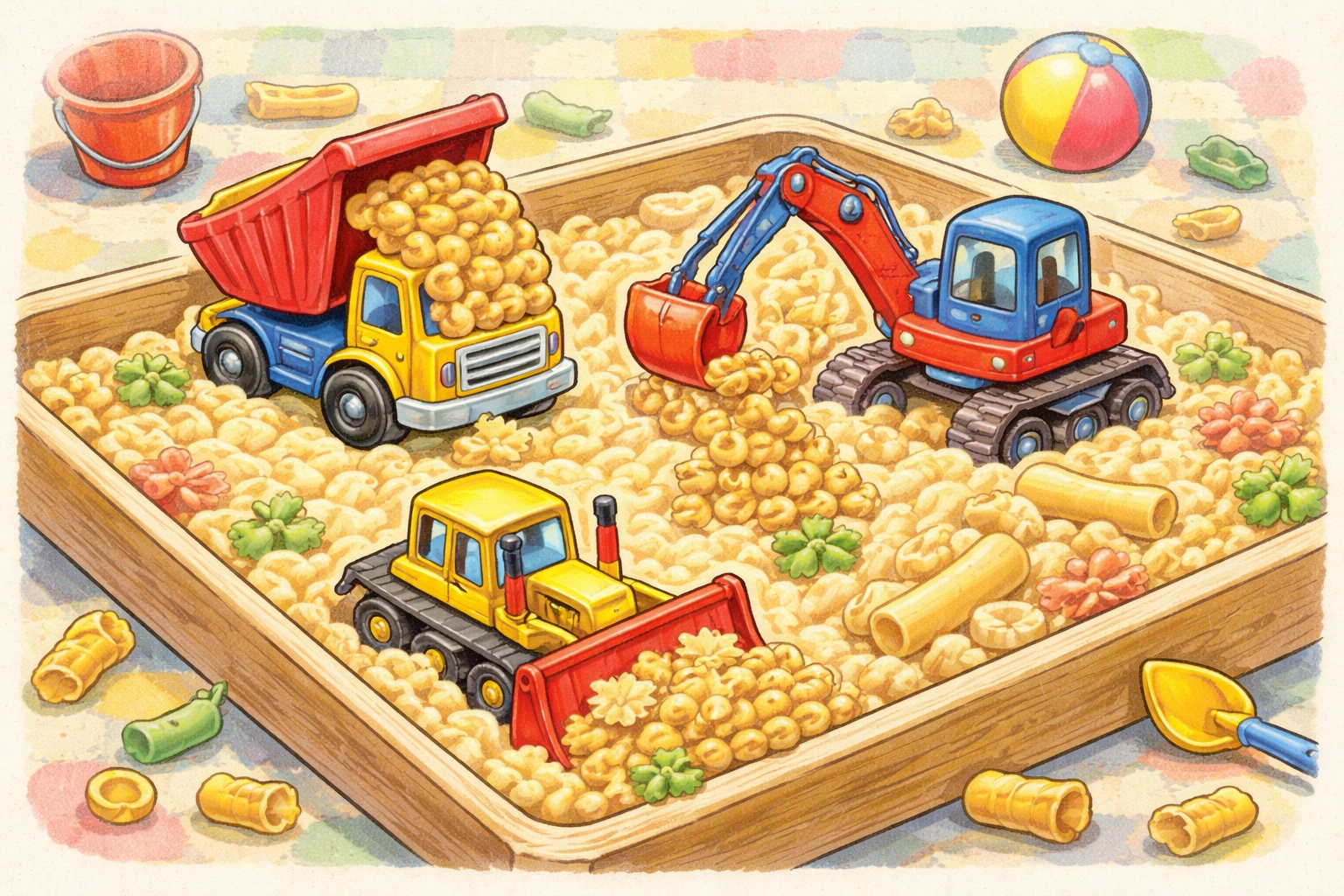
Step 3: Add Your Construction Fleet
Place toy construction vehicles around and in the bin. Classic choices include:
- Dump trucks for hauling loads
- Excavators or diggers for scooping
- Bulldozers for pushing pasta around
- Front loaders for big scoops
- Cement mixers (even though there's no cement, kids don't mind)
Don't have construction vehicles? Toy cars work too. So do plastic dinosaurs, if your child decides the construction site needs some prehistoric supervision.
Step 4: Set Up Work Stations
Create purpose within the play by adding small containers as "loading zones" or "delivery stations." A few measuring cups become official scooping tools. Small bowls can be sites where pasta gets delivered. An empty cardboard tube transforms into a tunnel or chute.
This structure gives kids direction without limiting imagination. They might follow your suggested stations, or they might completely ignore them and create their own, both outcomes are perfectly fine.
Step 5: Introduce the Activity
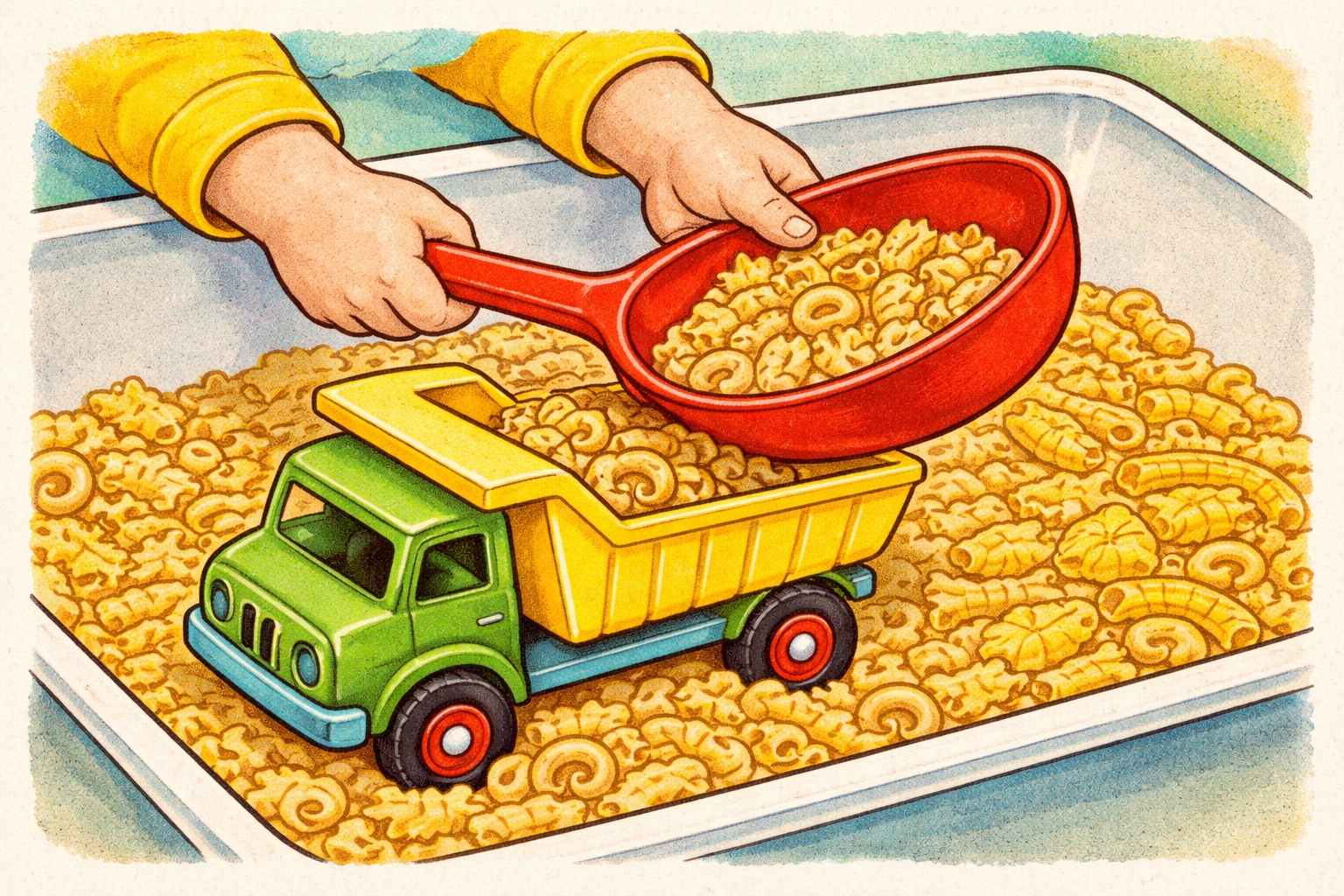
For younger kids, demonstrate scooping pasta into a dump truck and dumping it somewhere else. That's usually all the instruction needed before they dive in. Older kids might appreciate a "mission", can you move all the penne from this side to that side using only the excavator?
Then step back and let the construction commence.
Optional: Dyeing Pasta for Extra Visual Appeal
If you want to add some color to your construction site, dying pasta is straightforward:
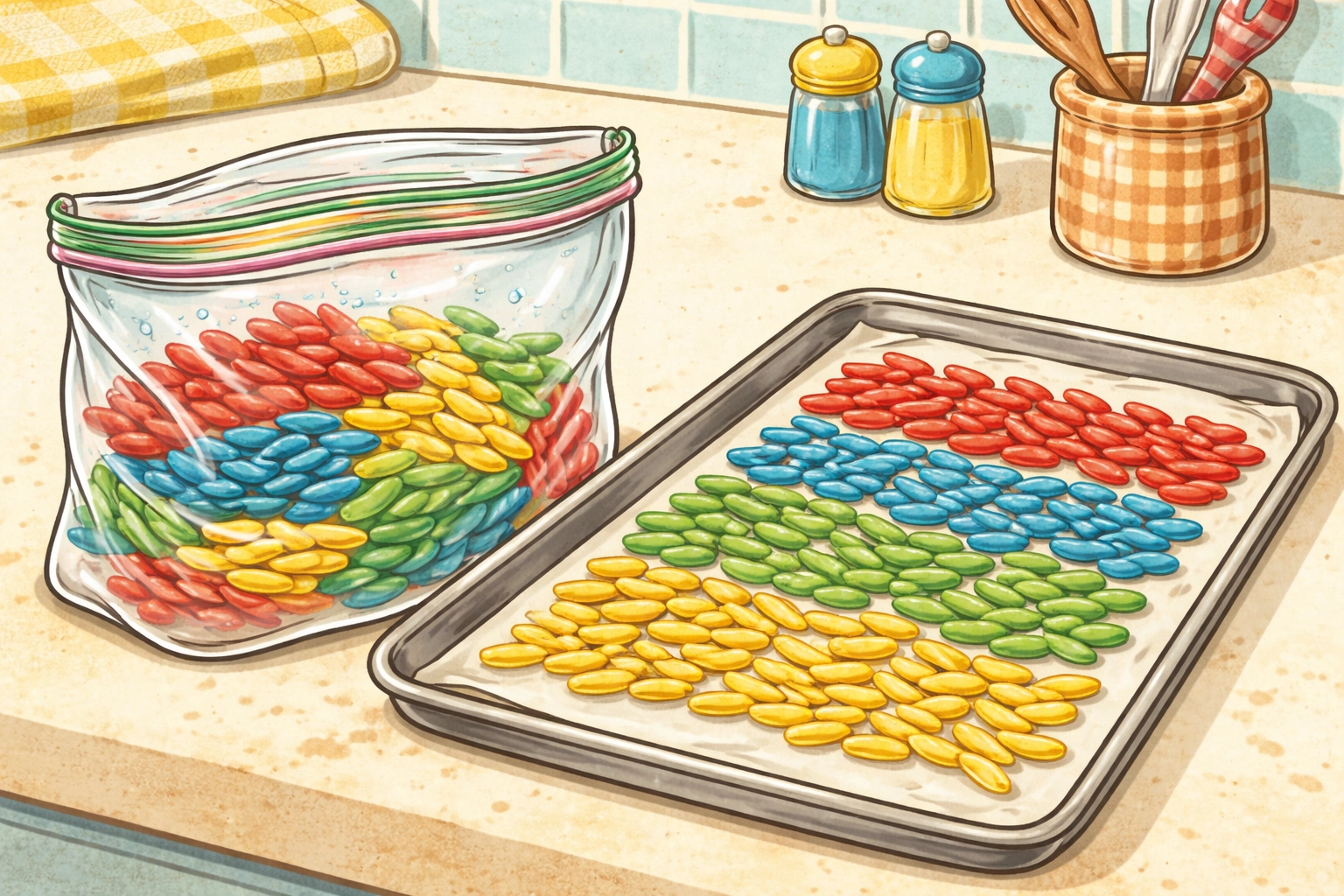
- Place dry pasta in a gallon-sized ziplock bag
- Add one capful of rubbing alcohol and 7-8 drops of food coloring
- Seal the bag and shake vigorously until color distributes evenly
- Spread pasta on a parchment-lined baking sheet
- Let dry overnight before use
Black pasta creates a realistic "asphalt" look. Brown mimics dirt. Yellow can represent sand. Mixing dyed and undyed pasta creates visual variety that can spark new play scenarios.
Tips for Extending the Play
Add natural materials: Small pebbles, twigs, or leaves from the yard can become landscape elements alongside the pasta.
Introduce problems to solve: "Oh no, the road is blocked! How can we clear it?" Challenges keep kids engaged longer.
Rotate vehicles: Swap out which trucks are available from day to day to refresh interest.
Create a storage system: Keep your pasta construction materials in a sealed bin for repeated use. The same pasta can last for weeks or months of play.
Move it outdoors: This activity works wonderfully on a porch or patio where spilled pasta can simply be swept up and returned to the bin.
Cleanup Made Simple
One of the beauties of dry pasta is that it's not messy in the sticky, staining sense. When playtime ends:
- Have kids help scoop loose pasta back into the bin (this is part of the fun for many children)
- Sweep or vacuum any escaped pieces
- Store the bin with a lid for next time
Pasta that's been handled but not wet or contaminated can be stored and reused many times. Just keep it dry and check periodically for any pieces that need replacing.
Frequently Asked Questions
Is this activity safe for toddlers who still put things in their mouths?
Dry pasta is non-toxic, but it can be a choking hazard for very young children. For toddlers who mouth objects, close supervision is essential, or consider waiting until they've passed that developmental stage.
How long will the pasta last for repeated play?
If kept dry and stored in a sealed container, pasta can last for several months of play sessions before it starts breaking down or getting too dusty.
Can I use pasta that's past its expiration date?
Absolutely. Expired dry pasta that you wouldn't want to eat makes perfectly good play material. This is a great way to use up forgotten pantry items.
What if my child wants to mix in water or paint?
That transforms it into a one-time sensory activity rather than a reusable one. Some families keep separate pasta for "dry play" and allow wet messy play as an occasional special activity.
Do I need to buy new construction toys for this?
Not at all. Any toy vehicles work, and many household items can substitute: plastic containers become dump trucks, spoons become scoops.
How do I keep the activity challenging for older kids?
Add building challenges, timing elements, or engineering problems. Can they build a ramp that dumps pasta into a specific container? Can they create a loading system that moves pasta from one end to the other?
What other fillers work besides pasta?
Dried beans, oats, kinetic sand, and even shredded paper can create similar sensory experiences with different textures and sounds.
Is there an educational component I can add?
Counting, sorting by shape, pattern-making, and vocabulary building all happen naturally during play. You can also introduce simple physics concepts like gravity and momentum.
Looking for more hands-on activities that turn everyday materials into engaging play? Check out our full collection of kids crafts for ideas that keep little hands busy and imaginations running.