



What's the best way to go camping when you can't go outside? Transform your living room into a wilderness wonderland! Indoor camping offers families a delightful opportunity to nurture self-reliance and spark that wide-eyed sense of wonder, all without worrying about rain clouds, chilly nights, or wayward mosquitoes.
Picture this: a cozy tent rising from the carpet like a mountain lodge, fairy lights twinkling overhead like distant stars, and little adventurers learning to "rough it" in the comfort of home. It's the stuff of storybook dreams, and you might be surprised how much your family could learn along the way.
Why Does Indoor Camping Help Children Grow?
Before we pitch our imaginary tents, let's talk about why this adventure matters.
Research from the American Academy of Pediatrics suggests that imaginative play often helps children develop problem-solving skills, emotional regulation, and creative thinking. When youngsters pretend to set up camp, build a fire (safely, of course!), and navigate the "wilderness," they're practicing self-reliance in a low-stakes environment.
Indoor camping also tends to encourage cooperation. Someone might need to hold the blanket while another secures it with clothespins. One child could be the "fire keeper" while a sibling prepares trail snacks. These small responsibilities often help children feel capable and confident, character traits that may serve them well for years to come.
And let's not forget the wonder! There's something magical about transforming an ordinary room into an extraordinary landscape. That sense of possibility? It's the same spark that makes gardening, science experiments, and outdoor exploration so meaningful.
What Materials Do You Need for Indoor Camping?
Good news, fellow adventurers, you likely have most of these supplies already! Here's a handy table to help you gather your gear:
| Item | Estimated Cost | Notes |
|---|---|---|
| Blankets & sheets | Household item | The bigger, the better for tent-building |
| Pillows & cushions | Household item | For tent walls and cozy seating |
| Clothespins or binder clips | Under $3 | Helpful for securing blanket forts |
| Flashlights | Under $5 | One per camper adds to the fun |
| Fairy lights (battery-operated) | Under $8 | Creates a starry atmosphere |
| Glow sticks | Under $5 | Safe, mess-free "campfire" glow |
| Sleeping bags or extra blankets | Household item | For snuggling during story time |
| Stuffed animals | Household item | Every camp needs wildlife! |
| Paper, crayons, scissors | Household item | For camp crafts and signs |
| Snacks (trail mix, crackers, fruit) | Under $10 | Campfire cuisine! |
Total estimated cost: Under $10 (or free if you're using household items!)
How Do You Set Up an Indoor Campsite? A Step-by-Step Guide
Step 1: Choose Your Campground
Scout your living room, playroom, or bedroom for the perfect spot. You'll want a space large enough to build a tent or fort, with room nearby for a "campfire circle" and activity area. Clear away furniture and toys to create your wilderness clearing.
Step 2: Build Your Tent or Fort
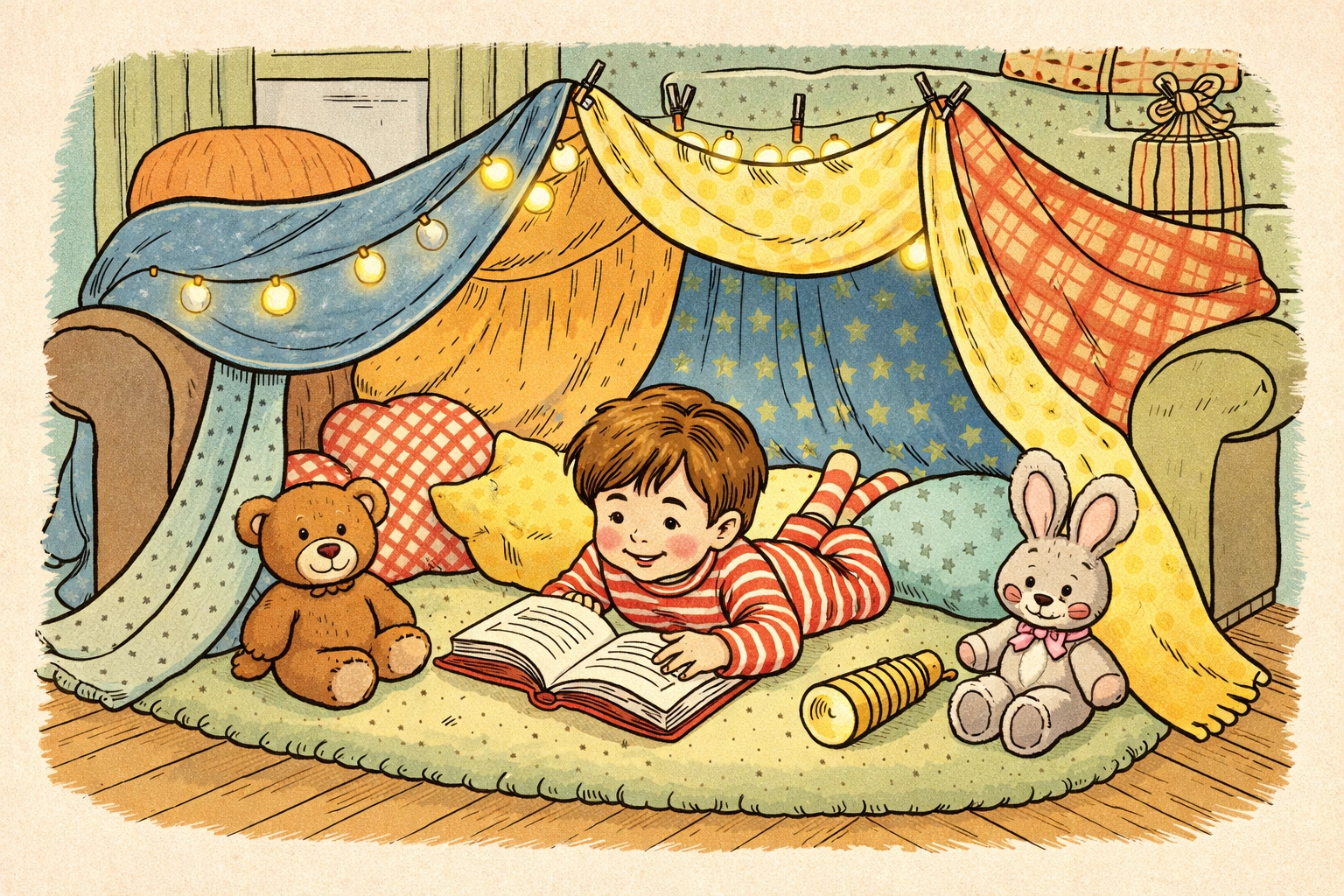
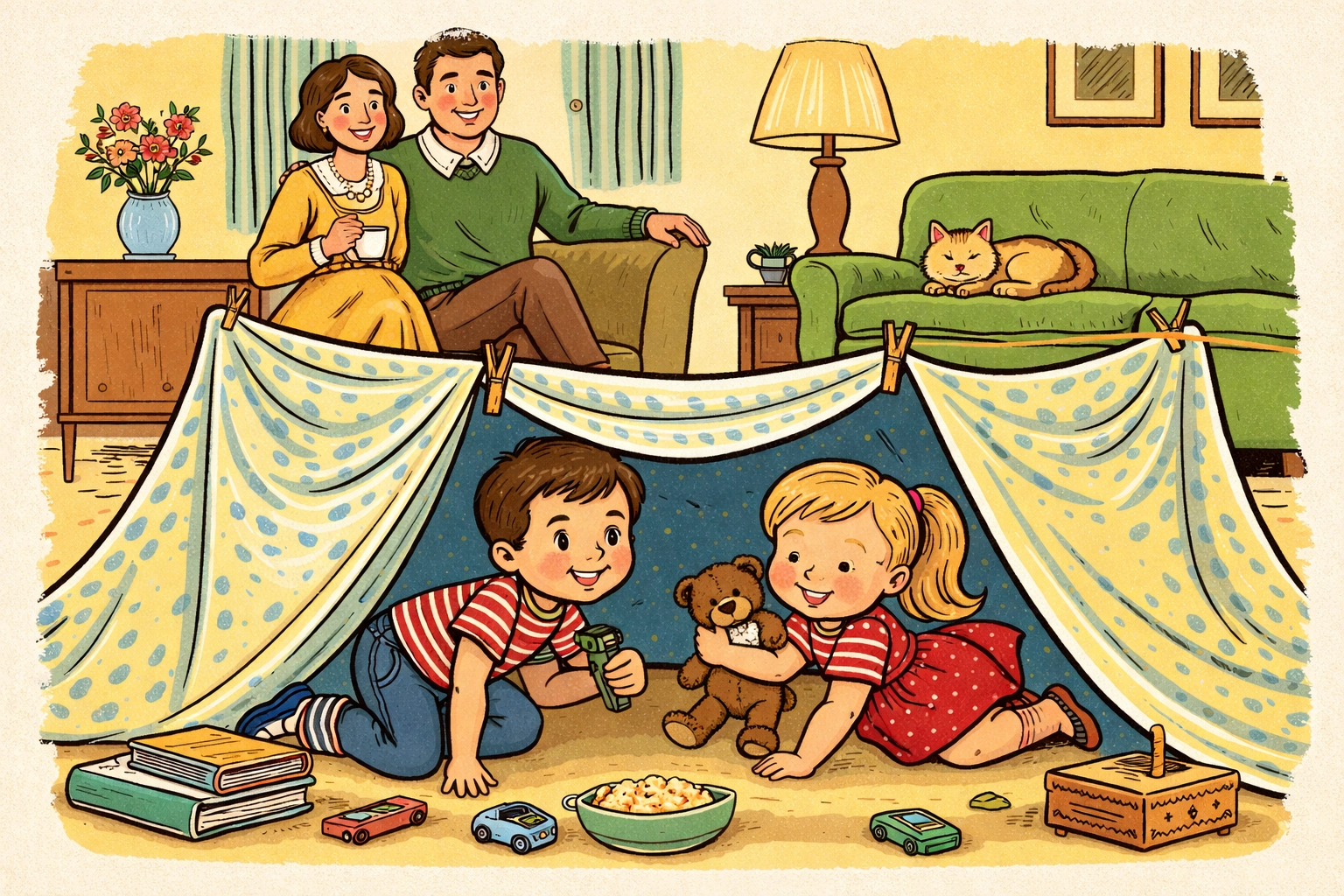
You could use an actual camping tent if you have one, but a blanket fort works beautifully! Drape sheets over chairs, sofas, or a clothesline strung between two points. Secure the edges with clothespins or heavy books. Pile pillows inside for a cozy floor.
Tip: Let children lead the construction when possible. Figuring out how to make a blanket stay put often builds problem-solving skills and a sense of accomplishment.
Step 3: Create Your Starry Sky
String battery-operated fairy lights around the ceiling or drape them inside the tent. If you have glow stars, stick them overhead. The soft glow tends to transform even the most familiar room into something enchanted.
Step 4: Establish Camp Zones
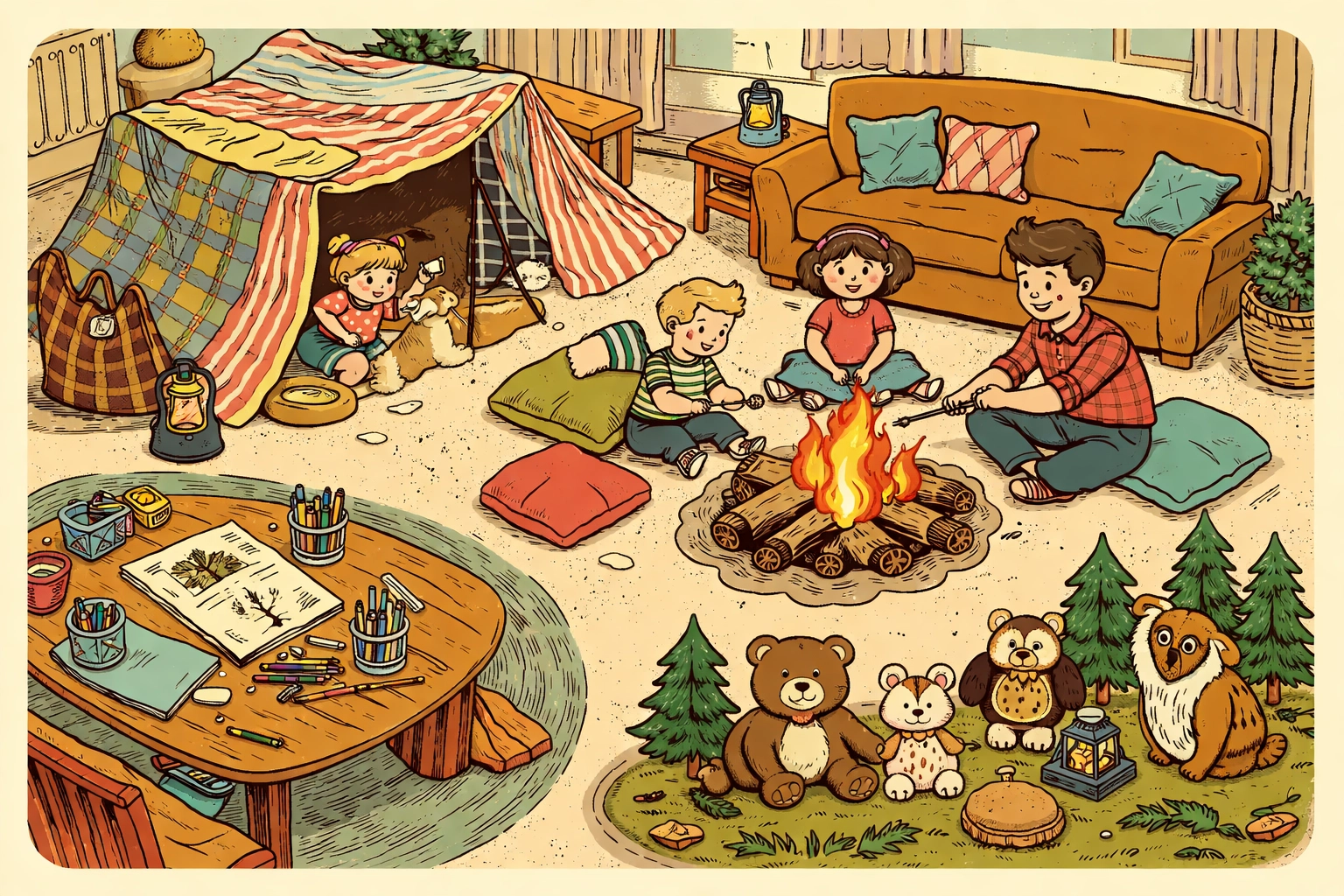
Consider setting up distinct areas, just like a real campsite:
- The Tent: For resting, reading, and sleeping
- The Campfire Circle: For stories, songs, and snacks
- The Activity Station: For crafts, games, and nature journals
- The "Wildlife Area": Arrange stuffed animals around the room as friendly forest creatures
Step 5: Add Atmosphere
Play nature sounds on a phone or speaker, crickets chirping, owls hooting, a gentle stream. This small touch often helps little campers feel like they've truly ventured into the great outdoors.
What Are Some Indoor-Safe "Campfire" Ideas?
Real flames and living rooms don't mix, but there are plenty of ways to capture that campfire magic safely!
The Flashlight Campfire
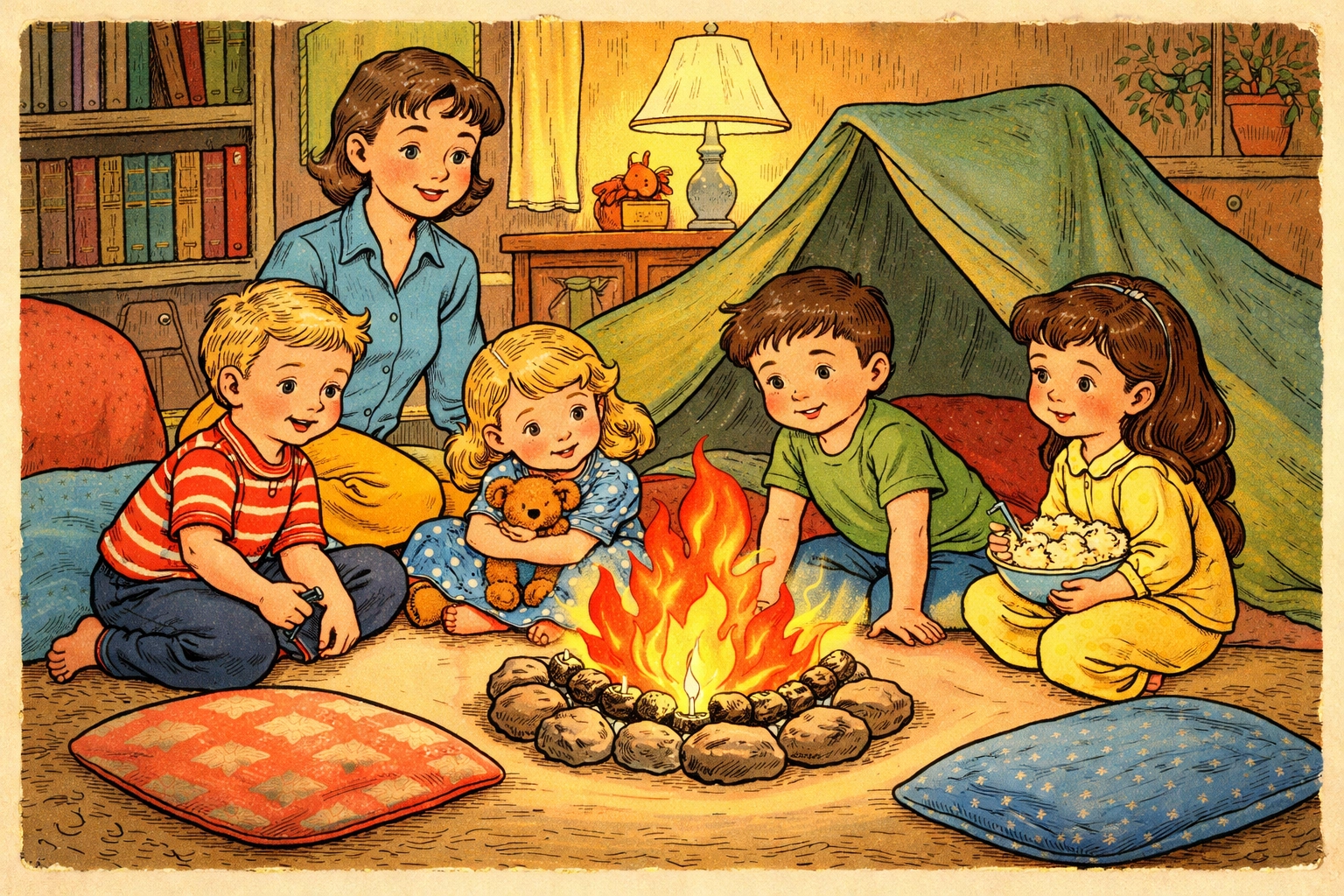
Gather several flashlights and point them upward inside a circle of orange, red, and yellow tissue paper. The light glowing through the paper creates a surprisingly convincing "fire" effect.
The Fairy Light Fire Pit
Coil a string of warm-toned fairy lights into a pile and surround them with crumpled brown paper "logs." Safe, beautiful, and perfect for gathering around.
The Glow Stick Bonfire
Crack a few glow sticks and arrange them in a teepee shape. Children often love watching them glow in a darkened room!
The Paper Flame Craft
Cut flame shapes from red, orange, and yellow construction paper. Tape or glue them to cardboard tubes (your "logs") and arrange in a circle. This version doubles as a craft project!
What Activities Work Well for Indoor Camping?
Once your campsite is ready, the adventure truly begins. Here are some ideas to keep the wonder alive:
Storytelling by "Firelight": Take turns telling silly, spooky, or imaginative tales. You might be surprised what stories your little ones dream up!
Stargazing Practice: Use a star chart or constellation app to learn about the night sky. Later, you could take this knowledge outside on a clear evening.
Camp Charades: Act out camping activities, fishing, roasting marshmallows, spotting a bear, while others guess.
Nature Journals: Even indoors, children can draw the "wildlife" (stuffed animals), design camp maps, or write about their adventure.
Trail Mix Station: Set out small bowls of cereal, raisins, nuts (if no allergies), and chocolate chips. Let each camper mix their own trail snack.
For more hands-on family projects, you might enjoy our guide to making a DIY mini greenhouse with plastic bottles or regrowing kitchen scraps.
Frequently Asked Questions
What age is indoor camping best for?
Indoor camping tends to work well for children ages 3 and up, though younger toddlers might enjoy shorter sessions with extra supervision.
Can indoor camping help kids prepare for real camping?
It often does! Practicing tent setup, flashlight use, and "roughing it" at home could help ease the transition to outdoor adventures.
How long should an indoor camping adventure last?
That depends on your family! Some enjoy a few hours of daytime play, while others might camp overnight. Follow your children's energy and interest.
Is it safe to sleep in a blanket fort?
Generally, yes, just ensure the structure is stable, avoid covering faces with fabric, and keep pathways clear for nighttime bathroom trips.
What if my child gets scared at night?
Keep a nightlight nearby and remind them they're still safe at home. The cozy, familiar setting often helps ease fears.
Can we include pets in indoor camping?
Many families do! Just supervise interactions and ensure pets are comfortable with the setup.
What snacks work best for indoor camping?
Trail mix, fruit, crackers, cheese, and marshmallows (for pretend s'mores!) are popular choices.
How do I make indoor camping educational?
Incorporate constellation learning, nature journaling, storytelling, and cooperative problem-solving into your activities.
Disclaimer
The activities described in this blog post are intended for educational and entertainment purposes. Adult supervision is recommended for all children's activities. Tierney Family Farms is not responsible for any injuries, accidents, or damages that may occur. Please assess all activities for age-appropriateness and safety before beginning.
References
- Ginsburg, K. R. (2007). "The Importance of Play in Promoting Healthy Child Development and Maintaining Strong Parent-Child Bonds." Pediatrics, American Academy of Pediatrics.
- Hirsh-Pasek, K., & Golinkoff, R. M. (2003). Einstein Never Used Flash Cards: How Our Children Really Learn: and Why They Need to Play More and Memorize Less. Rodale Books.
Happy camping, adventurers! May your living room wilderness be filled with wonder, laughter, and just the right amount of imaginary s'mores. 🏕️