



The quick answer: You can grow fresh herbs indoors all winter long using three simple methods: a sunny windowsill setup, a countertop grow light station, or a water-based propagation system. Each approach needs just a few basic supplies, works great for families, and keeps homegrown flavor within arm's reach even when snow is piling up outside.
Winter doesn't have to mean the end of fresh herbs. While your outdoor garden sleeps under a blanket of frost, your kitchen can become a tiny greenhouse bursting with basil, mint, parsley, and more. The best part? Kids absolutely love watching herbs sprout and grow: and they're way more excited to eat dinner when they've snipped the garnish themselves.
Let's dig into three beginner-friendly ways to keep your family's herb supply going strong until spring.
Method 1: The Sunny Windowsill Garden
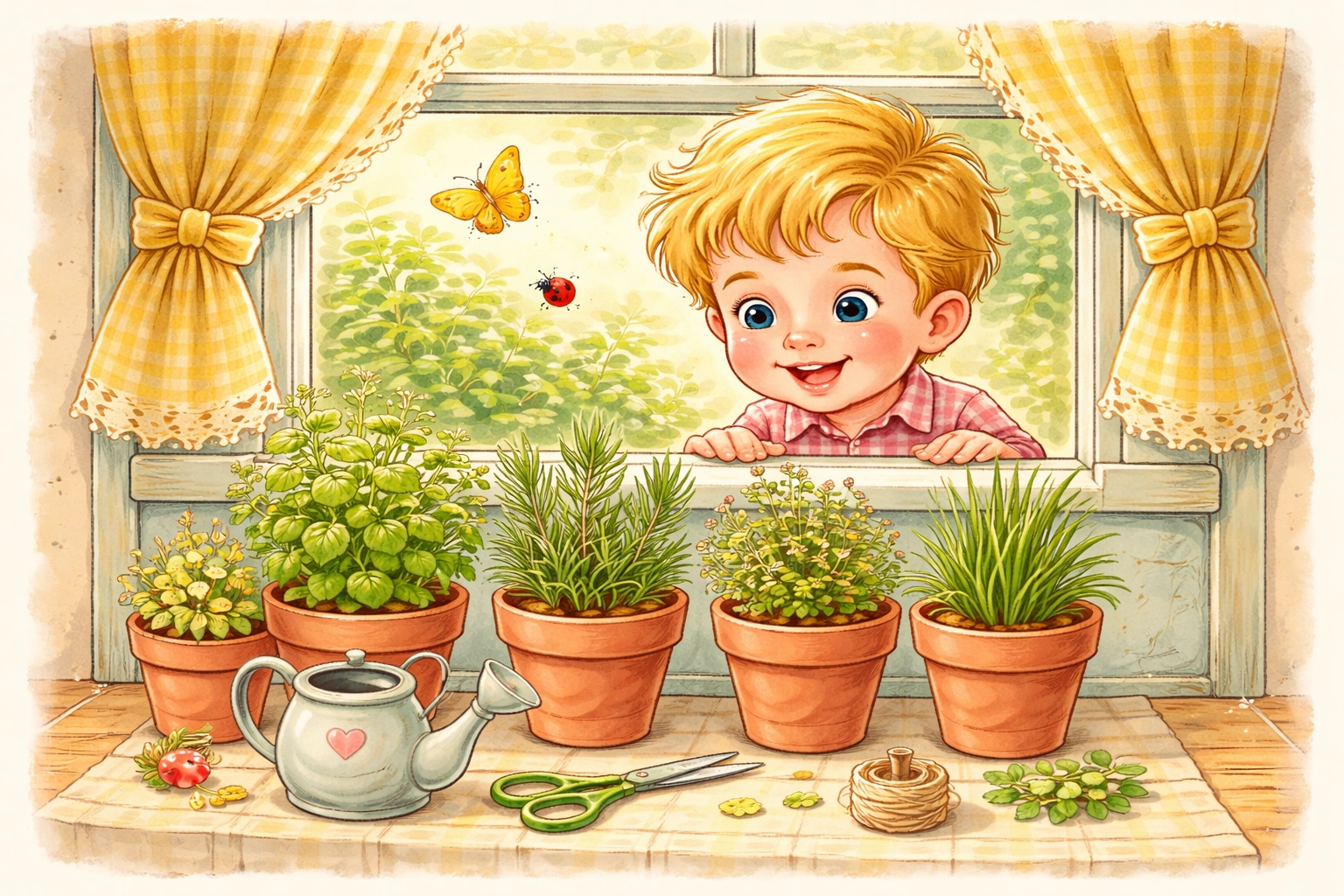
This is the classic approach, and it works beautifully if you've got a south-facing window that gets good light.
What You'll Need
- Small containers (at least 6 inches deep) with drainage holes
- Quality potting soil (not garden soil: this matters!)
- Small stones or pebbles for drainage
- Herb seedlings or seeds
- A sunny windowsill
Step-by-Step Setup
Step 1: Choose your containers. Terra cotta or clay pots work especially well for herbs because they're porous: they let the soil dry out properly between waterings, which most herbs prefer. Grab a few in different sizes to create a charming little herb village on your sill.
Step 2: Add a thin layer of pebbles to the bottom of each pot, then fill with potting soil, leaving about an inch of space at the top.
Step 3: Plant one herb per small pot. If you're using a wider container, you can group a few herbs together: but give mint its own pot. Trust me on this one. Mint is a garden bully and will take over everything if given the chance.
Step 4: Water gently until you see moisture drip from the drainage holes, then place your pots in that sunny window spot.
Step 5: Rotate your pots every few days so all sides get even light. This keeps your herbs from getting lopsided and reaching desperately toward the sun like they're trying to escape.
Best Herbs for Windowsills
Some herbs handle lower light conditions better than others. If your window doesn't get full sun all day, stick with:
- Parsley
- Mint
- Chives
- Cilantro
These forgiving herbs will still thrive with just a few hours of direct light.
Method 2: The Countertop Grow Light Station
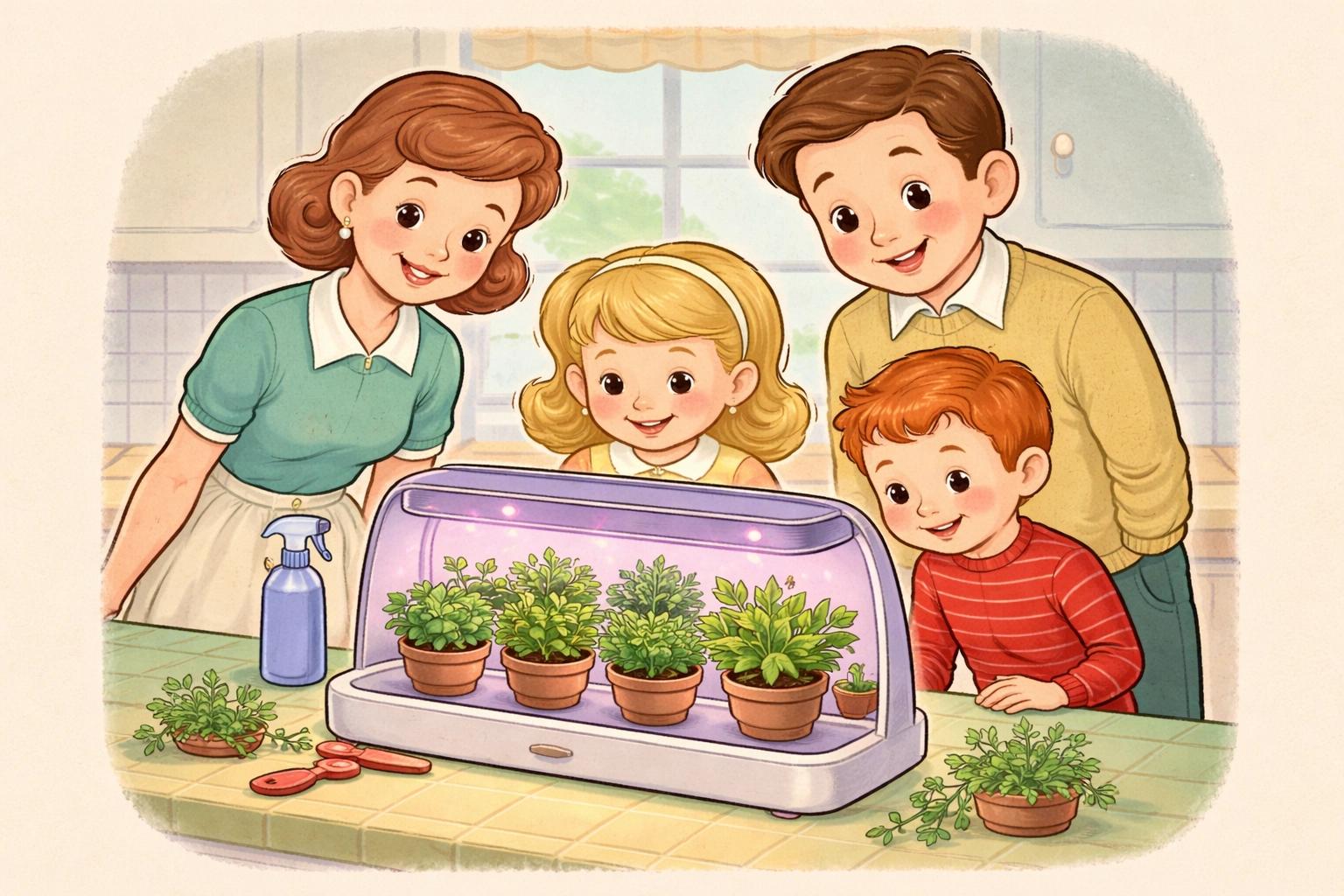
What if your windows face the wrong direction, or your house is surrounded by tall trees? No problem: grow lights are your new best friend.
What You'll Need
- A small shelving unit or dedicated counter space
- Full-spectrum LED or fluorescent grow light
- A simple outlet timer
- Containers with drainage
- Potting soil
- Herb seeds or transplants
Step-by-Step Setup
Step 1: Set up your grow light about 6 to 12 inches above where your plants will sit. Most inexpensive LED grow lights come with clips or stands that make positioning easy.
Step 2: Plug your light into an outlet timer and set it for 12 to 16 hours of light per day. This mimics the long summer days that herbs love, right in the middle of January.
Step 3: Prepare your containers the same way as the windowsill method: pebbles for drainage, quality potting soil, one herb per pot (or grouped, minus the mint).
Step 4: Place your planted containers under the light and let the magic happen.
Step 5: Check soil moisture every couple of days. Indoor air gets dry in winter, especially with heating systems running, so your herbs may need water more often than you'd expect.
Best Herbs for Grow Lights
With supplemental lighting, you can successfully grow the sun-lovers that would struggle in a dim window:
- Rosemary
- Thyme
- Basil
- Oregano
- Bay laurel
- Lavender
These Mediterranean herbs crave lots of light, and a good grow light setup gives them exactly what they need.
Method 3: Water Propagation (The Zero-Soil Approach)
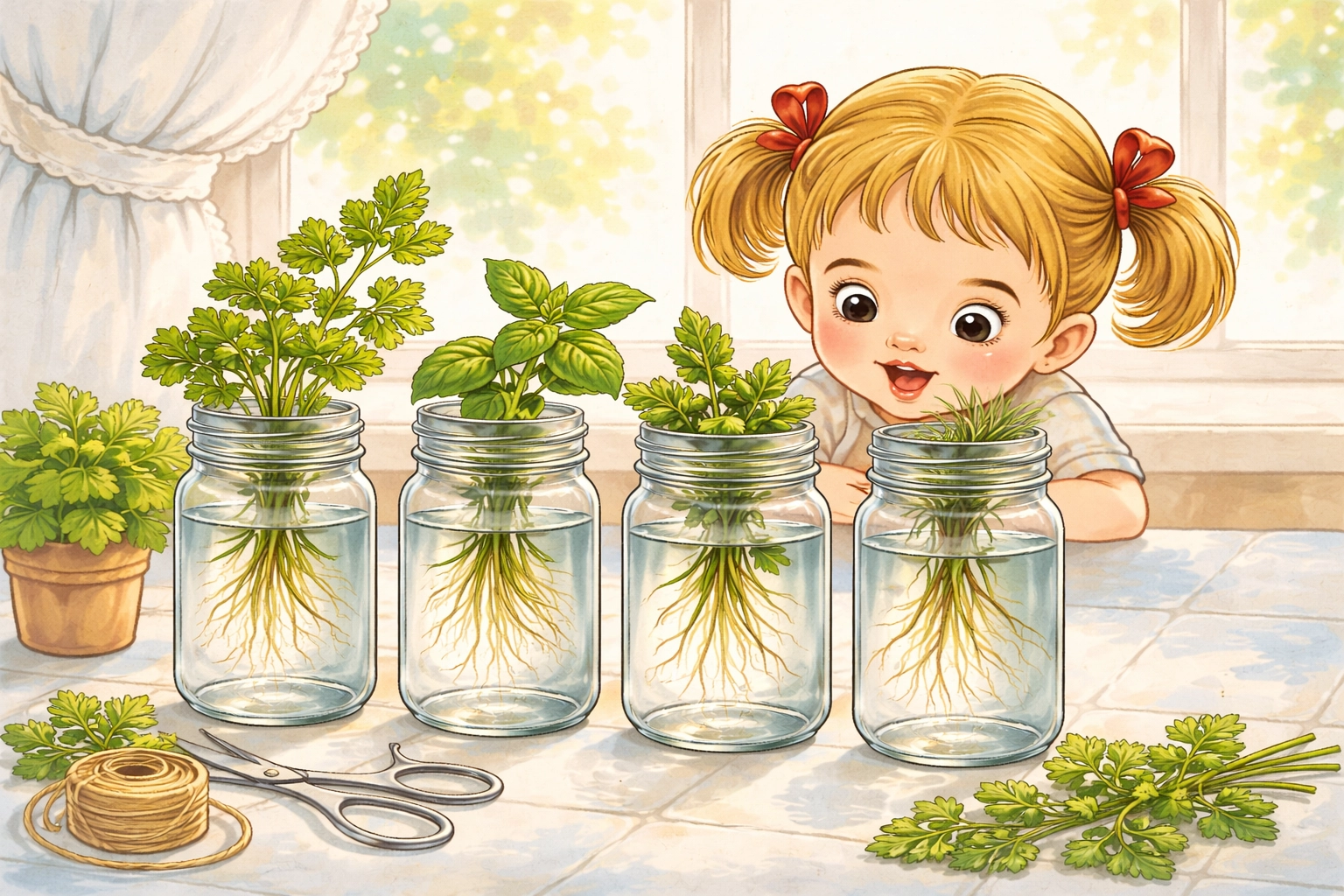
This method is perfect for families who want to watch roots grow in real time. It's basically a science experiment that ends with fresh herbs.
What You'll Need
- Clear glass jars or cups
- Fresh herb cuttings (from your garden, a friend's garden, or even store-bought herbs)
- Clean water
- A sunny spot or grow light
Step-by-Step Setup
Step 1: Take cuttings from healthy herb plants. Snip stems about 4 to 6 inches long, cutting just below a leaf node (that's the bumpy spot where leaves attach to the stem).
Step 2: Remove the lower leaves so you have a bare stem at the bottom and leaves only at the top.
Step 3: Place cuttings in clear jars filled with room-temperature water. The leaf nodes should be submerged, but keep the remaining leaves above water.
Step 4: Set your jars in a bright spot and change the water every few days to keep it fresh.
Step 5: Watch for roots! Most herb cuttings will start showing tiny white roots within a week or two. Once roots are a couple inches long, you can transplant to soil or keep growing in water.
Best Herbs for Water Propagation
Some herbs root like champions in water:
- Basil (the absolute easiest)
- Mint
- Oregano
- Lemon balm
- Sage
Kids go wild for this method because they can see the roots developing day by day through the glass. It's like having a tiny underwater garden on your kitchen counter.
Caring for Your Indoor Herb Garden
No matter which method you choose, a few simple habits will keep your herbs happy and productive.
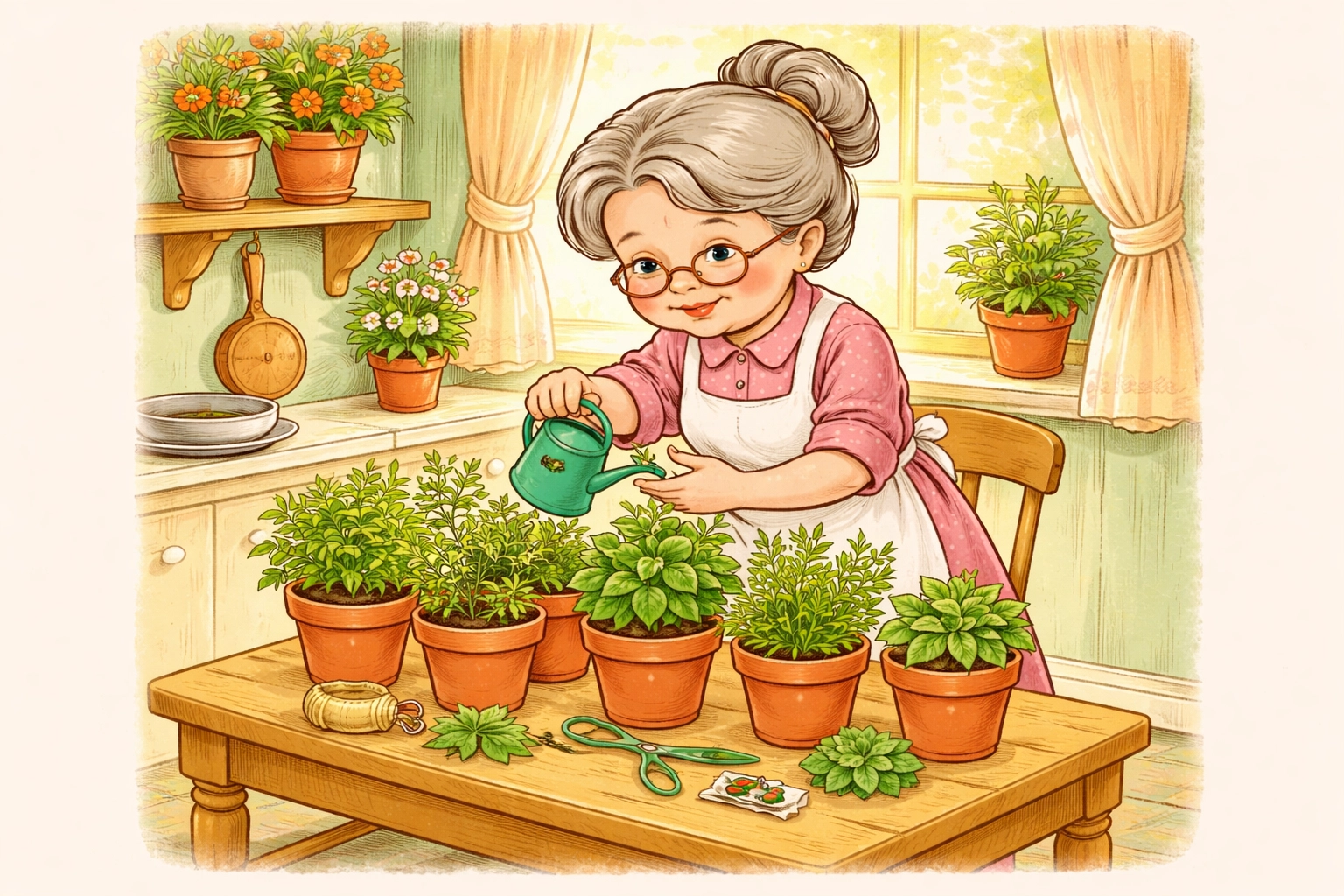
Watering Wisdom
Overwatering is the number one killer of indoor herbs. Stick your finger an inch into the soil: if it feels dry, water thoroughly. If it still feels moist, wait another day. Most herbs prefer to dry out a bit between drinks.
Feeding Your Herbs
Apply a water-soluble fertilizer every two weeks during the growing season, but go easy. Over-fertilizing can actually make your herbs taste bitter and reduce their wonderful aroma. Less is more here.
Harvesting the Right Way
Regular harvesting actually encourages bushier, healthier growth. Snip from the top of each stem, taking no more than one-third of the plant at a time. This keeps your herbs producing fresh leaves instead of getting leggy and sad.
Humidity Help
Cluster your herb pots together to create a little microclimate with higher humidity. Indoor winter air can be brutally dry, and grouping plants helps them share moisture. You can also set pots on a tray filled with pebbles and water (just make sure the pot bottoms aren't sitting directly in water).
Get the Whole Family Involved
Indoor herb gardening is a perfect winter activity for kids of all ages. Little ones can help with watering and watching for new growth. Older kids can take charge of their own herb pot from seed to harvest. And everyone can participate in cooking with the herbs you've grown together.
There's something genuinely magical about snipping fresh basil for pizza or adding homegrown chives to scrambled eggs when there's snow on the ground outside. It keeps that connection to growing things alive all year long.
If you're looking to expand your indoor growing adventures, check out our guide on how much space you need for a productive hydroponic garden or try building a DIY mini greenhouse from plastic bottles for even more indoor growing fun.
Now go plant something green: your winter kitchen will thank you.
FAQ: Indoor Herb Gardens in Winter
- What are the best 'low light' herbs for indoors? Mint and chives are very hardy and can handle a bit less sun than herbs like basil or rosemary.
- How often should I water an indoor herb garden? Most herbs like to have the top inch of soil dry out before they get another drink. Usually, watering 1-2 times a week is plenty for indoor pots.
- Do indoor herbs need fertilizer? Yes, a gentle, organic liquid fertilizer once a month during the growing season will help them stay lush and productive.
References:
- University extension services on indoor herb cultivation
- Master Gardener guidelines for container gardening
- LED grow light manufacturer recommendations for herb production