



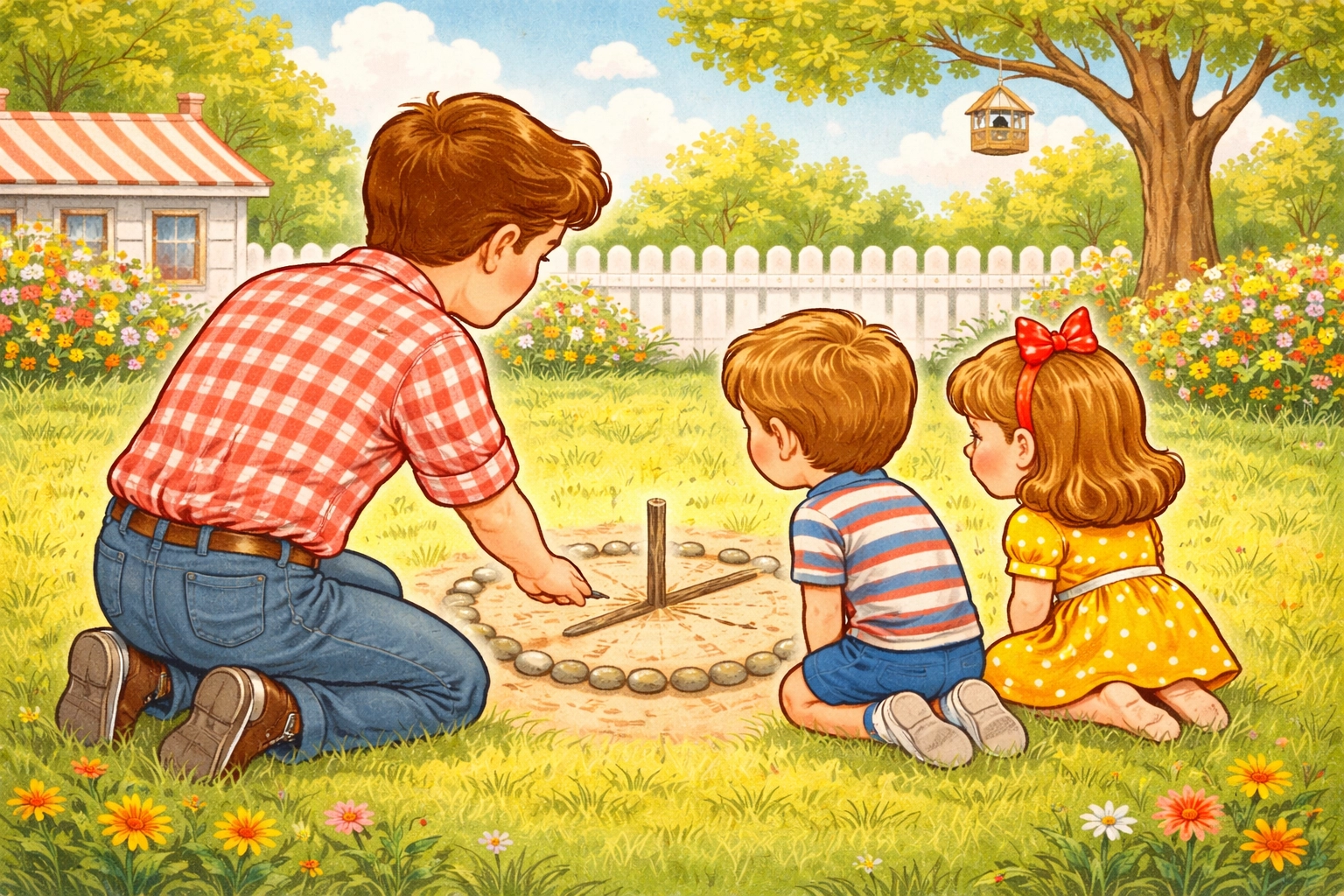
A DIY sundial tells time by tracking the shadow cast by the sun as it moves across the sky throughout the day. To make one with your kids, you'll need a straight stick (called a gnomon), some stones or markers, and a sunny spot outside. Set up at noon, mark where the shadow falls, then return every hour to mark the new shadow positions. By the end of the day, you'll have a working clock powered entirely by the sun: and your kids will have learned something truly magical about how our planet moves through space.
Pretty cool for a stick and some rocks, right?
Why Building a Sundial Is Perfect for Families
Before clocks existed, sundials were how humans kept track of their day. Building one with your kids connects them to thousands of years of human history: from ancient Egyptians to medieval monks to your own backyard.
But here's what I really love about this project: it forces everyone to slow down. You can't rush a sundial. You have to wait for the sun to move, check back throughout the day, and actually notice how the light changes around you. In a world of instant everything, that's a gift.
Plus, this project sneaks in lessons about:
- Earth's rotation and the solar system
- Basic geometry and angles
- Patience and observation
- The history of timekeeping
And the best part? Your materials probably cost nothing because you already have them.
What You'll Need for Your DIY Sundial
Gather these simple supplies before your sunny day:
The Essentials:
- A straight stick, wooden dowel, pencil, or drinking straw (this is your gnomon: the shadow-caster)
- 12 stones, small toys, or markers to label the hours
- A flat outdoor surface (dirt, sand, a paper plate, or a tree slice works great)
Optional Extras:
- A compass (to find true north)
- Paint or permanent markers for labeling
- A bucket of sand (if you don't have soft ground)
- A large paper plate or cardboard circle for a portable version
That's it. No fancy equipment required.
Step-by-Step: Building Your Backyard Sundial
Here's how to create a working sundial with your kids in one sunny day.
Step 1: Pick Your Spot and Your Day
You need a location that gets direct sunlight for most of the day: no big trees or buildings blocking the sun. A clear patch of yard, a sunny patio, or even a balcony can work.
Important: Start this project around noon on a sunny day. This gives you the best reference point (solar noon) and plenty of daylight hours to mark your dial.
Step 2: Set Up Your Gnomon
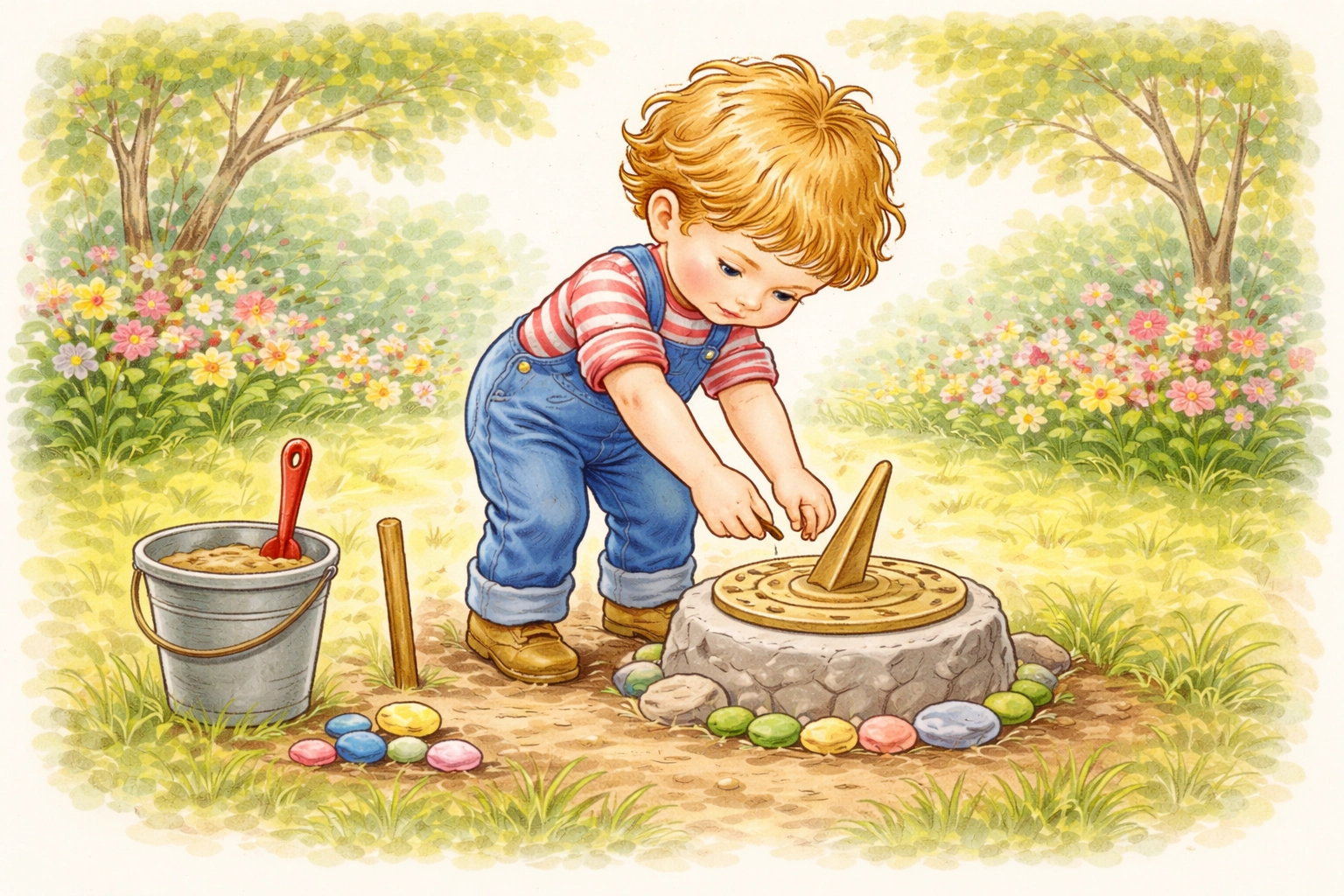
Push your stick firmly into the ground so it stands straight up. If you're working on concrete or a hard surface, fill a bucket or large pot with sand and stick your gnomon in there instead.
Here's a pro tip for older kids: In the Northern Hemisphere, tilt your stick slightly toward the north for more accurate readings. The ideal angle matches your latitude: but for a backyard project, straight up works just fine.
If you're using a paper plate, poke your stick through the center so the plate lies flat on the ground around it.
Step 3: Mark Your First Shadow
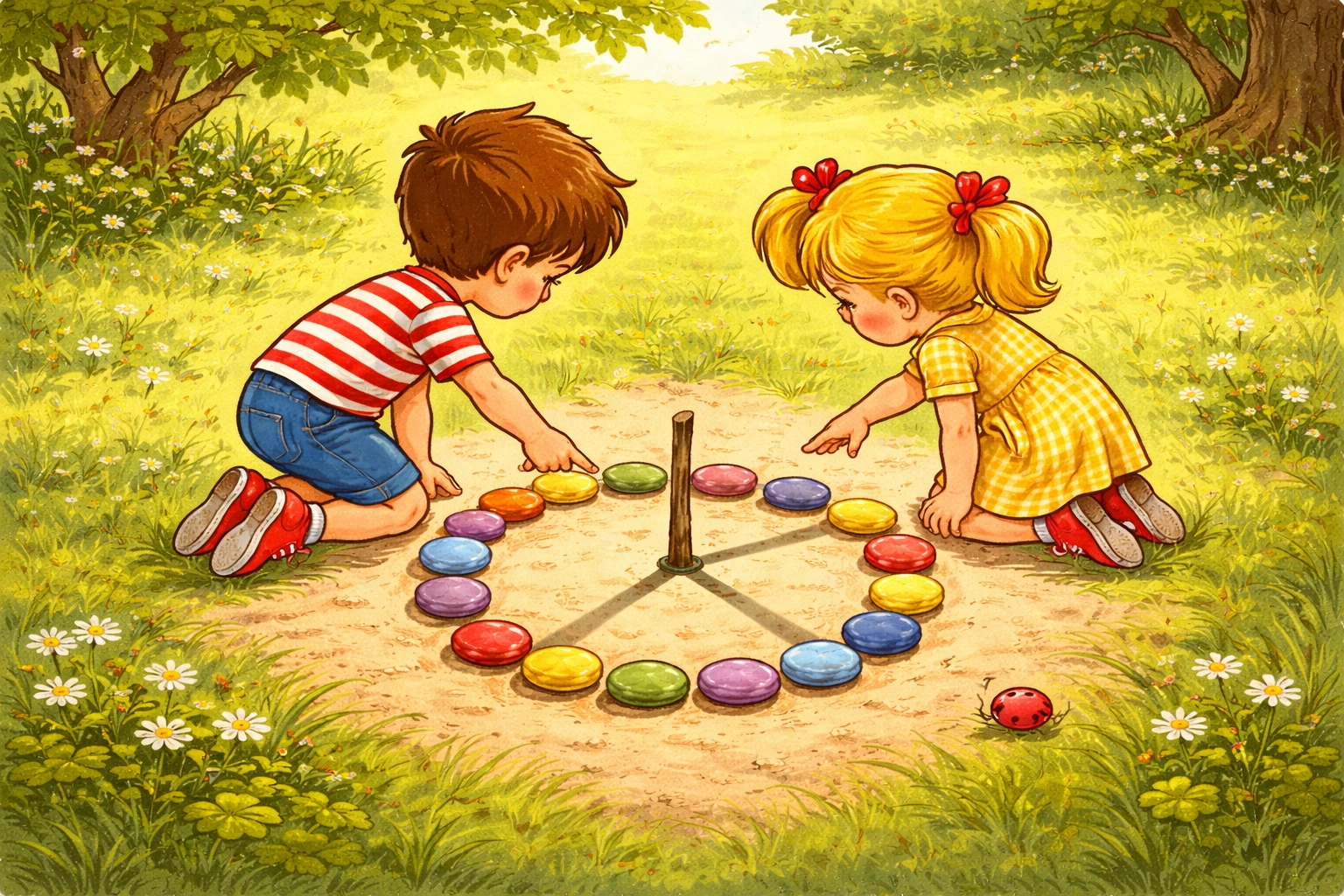
At noon (or as close to it as you can get), look at where the shadow of your stick falls. Place a stone at the tip of that shadow and label it "12" for 12 o'clock.
This is your baseline. Everything else builds from here.
Get the kids involved: Let them choose special rocks, small toys, or painted stones for each hour marker. It makes the project feel like theirs.
Step 4: Return Every Hour and Mark the Shadow
Here's where the magic happens: and where patience comes in.
Set an alarm on your phone for each hour. When it goes off, head outside with your kids and find where the shadow has moved. Place a new marker at the tip of the shadow and label it with the current hour.
- 1:00 PM → place a stone, label it "1"
- 2:00 PM → place a stone, label it "2"
- Keep going until sunset
You'll notice the shadow moves clockwise around your dial: which is exactly why clock hands move the way they do! Clocks were designed to mimic sundials.
Step 5: Complete Your Dial the Next Morning (Optional)
If you want a full 12-hour sundial, wake up early the next sunny morning and mark the hours from sunrise until noon. This gives you the complete picture.
For younger kids, an afternoon-only sundial works perfectly fine. They'll still get the concept without the early wake-up call.
How to Read Your Finished Sundial
Once your markers are in place, reading your sundial is simple:
- Look at where the shadow of your gnomon falls
- Find which hour marker it's closest to
- That's your (approximate) time!
The shadow will fall between markers as time passes: so if the shadow is halfway between "2" and "3," it's about 2:30.
A few things to keep in mind:
- Sundials track solar time, which can be a few minutes different from clock time depending on your location
- Daylight saving time will throw off your readings by an hour (great conversation starter about why we change clocks!)
- Cloudy days won't work: no sun, no shadow, no sundial
Variations to Try with Different Ages
For Toddlers and Preschoolers:
Keep it super simple. Use a big stick and colorful toys as markers. Focus on the wonder of watching shadows move, not precision timekeeping.
For Elementary Kids:
Add numbered labels, use a compass to find true north, and keep a journal of your observations. Compare your sundial time to your phone's time and discuss why they might differ.
For Middle Schoolers and Up:
Get scientific. Cut a triangular gnomon from cardboard at an angle matching your latitude. Start at 6 AM to capture a full day. Research how ancient civilizations used sundials and how they calculated the tilt angles.
What Your Kids Will Learn (Without Realizing It)
This isn't just arts and crafts: it's stealth education at its finest.
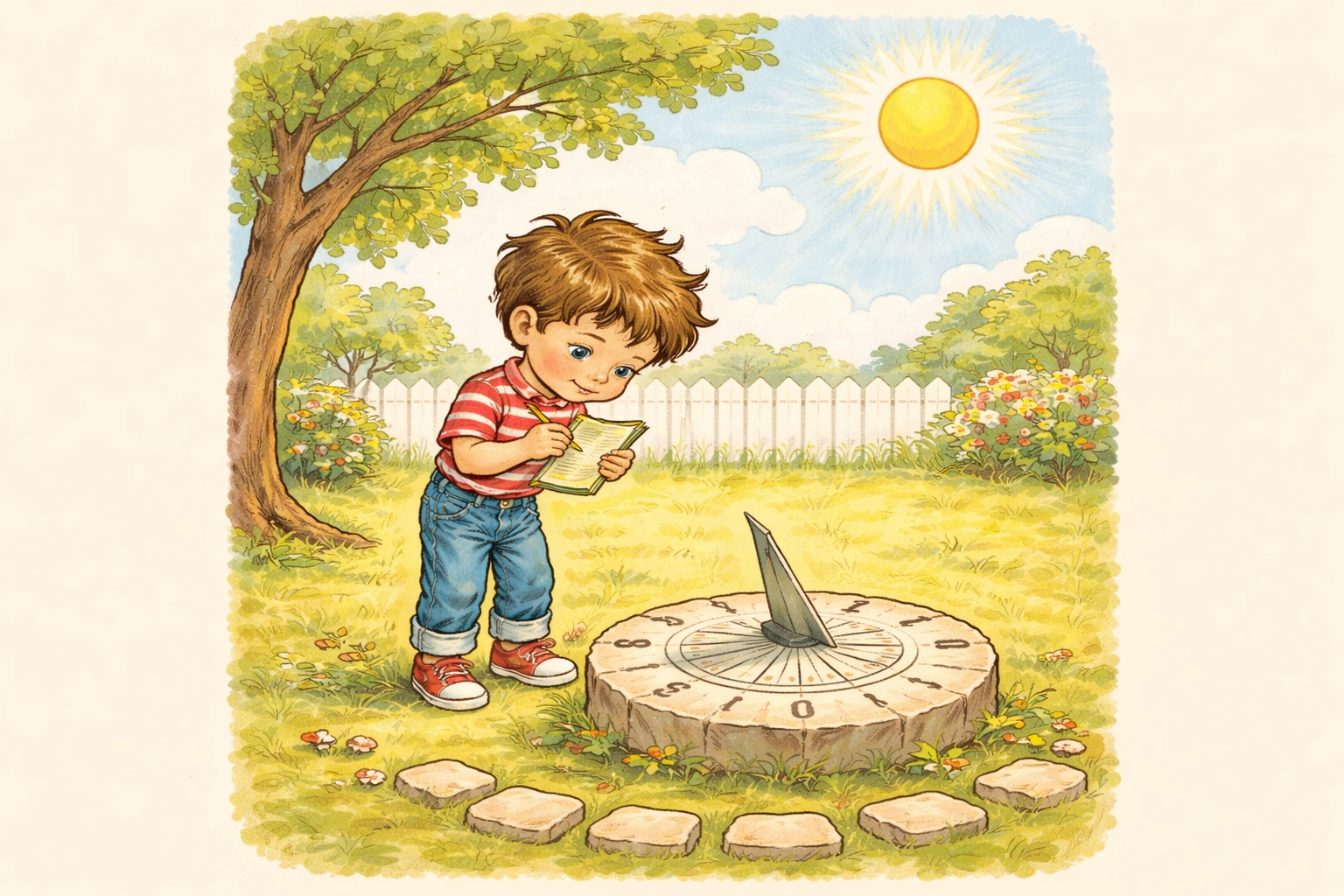
Astronomy: The sun doesn't actually "move" across the sky. Earth rotates, which makes the sun appear to travel from east to west. Your sundial makes this abstract concept visible and real.
Math and Geometry: The angle of shadows, the spacing between hours, and the circular pattern of the dial all connect to geometry concepts they'll encounter in school.
History: People relied on sundials for thousands of years. You can explore how different cultures: Egyptian, Greek, Chinese, Islamic: developed increasingly precise sundial designs.
Patience and Observation: In a world of instant results, waiting hours to complete a project builds focus and teaches kids that some things are worth the wait.
Quick Alternative: The 15-Minute Paper Sundial
Short on time? NASA and various educational sites offer printable sundial templates you can assemble in about 15 minutes. These pre-designed versions account for your location and time zone, skipping the hourly marking process while still teaching the same principles.
But honestly? The homemade version is more memorable. There's something special about building it from scratch and returning throughout the day to watch it come together.
Keep the Learning Going
Once your sundial is complete, you've got a permanent (or semi-permanent) outdoor learning station. Check it on different days throughout the year and notice how the shadow positions shift slightly as Earth's tilt changes with the seasons.
If your family enjoyed this project, you might also like building a DIY mini greenhouse from plastic bottles or creating a kitchen scrap regrow garden: both are great follow-up activities that keep kids connected to nature and hands-on learning.
Now get outside, find a sunny spot, and let the sun teach your kids how to tell time the way humans did for millennia. No batteries required.
DIY Sundial FAQ
- Does a DIY sundial work on cloudy days? A sundial needs a shadow to work, so it won't be able to tell the time when the sun is hidden. This is a great way to explain how we rely on sunlight for many natural processes.
- How do I 'calibrate' our sundial? Every hour on the hour, go outside and mark where the shadow falls. After a full day, you'll have your very own "garden clock"!
- Why does the shadow move throughout the day? It moves because the Earth is rotating! Even though it feels like we are standing still, the Earth is spinning, which makes the sun appear to move across the sky.
References:
- Various educational sundial building guides
- NASA paper sundial templates
- Solar time and Earth rotation educational resources