




Simple breathing exercises give busy kids an effective way to practice mindfulness outdoors, helping them manage stress and sharpen their focus in just a few minutes. The garden is the perfect classroom for these calming techniques: surrounded by real flowers to "smell," open sky to breathe in, and the gentle rhythm of nature all around.
Here at Tierney Family Farms, we've found that combining gardening with mindfulness creates something magical. Kids who might squirm through indoor meditation suddenly become focused and calm when they're standing barefoot in the grass, practicing bunny breaths next to the carrot patch.
Let's dig into five garden-friendly breathing exercises your kids can start using today.
Why the Garden Is Perfect for Kids' Mindfulness
Before we jump into the exercises, here's why outdoor breathing practice works so well for children.
When kids practice breathing techniques, their brains focus on a specific task. This pushes aside the swirling, distracting thoughts that can make them feel overwhelmed or unfocused. Add the sensory richness of a garden: the smell of herbs, the warmth of sunshine, the texture of soil: and you've created a multi-sensory calming experience.
The garden also removes the "sit still and be quiet" pressure that makes indoor meditation feel like punishment for active kids. Out here, they can wiggle their toes in the dirt, watch a bee buzz by, and still practice their breathing. It's mindfulness that meets kids where they are.

Exercise 1: Flower Breathing (The Perfect Starting Point)
Best for: Beginners, ages 3 and up
This is hands-down the easiest breathing technique for young children to master, and it's practically made for the garden.
How to Do It
- Have your child stand or sit near a real flower, herb, or fragrant plant. Lavender, mint, basil, or even a dandelion works great.
- Ask them to imagine (or actually) smelling the flower: breathing in deeply and slowly through their nose.
- As they exhale through their mouth, encourage them to blow gently, like they're cooling off hot soup or sending dandelion seeds into the wind.
- With each exhale, have them drop their shoulders and let their arms hang loose.
- Repeat 3-5 times.
Garden Tip
Plant a small "breathing garden" with fragrant herbs like lavender, mint, or chamomile. Kids can visit their special spot whenever they need to reset.
Exercise 2: Bunny Breath (For Big Feelings)
Best for: Kids who are upset, anxious, or having trouble regulating their breathing
This one is a game-changer when emotions are running high. The quick sniffs help interrupt the fight-or-flight response, and kids love the silly bunny connection.

How to Do It
- Have your child crouch down like a bunny in the garden: bonus points if you're near the actual vegetable patch!
- Tell them to take three quick sniffs through their nose, like a bunny sniffing for carrots.
- Then exhale slowly and smoothly through their nose.
- Repeat 4-5 times, or until they feel calmer.
When to Use It
Bunny Breath is perfect for transitions: like when it's time to come inside from playing, before starting homework, or after a frustrating moment. The playful nature of it helps kids shift gears without feeling like they're being told to "calm down."
Exercise 3: Five-Finger Breathing (Portable Calm)
Best for: Ages 4 and up, kids who like tactile activities
This technique gives kids something physical to focus on, which is incredibly helpful for children who struggle with abstract "just breathe" instructions.
How to Do It
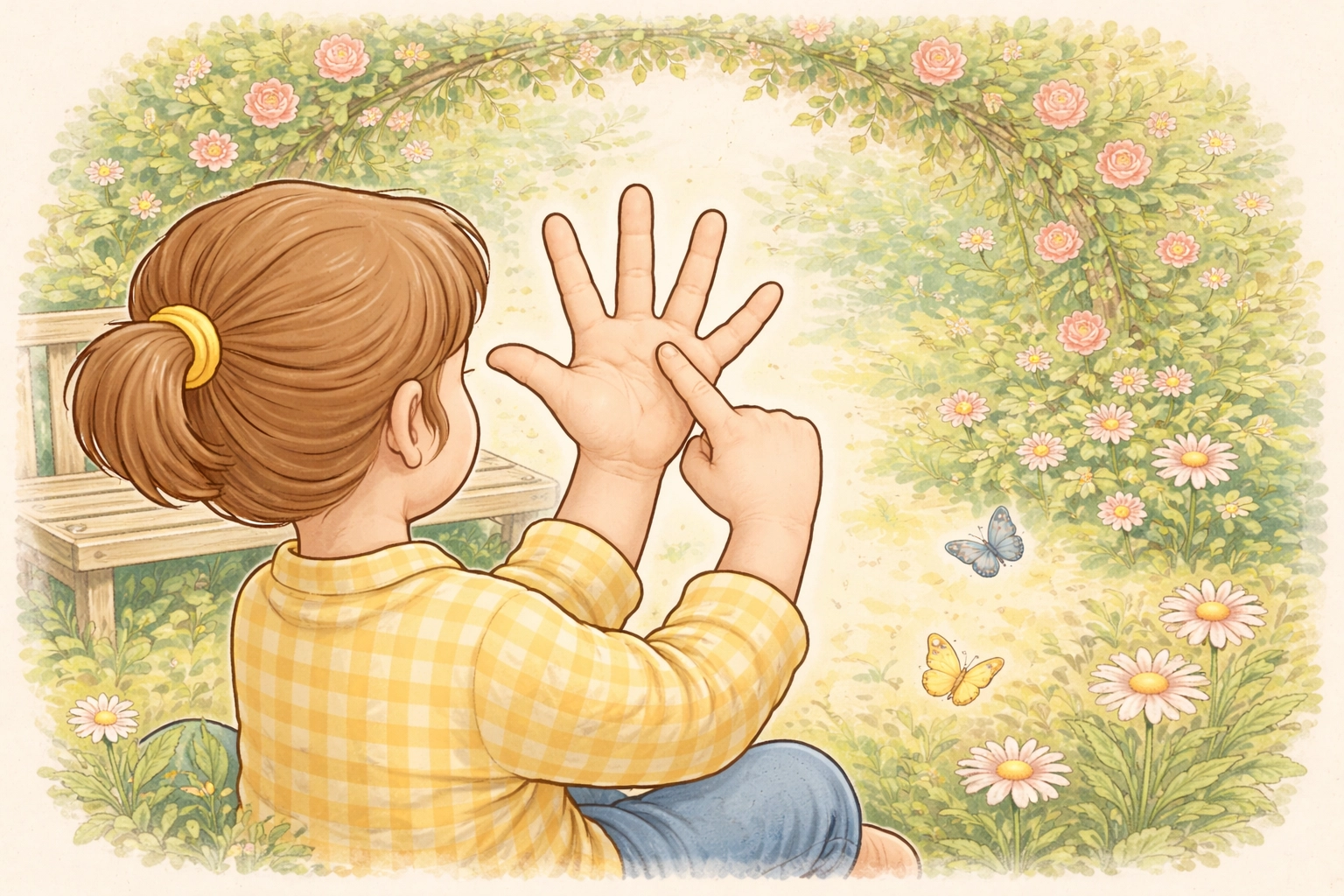
- Have your child hold out one hand like a starfish, fingers spread wide.
- Using the pointer finger of their other hand, they start at the base of their thumb.
- As they trace UP the thumb, they breathe in slowly through their nose.
- As they trace DOWN the other side of the thumb, they breathe out through their mouth.
- Continue tracing up and down each finger: inhale going up, exhale going down.
- By the time they reach the pinky, they've completed five full breaths.
Garden Connection
Try this sitting on a garden bench, a tree stump, or right in the grass. The combination of grounding (sitting on the earth) and the breathing pattern creates a powerful calming effect.
Exercise 4: Dragon Breathing (For Energy Release)
Best for: Kids with excess energy or frustration, ages 3 and up
Sometimes kids don't need to calm down: they need to let something OUT. Dragon Breathing gives them permission to release big energy in a controlled, healthy way.
How to Do It
- Have your child stand tall in an open area of the garden.
- Ask them to take a deep breath in through their nose.
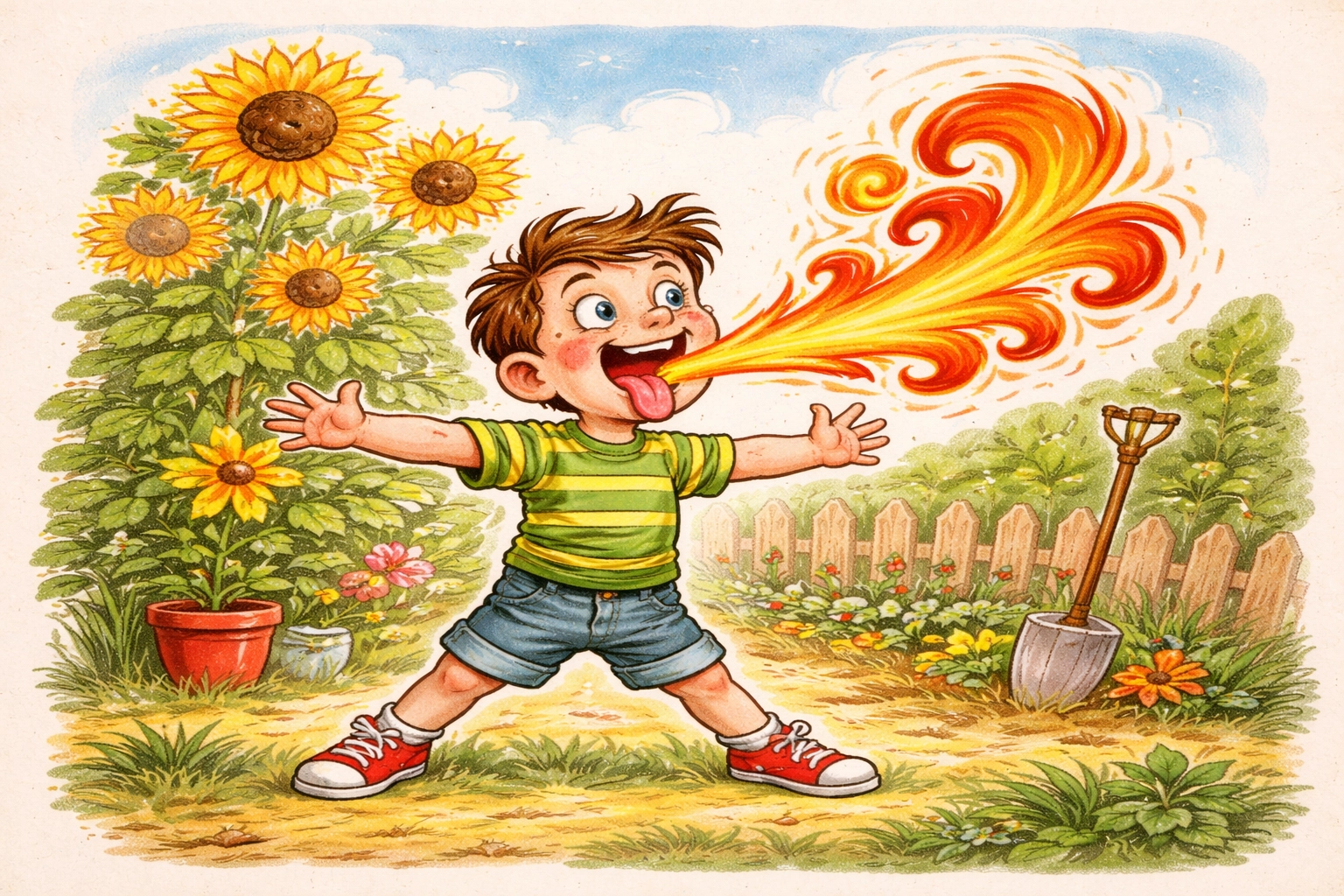
- On the exhale, they stick their tongue out and breathe out forcefully: like a dragon breathing fire!
- Encourage them to make it dramatic. Arms out, fierce face, the whole thing.
- Repeat 5 times.
Why It Works
This exercise validates big feelings while channeling them into something physical. After five dragon breaths, most kids feel lighter and more ready to reset.
Exercise 5: Square Breathing (For Focus)
Best for: Older kids (ages 6+), before homework or focused tasks
Square Breathing (sometimes called Box Breathing) adds counting and visualization, making it ideal for kids who need help concentrating.
How to Do It
- Have your child imagine drawing a square in the air with their finger.
- Side 1: Trace the first side while breathing IN for 4 seconds.
- Side 2: Trace the second side while HOLDING the breath for 4 seconds.
- Side 3: Trace the third side while breathing OUT for 4 seconds.
- Side 4: Trace the final side while HOLDING (empty lungs) for 4 seconds.
- Repeat 3-4 times.
Garden Variation
Instead of an imaginary square, have kids trace a raised garden bed, a stepping stone, or even a square planter as they breathe. Making it tangible helps younger kids grasp the concept.
Building a Garden Mindfulness Routine
The real magic happens when these exercises become a regular part of your garden time. Here's how to make it stick:
Start Small
Pick one exercise and practice it for a week before adding another. Flower Breathing is the easiest entry point for most families.
Attach It to Existing Habits
Practice breathing exercises at the beginning of garden time, right after watering, or before heading back inside. Attaching new habits to existing routines helps them stick.
Make It Their Idea
Let kids choose which breathing exercise they want to do. "Do you want to be a bunny or a dragon today?" gives them ownership over their calming practice.
Practice When They're Already Calm
Don't wait for a meltdown to introduce these techniques. Kids need to learn them when they're regulated so they can access them when they're not.

Quick Reference: Which Breath for What?
| Situation | Best Breathing Exercise |
|---|---|
| Just starting out | Flower Breathing |
| Big emotions or upset | Bunny Breath |
| Needs something physical | Five-Finger Breathing |
| Excess energy or frustration | Dragon Breathing |
| Before homework or focus time | Square Breathing |
The Bigger Picture
Teaching kids to breathe mindfully in the garden does more than calm them down in the moment. You're giving them a lifelong tool they can use anywhere: in the classroom, on the soccer field, during a thunderstorm, or someday in a stressful meeting as an adult.
And the garden? It becomes more than just a place to grow tomatoes. It transforms into a sanctuary where your child learns that they have the power to shift their own emotional state, one breath at a time.
That's a harvest worth cultivating.
Related reading:
- How Do You Make a DIY Kitchen Scrap Regrow Garden for Under $10 With Your Kids?
- How Do You Create a DIY Worm Composting Bin With Children?
FAQ: Garden Mindfulness for Kids
- What is the best time of day for garden mindfulness? Early morning or just before sunset is usually best. The air is often cooler and the garden is quieter, making it easier for kids to focus on their breathing and the sounds around them.
- How long should a child's mindfulness session last? Keep it short! Just 2–5 minutes is plenty for most kids. It’s more about the quality of the focus than the length of time.
- What if my child can't sit still? That's okay! You can do "walking mindfulness." Have them take very slow steps and focus on how the grass feels under their feet or the smell of the flowers they pass.
- How does a garden help a child feel more calm? The garden is a quiet, natural space that encourages focus and presence. Simple acts like feeling the soil or listening to the birds help slow down a busy mind.
- What is a 'mindful minute' in the garden? It's just taking 60 seconds to sit quietly and notice one thing you can see, one thing you can hear, and one thing you can smell. It’s a wonderful way for kids to practice mindfulness.
- Can gardening help with stress? Yes, both for kids and adults! Spending time in nature has been shown to lower stress levels and improve mood. It’s one of the best "natural" ways to feel better.
References:
- Research on children's outdoor mindfulness practices
- Breathing techniques for children and emotional regulation studies
- Child development and stress management through breathwork
- Educational approaches to mindfulness in family settings