



A bucket of water becomes an ecosystem.
Not a pond in the traditional sense. Something smaller. Something observable.
Mini ponds occupy forgotten corners. They require no excavation. No liner. No pump.
A washing-up bowl works. So does a large plant pot. Any waterproof container with depth.
The result: a self-sustaining micro habitat that attracts wildlife within weeks.
What Qualifies as a Mini Pond?
Any container holding water at a depth of 20–40 centimeters.
The container sits at ground level. Wildlife needs access. Steep walls create barriers.
Common options include:
- Large ceramic planters with drainage holes sealed
- Metal buckets or wash tubs
- Repurposed Belfast sinks
- Plastic storage containers buried to rim level
Size matters less than placement and structure.
A 30-centimeter bowl supports the same fundamental ecosystem as a 60-centimeter tub. Frogs breed in both. Dragonflies visit both. Water beetles colonize both.
The difference lies in species diversity and population capacity.
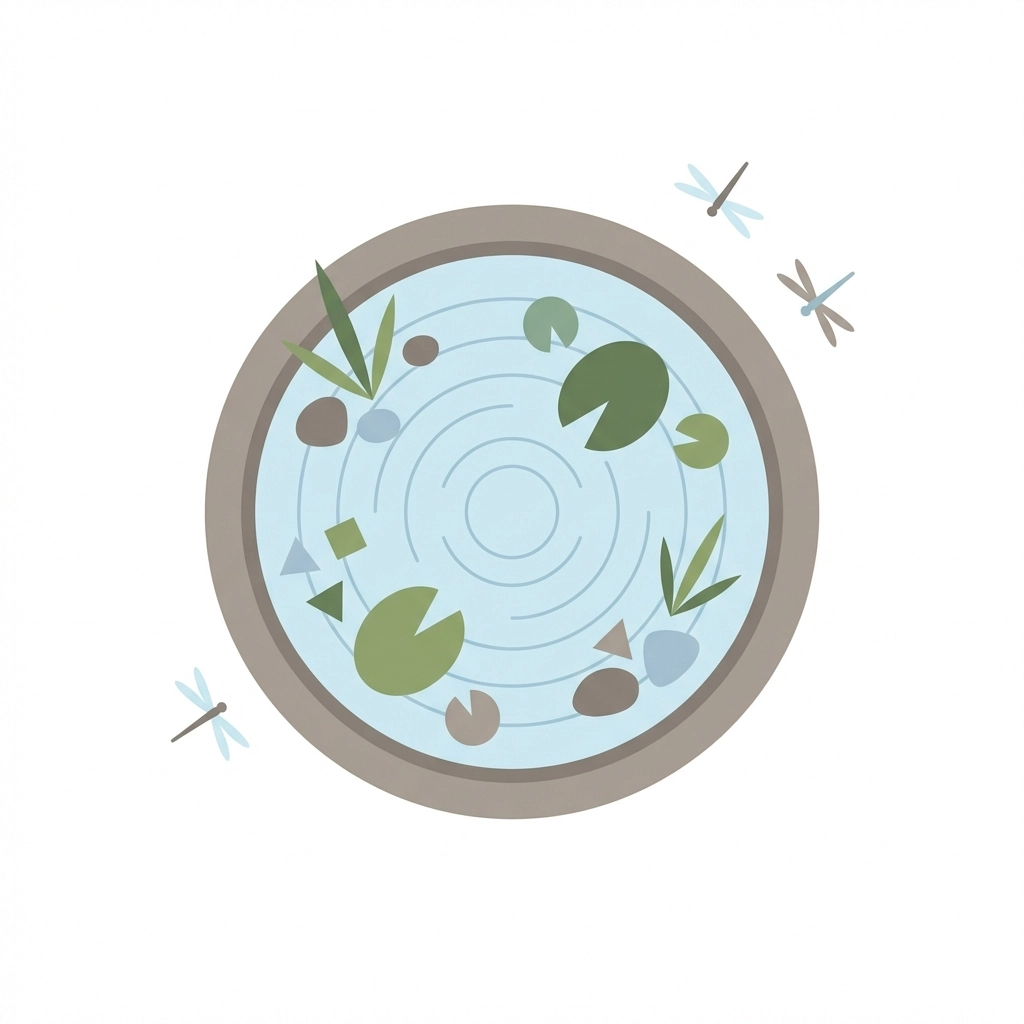
Where Should a Mini Pond Sit?
Partial shade.
Full sun accelerates algae growth. The water turns green. Oxygen depletes. Wildlife suffers.
Full shade limits plant growth. Fewer plants mean fewer insects. Fewer insects mean fewer predators.
The balance point: morning sun, afternoon shade. Dappled light throughout the day also works.
Avoid placement directly beneath deciduous trees. Autumn brings leaf fall. Decomposing leaves release tannins. Water quality declines.
Distance from structures matters. At least one meter from fences or walls allows approach from multiple directions. Wildlife prefers options.
Ground level installation creates the most natural access. Dig a shallow hole. Set the container so the rim sits flush with soil. The transition from land to water becomes seamless.
What Makes Water Safe for Wildlife?
Rainwater.
Tap water contains chlorine. Chloramine in treated supplies persists longer. Both harm amphibian eggs and aquatic invertebrates.
Collection methods:
- Divert downspout runoff into a storage barrel
- Leave buckets out during rainfall
- Collect from greenhouse gutters
Fill the container entirely with collected rainwater. Top up during dry periods from the same source.
Groundwater from shallow wells also works. Test for pH first. Neutral to slightly alkaline suits most pond species.
Standing water from existing natural ponds can introduce beneficial microorganisms. A single jar of established pond water seeds the micro habitat with algae, bacteria, and microscopic life.
How Do Animals Get In and Out?
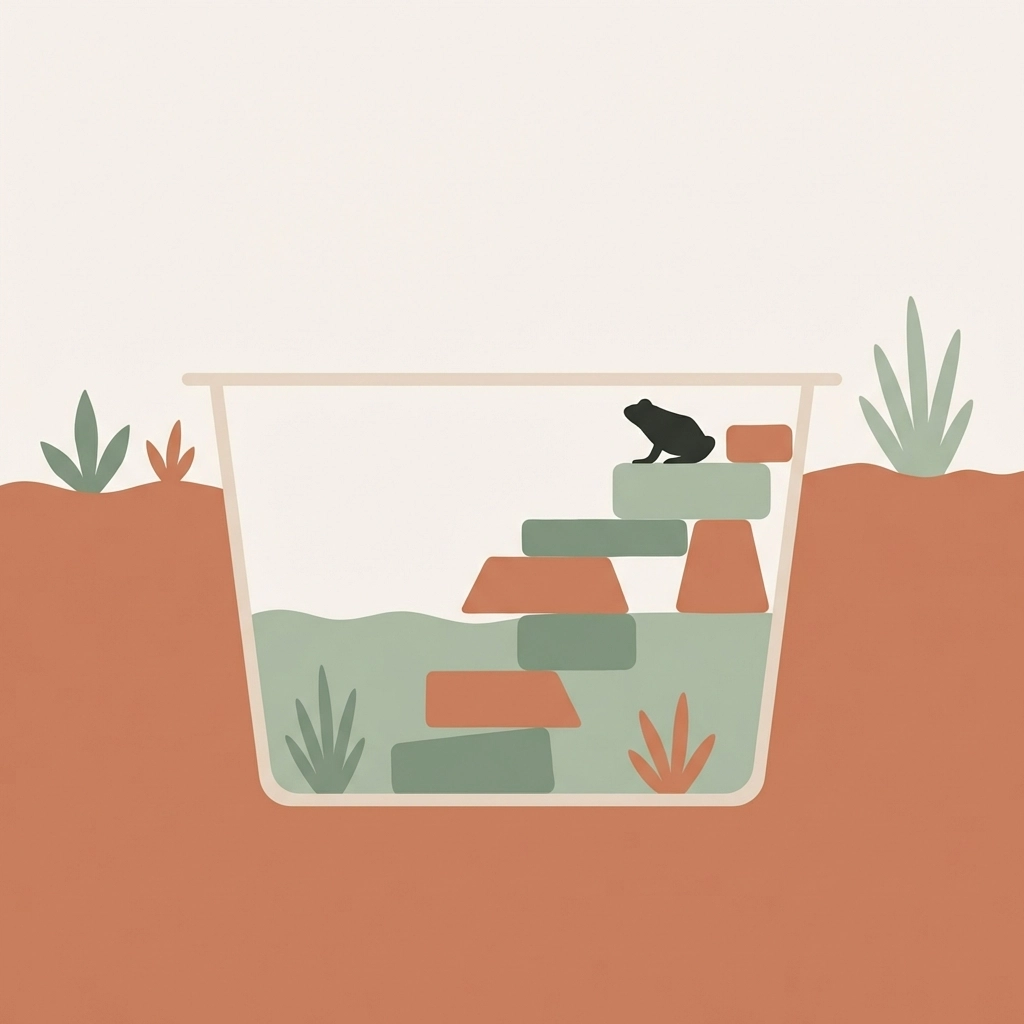
Straight-sided containers trap wildlife.
A frog enters. The frog cannot climb smooth plastic walls. The frog drowns.
Access ramps solve this problem.
Stack materials on one side of the container:
- Flat stones arranged as steps
- Bricks positioned at angles
- Inverted terracotta pots creating shelves
- Branches wedged from bottom to rim
The goal: a gradual slope from the deepest point to the surface and beyond.
Hedgehogs drink from mini ponds. Birds bathe. Both need exit routes.
Large flat stones placed at water level serve as platforms. Insects rest there. Amphibians bask. Birds perch before drinking.
Which Plants Support a Micro Habitat?
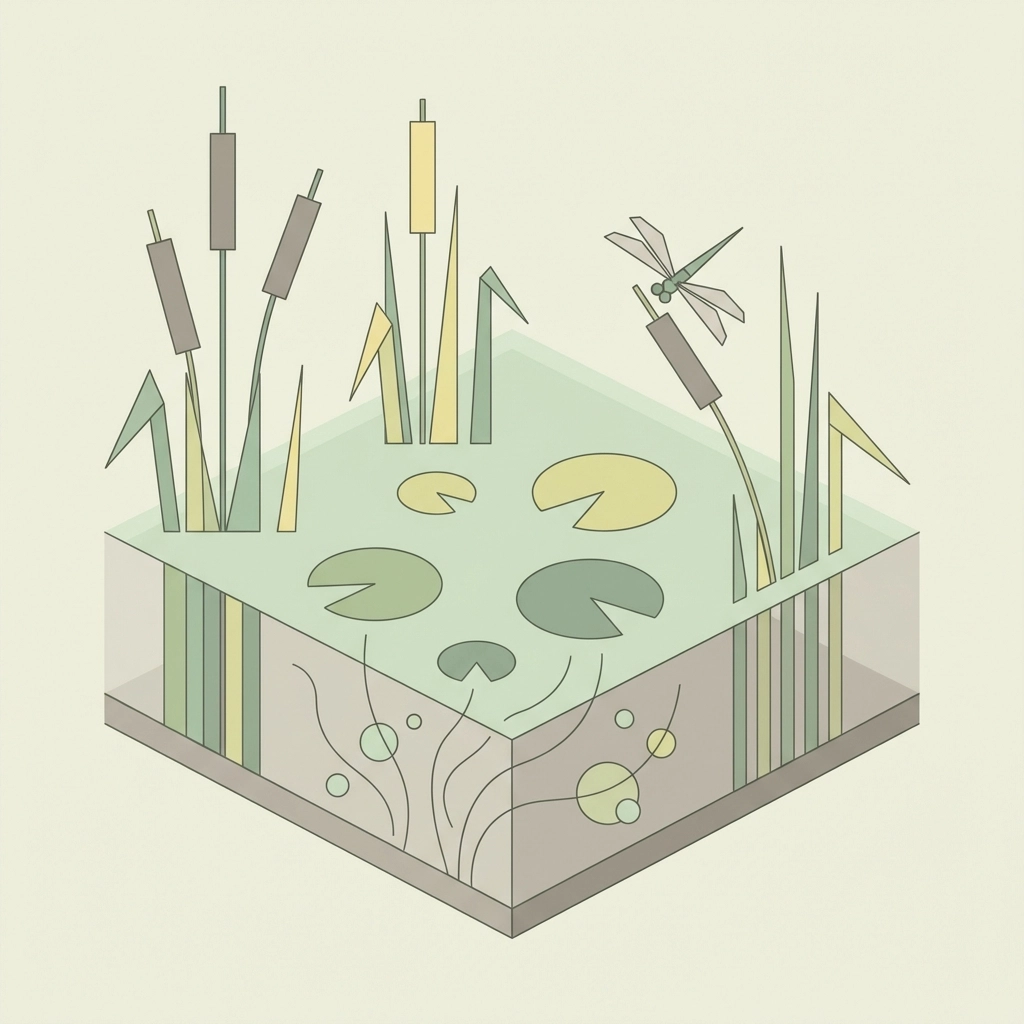
Four categories. Each serves a different function.
Oxygenating plants grow fully submerged. They release oxygen into the water. They provide cover for larvae and tadpoles.
- Hornwort
- Water starwort
- Curly pondweed
Marginal plants root in shallow water at the edges. They create shelter. They provide egg-laying sites.
- Water mint
- Lesser spearwort
- Marsh marigold
Floating plants rest on the surface. They shade the water. They offer landing platforms for insects.
- Frogbit
- Water lettuce
- Duckweed (use sparingly: spreads rapidly)
Emergent plants grow tall stems above water. Dragonfly nymphs climb these stems during metamorphosis. The transition from aquatic to aerial life requires vertical structure.
- Soft rush
- Yellow flag iris (in larger containers only)
- Water forget-me-not
Start with one plant from each category. Observe growth over a season. Add more based on available space.
Overcrowding chokes a mini pond. Leave at least 50% of the surface visible.
What Wildlife Appears First?
Insects arrive within days.
Water striders find new water sources quickly. Pond skaters follow. Both hunt smaller insects on the surface.
Within two weeks:
- Mosquito larvae appear in standing water
- Water beetles fly in from surrounding areas
- Damselflies begin reconnaissance visits
Within one month:
- Dragonfly nymphs establish if conditions suit
- Aquatic snails hitchhike on plants or arrive on bird feet
- Water boatmen colonize
Frogs and toads find mini ponds during breeding season. Late winter through spring brings males searching for sites. A single successful breeding event produces dozens of tadpoles.
Newts prefer more established ponds. Second or third year installations see higher newt activity.
Birds treat mini ponds as drinking stations. Robins, blackbirds, and finches visit reliably. Bats skim the surface at dusk, drinking on the wing.
How Does Observation Work?
Distance first.
Wildlife flees from sudden movement. Approach slowly. Stop at two meters. Wait.
Early morning reveals the most activity. Amphibians hunt at dawn. Insects warm on sun-touched stones. Birds drink before territorial duties begin.
Evening offers different subjects. Bats appear at twilight. Nocturnal beetles emerge. Frogs vocalize.
Tools that enhance observation:
- Hand lens for examining larvae and eggs
- Small net for temporary capture and release
- Clear container for close inspection of specimens
- Notebook for tracking species over time
Documentation creates value. Note dates of first sightings. Record breeding activity. Track population changes season to season.
A mini pond observed weekly for one year yields more data than a large pond ignored.
What Maintenance Does a Mini Pond Need?
Minimal intervention produces best results.
Top up water levels during dry periods. Use stored rainwater only.
Remove excessive plant growth once annually. Late autumn works well. Cut back dead foliage. Thin overcrowded species.
Leave cut plant material beside the pond for 24 hours. Invertebrates escape back into the water. Then compost the debris.
Never drain and refill. The established ecosystem depends on accumulated microorganisms, beneficial bacteria, and algae colonies.
Algae blooms occur in new ponds. This is normal. The system balances within weeks as plants establish and grazers multiply.
Ice forms in winter. Leave it. Amphibians overwinter in mud at the bottom. Breaking ice disturbs them. A floating ball or bundle of straw prevents complete surface freezing if extended cold arrives.
What Problems Require Attention?
Green water indicates excess nutrients. Reduce direct sunlight exposure. Add more oxygenating plants. Avoid feeding wildlife near the pond.
Foul odor signals anaerobic conditions. Too much organic matter has accumulated. Remove debris carefully. Increase water circulation with additional plants.
No wildlife after several months suggests a location problem. Shade, access, or isolation may be factors. Relocate if necessary.
Predators present a different challenge. Herons take frogs from even small ponds. Cats hunt at pond edges. Netting deters both but reduces aesthetic appeal and can trap birds.
Balance acceptance with intervention. Some predation is natural. Excessive loss warrants protective measures.
What Value Does a Mini Pond Create?
Habitat in miniature.
Standing water has disappeared from most landscapes. Drainage, development, and changing land use eliminate natural ponds.
A single container reverses this locally. Frogs breed. Dragonflies reproduce. Bats drink.
The ecological contribution scales with numbers. One mini pond helps. Ten mini ponds across a neighborhood create a network. Networks support populations.
Observation teaches. Watching metamorphosis from egg to tadpole to frog demonstrates biological processes directly. No screen required.
The investment: one container, some stones, a few plants, collected rainwater.
The return: a functioning ecosystem within arm's reach.