


Art supplies exist everywhere on a farm.
Sticks become brush handles. Leaves create texture. Pine needles produce fine lines. The land provides everything needed for a creative afternoon.
This project transforms a simple walk through fields and woodlines into a full art studio experience. No store-bought supplies required.
What Materials Work Best for Foraged Paintbrushes?
The variety matters more than perfection.
Different textures produce different marks on paper. Smooth materials glide. Rough materials scratch and stipple. Each foraged item creates its own signature stroke.
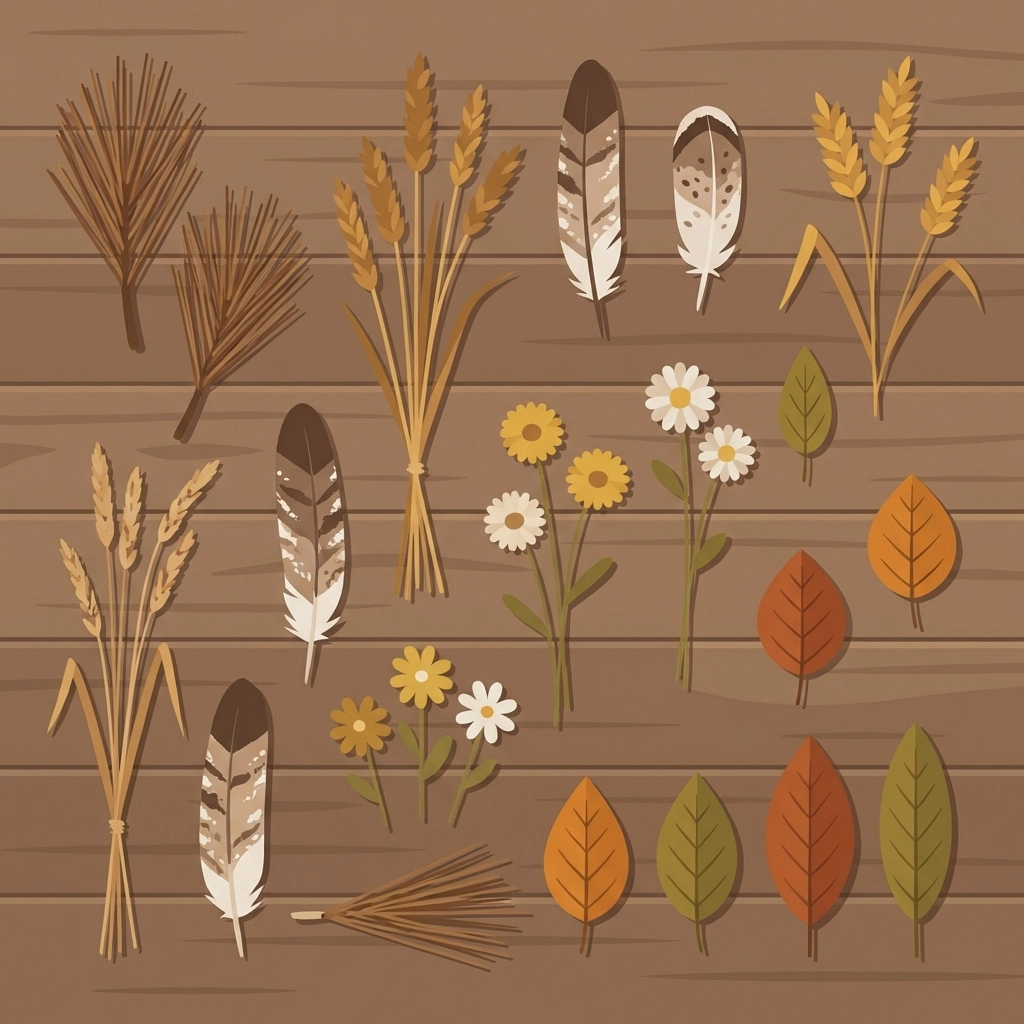
Best materials to collect:
- Pine needles (bundled tight for fine lines)
- Dried grasses (soft, sweeping strokes)
- Leaves of varying sizes (stamps and broad strokes)
- Small wildflowers (dotted, textured patterns)
- Feathers (delicate, wispy marks)
- Bark pieces (rough, abstract textures)
- Seed heads (unique circular patterns)
- Moss clumps (spongy, dabbing effects)
Gather items in multiple sizes. Thin materials create detail work. Thick bundles cover large areas quickly.
Freshly picked items hold moisture. Dried items absorb paint differently. Both approaches work. The results simply differ.
How Are Nature Paintbrushes Assembled?
The process takes about five minutes per brush.
Required supplies:
- Foraged materials (leaves, grasses, needles, flowers)
- Sticks or small branches (handle length)
- Masking tape or rubber bands
- Scissors (optional, for trimming)
Assembly steps:
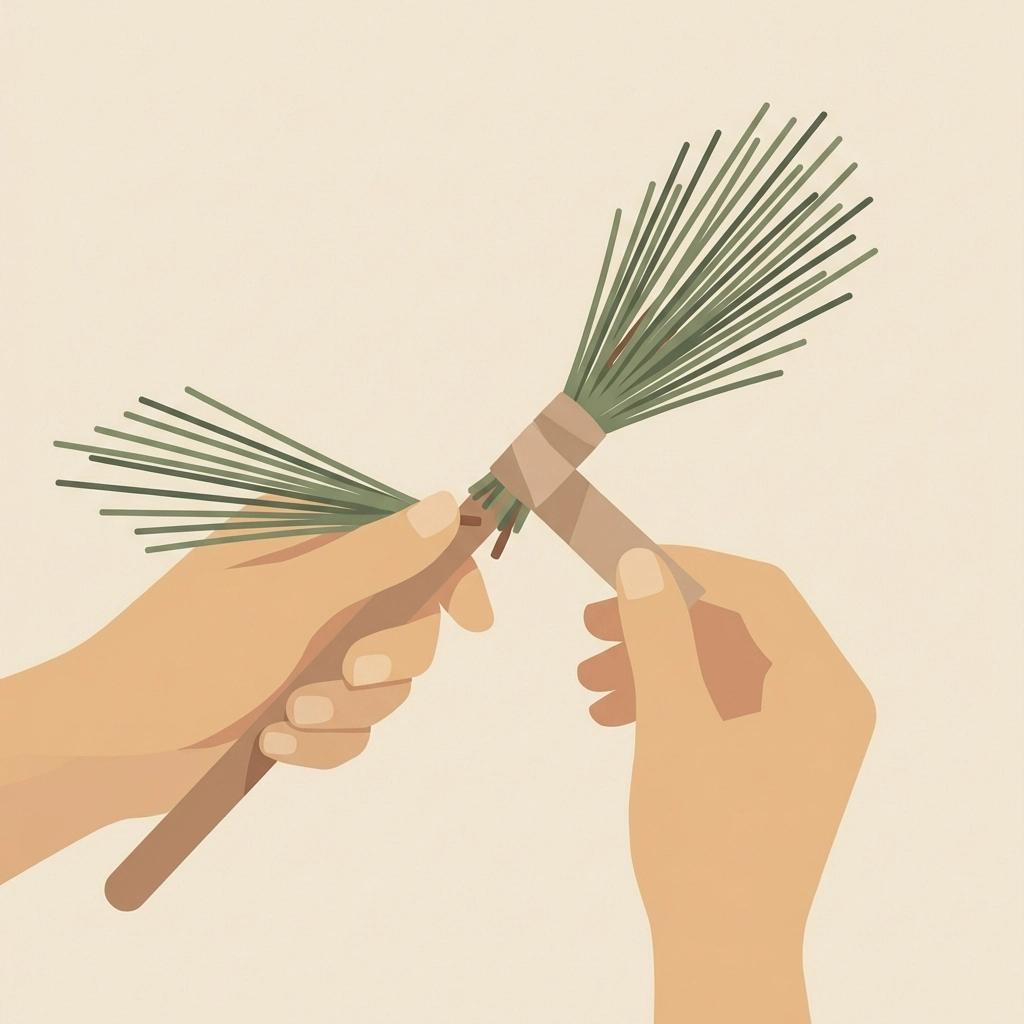
- Select a stick roughly 6-8 inches long. This becomes the handle.
- Gather the chosen foraged material into a small bundle.
- Trim stems to equal length if needed.
- Hold the bundle against one end of the stick.
- Wrap masking tape or a rubber band around the connection point.
- Wrap multiple times for security.
- Test the brush on scrap paper.
The wrapping technique determines durability. Tight wraps last longer. Loose wraps allow materials to fan out more.
Washi tape adds color to handles. This helps identify different brush types during a project.
What Kinds of Marks Do Different Materials Make?
Each natural material behaves uniquely.
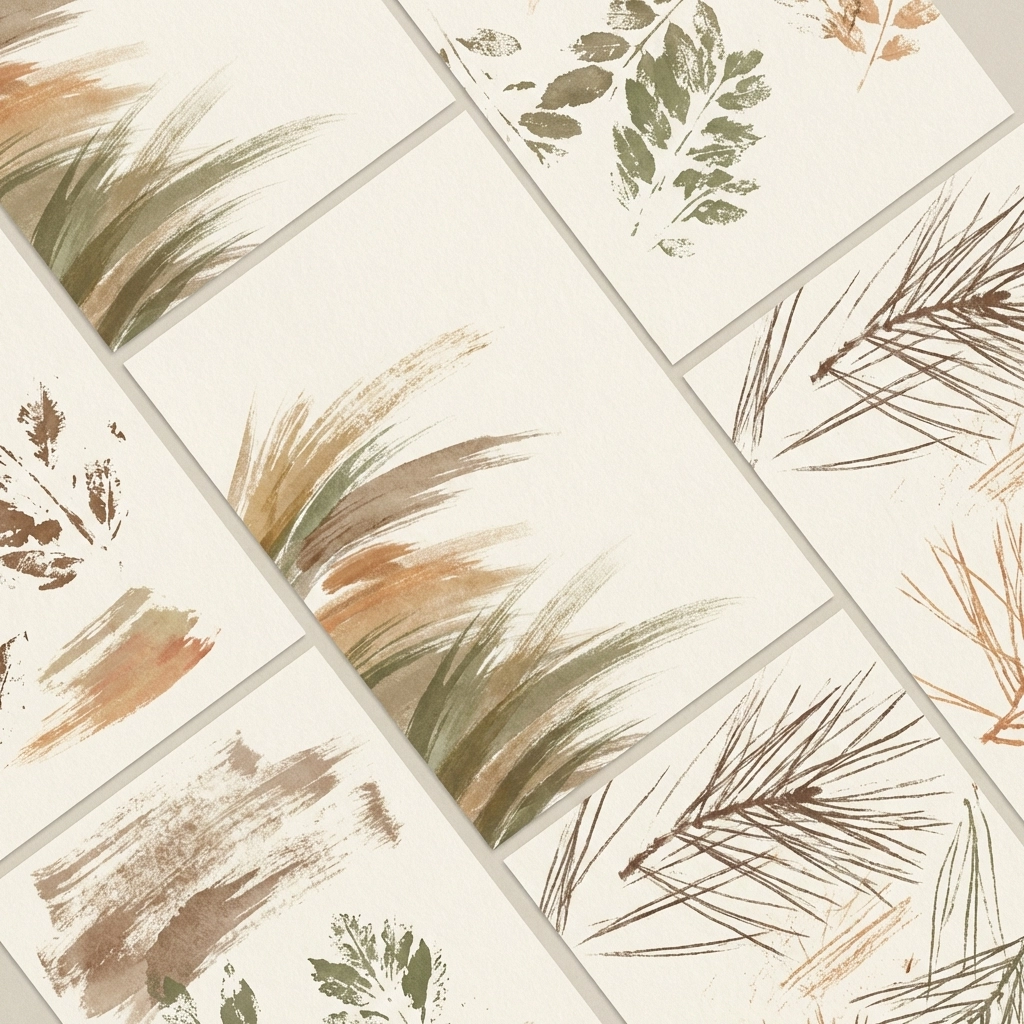
Pine needles: Produce fine, scratchy lines. Bundle tightly for concentrated marks. Spread apart for scattered, textured strokes.
Dried grasses: Create soft, flowing lines. Large sweeping arm movements reveal the best effects. Grasses bend and flow across paper.
Leaves: Function as stamps when pressed flat. Work as broad brushes when held at angles. Dried leaves crumble slightly, adding organic texture.
Feathers: Produce whisper-thin lines. The barbs separate and reunite across the page. Feathers work best with thin, watery paint.
Moss: Acts like a natural sponge. Dabbing motions create dotted, organic patterns. Moss holds significant amounts of paint.
Seed heads: Leave circular impressions. Each seed head produces a unique pattern based on its structure.
The discovery process matters. Testing each brush reveals unexpected results.
Can Natural Pigments Replace Store-Bought Paint?
Natural pigments exist in soil, plants, and organic matter across farm landscapes.
Sources for natural color:
- Red/brown tones: Clay soil, rust, dried berries
- Yellow tones: Dandelion heads, onion skins, turmeric root
- Green tones: Crushed leaves, grass stains, moss
- Purple/blue tones: Berries (blackberries, elderberries)
- Brown tones: Walnut hulls, coffee grounds, mud
- Black tones: Charcoal, burnt wood
Creating basic natural paint:
- Collect the pigment source material.
- Crush or grind the material thoroughly.
- Mix with water to create liquid consistency.
- Add a binding agent (egg yolk, flour paste, or honey) for adhesion.
- Strain if chunks remain.
- Store in small sealed containers.
Natural paints behave differently than commercial options. Colors appear more muted. Textures vary. This unpredictability becomes part of the creative experience.
Berry-based inks stain hands. Gloves help during preparation.
What Setup Works Best for This Project?
Outdoor spaces work well. Indoor spaces work equally well with proper covering.
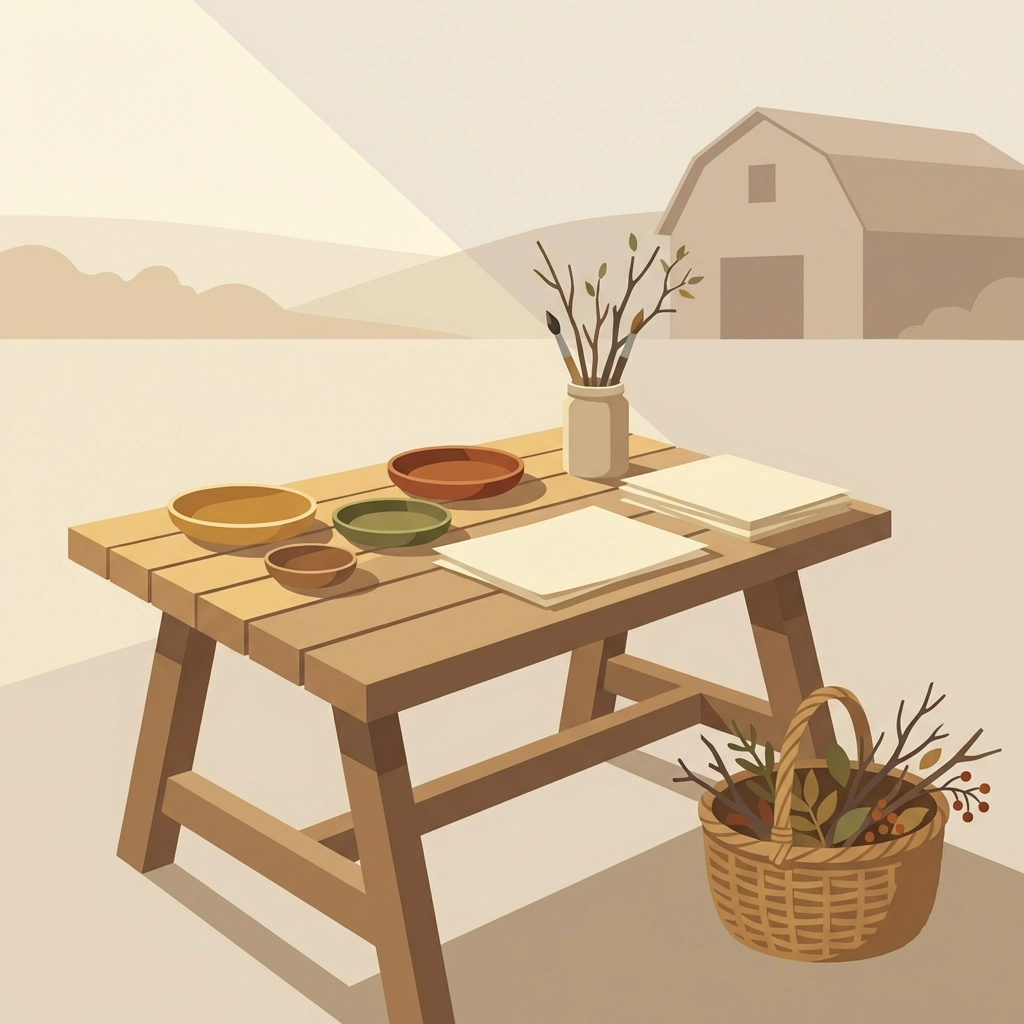
Recommended setup:
- Large sheets of paper or cardboard
- Shallow dishes for paint or natural pigments
- Water container for rinsing brushes
- Old towels or rags
- Drop cloth or newspaper (for indoor sessions)
- Collection basket for foraged materials
Thick paper handles moisture better than thin paper. Watercolor paper works. Cardboard works. Grocery bags opened flat work.
The workspace benefits from organization. Separate areas for different brush types prevent confusion. Labeled containers help during group sessions.
What Techniques Produce the Best Results?
Large arm movements reveal texture.
Small, controlled strokes produce detailed work. The choice depends on the desired outcome.
Effective techniques:
- Sweeping strokes: Hold the brush loosely. Move the entire arm, not just the wrist. Grasses and pine needles excel here.
- Stamping: Press the brush straight down. Lift straight up. Leaves and seed heads work best.
- Dabbing: Quick up-and-down motions. Moss and bundled flowers create organic patterns.
- Dragging: Pull the brush across the surface with pressure. Creates lines that reveal the material's texture.
- Rolling: Twist the brush while moving across paper. Produces varied line weights.
Layering adds depth. Start with large background strokes. Add detail work on top once the first layer dries.
How Does This Activity Benefit Participants?
The benefits extend beyond the finished artwork.
Cognitive benefits:
- Critical thinking develops during material selection
- Problem-solving occurs when brushes need adjustment
- Hand-eye coordination improves with each stroke
- Attention span increases through focused activity
Emotional benefits:
- Stress decreases during outdoor foraging
- Mindfulness develops through observation of natural details
- Satisfaction comes from creating with found materials
- Connection to the land deepens through direct interaction
The foraging portion of this project holds equal value to the painting portion. Walking through fields and woods with a purpose changes the experience. Details become visible that normally go unnoticed.
Seasonal changes affect available materials. Spring offers fresh growth. Summer provides dried grasses. Fall brings seed heads and changing leaves. Winter offers bare branches and dried remnants.
What Projects Work Well With Nature Brushes?
Abstract art requires no specific skill level.
Project ideas:
- Abstract landscapes using sweeping grass brushes
- Textured backgrounds for mixed media work
- Nature journals with foraged-brush illustrations
- Greeting cards with stamped leaf designs
- Wrapping paper with repeated patterns
- Wall art using large-scale techniques
- Collaborative murals with multiple brush types
Group projects encourage sharing of discovered techniques. One participant finds an effective method. Others observe and adapt.
The finished work carries meaning beyond its visual appearance. Each stroke connects back to a specific location on the land. The materials tell a story.
What Storage Methods Extend Brush Life?
Proper storage preserves brushes for multiple uses.
Storage guidelines:
- Allow brushes to dry completely before storing
- Store upright in containers to prevent crushing
- Keep in cool, dry locations
- Replace natural materials as they deteriorate
- Handles remain usable indefinitely
Fresh materials last one to three sessions. Dried materials last longer but produce different effects over time.
Some creators prefer single-use brushes. The gathering becomes part of each art session. New materials bring new possibilities each time.
What Makes This Project Worth the Effort?
The connection between landscape and artwork creates meaning.
Commercial art supplies disconnect the creator from materials. Foraged brushes reverse this separation. The land becomes both inspiration and medium.
The activity suits solo sessions and group gatherings equally. Complexity scales based on participant interest. Simple projects take thirty minutes. Elaborate pieces take hours.
No special skills required. No expensive supplies needed. The farm provides everything.
Walk the land with intention. Gather materials with curiosity. Create something unexpected.
The results surprise even experienced artists.