




Smart gardens use sensors to “talk” to us. They measure pH, EC, and light, sending data to computers to help us grow better. Think of sensors as tiny reporters stationed throughout your garden, constantly sending updates about what’s happening with your plants, even when you’re asleep, at school, or on vacation.
If you’ve been following our Junior Engineer series, you’ve learned how plants drink water through roots, why pH matters, and how we measure invisible plant food with EC meters. Now it’s time to put all those pieces together and discover how modern gardens can actually communicate with the people growing them.
Welcome to the world of the Internet of Things, where your lettuce can send you a text message.
What Does It Mean When a Garden “Talks”?
Gardens don’t have mouths, of course. But they do have needs, and those needs create signals that we can measure.
A thirsty plant might droop its leaves. A hungry plant might turn pale. A plant getting too much light might develop brown, crispy edges. For thousands of years, farmers and gardeners had to use their eyes, their experience, and sometimes just plain luck to figure out what their plants were trying to tell them.
Sensors change everything.
Instead of waiting for a plant to look sick, sensors measure conditions before problems happen. They’re like having a doctor check your vital signs every single second of every single day, except instead of checking your heartbeat, they’re checking your plant’s water, light, temperature, and nutrients.
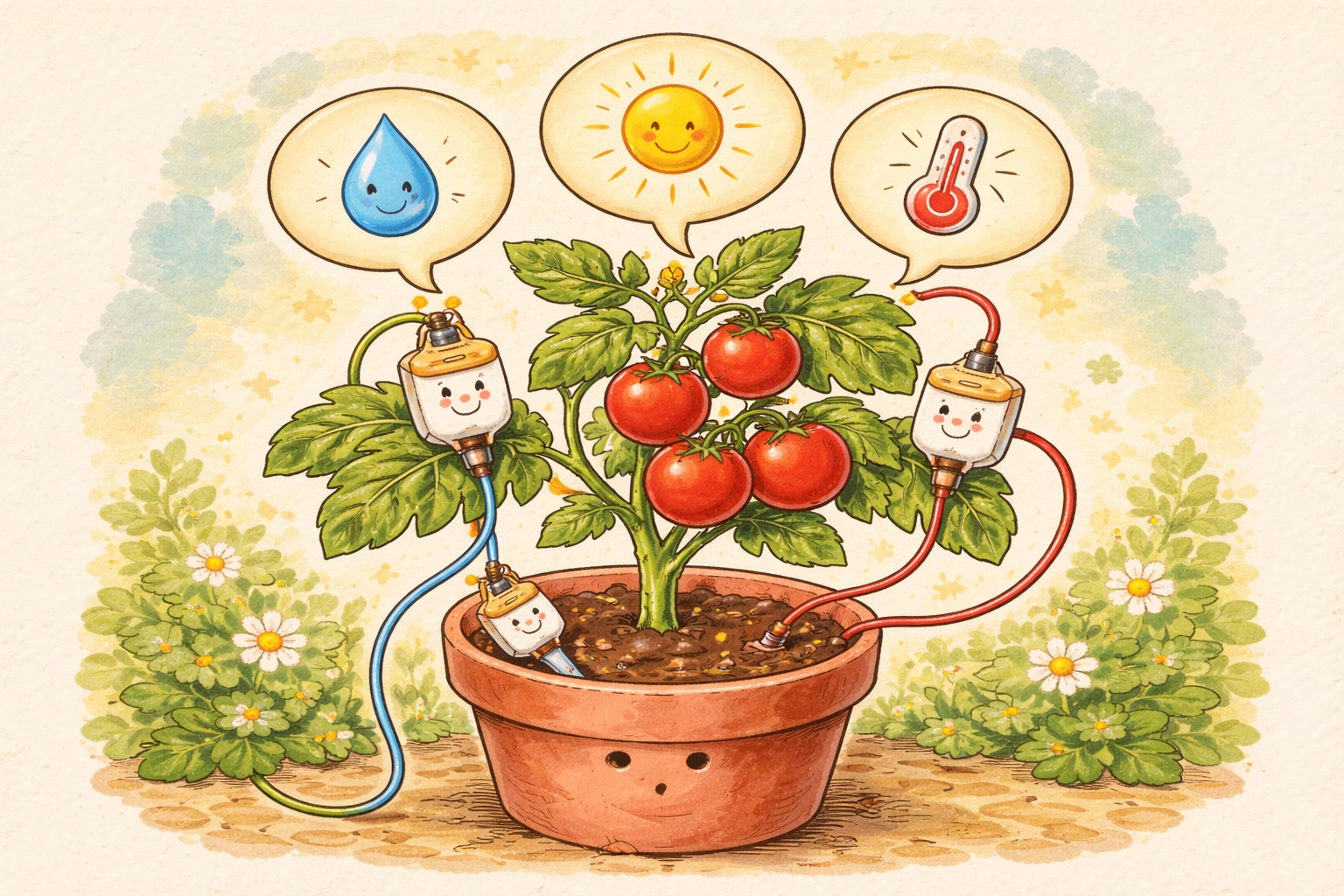
Meet the Sensor Family: Your Garden’s Eyes and Ears
Every sensor in a smart garden has one job: measure something specific and report back. Here are the sensors Junior Engineers should know about:
The Moisture Sensor (The Thirst Detective)
This sensor measures how much water is in your growing medium. In soil gardens, it checks the dirt. In hydroponic systems, it monitors the reservoir level or the moisture at the root zone.
What it tells you: “The roots are getting dry!” or “There’s plenty of water here.”
The pH Sensor (The Acid/Base Reporter)
You already know that pH measures how acidic or basic your nutrient solution is. A pH sensor does this job automatically, checking the water constantly instead of requiring you to dip test strips every day.
What it tells you: “The pH is 6.2, perfect for lettuce!” or “Warning: pH has dropped to 5.0!”
The EC/TDS Sensor (The Nutrient Counter)
Remember our lesson on measuring what you can’t see? EC sensors use electricity to count how much plant food is dissolved in your water, all day, every day.
What it tells you: “Nutrient levels are strong!” or “Time to add more fertilizer.”
The Light Sensor (The Sunshine Spy)
Plants need light to make food through photosynthesis. Light sensors measure how much light your plants are actually receiving, measured in units called lux or PAR (Photosynthetically Active Radiation).
What it tells you: “Your grow light is working great!” or “This corner is too shady for tomatoes.”
The Temperature Sensor (The Weather Watcher)
Plants are picky about temperature. Too cold and they stop growing. Too hot and they get stressed. Temperature sensors monitor the air around your plants and sometimes the water in your reservoir.
What it tells you: “The basement is 68°F, perfect for lettuce!” or “Alert: Temperature dropped to 45°F overnight!”
The Internet of Things: When Sensors Get Connected
Here’s where the magic happens.
A single sensor can only tell you what’s happening right now, in that exact spot. But when you connect multiple sensors to a computer or microcontroller, and that computer connects to the internet… suddenly your garden becomes part of something bigger.
This is called the Internet of Things, or IoT for short.
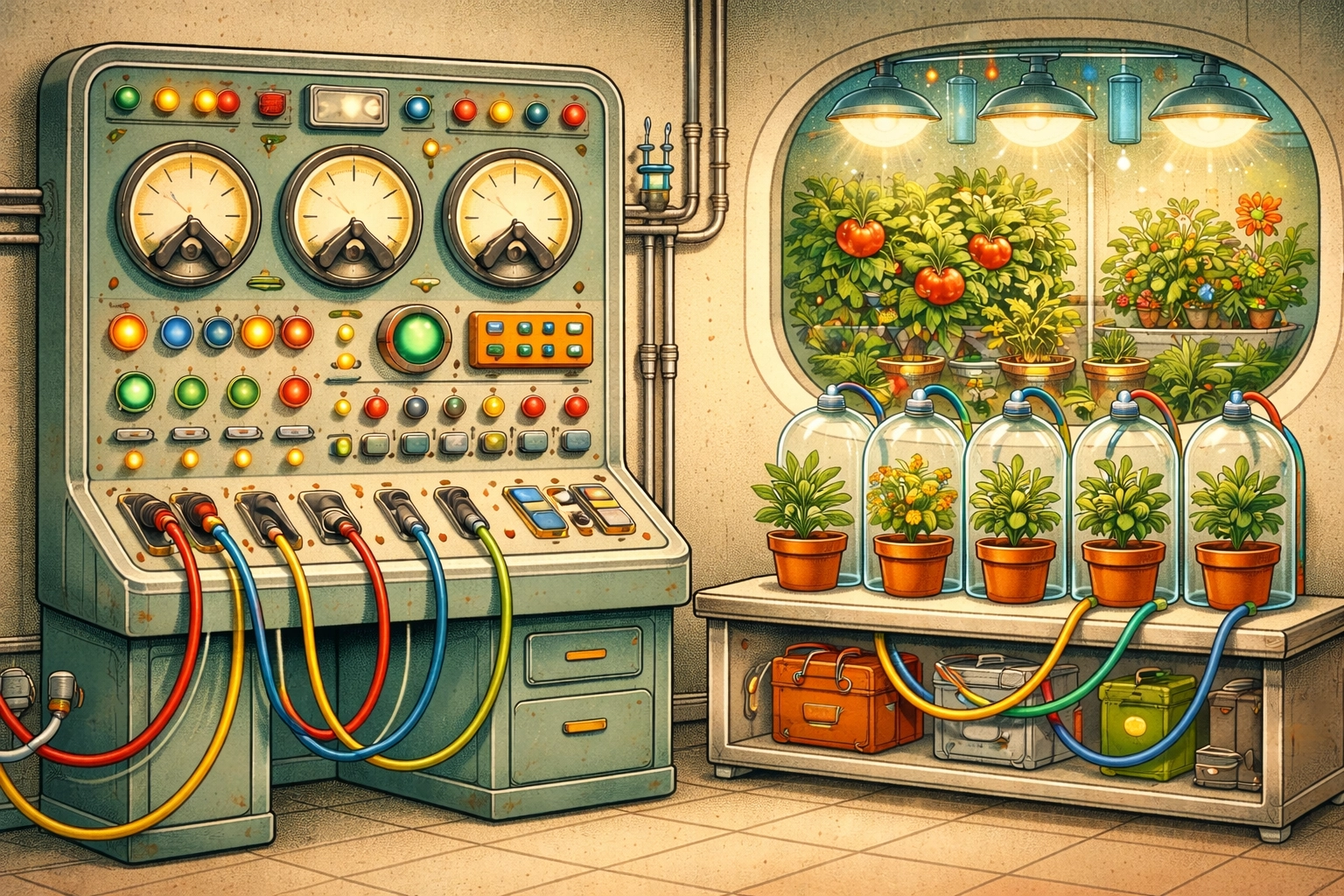
The Internet of Things is exactly what it sounds like: everyday objects (things!) connected to the internet so they can send and receive information. Your garden sensors become “smart” when they can:
- Collect data (measure pH, moisture, light, temperature, EC)
- Send that data to a computer, phone, or cloud server
- Trigger actions based on what they measure
According to research published in Frontiers in Plant Science (2024), high-resolution data collection from plant sensors allows scientists to track plant growth with incredible precision, measuring changes in mass, height, and health that human eyes would never notice.
For Junior Engineers, this means we can build gardens that don’t just grow plants, they learn how to grow plants better over time.
How Smart Gardens Make Decisions
Imagine you built a hydroponic lettuce garden with sensors for moisture, pH, EC, light, and temperature. Here’s how a smart system might work:
Scenario 1: The Water Gets Low
The moisture sensor notices the reservoir is getting empty. It sends a signal to the computer. The computer turns on a pump to add more water from a backup tank. The system sends you a notification: “Added 2 gallons of water at 3:47 PM.”
You didn’t have to do anything. The garden handled it.
Scenario 2: The pH Drifts
The pH sensor notices the water has become too acidic (pH 5.2). The computer logs this information and sends you an alert: “pH is low. Consider adding pH Up solution.” You check the app on your phone, see the warning, and fix the problem before your plants even notice.
Scenario 3: The Lights Need Adjusting
The light sensor notices that winter days are getting shorter, and your plants are receiving less natural light. The computer automatically extends the grow light timer by one hour to compensate.
Your plants keep growing strong, even as the seasons change.
Automation: The Robot Gardener
Sensors are the eyes and ears. But a smart garden also needs hands, something to actually do the work.
This is where automation comes in.
Timers turn things on and off at scheduled times. Your grow lights might run from 6 AM to 10 PM every day, controlled by a simple timer.
Relays are like electrical switches that a computer can control. When a sensor says “the water is low,” a relay can flip on a pump.
Actuators are devices that create physical movement, opening a valve, adjusting a vent, or moving a shade cloth.
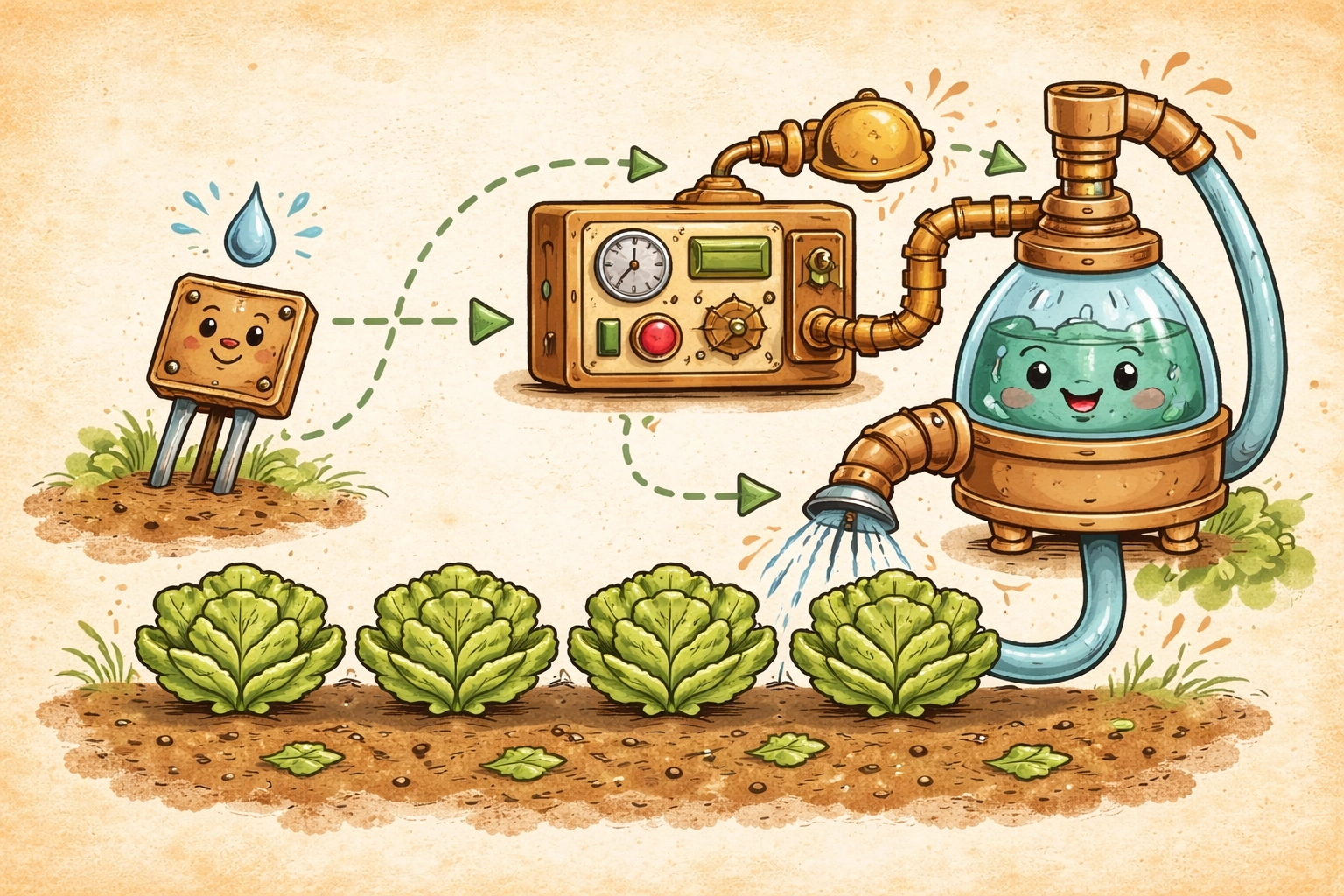
When you combine sensors (to gather information) with relays and actuators (to take action), you create a system that can run itself. The human gardener becomes a supervisor, checking in occasionally rather than doing every task by hand.
Building Your First “Talking” Garden
You don’t need expensive equipment to start experimenting with smart garden concepts. Here are some Junior Engineer-appropriate ways to begin:
Level 1: Manual Monitoring
Use handheld meters (pH pen, EC meter, thermometer) to check your garden daily. Write the readings in a journal. You are the computer, spotting patterns and making decisions.
Level 2: Simple Timers
Add a basic outlet timer to your grow lights or air pump. This is automation at its simplest, no sensors required, just scheduled on/off cycles.
Level 3: Connected Sensors
With adult supervision, explore beginner-friendly microcontrollers like Arduino or Raspberry Pi. These small computers can read sensor data and display it on a screen, or even send it to your phone.
Why This Matters for Young Growers
Learning about sensors and IoT isn’t just about gardening. These same concepts power:
- Weather stations
- Medical devices
- Self-driving cars
- Factory robots
- Space exploration equipment
When you understand how sensors collect data and how computers use that data to make decisions, you’re learning skills that apply to almost every field of science and engineering.
Your talking garden is a training ground for the future.
Linda’s Disclaimer
Linda here, the responsible voice in the background. Electrical projects involving microcontrollers, sensors, and wiring should always be done with adult supervision. Water and electricity don’t mix, so keep all electronic components safely away from splashing nutrient solutions. If you’re connecting anything to your home’s electrical system, please have a qualified adult handle that part. Start simple, stay safe, and remember: the best engineers are careful engineers.
Frequently Asked Questions
Can kids really build smart garden systems?
Absolutely! Start with simple projects like timers and handheld meters, then gradually add more technology as your skills grow. Many schools use Arduino-based garden projects to teach coding and electronics.
How much does a basic sensor system cost?
Individual sensors (pH, temperature, moisture) can cost $10-30 each. Complete beginner kits with microcontrollers range from $30-100. You don’t need everything at once: build your system piece by piece.
What if a sensor breaks or gives wrong readings?
Sensors need calibration and occasional replacement. Always cross-check important readings with a backup method (like pH test strips) until you trust your equipment.
References
- Frontiers in Plant Science. (2024). High-resolution data collection for plant mass measurement in automated growing systems.
- Arduino Project Hub. Smart Garden IoT tutorials and community projects.
- University Extension Services. Introduction to precision agriculture sensors.
The Garden That Talks is the seventh post in our Junior Engineer technical series. Next time, we’ll explore how all these systems come together in real working farms( from backyard setups to commercial greenhouses.)