



Every garden needs bees and butterflies because these tiny helpers make your plants grow, bloom, and produce food. Pollinators are responsible for helping over 75% of the world's flowering plants reproduce: and about one-third of the food on your dinner table exists because a bee, butterfly, or other pollinator did its job. Without them, your tomatoes wouldn't fruit, your squash wouldn't grow, and your flower garden would look pretty sad.
Let's explore the wonderful world of pollinators and learn how your family can roll out the welcome mat for these garden superheroes.
What Exactly Do Pollinators Do?
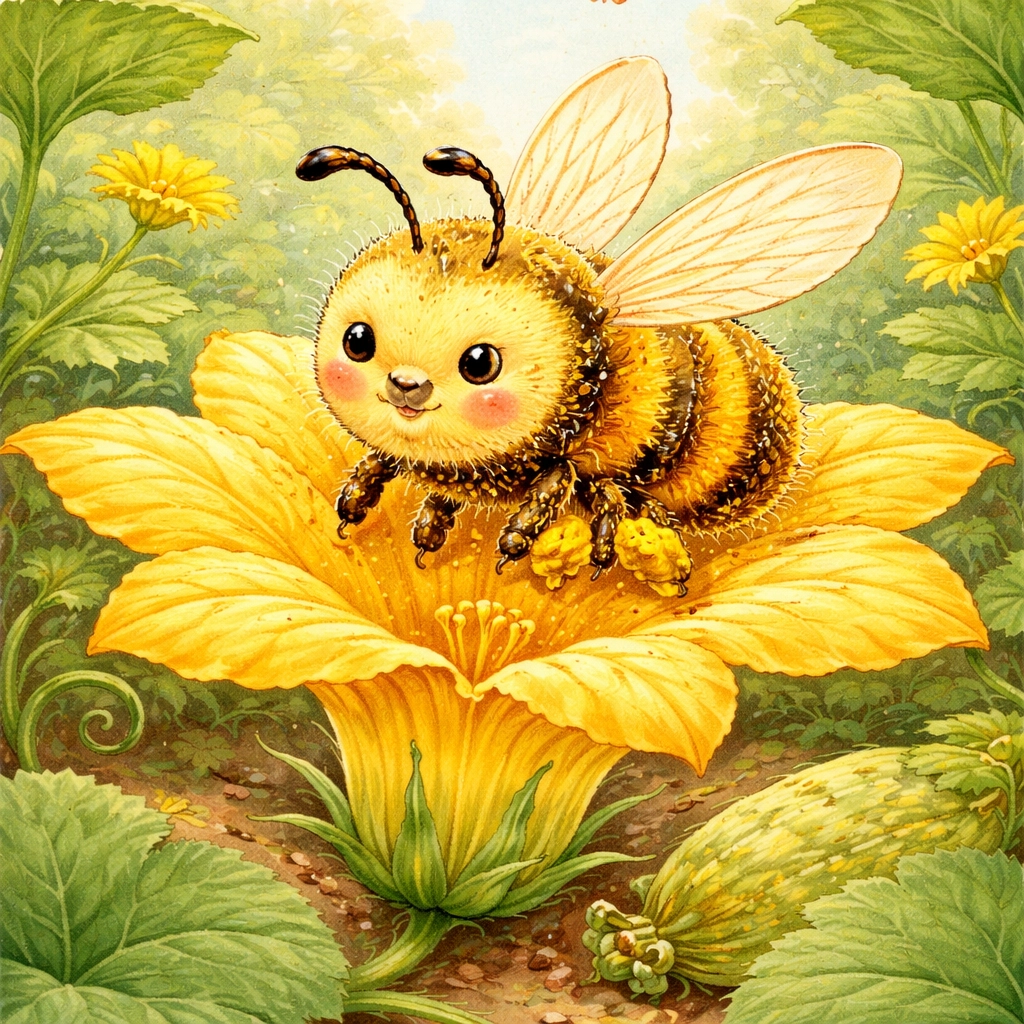
Picture this: a fuzzy bumblebee lands on a bright yellow squash blossom. As it sips sweet nectar, tiny grains of pollen stick to its fuzzy body. When that bee buzzes over to the next flower, some of that pollen rubs off. That transfer: pollen moving from one flower to another: is called pollination, and it's how plants make seeds, fruits, and vegetables.
Without pollination, most plants can't reproduce. No pollination means no apples, no strawberries, no pumpkins, and no sunflower seeds. It's that simple: and that important.
Meet Your Garden's Pollinator Squad
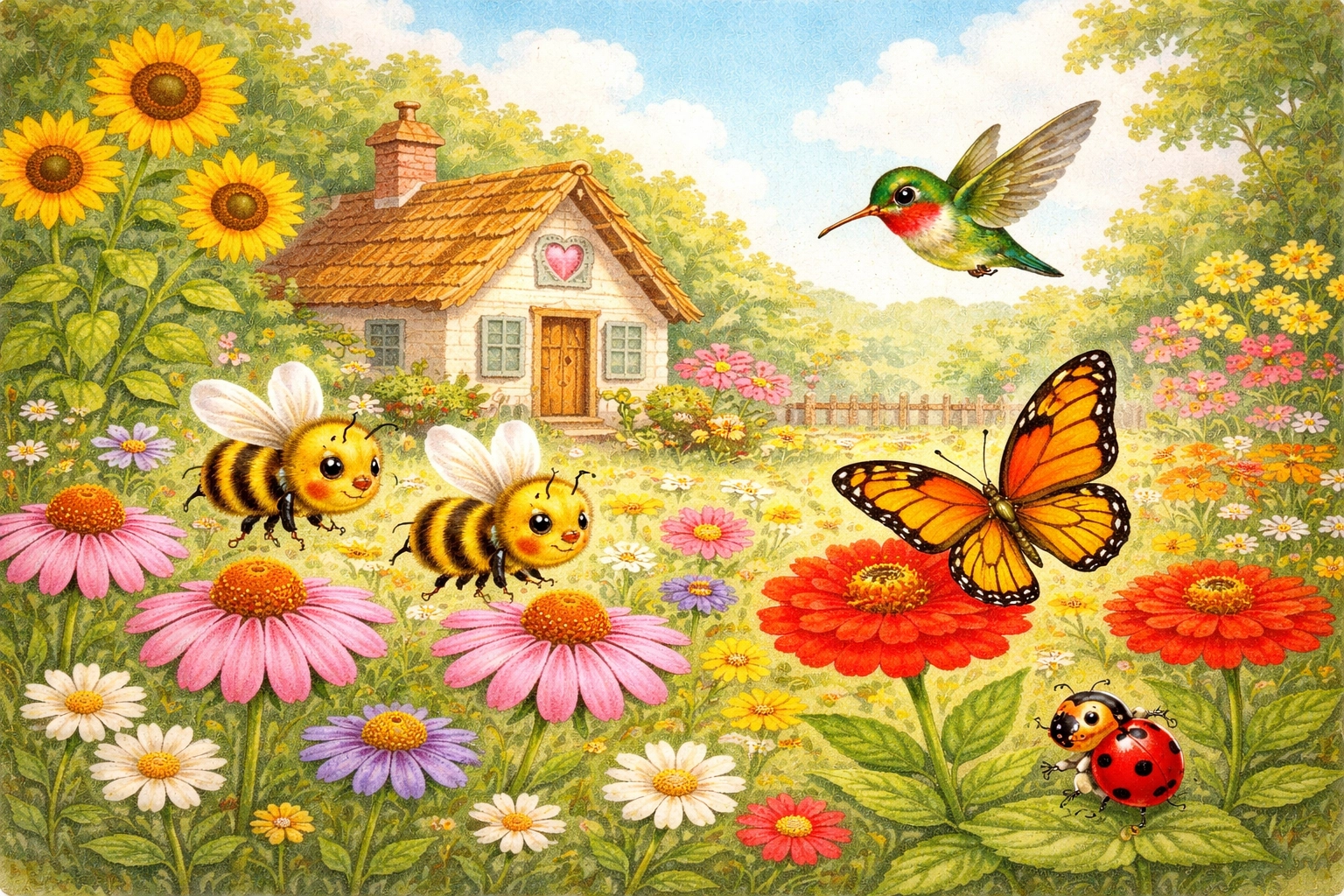
Bees and butterflies get most of the attention (and they deserve it!), but your garden actually attracts a whole crew of helpful pollinators. Here's who might be visiting your backyard:
Bees: The Workhorses
Honeybees, bumblebees, mason bees, and sweat bees are some of the most efficient pollinators around. They visit flowers specifically to collect pollen and nectar, which means they're incredibly thorough. A single honeybee colony can pollinate 300 million flowers in a single day!
Butterflies: The Colorful Wanderers
Butterflies float from flower to flower, sipping nectar with their long, straw-like tongues. While they're not as fuzzy as bees (so less pollen sticks to them), they travel longer distances, helping spread pollen across your whole garden: and beyond.
Moths: The Night Shift
While butterflies work during the day, moths take over after sunset. They're especially attracted to white or pale flowers that open in the evening, like moonflowers and evening primrose.
Hummingbirds: The Tiny Helicopters
These zippy little birds hover in front of tubular flowers, drinking nectar and spreading pollen with their long beaks and foreheads. They love red, orange, and pink blooms.
Beetles and Flies: The Unsung Heroes
They might not be as charming, but beetles and certain flies pollinate plenty of plants too. Ancient flowering plants actually evolved to be pollinated by beetles before bees even existed!
Why Your Garden (and the Whole Planet) Needs Pollinators
Better Fruits and Vegetables
Well-pollinated plants don't just produce more food: they produce better food. Fruits and vegetables that receive thorough pollination are larger, more flavorful, and more uniform in shape. Ever grown a weird, lopsided strawberry? That's often a sign of incomplete pollination.
A Healthier Ecosystem
Pollinators create a ripple effect throughout nature. The seeds, nuts, and fruits they help produce feed birds, squirrels, and other wildlife. The pollinators themselves become food for frogs, birds, and small mammals. Everything connects.
Biodiversity Protection
Different pollinators prefer different flowers, creating what scientists call "pollination webs." This diversity makes ecosystems more resilient against disease, extreme weather, and invasive species. The more pollinator variety in your garden, the stronger and healthier it becomes.
Food Security for Humans
Here's a number that might surprise you: pollinators contribute to the production of crops worth over $200 billion worldwide each year. Coffee, chocolate, almonds, apples, blueberries: all depend on pollination. Supporting pollinators in your backyard is actually a small act of food security.
The Secret Superpower of Home Gardens
Here's something amazing that researchers discovered: in cities and towns, private home gardens produce roughly 85% of the nectar that pollinators need to survive. Not parks. Not nature preserves. Regular backyard gardens like yours.
Gardens cover about 29% of urban land: that's six times more space than public parks! This means your little patch of soil isn't just a hobby. It's genuine pollinator habitat. What you plant and how you care for your garden directly impacts whether bees and butterflies can find enough food to survive.
That's real power, and your family can use it.
How to Make Your Garden a Pollinator Paradise
Ready to welcome more bees and butterflies? Here are practical steps your family can take together:
1. Plant a Rainbow of Flowers
Pollinators see colors differently than we do, and different species prefer different hues. Plant a variety:
- Blues and purples (lavender, salvia, catmint) attract bees
- Reds and oranges (bee balm, zinnias, cardinal flower) draw hummingbirds
- Yellows and whites (sunflowers, coneflowers, daisies) appeal to butterflies and many bees
2. Plan for Continuous Blooms
Pollinators need food from early spring through late fall. Choose plants that bloom at different times:
- Spring: Crocuses, hyacinths, fruit tree blossoms
- Summer: Black-eyed Susans, coneflowers, milkweed
- Fall: Asters, goldenrod, sedum
This way, there's always something on the menu.
3. Skip the Pesticides
Chemical pesticides don't just kill garden pests: they harm pollinators too. If you need pest control, try hand-picking bugs, using row covers, or choosing organic options that target specific pests rather than everything that moves.
4. Let Things Get a Little Wild
Resist the urge to keep your lawn perfectly manicured. Allow patches of clover and dandelions to grow: they're excellent early-season food for bees. Leave some leaf litter in garden corners where beneficial insects can shelter.
5. Provide Water Sources
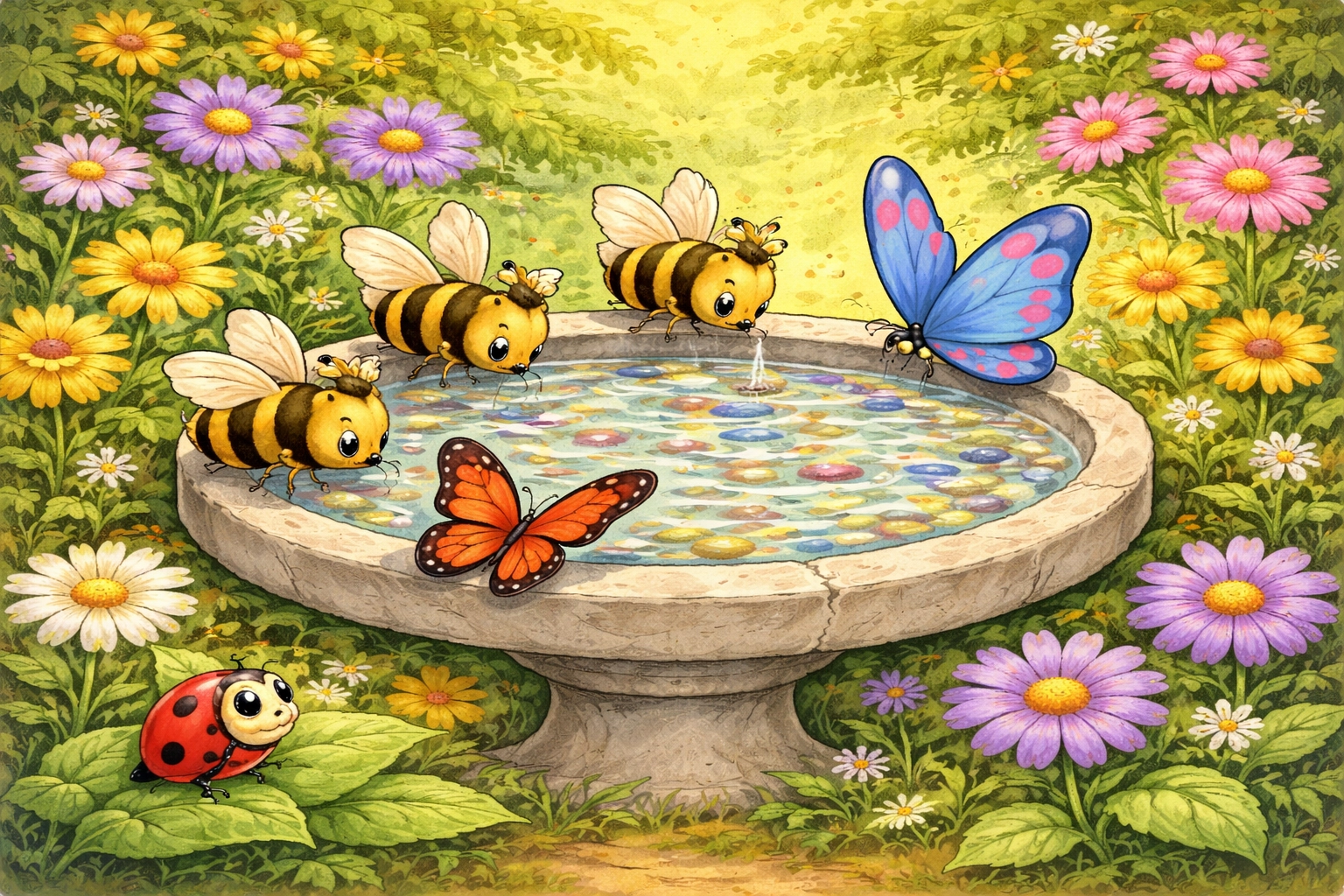
Pollinators get thirsty! A shallow dish filled with pebbles and water gives bees and butterflies a safe place to drink without drowning. Change the water regularly to prevent mosquito breeding.
6. Choose Native Plants When Possible
Native plants and native pollinators evolved together over thousands of years. They're perfectly matched. Local bees know exactly how to work native flower shapes, and the bloom times sync up with when pollinators need food most. Check with your local garden center or extension office for native plant recommendations in your area.
7. Create Shelter and Nesting Sites
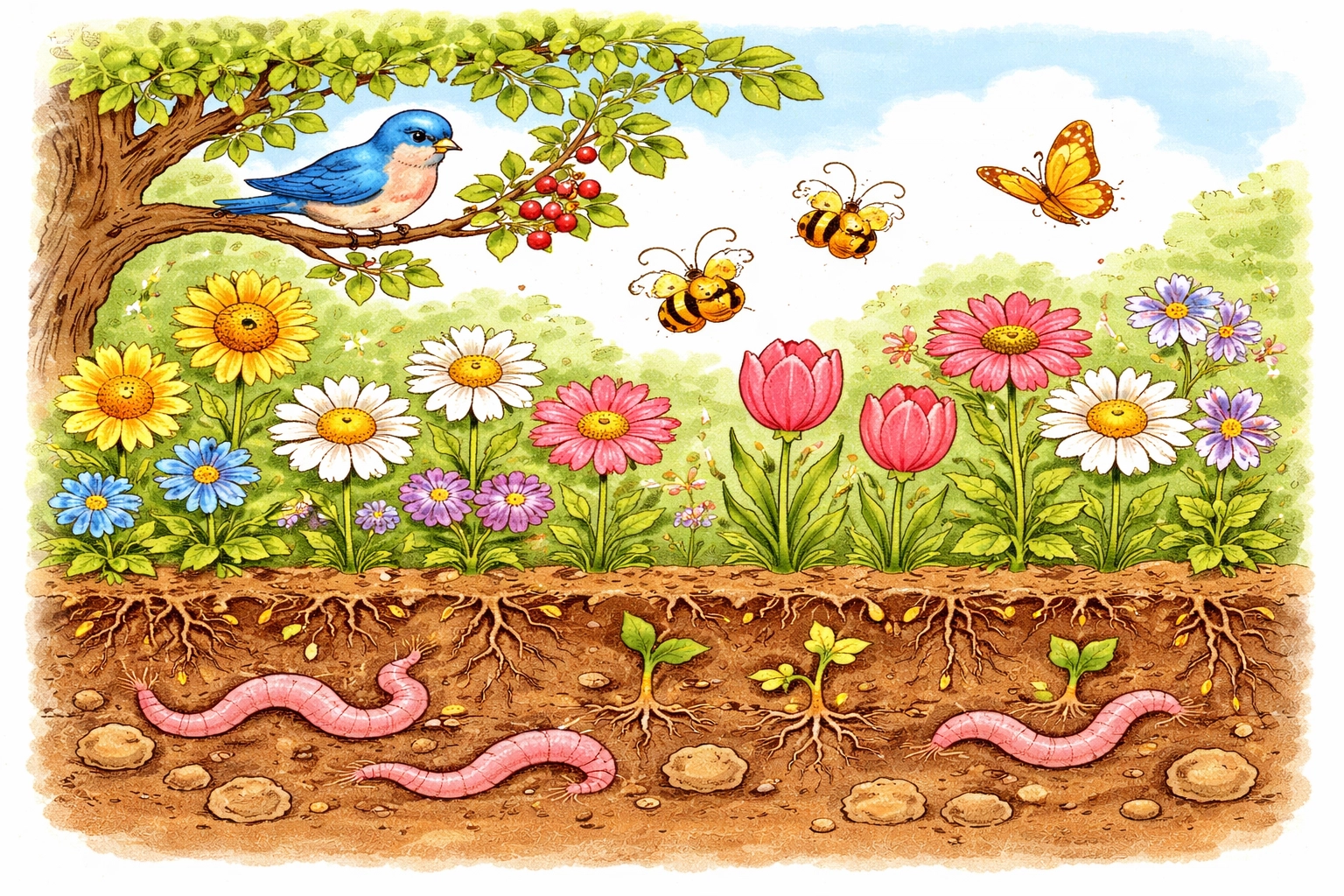
Many native bees don't live in hives: they nest in the ground or in hollow stems. Leave some bare soil patches (no mulch) for ground-nesting bees. Let spent flower stalks stand through winter so stem-nesting bees can use them.
A Family Activity: The Pollinator Watch
Turn pollinator appreciation into a hands-on learning experience. Spend 15 minutes in your garden with your kids and observe:
- How many different types of pollinators can you spot?
- Which flowers seem most popular?
- Do bees and butterflies visit the same flowers, or different ones?
- Can you see pollen stuck to a bee's legs or body?
Keep a simple nature journal to track your observations throughout the growing season. You'll be amazed at how much more you notice when you're paying attention.
The Big Picture
When you plant flowers for pollinators, you're doing so much more than making your yard pretty. You're creating habitat. You're supporting the food web. You're teaching your children that even small creatures play enormous roles in keeping our world running.
Bees and butterflies have been doing this work for millions of years. All we have to do is give them a place to do it.
Your garden: no matter how small: can be that place.
For more family-friendly nature projects, explore our guides on building a DIY mini greenhouse with plastic bottles or creating a worm composting bin with your kids.
FAQ
Which plants attract the most bees and butterflies?
Lavender, sunflowers, and milkweed are like a "five-star restaurant" for pollinators. They provide plenty of nectar and are easy for bugs to find.
Is it safe to have bees in a kid's garden?
Generally, yes! Most garden bees (like bumblebees) are very gentle and only care about the flowers. Teaching kids to watch them from a respectful distance is a great lesson in nature.
Why are pollinators so important for our food?
Almost one out of every three bites of food we eat is thanks to a pollinator. Without them, we wouldn't have many of our favorite fruits, vegetables, and nuts.
References
- Xerces Society – Pollinator Conservation Resources
- University of Bristol – Urban Garden Nectar Research (2021)
- USDA Natural Resources Conservation Service – Pollinator Biology and Habitat
- Food and Agriculture Organization of the United Nations – Pollinators and Food Production