



What lives in soil? A single handful of healthy soil contains more living organisms than there are people on Earth: including earthworms, bacteria, fungi, tiny insects, and countless microbes all working together to create the foundation for plant life. Teaching kids about this hidden underground world turns an ordinary backyard dig into an unforgettable science adventure.
Let's grab our magnifying glasses and explore the secret life happening right beneath our feet.
Why Soil Isn't Just "Dirt"
Here's something that blows kids' minds every single time: soil is alive.
We tend to think of the ground as just… ground. Brown stuff. Something to wipe off our shoes. But healthy soil is actually a bustling city of creatures, each with their own job to do.
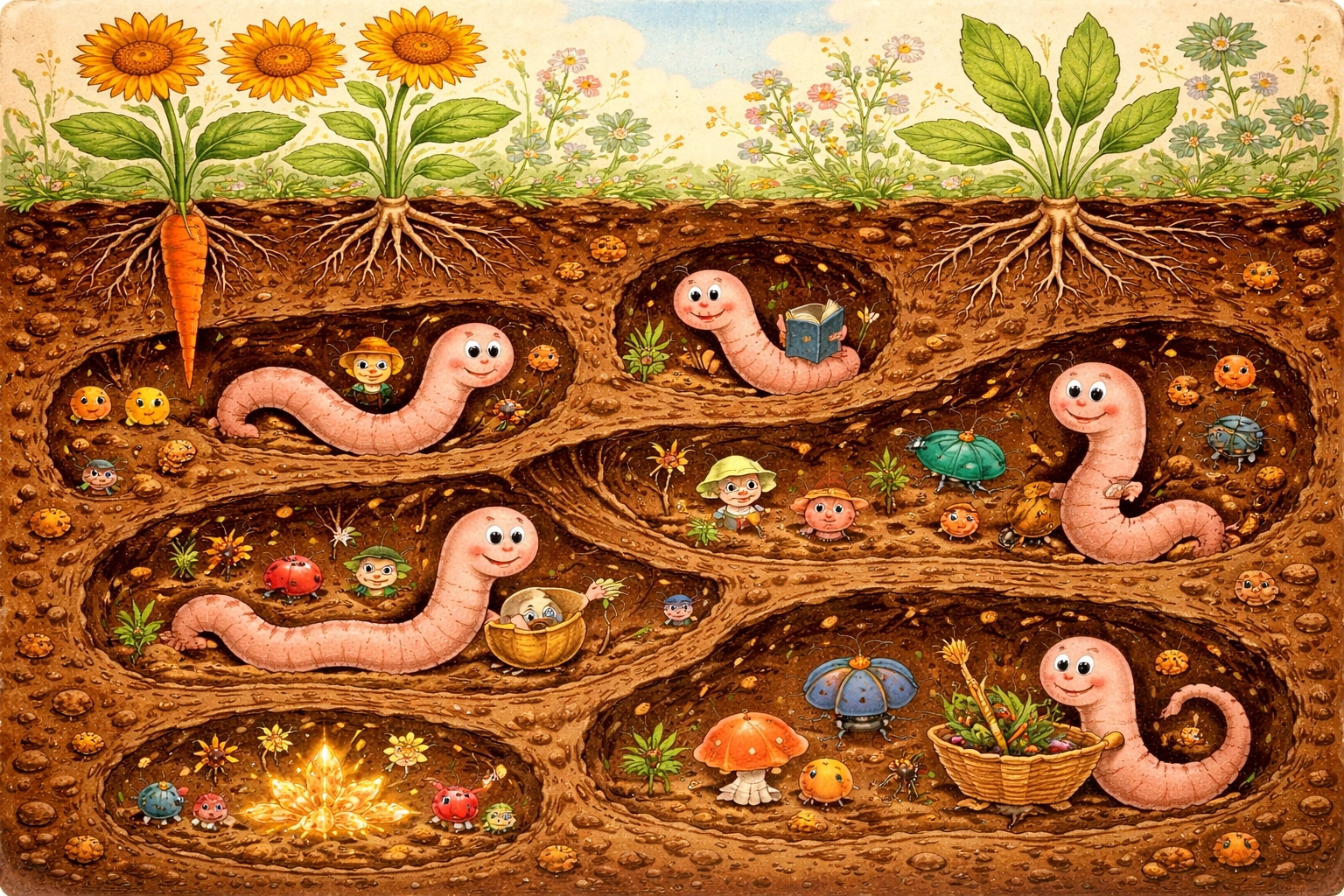
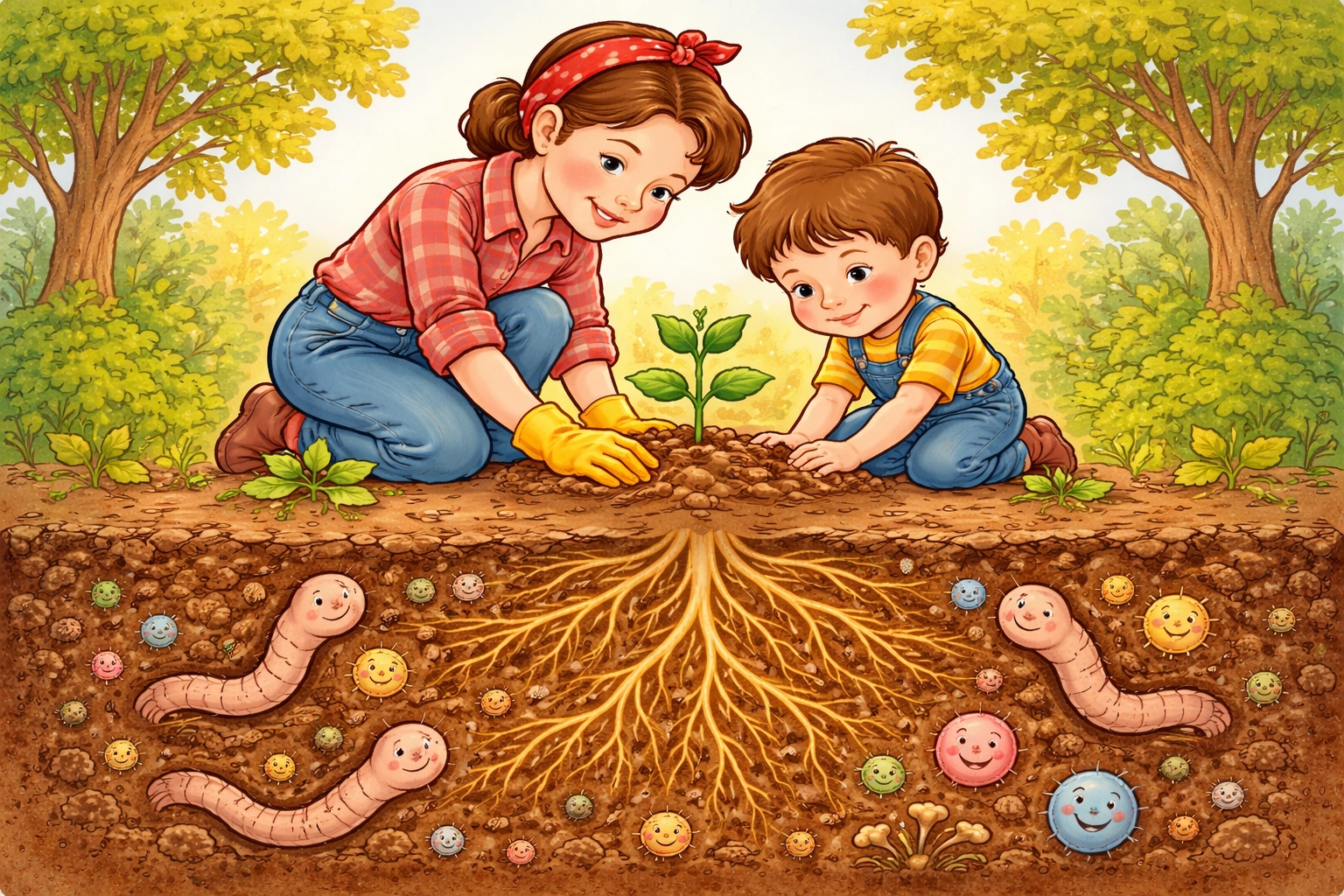
When leaves fall from trees or a plant dies, it doesn't just disappear. Earthworms, beetles, bacteria, and fungi get to work breaking it down into nutrients that feed new plants. Scientists call this the "soil food web": and it's one of nature's most important recycling systems.
Without these underground workers, dead plants would pile up forever, and nothing new could grow. Pretty important job, right?
Meet the Underground Crew
So who exactly lives down there? Let's introduce your kids to the cast of characters:
The Visible Workers
These are the creatures kids can spot with their own eyes:
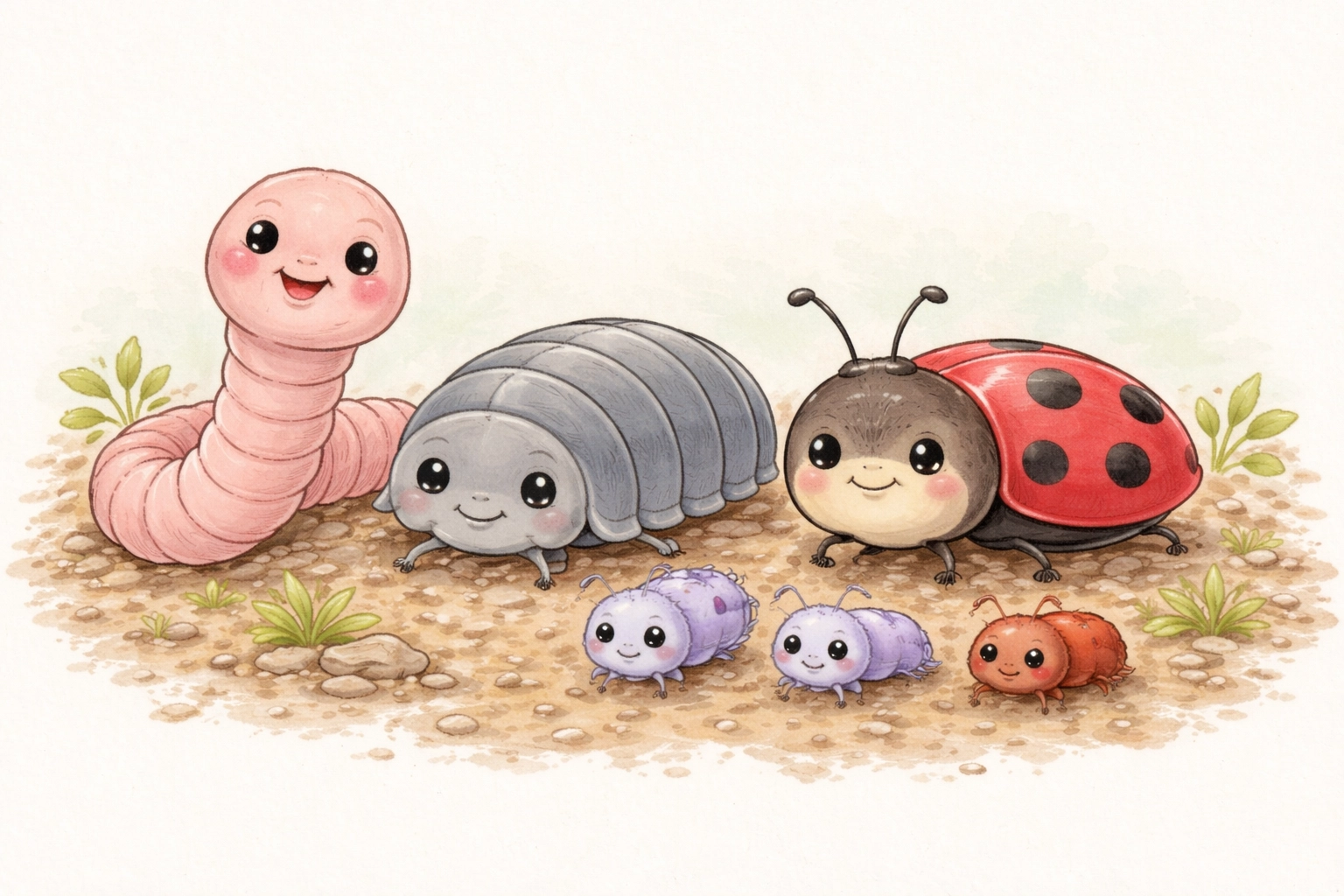
- Earthworms – The superstars of soil. They tunnel through the ground, eating dead plant material and leaving behind nutrient-rich castings (that's a fancy word for worm poop, which plants absolutely love).
- Millipedes and Sow Bugs – These little rollers munch on decaying leaves and wood.
- Ants and Beetles – They dig tunnels that help air and water reach plant roots.
- Springtails and Mites – Tiny but mighty, these guys break down the smallest bits of organic matter.
The Invisible Helpers
These require a microscope, but they do the heaviest lifting:
- Bacteria – Billions in every teaspoon of soil! They break down dead stuff into simple nutrients plants can absorb.
- Fungi – Those thread-like networks (called mycelium) actually connect plants underground and help them share nutrients. Some scientists call it the "wood wide web."
- Protozoa – Single-celled organisms that eat bacteria and release even more nutrients.
When kids understand that this invisible army is working 24/7 right under the swing set, the backyard becomes a whole lot more interesting.
Hands-On Activity: The Soil Safari
Ready to explore? Here's a simple investigation you can do with kids of any age.
What You'll Need:
- A small shovel or garden trowel
- A white plate or shallow tray
- A magnifying glass
- A notebook and pencil
- Small containers (optional, for temporary observation)
Step-by-Step Instructions:
Step 1: Choose Your Dig Sites
Pick 2-3 different spots around your yard or a local park. Try to include variety: maybe one spot under a tree with lots of leaf litter, one in a garden bed, and one in a bare or compacted area.
Step 2: Collect Your Samples
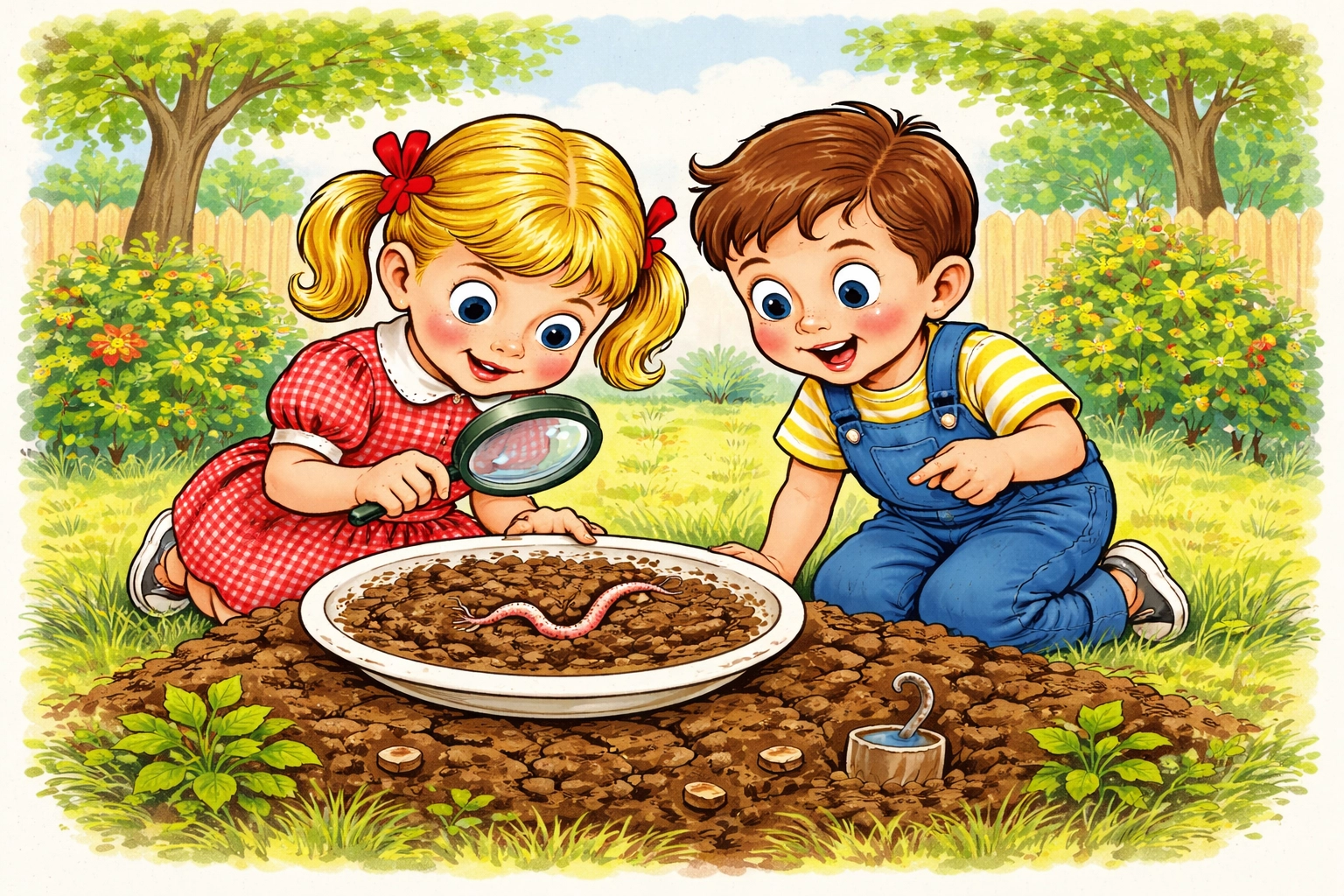
Dig up about a cup of soil from each location. Place each sample on a separate section of your white plate or tray. The white background makes it much easier to spot tiny creatures.
Step 3: Get Searching
Using fingers, sticks, or small tools, gently spread out the soil and look for movement. Check for:
- Earthworms (count them!)
- Small insects or beetles
- Tiny white or translucent creatures
- Anything that wiggles, crawls, or squirms
Step 4: Record Your Findings
Have kids draw what they see and make tally marks for each type of creature. Which location had the most life? Which had the least?
Step 5: Discuss and Compare
This is where the learning really clicks. Ask questions like:
- Why do you think the soil under the tree had more worms?
- What was different about the bare patch?
- What do these creatures need to survive?
Kids often discover on their own that healthy soil (with lots of organic matter like leaves and mulch) supports way more life than compacted or chemically-treated soil. That's a big lesson wrapped in a fun activity.
Going Deeper: Start a Worm Composting Bin
If your kids are hooked on earthworms (and let's be honest, most kids are), take it to the next level with a DIY worm composting bin.
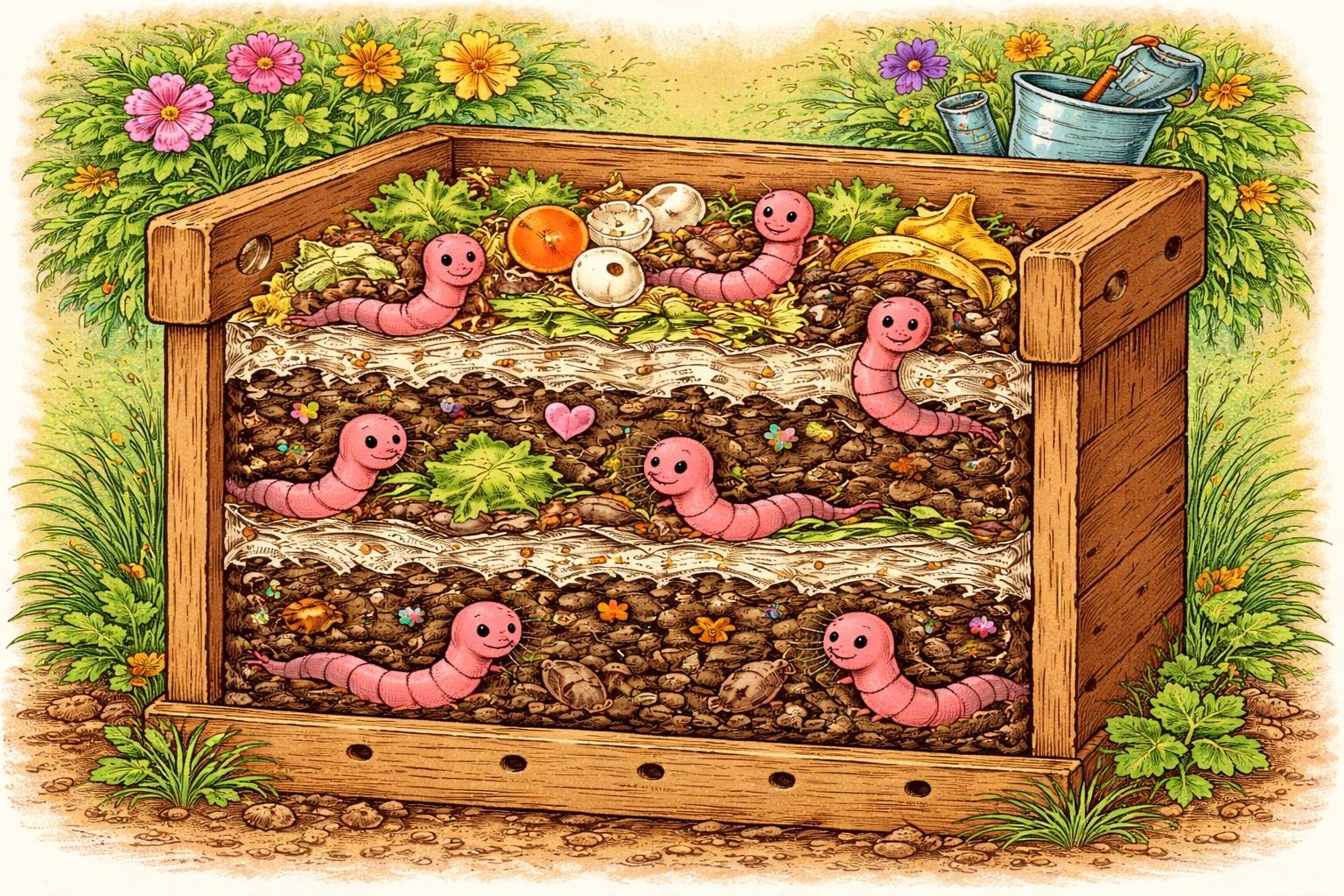
Worm composting (also called vermicomposting) lets kids observe decomposition in action. They'll feed kitchen scraps to red wiggler worms and watch as those scraps transform into rich, dark compost over several weeks.
It's like having a front-row seat to the soil food web: right in your garage or under the kitchen sink.
We've got a full step-by-step guide to help you get started: How Do You Create a DIY Worm Composting Bin with Children
Simple Experiments to Try
Want to dig even deeper into soil science? Here are a few more ideas:
The Breathing Soil Test
Did you know soil "breathes"? Microbes release carbon dioxide as they break down organic matter: just like we exhale when we breathe.
Try this: Place a small amount of moist soil in a sealed jar with a lit candle (adult supervision required). The candle will eventually go out as the microbes use up the oxygen. Compare how fast this happens with different soil types.
The Earthworm Tunnel Viewer
Fill a clear container (like a large mason jar or small aquarium) with layers of different colored sand and soil. Add a few earthworms and some food scraps on top. Cover the outside with dark paper.
After a few days, remove the paper and observe how the worms have mixed the layers and created tunnels. Kids can literally see the work earthworms do underground.
Soil Texture Test
Collect soil from different areas. Add water to each sample in a jar, shake vigorously, and let it settle for 24 hours. The layers that form (sand on bottom, silt in middle, clay on top) teach kids about soil composition.
Why This Matters Beyond the Backyard
Teaching kids about soil life isn't just about science facts: it's about building respect for the natural world.
When children understand that healthy soil grows healthy food, and that tiny creatures are essential to that process, they start making connections:
- Why composting matters
- Why we don't pour chemicals everywhere
- Why gardens need organic matter
- Why protecting natural spaces is important
These aren't abstract environmental concepts anymore. They're real, observable, and something kids helped discover themselves.
Keep the Exploration Going
The secret life of soil is one of those topics that just keeps giving. Once kids start noticing earthworms after a rainstorm or asking what makes compost smell "earthy," you know the lesson stuck.
Here are a few ways to extend the learning:
- Start a nature journal specifically for soil observations
- Visit a local farm and ask about their soil health practices
- Read books about decomposition and underground ecosystems (your library has great options for all ages)
- Plant something together and talk about how roots interact with soil creatures
Every time your family digs in the garden, you're meeting millions of tiny neighbors who make growing things possible. That's a pretty magical thought: and one worth sharing with the next generation.
FAQ
- Why are earthworms called 'nature's recyclers'? They eat old leaves and bits of food and turn them into "worm castings" (which is basically super-powered dirt for plants). They also help air get into the soil as they crawl.
- How can kids tell if their soil is healthy? Look for life! Healthy soil is usually dark, crumbly, and full of worms and tiny bugs. If you see plenty of "critters," your soil is doing a great job.
- Do microbes in the soil help plants? Yes! Tiny bacteria and fungi work with the plant roots to help them "eat" nutrients and stay healthy. It’s a huge, busy community right under our feet!
References
- Soil Biology and the Soil Food Web – USDA Natural Resources Conservation Service
- Microorganisms in Soil – University Extension Programs
- Teaching Soil Ecology to Students – Environmental Education Resources
- Composting with Worms – Cornell Cooperative Extension
- Carbon Cycling in Soil Ecosystems – National Science Teaching Association