



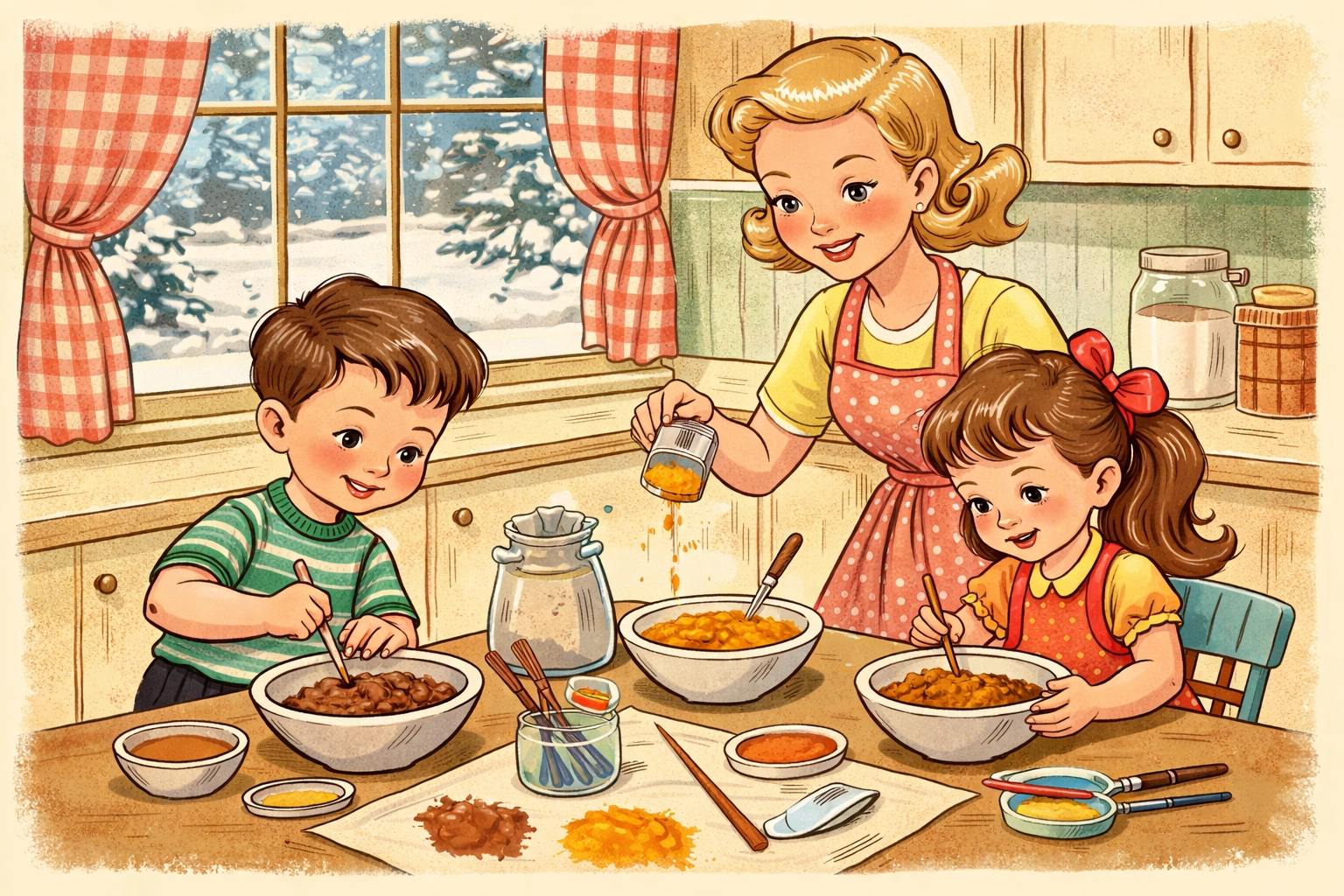
Yes, you can absolutely paint with spices from your kitchen pantry! Cinnamon, turmeric, cocoa powder, and other common spices mixed with water (or a simple flour paste) create beautifully textured, wonderfully scented paints that work on regular paper. No craft store trip required, just raid your spice rack and let the creative magic happen.
Can You Really Paint with Spices from Your Pantry?
You bet. Spices have been used as natural pigments for centuries, long before acrylic paints lined store shelves. The science is simple: ground spices contain natural color compounds that transfer to paper when mixed with a liquid base.
The best part? Your artwork will smell incredible. Imagine a cinnamon-scented snowman or a turmeric sunset that fills the room with warm, earthy aromas. It's a full sensory experience that store-bought paints simply can't replicate.
This activity is particularly perfect for snow days when you're stuck inside, the roads are a mess, and nobody's making a run to the craft store. Everything you need is probably sitting in your kitchen right now.
What Spices Work Best for DIY Paint?
Different spices produce different colors. Here's your quick color guide:
| Spice | Color Produced | Scent Level |
|---|---|---|
| Turmeric | Vibrant golden yellow | Mild, earthy |
| Cinnamon | Warm reddish-brown | Strong, sweet |
| Cocoa powder | Rich chocolate brown | Strong, chocolatey |
| Paprika | Rusty orange-red | Mild, smoky |
| Ginger | Pale tan/beige | Moderate, zesty |
| Nutmeg | Light brown | Strong, warm |
Turmeric tends to be the showstopper, it produces the most vibrant, saturated color of the bunch. Cinnamon and cocoa give you those cozy brown tones perfect for painting tree trunks, animals, or hot cocoa mugs.
What If You Don't Have White Paint on Hand?
No problem at all! You have two solid options that work wonderfully:
Option 1: Water Only (Quickest Method)
Simply mix your spice with water. Start with about 1 tablespoon of spice and add water gradually until you get a paint-like consistency. Less water equals stronger color. This method creates a watercolor effect.
Option 2: Flour Paste Base (Best Paint Alternative)
This homemade base gives you a thicker, more paint-like consistency without any actual paint:
- 4 tablespoons all-purpose flour
- 4 tablespoons cornstarch
- Enough water to create a smooth paste
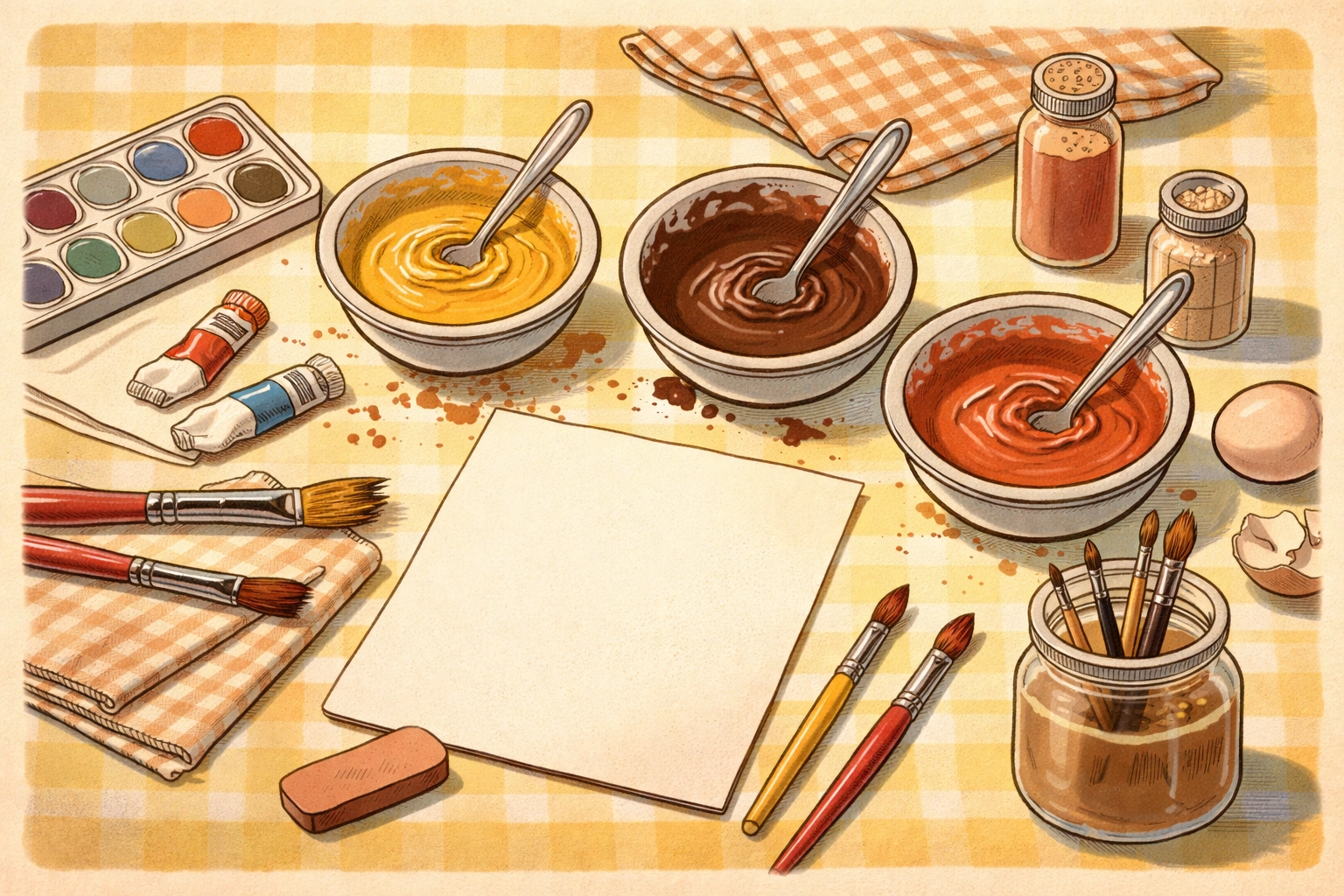
Mix the flour and cornstarch together, then slowly add water while stirring until you reach a paint-like thickness. Divide into small bowls and stir in your spices. This base helps the color adhere better and creates a smoother application.
Step-by-Step: How to Set Up Your Spice Painting Station
Materials You'll Need
| Item | Purpose | Likely Location |
|---|---|---|
| 3-5 spices | Your paint colors | Spice rack or pantry |
| Small bowls or cups | Mixing containers | Kitchen cabinet |
| Water | Paint base | Tap |
| Flour + cornstarch (optional) | Thicker paint base | Pantry |
| Spoons or popsicle sticks | Mixing | Kitchen drawer |
| Paintbrushes, cotton swabs, or fingers | Applicators | Junk drawer or use fingers! |
| Paper | Canvas | Printer, notebook, paper bags |
| Rock sugar crystals (optional) | Sparkle effect | Baking supplies |
Instructions
Step 1: Gather Your Spices
Pull out whatever you've got. You don't need all of them, even two or three spices give you plenty to work with. Avoid anything spicy-hot like cayenne or chili powder, especially with younger kids who might touch their faces.
Step 2: Set Up Mixing Stations
Place a small amount of each spice in separate bowls. A tablespoon or two per color is usually plenty for one painting session.
Step 3: Add Your Liquid Base
For the water method, add water a little at a time and stir until you reach your desired consistency. For the flour paste method, prepare your base first, divide it among bowls, then stir in spices.
Pro tip: Let your mixture sit for about 10-15 minutes before painting. The colors tend to become more vibrant as the spices hydrate.
Step 4: Test Your Colors
Do a quick swatch test on scrap paper. Adjust by adding more spice for stronger color or more liquid for lighter washes.
Step 5: Paint Away
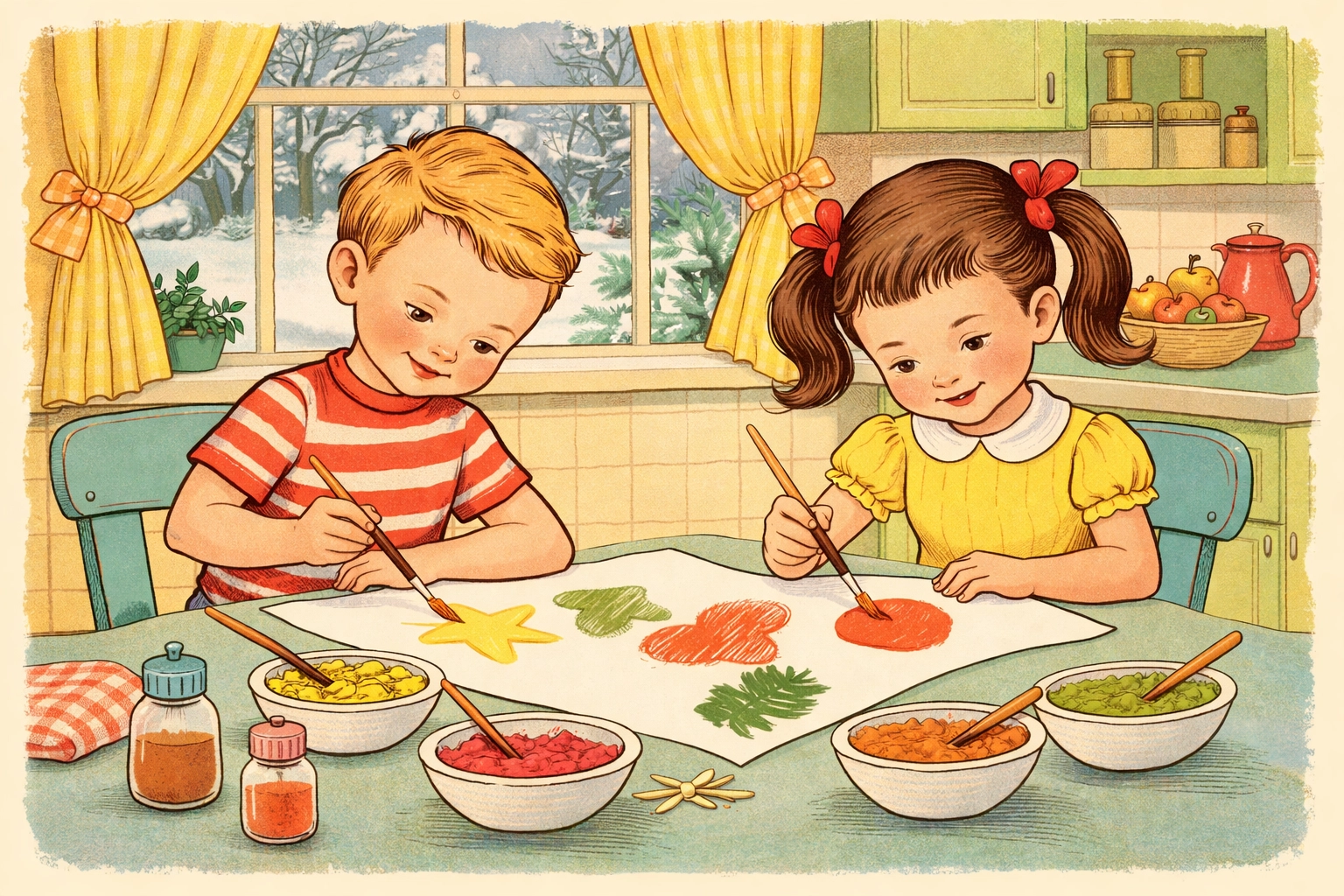
Let the kids go wild. Spice paint works beautifully for finger painting, brush painting, or even stamping with sponges or cookie cutters.
How Do You Add Sparkle Without Glitter?
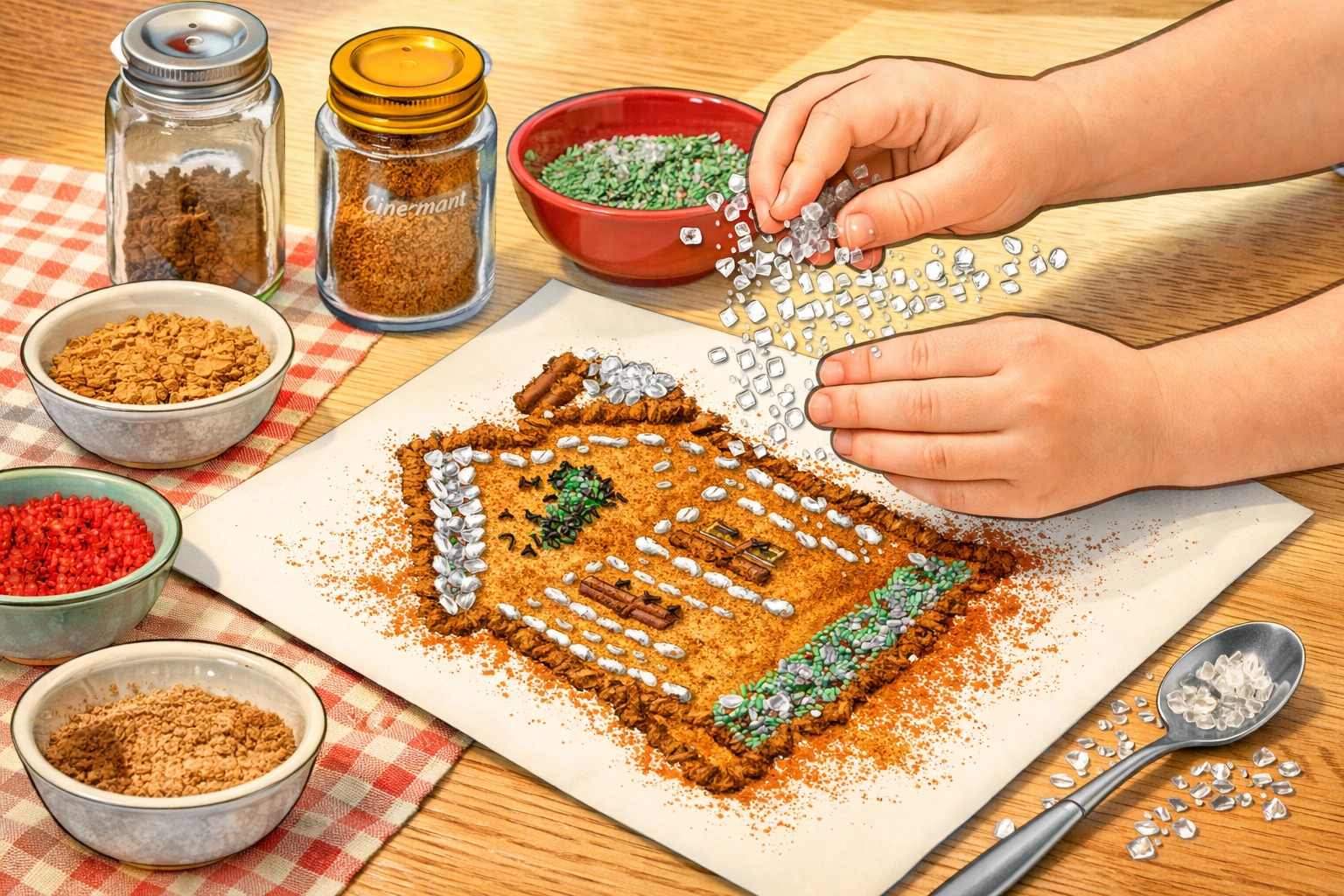
Here's where rock sugar becomes your secret weapon. Those chunky sugar crystals you might have tucked away in your baking supplies? They catch light beautifully and add a subtle, organic sparkle to artwork.
To use rock sugar for sparkle:
- Finish your spice painting and let it dry slightly (still tacky but not wet)
- Gently press small rock sugar crystals into the areas you want to shimmer
- Let dry completely, the crystals will adhere to the paint
This works especially well for snow scenes, stars, or anything that needs a little extra magic. The crystals catch light differently than glitter and won't shed all over your house for the next six months.
If you don't have rock sugar, coarse sea salt or even regular sugar can create a similar textured effect, though with less sparkle.
What Should You Expect from Spice Paintings?
Set realistic expectations and you'll be thrilled with the results:
- Colors will be earthier than typical craft paints, think warm, natural tones rather than neon brights
- Texture is part of the charm, you'll see tiny spice particles in the dried paint, which adds visual interest
- The scent lingers, artwork will smell faintly of the spices for quite a while
- Colors may shift slightly as they dry, usually becoming a bit lighter
The finished artwork has a beautiful, almost vintage quality that looks like it belongs in a nature journal or old storybook.
Quick Safety Notes
Spice painting is generally very safe, but keep these tips in mind:
- Avoid eye rubbing, turmeric especially can irritate eyes and will stain skin temporarily
- Skip the hot stuff, no cayenne, chili powder, or anything with heat
- Turmeric stains, it can turn fingers yellow for a day or two, and it may stain clothing, so maybe skip the fancy outfits
- Taste-safe doesn't mean tasty, the paint won't hurt little ones if they sneak a lick, but it won't taste good either
Frequently Asked Questions
How long does spice paint last?
Mixed spice paint keeps for a day or two in the refrigerator. After that, it may start to smell off. Mix small batches as needed.
Will spice paintings fade over time?
Natural pigments can fade with prolonged sun exposure. Display artwork away from direct sunlight to preserve colors longer.
Can you use expired spices?
Absolutely! Expired spices often lose their flavor punch but retain their color. This is a great way to use up that ancient cinnamon in the back of your cabinet.
What paper works best for spice painting?
Thicker paper holds up better to wet paint. Cardstock, watercolor paper, or even brown paper bags work well. Regular printer paper can work but may wrinkle.
Is spice paint safe for toddlers?
Generally yes, as long as you avoid hot spices. Supervise closely and expect some taste-testing. The flour paste base is completely non-toxic.
Can you mix spices together to create new colors?
Yes! Mixing turmeric with a little cocoa can create olive tones. Cinnamon plus paprika deepens the red-brown. Experiment and see what happens.
How do you clean up spice paint?
Warm water and soap handle most of it. Turmeric may temporarily stain light-colored surfaces, so wipe up spills quickly.
Can adults enjoy spice painting too?
Absolutely. The earthy tones and textured finish make for beautiful nature journals, greeting cards, or meditative art sessions.
References
- Research on spice painting techniques and natural pigments
- Traditional methods of creating homemade paints using pantry staples
For more snow day activities you can do without leaving the house, check out our other kids crafts on the blog!
Tierney Family Farms provides educational content for families. Always supervise children during craft activities and adjust projects as needed for your child's age and abilities. We are not responsible for any staining, messes, or sudden urges to repaint your entire house using only turmeric.