




The short answer: Epsom salt, crushed eggshells, banana peel "tea," and aquarium water can all provide some essential nutrients for a budget-friendly hydroponic setup. While these kitchen-cabinet solutions may not replace a complete commercial nutrient mix for serious growing, they're fantastic for teaching kids about plant science and running fun experiments without spending a dime on fancy bottles.
Let's raid your pantry and turn everyday items into plant food!
Why Do Hydroponic Plants Need Special Nutrients Anyway?
Here's the thing, when plants grow in soil, they have access to a whole buffet of minerals that have built up over years. Dirt is basically a slow-release multivitamin.
But in hydroponics? Your plants are growing in water. There's no soil to pull nutrients from. That means you become the chef, and your job is to serve up a balanced meal of everything those roots need.
Plants generally require two categories of nutrients:
Macronutrients (the big ones):
- Nitrogen (N) , for leafy green growth
- Phosphorus (P) , for roots and flowers
- Potassium (K) , for overall plant health
- Calcium , for strong cell walls
- Magnesium , for photosynthesis
- Sulfur , for protein production
Micronutrients (the little helpers):
- Iron, zinc, boron, copper, manganese, and a few others in tiny amounts
Commercial hydroponic nutrients are carefully formulated to dissolve completely and deliver precise ratios. But for a backyard experiment or a kitchen-window herb garden with the kids? You can absolutely cobble together something from items you already own.
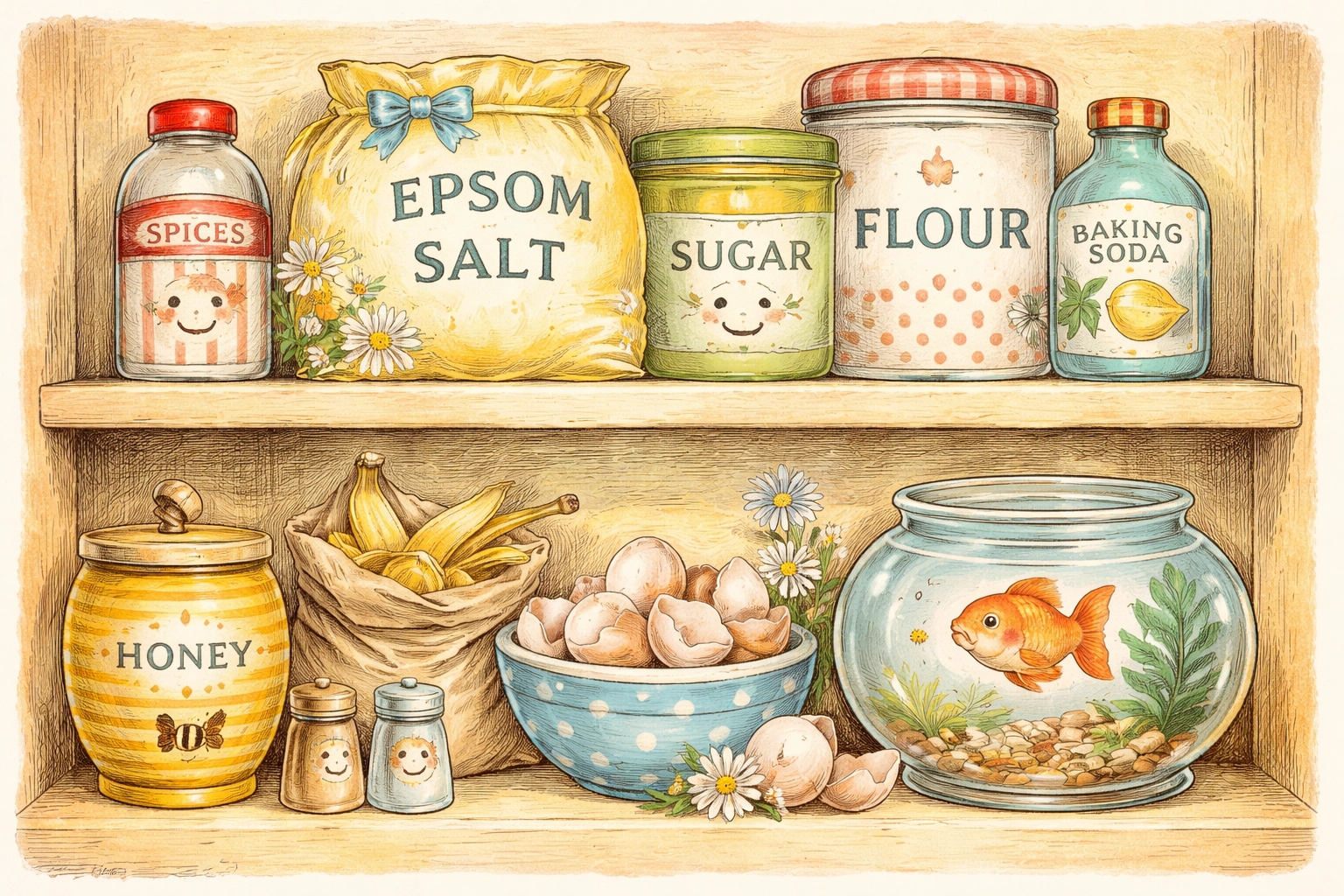
The Budget Pantry Nutrient Table
Here's a handy breakdown of common household items and what they might offer your plants. Everything on this list should cost you nothing (you probably already have it) or just a couple bucks.
| Household Item | Primary Nutrient(s) | Estimated Cost | Notes |
|---|---|---|---|
| Epsom Salt | Magnesium, Sulfur | ~$3–5 for a bag | Dissolves easily; a hydroponic favorite |
| Crushed Eggshells | Calcium | Free (kitchen scraps) | Needs to be finely ground; dissolves slowly |
| Banana Peel "Tea" | Potassium | Free (kitchen scraps) | Steep in water; mild nutrient boost |
| Aquarium Water | Nitrogen (from fish waste) | Free (if you have fish) | Natural and gentle; great for leafy greens |
| Unsulfured Molasses | Trace minerals, sugars | ~$4–6 | Feeds beneficial microbes; use sparingly |
| Seaweed/Kelp (dried) | Micronutrients, potassium | ~$5–8 | Soak to make a "tea"; excellent trace minerals |
| Wood Ash (hardwood only) | Potassium, calcium | Free (fireplace) | Use very sparingly; raises pH quickly |
Total potential cost: $0–10, depending on what's already in your kitchen.
Step-by-Step: Making Your Own Household Nutrient Solutions
Ready to play mad scientist? Here are a few simple recipes to try. These work best for low-stakes experiments, think lettuce seedlings, basil starts, or that kitchen scrap regrow garden you've been meaning to start.

Recipe #1: Epsom Salt Solution (Magnesium Boost)
You'll need:
- 1 tablespoon Epsom salt
- 1 gallon of water
Instructions:
- Measure out one tablespoon of Epsom salt.
- Add it to a gallon jug of room-temperature water.
- Shake or stir until completely dissolved (this happens fast).
- Use this as part of your reservoir water, not as the only nutrient source.
Why it works: Epsom salt is pure magnesium sulfate. It dissolves completely, no gunk, no residue, making it one of the most hydroponic-friendly household items out there.
Recipe #2: Banana Peel Potassium Tea
You'll need:
- 3–4 banana peels
- 1 quart of water
- A jar with a lid
Instructions:
- Chop the banana peels into small pieces.
- Place them in a quart jar and cover with water.
- Let it steep for 24–48 hours at room temperature (cover loosely).
- Strain out the peels and use the "tea" diluted 1:1 with fresh water.
Why it works: Banana peels release potassium and small amounts of phosphorus as they break down. It's gentle and unlikely to burn tender roots.
Recipe #3: Eggshell Calcium Water
You'll need:
- Shells from 6–8 eggs (rinsed and dried)
- 1 quart of water
- Optional: a splash of white vinegar
Instructions:
- Crush the eggshells as finely as possible (a mortar and pestle or blender works great).
- Add the crusite shells to a jar of water.
- For faster results, add 1 tablespoon of white vinegar, this helps dissolve the calcium.
- Let it sit for 5–7 days, shaking occasionally.
- Strain and use sparingly in your reservoir.
Why it works: Eggshells are almost pure calcium carbonate. The vinegar converts it to calcium acetate, which dissolves more readily in water.
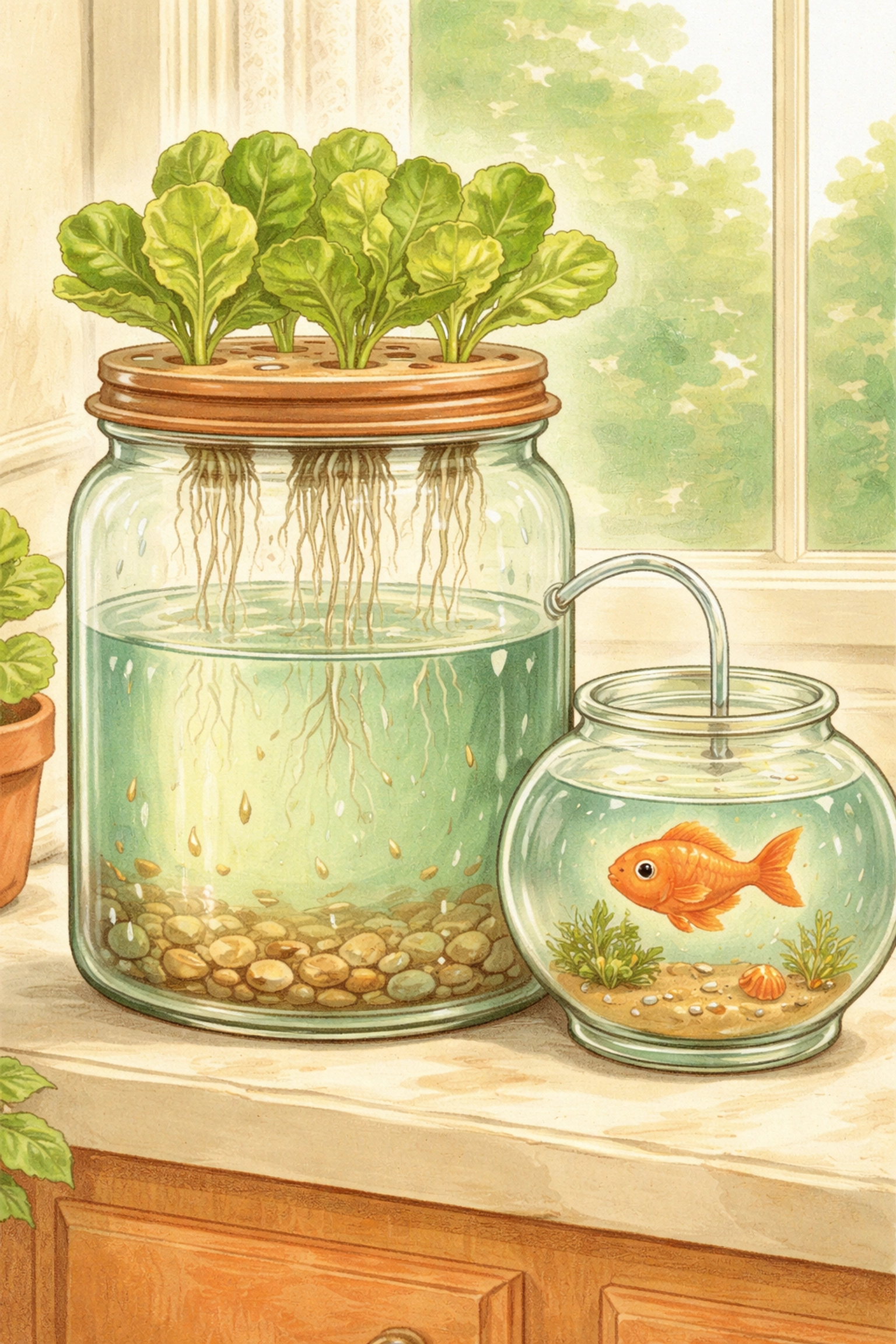
Recipe #4: Aquarium Water (The Lazy Gardener's Secret)
You'll need:
- Water from a freshwater fish tank (during a water change)
Instructions:
- When you do your regular aquarium water change, save that "dirty" water.
- Use it directly in your hydroponic reservoir or to top off your system.
Why it works: Fish waste breaks down into nitrogen compounds that plants love. This is basically a tiny version of aquaponics! It's especially good for leafy greens like lettuce and spinach.
A Few Honest Warnings
Let's keep it real, household nutrients have limitations:
They're not complete. You might get magnesium from Epsom salt and potassium from banana peels, but you're probably missing nitrogen, phosphorus, and several micronutrients. For long-term growing or fruiting plants (tomatoes, peppers), you'll likely need to supplement with a commercial hydroponic nutrient at some point.
Ratios are guesswork. Commercial nutrients are precisely balanced. Kitchen concoctions? Not so much. This is fine for experiments and learning, but don't expect prize-winning harvests.
Some things don't dissolve well. Unlike purpose-made hydroponic nutrients, household items can leave residue, clog pumps, or create funky buildup. Strain everything and monitor your system.
pH matters. Wood ash and eggshells can raise your water's pH significantly. If you're serious about results, grab some inexpensive pH test strips.
For more on setting up your system on a budget, check out our guide on how much space you need for a productive hydroponic garden.
Frequently Asked Questions
Can I grow tomatoes using only household nutrients?
You can start tomatoes this way, but fruiting plants are heavy feeders. Once they begin flowering, they typically need more phosphorus and potassium than most DIY solutions provide consistently.
Is Epsom salt safe for all plants?
Generally, yes, in moderation. Most plants benefit from a magnesium boost. However, using too much can cause nutrient imbalances over time.
How often should I add banana peel tea to my system?
Once a week is usually plenty. It's mild, so there's low risk of overdoing it, but you still want variety in your nutrient sources.
Can I use coffee grounds in hydroponics?
This one's tricky. Coffee grounds don't dissolve well and can introduce mold or bacteria into your water. They're better suited for soil composting.
Will fish tank water smell bad?
Fresh aquarium water shouldn't have a strong odor. If it smells foul, the tank may have water quality issues, skip it for your plants.
Do I need to pH test my homemade solutions?
It's a good idea, especially if you're adding things like wood ash or vinegar-treated eggshells. Most plants prefer a pH between 5.5 and 6.5 in hydroponics.
Can I mix multiple household nutrients together?
Yes, but start conservatively. Combine Epsom salt with banana peel tea and some aquarium water for a more "complete" (though still imperfect) solution.
Are household nutrients safe for kids to handle?
Absolutely: Epsom salt, eggshells, and banana peels are all kitchen-safe. Just supervise younger children around water and make it a fun science lesson.
References
- University of Arizona Controlled Environment Agriculture Center – Hydroponic Nutrient Solutions
- Cornell University Cooperative Extension – Essential Plant Nutrients
- Oklahoma State University Extension – Understanding Plant Nutrition
- Maximum Yield – Macro and Micronutrients in Hydroponics
Happy growing from all of us at Tierney Family Farms! Got a kitchen-science success story? We'd love to hear about it.