




The Quick Answer: The ideal pH for most hydroponic plants is 5.5 to 6.5. This slightly acidic range acts as the "sweet spot" where nutrients dissolve properly and roots can absorb them efficiently. For precision growers, an even tighter range of 5.8 to 6.0 is often recommended for maximum nutrient availability.
Now that you know the magic numbers, let's explore why pH is so important: and how you can master water chemistry like a true Junior Engineer.
What is pH? The "Gatekeeper" of Your Hydroponic Garden
Think of pH as the gatekeeper standing at the entrance to your plant's root system. No matter how perfectly you've mixed your nutrient solution (remember our NPK deep-dive?), if the pH is wrong, those nutrients simply cannot pass through the gate.
pH measures how acidic or alkaline (basic) a liquid is on a scale from 0 to 14:
- 0 to 6.9 = Acidic (think lemon juice or vinegar)
- 7.0 = Neutral (pure water)
- 7.1 to 14 = Alkaline (think baking soda or soap)
Here's the science: pH affects the solubility of nutrients in water. When pH drifts too high (alkaline) or too low (acidic), certain nutrients chemically "lock up" and become unavailable to your plants: even though they're technically still in the water. Your plant could be swimming in a sea of food but starving to death.

In soil gardening, the earth naturally buffers pH fluctuations. But in hydroponics, there's no soil safety net. Your water chemistry is everything, which is why Junior Engineers need to understand and monitor pH carefully.
The "Sweet Spot": pH Ranges for Different Crops
While 5.5 to 6.5 is the general guideline, different plants have their own preferences within that range. Here's what the research tells us:
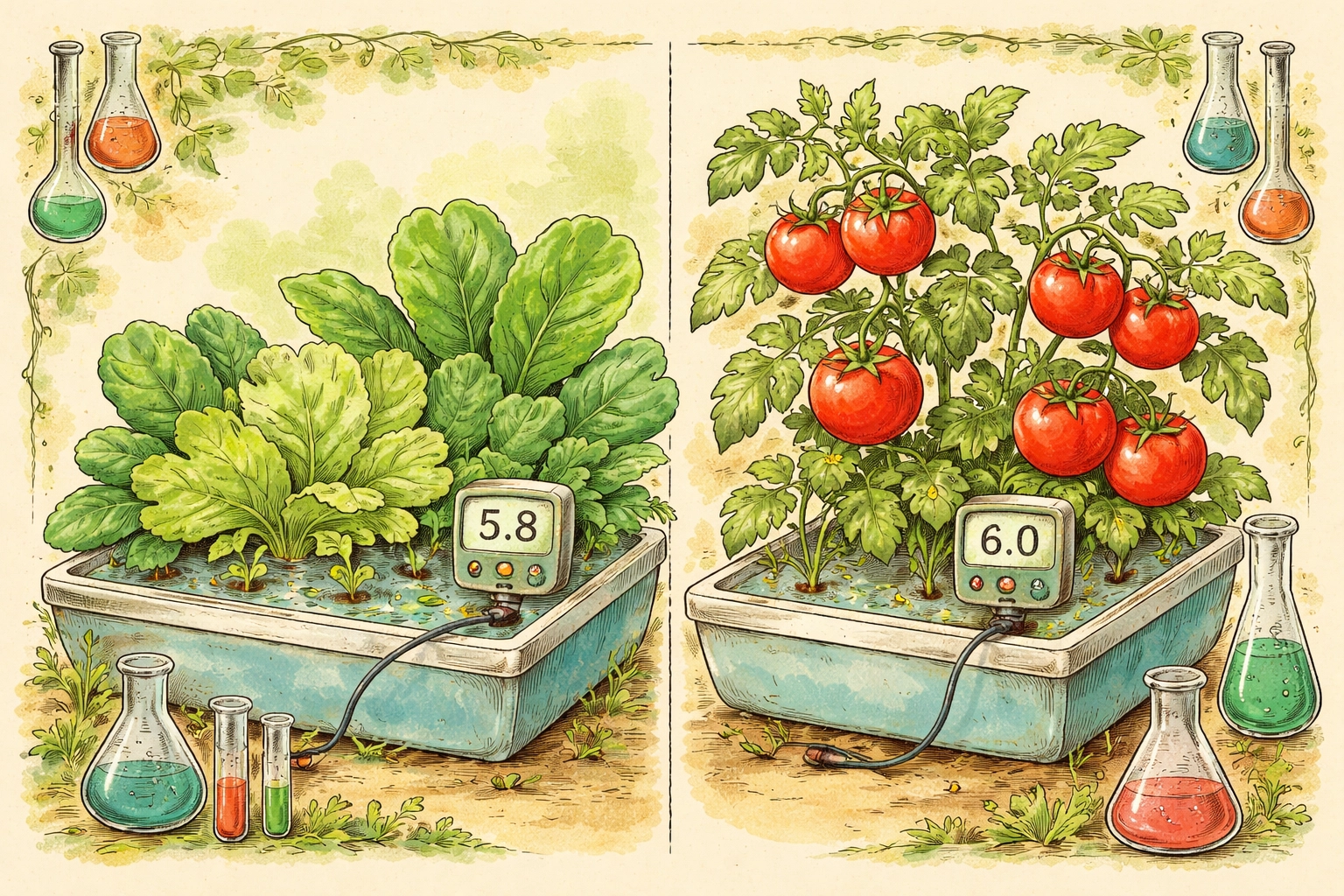
Leafy Greens (Lettuce, Spinach, Kale)
Optimal pH: 5.5 to 6.0
Lettuce is one of the most popular hydroponic crops, and studies published in MDPI Horticulturae confirm that leafy greens thrive in the lower end of the pH spectrum. At this range, nitrogen (the "N" in NPK) remains highly available, promoting lush, green leaf growth.
Fruiting Plants (Tomatoes, Peppers, Cucumbers)
Optimal pH: 5.5 to 6.5 (adjusting by growth stage)
Here's where it gets interesting! Tomatoes benefit from dynamic pH management:
- Vegetative Stage (growing leaves and stems): Keep pH around 6.0 to support balanced nutrient absorption.
- Flowering/Fruiting Stage: Lower pH closer to 5.5. This reduces nitrogen uptake while increasing potassium and iron absorption: both critical for developing flavorful, healthy fruit.
Herbs (Basil, Mint, Cilantro)
Optimal pH: 5.5 to 6.5
Most culinary herbs are flexible and forgiving within the standard range. Basil, in particular, does beautifully around 5.8 to 6.0.
The Outliers
Not every plant follows the rules! Blueberries, for example, prefer a much more acidic environment (pH 4.0 to 5.0). Always research your specific crop before assuming the standard range applies.
Why pH Matters: Understanding Nutrient Lockout
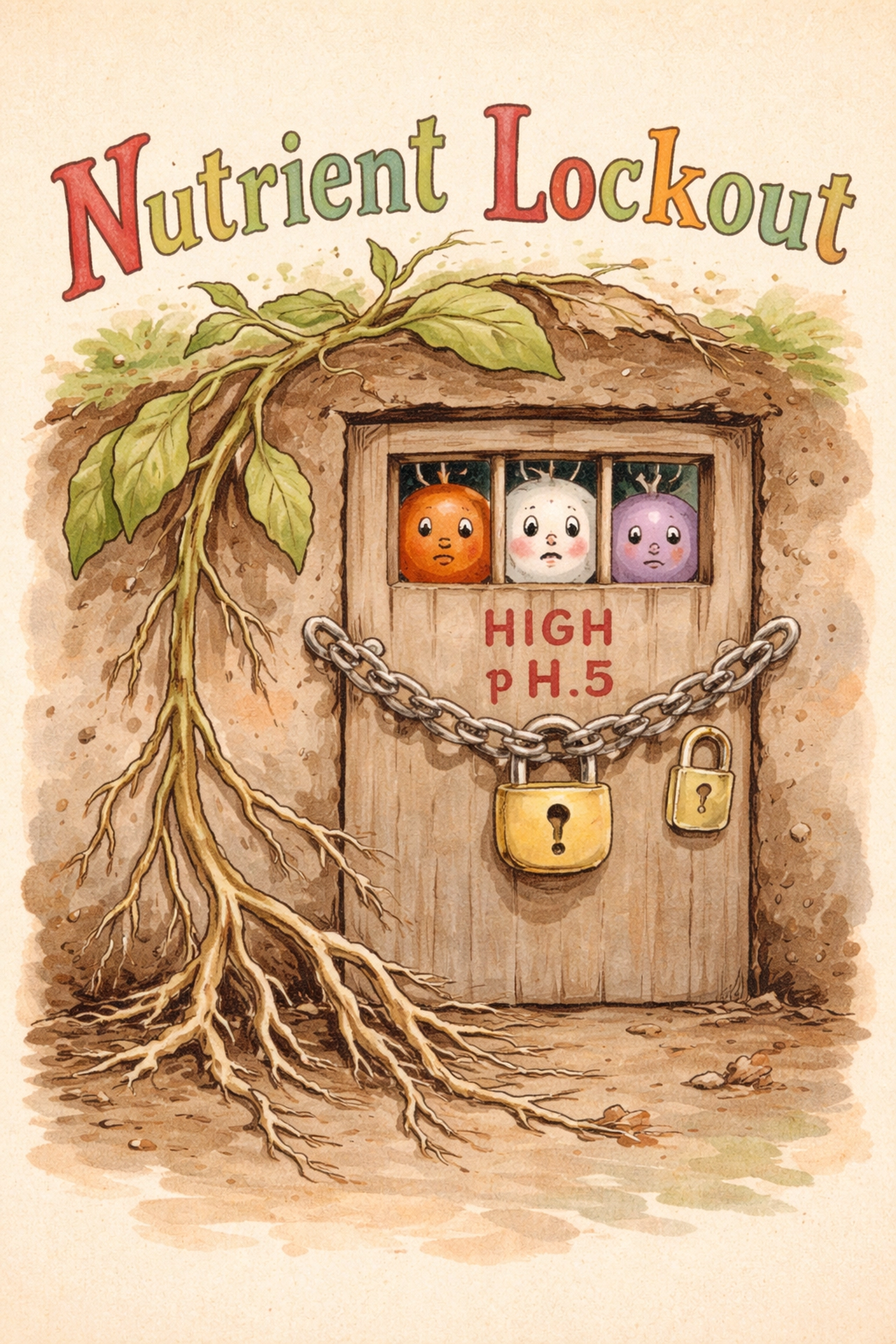
Nutrient lockout is the nightmare scenario every hydroponic grower wants to avoid. It happens when pH drifts outside the optimal range, causing nutrients to become chemically unavailable.
What Happens When pH is Too High (Above 6.5)?
In alkaline conditions, critical micronutrients begin to precipitate (form solid particles) and fall out of solution:
- Iron becomes unavailable, causing yellowing leaves (chlorosis)
- Calcium locks up, leading to blossom end rot in tomatoes
- Magnesium and Manganese also become inaccessible
- Phosphorus availability drops significantly
According to research from Oklahoma State University Extension, high pH can also cause excessive sodium uptake, leading to leaf damage and water loss in plants.
What Happens When pH is Too Low (Below 5.5)?
Overly acidic conditions create their own problems:
- Aluminum toxicity can damage roots
- Calcium and Magnesium deficiencies occur
- Beneficial bacteria in your system may die off
- Root systems can become damaged and stressed
Research published in the NIH/PMC database shows that prolonged exposure to low pH environments significantly impairs root development and overall plant health.
The Visual Guide to Nutrient Availability
Imagine a chart where each nutrient has a "comfort zone" on the pH scale. In the 5.5 to 6.5 range, almost all essential nutrients overlap in their availability windows. Drift outside that range, and you start losing access to one nutrient after another: like doors closing down a hallway.
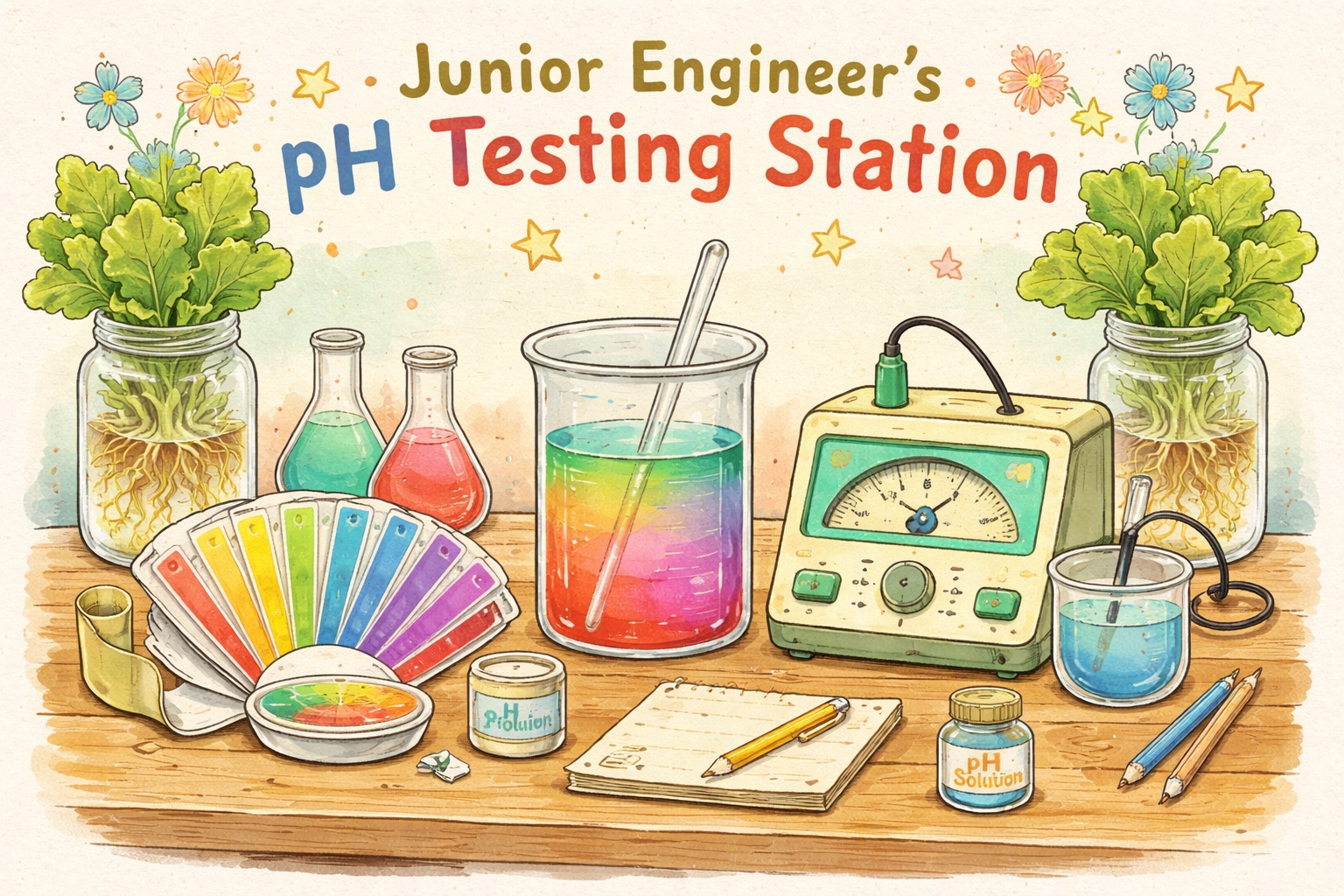
How to Test and Adjust pH: The Junior Engineer's Toolkit
Now for the hands-on part! Here's how to monitor and maintain perfect pH in your hydroponic system.
Testing Methods
1. pH Test Strips
- Pros: Inexpensive, no batteries required
- Cons: Less precise, can be hard to read colors accurately
- Best for: Beginners and quick spot-checks
2. Liquid pH Test Kits
- Pros: More accurate than strips, affordable
- Cons: Requires careful color matching
- Best for: Home growers who want reliability without high cost
3. Digital pH Meters
- Pros: Most accurate, instant readings, easy to use
- Cons: Requires calibration and battery replacement
- Best for: Serious Junior Engineers who want precision
The University of Georgia Extension recommends testing pH daily for recirculating systems, or at minimum every time you add water or nutrients.
Adjusting pH: Natural vs. Commercial Methods
Commercial pH Adjusters (Recommended for Precision)
- pH Down: Typically phosphoric acid or citric acid-based solutions that lower pH
- pH Up: Typically potassium hydroxide or potassium carbonate-based solutions that raise pH
Always add adjusters in small increments! A few drops can make a big difference. Wait 15-30 minutes, retest, and adjust again if needed.
Natural Methods (Use with Caution)
Some growers use household items in a pinch:
- White vinegar can lower pH (but may introduce unwanted compounds)
- Baking soda can raise pH (but adds sodium, which can harm plants)
For consistent, reliable results, commercial pH adjusters designed for hydroponics are your safest bet.
The Golden Rule: Small Changes, Patience Required
Never make dramatic pH adjustments all at once. Rapid pH swings can shock roots and destabilize your entire nutrient solution. Make small changes, wait, retest, and repeat. Your plants will thank you for the gentle approach.
🔬 Science Lab: References & Further Reading
We don't do "trust me, bro" science here at Tierney Family Farms. Here are the peer-reviewed studies and university extension resources that informed this guide:
University of Georgia Extension – Hydroponic Vegetable Production
https://extension.uga.edu/publications/detail.html?number=B1256Oklahoma State University Extension – Electrical Conductivity and pH Guide for Hydroponics
https://extension.okstate.edu/fact-sheets/electrical-conductivity-and-ph-guide-for-hydroponics.htmlMDPI Horticulturae – Effects of pH on Hydroponic Lettuce Production
https://www.mdpi.com/2311-7524/9/7/837NIH/PMC – Effects of Low pH on Plant Root Systems
https://pmc.ncbi.nlm.nih.gov/articles/PMC8465728/
Frequently Asked Questions
Q: How often should I test pH in my hydroponic system?
A: For recirculating systems, test daily. For simpler setups like Kratky jars, test every time you add water or nutrients: typically every 2-3 days.
Q: Can tap water affect my pH?
A: Absolutely. Tap water pH varies by location (often 7.0 to 8.5) and may contain chlorine or chloramines. Many growers let tap water sit for 24 hours or use filtered water to start with a more neutral baseline.
Q: What causes pH to drift in my system?
A: Nutrient uptake by plants, evaporation, algae growth, and decomposing organic matter all cause pH fluctuations. It's completely normal: just stay vigilant!
Q: Is it better to have pH slightly too high or too low?
A: If you must err, slightly low (around 5.5) is generally less harmful than slightly high for most hydroponic crops. But the goal is always to stay within range.
Q: Can I use pool pH test kits for hydroponics?
A: Pool kits measure the right range but may lack the precision needed for hydroponics. Invest in a kit designed for gardening or aquariums for better accuracy.
Q: Why does my pH keep rising overnight?
A: Plants release compounds during respiration that can raise pH. Algae growth (from light exposure) also increases pH. Check for light leaks in your reservoir.
Q: Do different hydroponic systems require different pH levels?
A: The optimal pH range (5.5-6.5) applies across systems: DWC, NFT, Ebb and Flow, and Kratky. The system type doesn't change plant chemistry.
Q: How long should I wait after adjusting pH before retesting?
A: Wait 15-30 minutes for the solution to fully mix and stabilize before taking another reading.
Disclaimer:
Tierney Family Farms provides DIY activity ideas, project instructions, product reviews, and learning blogs for families. Content is for general informational and entertainment purposes only and does not constitute medical, safety, or professional advice. Some projects may involve sharp tools, small parts, or chemicals. Adult supervision is required for all children's activities, and you must ensure each project is safe and age-appropriate for your situation. Attempt projects only if you are confident they are safe for your skill level and environment. Portions of this content may be generated with AI; information may contain errors or become outdated; always verify details independently. No guarantee of accuracy is made. Affiliate links may appear and commissions may be earned. By viewing or using these ideas, you assume all risks, and Tierney Family Farms is not responsible for any harm, injury, or loss.