




Kids can keep their plants watered during vacation by making a string-wick system: simply place a water-filled jar next to the plant and thread cotton string from jar to soil for slow watering.
No batteries.
No pumps.
No complicated setup.
Just science, string, and a jar.
Here's the step-by-step method.
Why Does the String-Wick System Work?
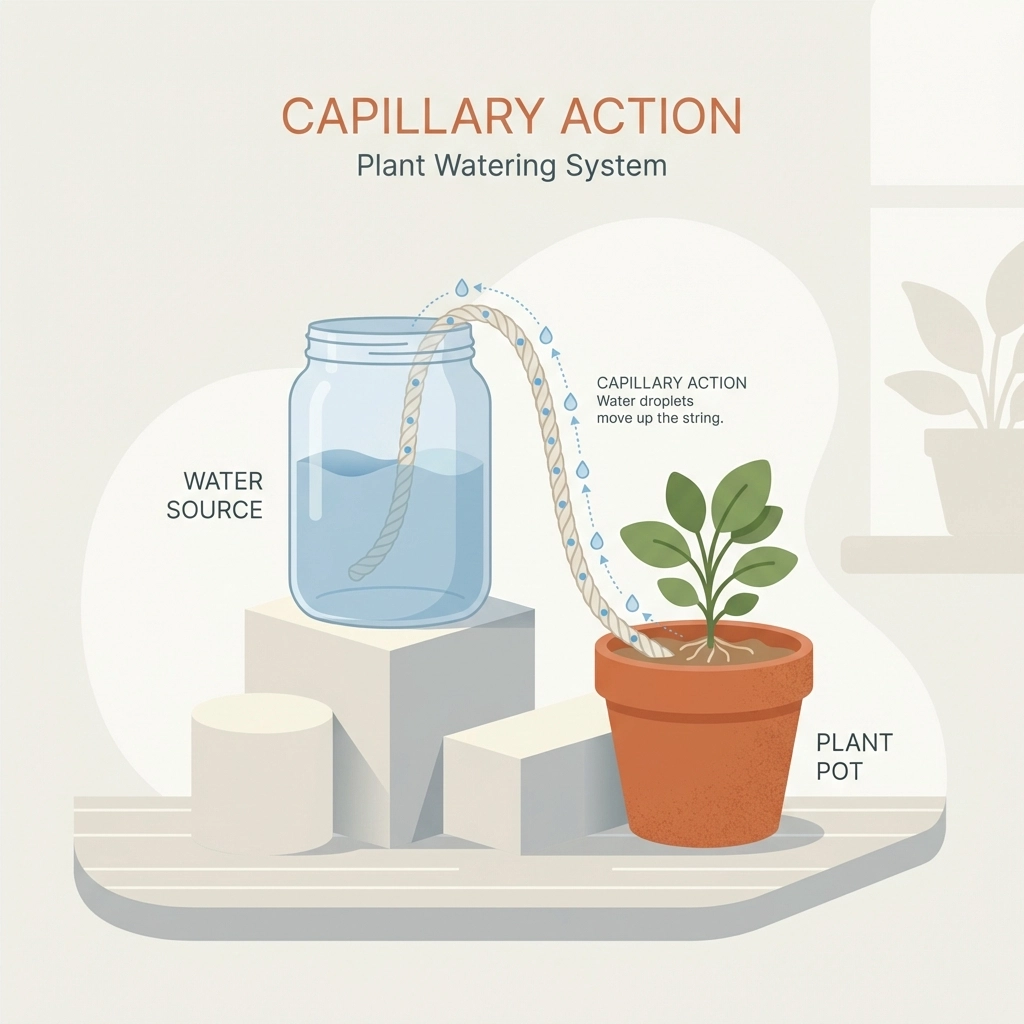
The answer is capillary action.
Water moves through tiny gaps in cotton fibers. The string acts as a pathway. Moisture travels from the jar into the soil as the plant needs it.
Dry soil pulls water. Wet soil stops the flow.
The system self-regulates.
This is the same principle that allows paper towels to absorb spills. Trees use capillary action to pull water from roots to leaves. The string-wick system applies this natural phenomenon to plant care.
Simple physics. Reliable results.
What Materials Are Needed?
Everything required is already in most homes.
Materials list:
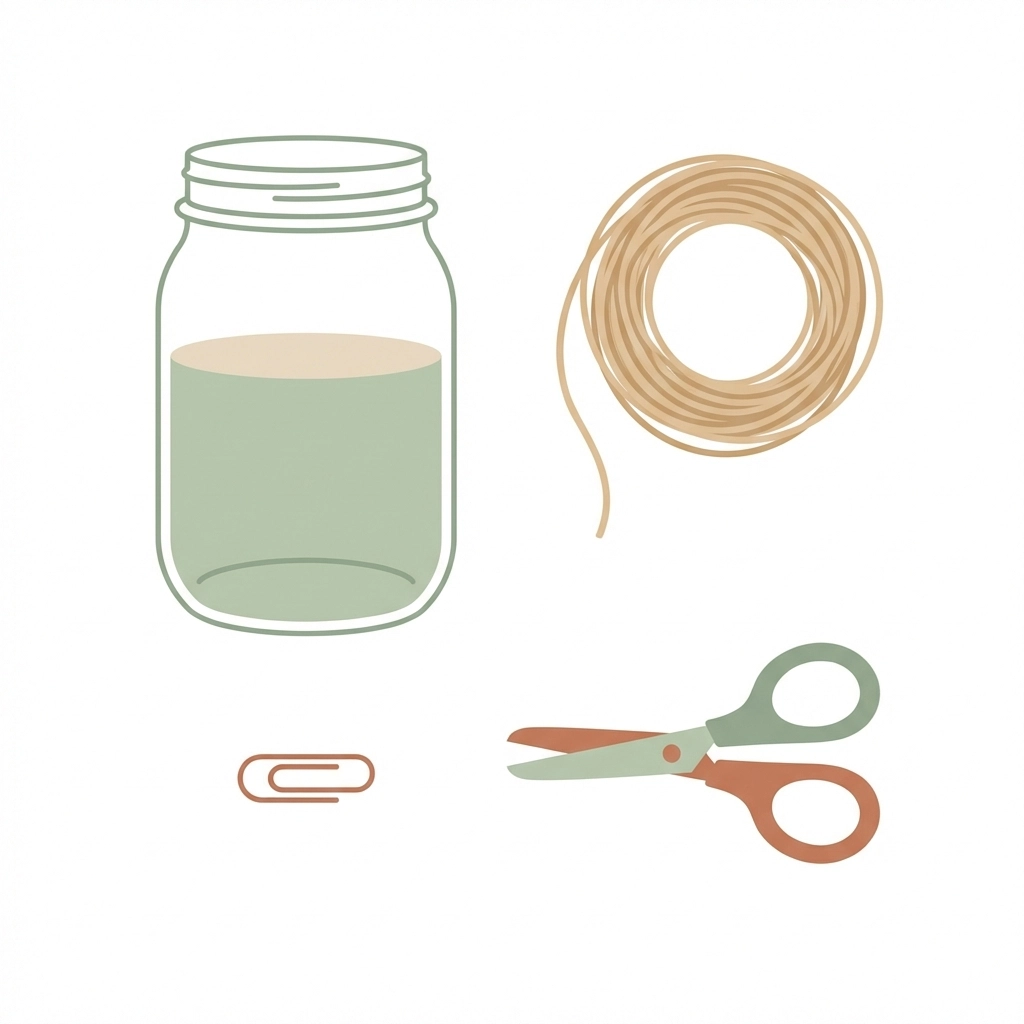
- 100% cotton string or yarn (about 2 feet per plant)
- Glass jar or container (mason jar works well)
- Paper clip or small weight
- Water
- Indoor plant in soil
Optional:
- Old cotton t-shirt (cut into strips as string alternative)
- Small stool or stack of books (to elevate the water source)
Budget: Under $2.
Most families spend nothing. These items are household staples.
How Old Should Kids Be for This Project?
This project suits ages 6 and up.
Younger children can participate with adult guidance. The steps involve no sharp tools, no heat, no chemicals.
Skills involved:
- Cutting string with scissors
- Measuring length
- Pressing string into soil
- Filling a jar with water
Safe. Simple. Educational.
Children under 6 can help fill the water jar and watch the process. The setup itself takes about 10–15 minutes for a single plant.
Step-by-Step Instructions
Step 1: Cut the String
Measure approximately two feet of cotton string per plant.
Use 100% cotton. Synthetic materials do not absorb water effectively. The fibers must be natural for capillary action to occur.
No cotton string available? Cut an old cotton t-shirt into thin strips. Works the same way.
Step 2: Attach a Weight
Tie a paper clip to one end of the string.
This weight keeps the string submerged in the water jar. Without it, the string floats and loses contact with the water source.
Any small, non-rusting weight works. A button. A small stone. A metal washer.
Step 3: Fill the Jar
Fill a glass jar or container with water.
The size depends on how long the plant will be unattended.
General guide:
- Weekend trip (2–3 days): 1 quart jar
- Week-long vacation (7 days): Half-gallon container
- Extended absence (10+ days): Gallon container or multiple jars
Larger containers mean longer coverage.
Step 4: Position the Water Source
Place the jar higher than the plant.
Gravity assists the water flow. The string must slope downward from jar to soil. No dips. No upward curves.
Use a small stool, a stack of books, or a shelf. The water container sits above. The plant sits below.
Height difference: 6–12 inches works well.
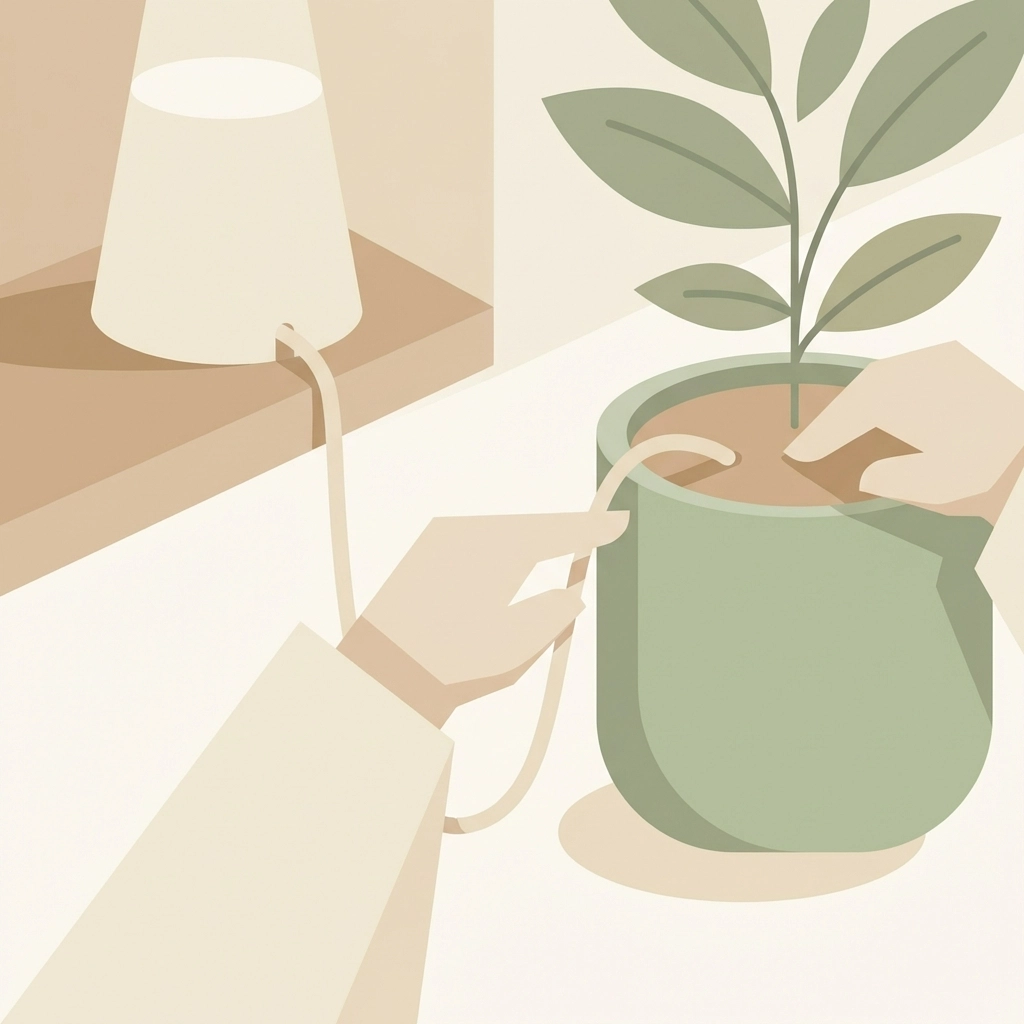
Step 5: Insert the String
Drop the weighted end into the jar.
Take the other end and bury it 1–2 inches into the soil near the plant's roots.
Press the soil firmly around the string. Good contact between string and soil ensures water transfer.
The string should form a continuous slope. Water follows gravity.
Step 6: Test the System
Wait 30–60 minutes.
Check the soil around the string. It should feel slightly damp.
If the soil remains dry:
- Adjust the string position
- Ensure the cotton is fully saturated
- Confirm the jar is elevated properly
The system begins working immediately once the string absorbs water.
Tips for Success
Use the right string.
100% cotton is essential. Nylon, polyester, and synthetic blends do not absorb water. Check labels.
Pre-soak the string.
Dip the entire string in water before setup. Wet fibers conduct water faster than dry ones.
Avoid kinks.
The string must hang smoothly. Knots, twists, and sharp bends interrupt water flow.
Match jar size to plant size.
A large fern needs more water than a small succulent. Adjust container volume accordingly.
Test before leaving.
Run the system for 24 hours before any trip. Confirm the plant receives adequate moisture.
What Plants Work Best?
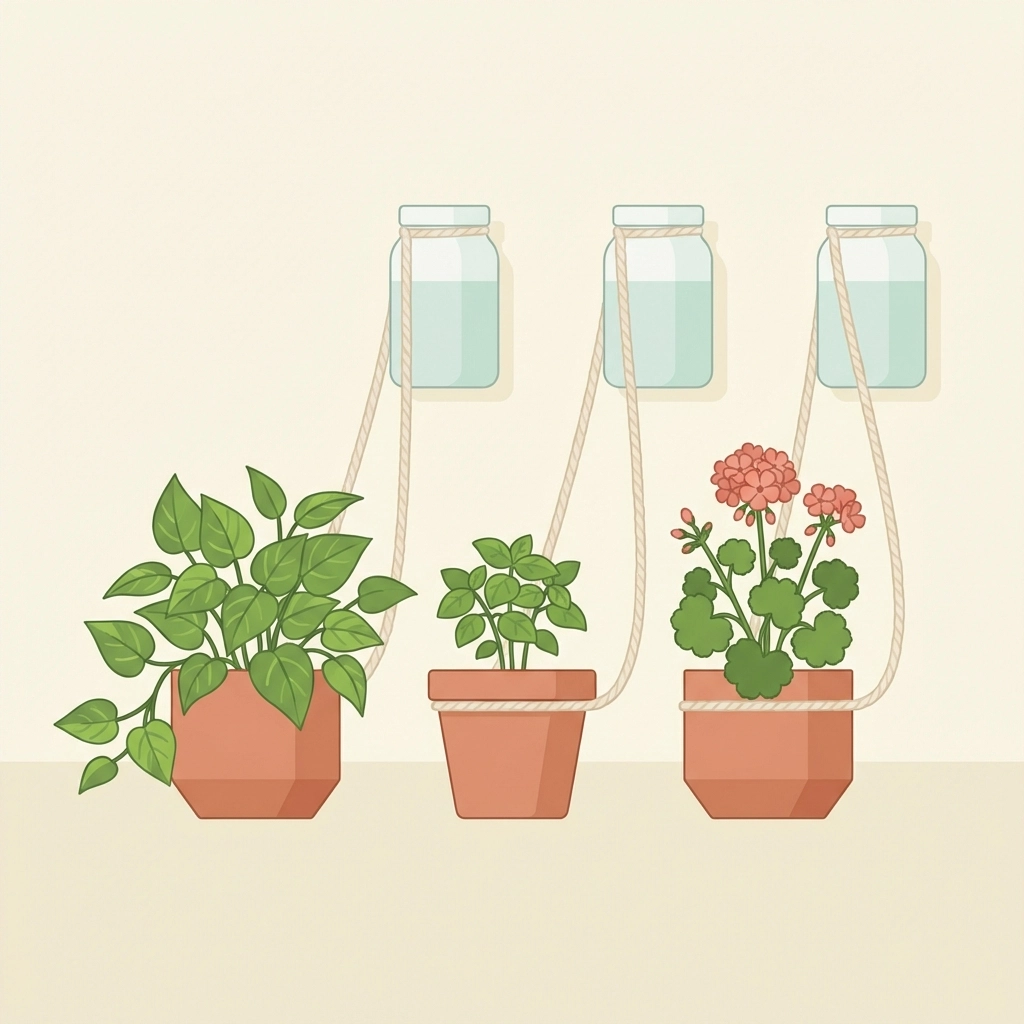
The string-wick system works for most indoor potted plants.
Ideal candidates:
- Herbs (basil, mint, parsley)
- Tropical houseplants (pothos, philodendron)
- Flowering plants (peace lily, African violet)
- Small vegetables (lettuce, spinach seedlings)
Less suitable:
- Succulents and cacti (prefer dry conditions)
- Large outdoor plants (require more volume)
Match the system to the plant's water needs.
What Do Kids Learn from This Project?
This DIY introduces several concepts.
Science:
- Capillary action
- Gravity and water flow
- Plant biology and hydration
Responsibility:
- Planning ahead
- Problem-solving
- Caring for living things
Sustainability:
- Using household items
- Reducing waste
- Avoiding single-use products
A 15-minute project delivers lasting lessons.
Common Problems and Fixes
Problem: Soil stays dry.
Fix: Check string material. Ensure 100% cotton. Re-wet the string and reposition.
Problem: Water drains too fast.
Fix: Use thinner string. Reduce the height difference between jar and plant.
Problem: String falls out of jar.
Fix: Add a heavier weight. Secure the paper clip more firmly.
Problem: Mold appears on string.
Fix: Replace the string. Use fresh water. Ensure adequate air circulation.
How Long Does the System Last?
Duration depends on three factors:
- Container size – Larger jar equals longer coverage
- Plant size – Bigger plants drink more
- Environment – Hot, dry rooms increase evaporation
Typical estimates:
| Container Size | Coverage Duration |
|---|---|
| 1 quart | 3–5 days |
| Half gallon | 7–10 days |
| 1 gallon | 14+ days |
For extended trips, use multiple jars or a larger reservoir.
Budget Breakdown
| Item | Cost |
|---|---|
| Cotton string | $0–$1 |
| Glass jar | $0 (reused) |
| Paper clip | $0 |
| Water | $0 |
Total: Under $2.
Most families complete this project at zero cost.
Safety Notes
This project involves no hazards.
- No sharp tools (scissors optional for cutting string)
- No heat sources
- No chemicals
- No electricity
Adult supervision recommended for children under 6. Ages 6+ can complete independently.
Keep water containers stable to prevent spills.
Final Thoughts
The string-wick watering system solves a common problem.
Plants stay hydrated. Kids learn science. Families travel worry-free.
Setup takes minutes. Materials cost almost nothing. The system runs without power or supervision.
Capillary action does the work.
References
This project draws from general public knowledge about capillary action and DIY plant care methods widely shared across gardening communities, educational resources, and household sustainability guides.
Disclaimer
This blog post is for educational and entertainment purposes only. Adult supervision is recommended for all children's activities. Tierney Family Farms is not responsible for any outcomes, damages, or issues arising from attempting this project. Always assess materials and conditions for safety before beginning.



11 Comments
How to Build a Vertical Pocket Garden with Felt – Tierney Family Farms
January 20, 2026, at 2:51 pm[…] If you're looking for ways to keep plants watered while the family is away, check out our guide on easy DIY self-watering solutions. […]
How to build a "Self-Watering" wick system from old shoelaces? – Tierney Family Farms
January 21, 2026, at 3:57 am[…] you've enjoyed other easy DIY watering projects, this one takes things up a notch with a bit more science and a lot more "wow […]
How to grow a "Pizza Topping" pot with kids? – Tierney Family Farms
January 21, 2026, at 3:57 am[…] If you're going on vacation, check out our guide to keeping plants watered while you're away! […]
How to build a vertical PVC "Strawberry Tower" on a budget? – Tierney Family Farms
January 21, 2026, at 4:01 am[…] If you're looking for more ways to keep plants happy while you're away, check out our guide on easy DIY self-watering systems. […]
How to Maintain a Vertical Garden: Watering and Pruning Tips – Tierney Family Farms
January 21, 2026, at 4:03 am[…] If your kids are interested in learning more about keeping plants watered, check out our guide on easy DIY projects to keep plants watered when kids are away. […]
Vertical Lettuce Walls: Growing a Salad on Your Bedroom Door – Tierney Family Farms
January 21, 2026, at 5:42 am[…] If you're looking for more hands-off watering solutions, check out our guide on keeping plants watered when kids are away. […]
Growing Edible Flowers in Your Vertical Garden – Tierney Family Farms
January 21, 2026, at 5:45 am[…] For more tips on keeping plants hydrated, check out our guide on easy DIY watering solutions. […]
DIY Pallet Garden: A Rustic Vertical Farming Project – Tierney Family Farms
January 21, 2026, at 5:46 am[…] For more tips on keeping plants watered, especially during vacations, check out our guide on easy DIY plant watering solutions. […]
Growing Microgreens in a Vertical Tray System – Tierney Family Farms
January 21, 2026, at 5:46 am[…] If you're interested in automated watering options, capillary mat systems can reduce your daily effort significantly. We cover similar concepts in our guide on keeping plants watered when kids are away. […]
How to Build a Vertical Gutter Garden for Your Porch – Tierney Family Farms
January 21, 2026, at 5:48 am[…] For hands-free watering, consider adding a simple drip irrigation line along each tier. You can find inexpensive kits at garden centers, or check out our post on easy DIY watering solutions. […]
How to build a Sneaky indoor herb garden in an old bookshelf? – Tierney Family Farms
January 21, 2026, at 5:53 am[…] If you're looking for more ways to keep your plants happy while the family is away, check out our guide on easy DIYs to keep plants watered when kids are away. […]