



The most effective method uses white carnations, food coloring, and water. Cut stems at a 45-degree angle. Place in concentrated dye solution. Wait 6-8 hours. Color appears on petal edges first. Full transformation follows overnight.
This experiment works because of capillary action. Tiny tubes inside the stem pull water upward against gravity. The dye travels with the water. It deposits in the petals. The result is a visible demonstration of how plants drink.
Families use this project for hands-on science. Teachers use it to explain plant biology. Gardeners use it to create custom floral arrangements. The process requires no special equipment. Just kitchen supplies and fresh flowers.
What Materials Are Needed?
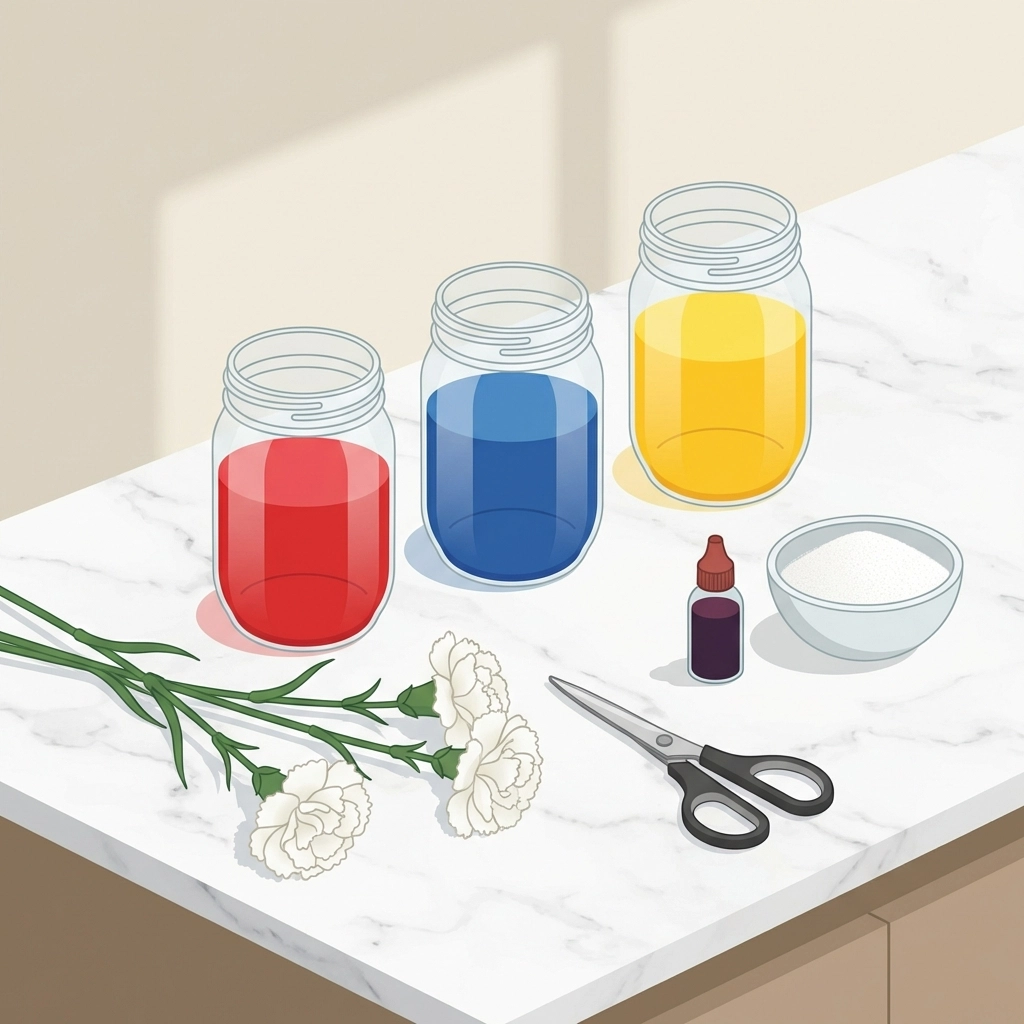
Gather these items before starting:
- White carnations (fresh, not wilting)
- Clear glasses or jars
- Food coloring (liquid works best)
- Sharp scissors or garden shears
- Water (warm preferred)
- White vinegar (optional)
- Sugar (optional)
White carnations produce the most vibrant results. Their petal structure absorbs dye efficiently. White daisies and white roses also work. Results vary by flower type.
Clear containers allow observation of the process. The colored water level drops visibly over time. This reinforces the science lesson.
How Does the Color-Changing Process Work?
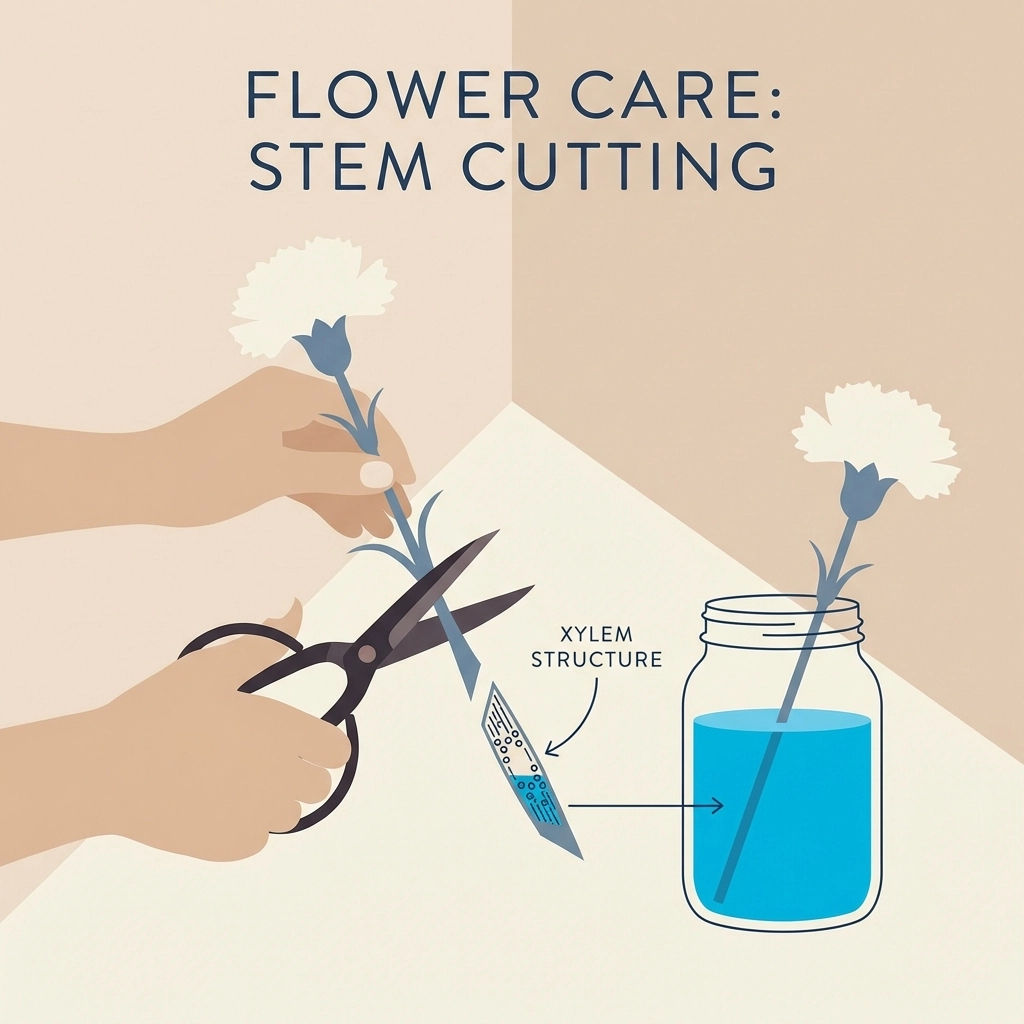
Plants absorb water through their roots. Cut flowers absorb water through their stems. The stem contains xylem tissue. Xylem acts like a bundle of tiny straws.
Capillary action pulls water upward. Surface tension and adhesion make this possible. Water molecules cling to the xylem walls. They pull other water molecules behind them.
The dye dissolves in water. It travels wherever the water goes. Petals are the endpoint. Dye accumulates there as water evaporates from petal surfaces.
This is why color appears at petal edges first. Those edges have the highest evaporation rate. More water flows there. More dye deposits there.
The entire system mimics natural plant hydration. Soil nutrients travel the same pathway. This experiment makes an invisible process visible.
What Are the Step-by-Step Instructions?
Step 1: Prepare the Colored Water
Fill each glass halfway with water. Warm water speeds absorption. Add 30 or more drops of food coloring per glass. Stir until fully dissolved.
More dye creates deeper color. Less dye creates pastel shades. The concentration determines the final result.
For enhanced absorption, add:
- One teaspoon of white vinegar
- One teaspoon of sugar
The vinegar lowers pH slightly. Sugar provides energy for cellular processes. Both additions increase dye uptake.
Step 2: Prepare the Flower Stems
Use sharp scissors or garden shears. Dull blades crush the stem. Crushed stems absorb water poorly.
Cut each stem at a 45-degree angle. This creates maximum surface area. More surface area means faster absorption.
Keep stems short. The flower head should sit just above the glass rim. Shorter distance means faster color change.
Remove leaves below the waterline. Submerged leaves rot. Rotting leaves contaminate the water. Contaminated water clogs xylem tubes.
Step 3: Place Flowers in Colored Water
Insert one flower per glass. Multiple flowers in one container compete for dye. Competition reduces color intensity.
Position glasses in a stable location. Avoid direct sunlight. Heat accelerates evaporation but can wilt flowers prematurely.
Room temperature is ideal. Consistent conditions produce consistent results.
Step 4: Monitor Progress
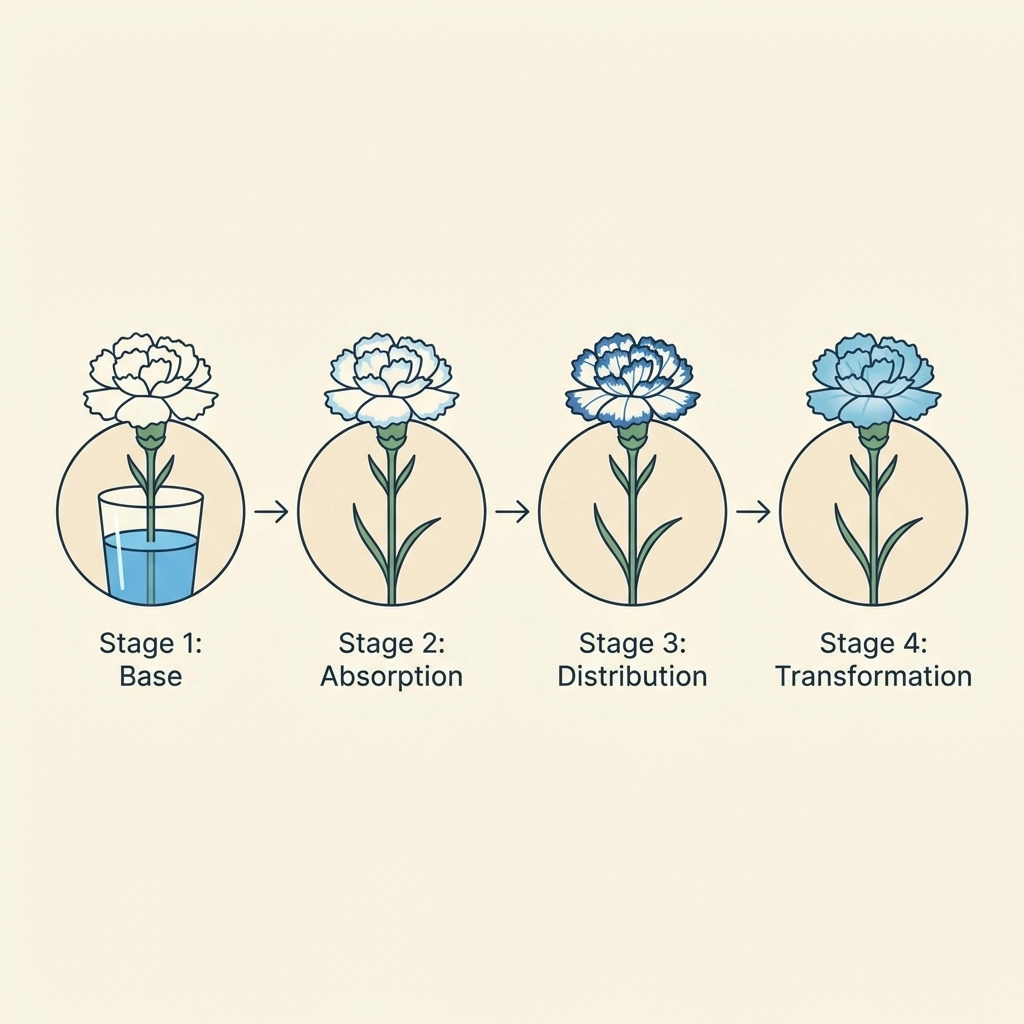
Check flowers every two hours initially. Color appears on petal tips within 60 minutes. This is the first visible sign of success.
After 6-8 hours, significant color develops. The edges show strong pigmentation. The centers remain lighter.
Leaving flowers overnight deepens the color. Maximum saturation occurs around 24 hours. Beyond that, additional change is minimal.
Document progress with photos. Time-lapse comparisons demonstrate the science clearly. This documentation enhances educational value.
What Variations Create Different Effects?
Split-Stem Rainbow Flowers
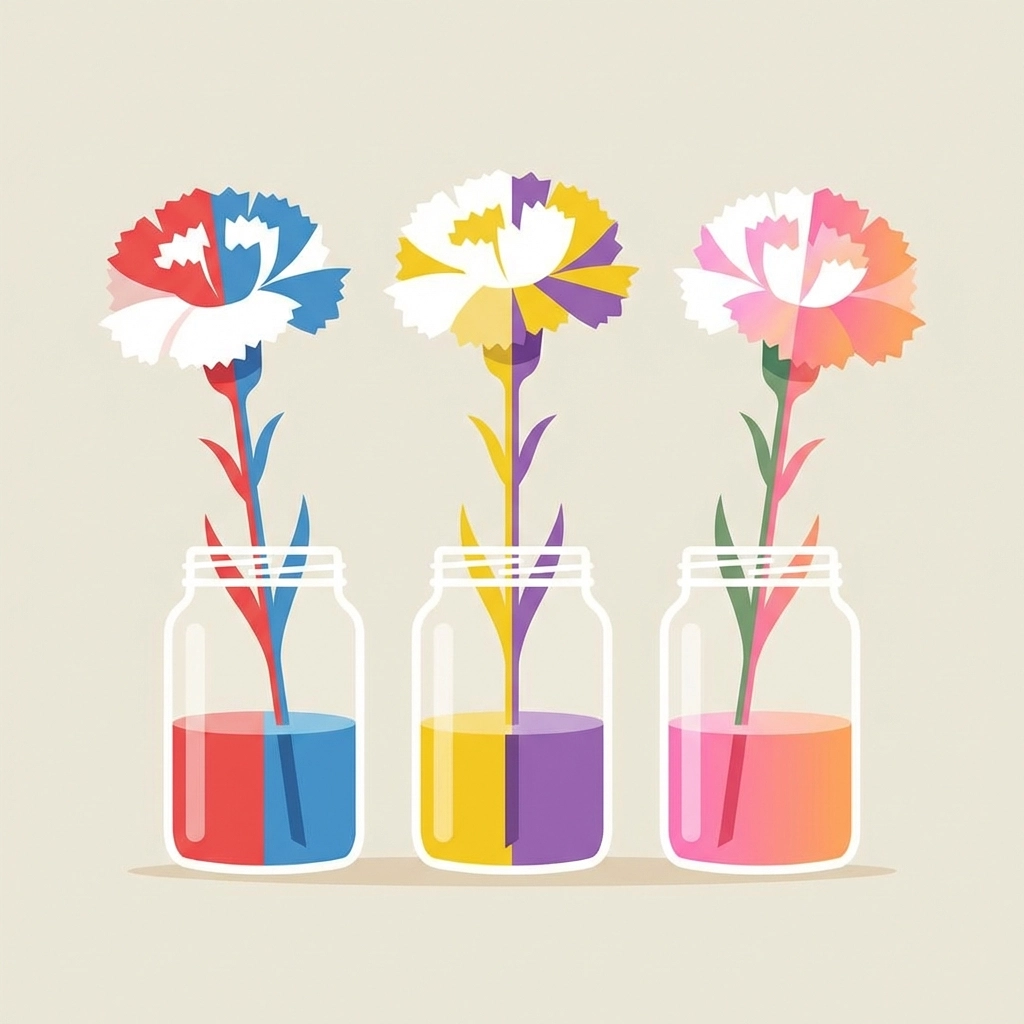
Cut the stem vertically into two or three sections. Place each section in a different color. The flower absorbs multiple colors simultaneously.
Red and blue create a striking combination. Yellow and red produce warm gradients. The colors remain separated in distinct petal sections.
This variation demonstrates how xylem tubes function independently. Each tube serves specific petal regions. The split stem makes this visible.
Color Mixing Experiments
Start with one color. After 12 hours, move the flower to a different color. The petals show layered effects.
Primary colors teach color theory. Blue then yellow does not create green. The pigments remain separate. This distinguishes dye absorption from paint mixing.
Comparing Flower Types
Test multiple white flower varieties simultaneously:
- Carnations (fastest, most vibrant)
- Daisies (moderate speed, good color)
- Roses (slower, subtle results)
- Chrysanthemums (variable results)
Different flowers have different xylem structures. Some absorb faster. Some show color more dramatically. Comparison reveals these differences.
What Are Common Mistakes to Avoid?
Using Wilted Flowers
Wilted flowers have compromised xylem. Their tubes contain air bubbles. Air blocks water flow. Fresh flowers perform dramatically better.
Select flowers with firm petals. Stems should be rigid, not limp. Leaves should be green and turgid.
Cutting with Dull Tools
Crushing the stem damages xylem tubes. Damaged tubes cannot transport water efficiently. Sharp cuts preserve tube integrity.
Clean tools between cuts. Bacteria transfer between stems. Infection slows absorption.
Using Insufficient Dye
Pale results come from diluted solutions. Thirty drops is the minimum recommendation. Fifty drops creates intense color.
Food coloring is inexpensive. Use generously for best results.
Placing in Direct Sunlight
Sunlight accelerates wilting. Wilted flowers stop absorbing water. The experiment ends prematurely.
Bright indirect light works well. Normal room lighting is sufficient.
What Educational Concepts Does This Teach?
This experiment covers multiple scientific principles:
- Capillary action – water movement against gravity
- Transpiration – water evaporation from plant surfaces
- Xylem function – vascular tissue transport
- Surface tension – molecular cohesion properties
- Adhesion – attraction between different molecules
For younger learners, the visual transformation captures attention. Abstract concepts become concrete. The process happens in real time.
For older students, quantitative measurements add depth. Measure water consumption. Calculate absorption rates. Graph color intensity over time.
Teachers incorporate this into biology units. Homeschool families use it for hands-on learning. The materials are accessible. The results are reliable.
How Long Do Color-Changed Flowers Last?
Treated flowers last as long as untreated cut flowers. Typically 5-7 days with proper care.
Change the colored water every 2-3 days. Fresh water prevents bacterial growth. Re-cut stems when changing water.
The color remains permanent once absorbed. It does not fade or wash out. The dye becomes part of the petal structure.
Display flowers in cool locations. Avoid heat sources and direct sunlight. These conditions extend vase life.
Why Does This Project Matter?
Science becomes tangible through observation. This experiment transforms invisible biology into visible change. The learning sticks because the experience is memorable.
Families bond over shared discovery. Classrooms engage through hands-on participation. The materials cost under five dollars. The educational return is substantial.
Color-changing flowers demonstrate that complex science can be simple. No lab required. No special training needed. Just curiosity, patience, and a few white carnations.