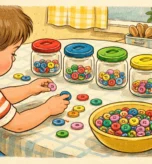




The easiest method requires only overripe fruit and a plate.
Cut a ripe orange in half. Place it on a paper plate. Hang it from a tree branch about three feet off the ground. Done.
No special equipment. No purchases. Just kitchen scraps and five minutes.
Butterflies feed on the natural sugars in decomposing fruit. The sweeter and softer the fruit, the better. Bananas work. Cantaloupe works. Anything past its prime in the fruit bowl becomes butterfly food.
This project takes less than ten minutes to set up. Children as young as four can participate. The science happens naturally: observation, patience, cause and effect.
What Materials Are Needed for a Basic Butterfly Feeder?
The simplest version requires items already in most homes.
Essential supplies:
- One paper plate or plastic lid
- String, yarn, or twine (about 2 feet)
- Overripe fruit (oranges, bananas, cantaloupe, watermelon)
- A hole punch or scissors
That’s it.
For a slightly upgraded version, add:
- A kitchen sponge
- Sugar
- Warm water
The sponge holds sugar-water nectar. This provides an additional food source beyond fruit.
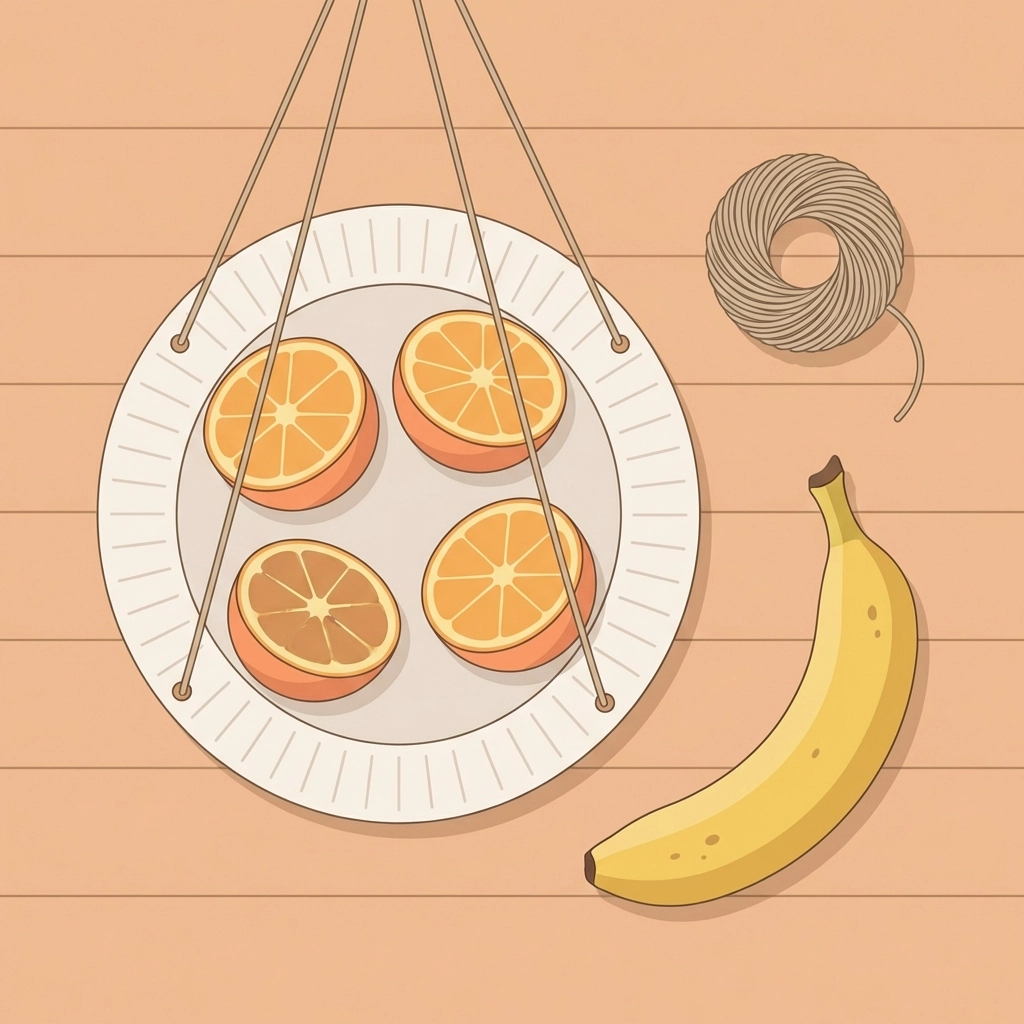
How Does the Assembly Process Work?
Step 1: Prepare the plate.
Punch four holes evenly spaced around the edge of the paper plate. Space them like compass points: north, south, east, west.
Step 2: Thread the string.
Cut four pieces of string, each about 8 inches long. Thread one piece through each hole. Tie a knot on the underside to secure.
Step 3: Gather the strings.
Bring all four string ends together above the plate. Tie them in a single knot. The plate now hangs level.
Step 4: Prepare the fruit.
Cut overripe fruit into slices or halves. Oranges work best when halved with the flesh facing up. Bananas can be peeled and laid flat. Remove any stickers or labels.
Step 5: Place the fruit.
Arrange fruit pieces on the plate. Leave some space between pieces. Overcrowding limits landing room for butterflies.
Step 6: Hang the feeder.
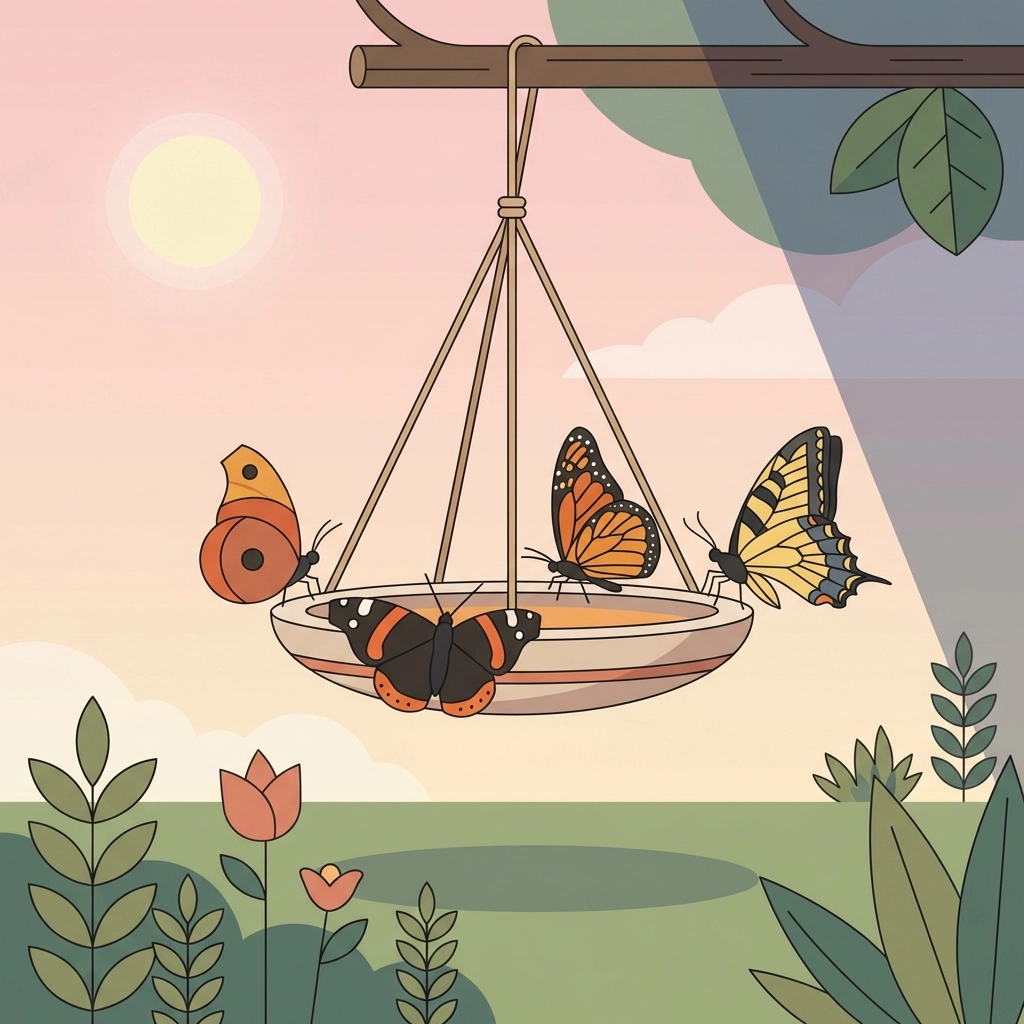
Find a tree branch or shepherd’s hook. Hang the feeder approximately three feet above the ground. Choose a location near existing flowers if possible.
The feeder is ready.
What About Adding Sugar-Water Nectar?
Sugar-water provides concentrated energy.
The ratio: one part sugar to four parts warm water.
Stir until the sugar dissolves completely. Undissolved granules can harm butterfly tongues.
Soak a clean kitchen sponge in the solution. Place the wet sponge on the plate alongside the fruit. The sponge acts as a nectar reservoir.
Butterflies land on the sponge and extend their proboscis to drink.

Important notes on nectar:
- Use plain white sugar only
- Honey is not safe: it can harbor bacteria harmful to butterflies
- Red dye is unnecessary and potentially harmful
- Fresh solution every two to three days prevents mold
The fruit-and-sponge combination attracts the widest variety of species.
Where Should the Feeder Be Placed?
Location determines success.
Optimal placement characteristics:
- Partial shade (prevents food from drying too quickly)
- Near existing flowers or garden beds
- Protected from strong wind
- Visible from a window for observation
- Away from bird feeders
Height matters. Three feet off the ground works well. Too low invites ants. Too high makes observation difficult.
Morning sun with afternoon shade creates ideal conditions. The warmth attracts butterflies early in the day. The shade preserves the food.
Avoid placing feeders directly over patios or walkways. Overripe fruit drips. Bees and wasps also visit butterfly feeders.
Which Butterflies Visit Feeding Stations?
Different species prefer different foods.
Fruit-feeding butterflies:
- Red-spotted Purple
- Question Mark
- Comma
- Mourning Cloak
- Red Admiral
- Hackberry Emperor
These species rarely visit traditional flower nectar. Rotting fruit is their primary food source. A feeding station provides resources that gardens alone cannot.
Nectar-feeding butterflies:
- Monarchs
- Swallowtails
- Painted Ladies
- Fritillaries
These species visit the sugar-water sponge more than the fruit. They also continue visiting nearby flowers.
The feeding station supplements natural food sources. It does not replace them.
What Maintenance Does a Butterfly Feeder Require?
Minimal effort keeps the station functional.
Daily tasks:
- Check fruit condition
- Remove any moldy pieces
- Top off sugar-water if sponge appears dry
Every two to three days:
- Replace fruit entirely
- Make fresh sugar-water solution
- Rinse the sponge
Weekly:
- Wash the plate with mild soap
- Inspect strings for wear
- Check hanging location stability
Bring the feeder indoors at night. Raccoons, opossums, and rodents seek out fruit after dark. Moths also feed on the same foods as butterflies.
Morning is the best time to refresh and rehang.
When Is the Best Time to Start a Butterfly Feeder?
Late spring through early fall provides peak activity.
Butterflies become active when daytime temperatures reach 60°F consistently. Activity peaks between 10 AM and 3 PM on sunny days.
Seasonal timing:
- Spring: Overwintered species emerge hungry
- Summer: Maximum species diversity and population
- Fall: Migration species like Monarchs need fuel
- Winter: No butterfly activity in most regions
Start the feeder in late April or early May in most temperate climates. Continue through September or October.
Observation improves with patience. The first visitors may take several days to discover the station. Once found, butterflies return repeatedly.
How Can the Station Be Expanded Over Time?
Start simple. Add complexity based on results.
Phase 1: Basic plate feeder
Fruit only. Observe which species visit. Note timing and frequency.
Phase 2: Add nectar component
Include the sugar-water sponge. Compare visitation patterns.
Phase 3: Multiple stations
Place feeders in different garden zones. Some butterflies prefer sun. Others prefer shade.
Phase 4: Specialized feeders
Commercial butterfly feeders offer features like ant moats and rain guards. These become worthwhile once the habit of butterfly feeding is established.
Phase 5: Habitat integration
Plant host plants for caterpillars. Add puddling stations with damp sand. Create a complete butterfly ecosystem.
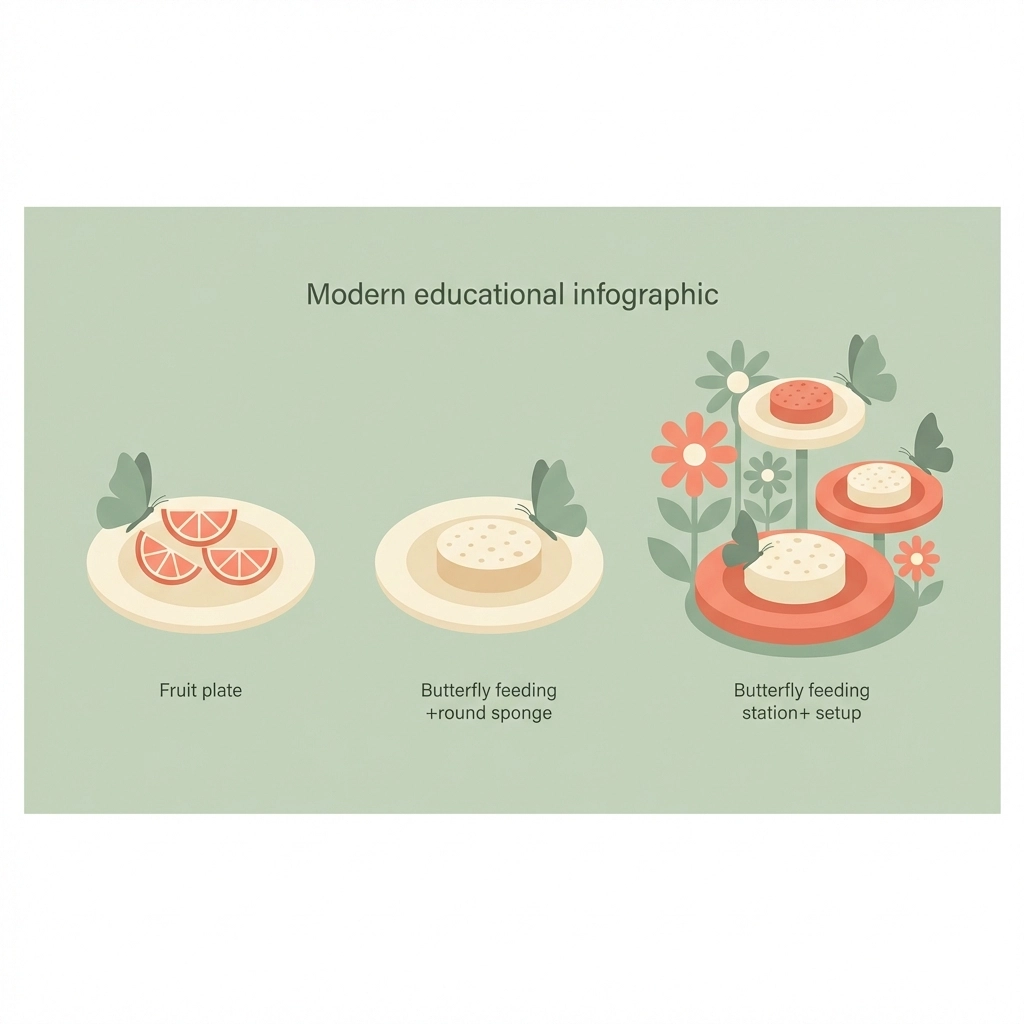
Each phase builds on previous observations. The learning compounds.
What Common Mistakes Should Be Avoided?
Several errors reduce feeder effectiveness.
Using unripe fruit.
Butterflies cannot pierce firm fruit skin. The fruit must be soft, even mushy.
Placing feeders in full sun.
Food dries out within hours. Fermentation accelerates. Bees dominate the station.
Forgetting maintenance.
Moldy fruit repels butterflies and attracts pests. Consistency matters.
Using honey instead of sugar.
Honey contains bacteria and spores that can sicken butterflies. Plain white sugar is safe.
Giving up too soon.
Butterflies need time to discover new food sources. Allow at least one week before concluding the station has failed.
What Educational Value Does This Project Offer?
The butterfly feeder teaches through observation.
Science concepts demonstrated:
- Insect life cycles
- Pollination and feeding behavior
- Ecosystem relationships
- Decomposition processes
- Weather and animal activity patterns
Skills developed:
- Patience
- Careful observation
- Data recording
- Cause-and-effect reasoning
- Responsibility through maintenance
The project scales to any age. Younger children focus on spotting and counting. Older children can keep observation journals, photograph species, and research identification.
A simple plate of rotting fruit becomes a window into ecology.
The butterfly feeding station proves that meaningful nature connection requires no budget, no expertise, and no special equipment. Just attention.