



Crunchiness comes from consistent moisture, proper harvest timing, and well-draining soil.
Peppers develop thick, crisp cell walls when water uptake remains steady throughout the growing season. Stress from drought or overwatering creates soft, thin-walled fruit. Raised beds offer control over these variables.
The texture difference between a grocery store pepper and a homegrown one starts in the soil.
What Soil Do Peppers Need in Raised Beds?
Sandy, loamy soil with excellent drainage.
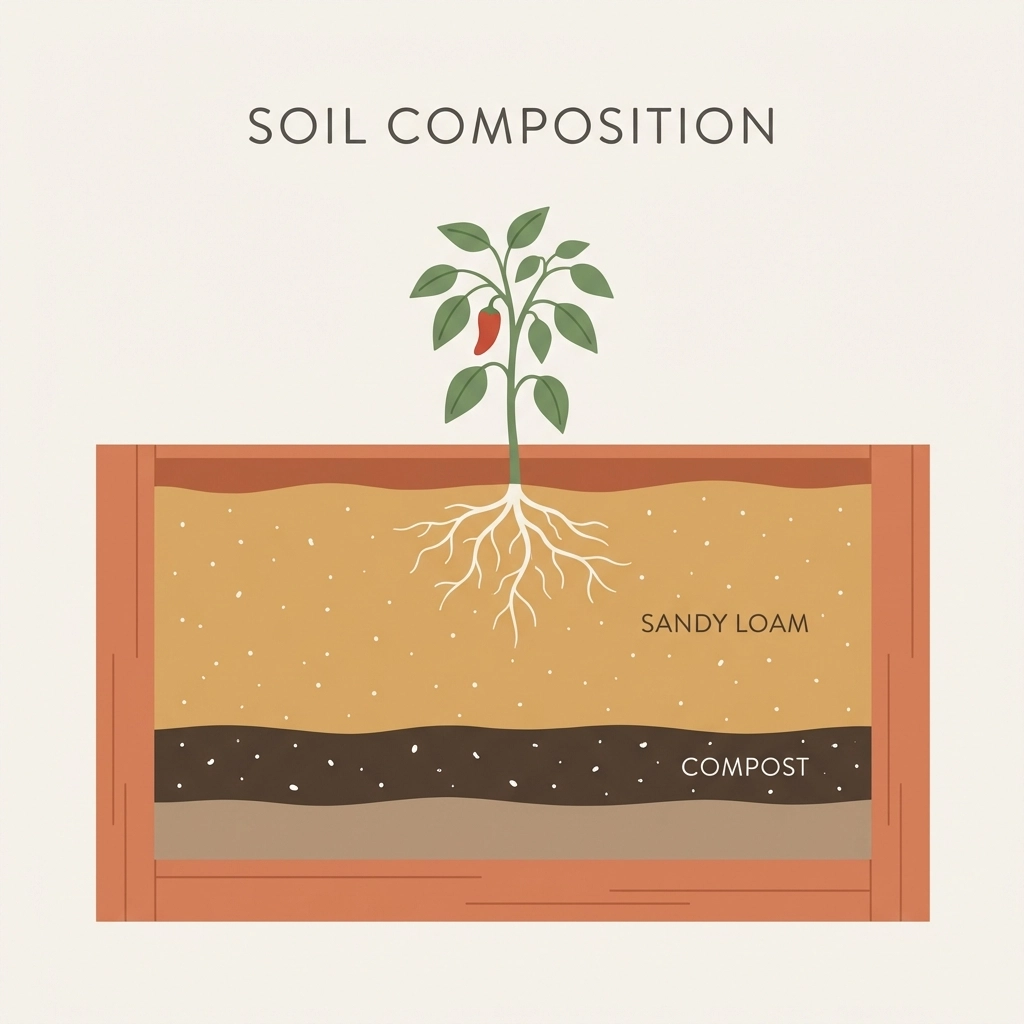
Peppers demand moisture but despise soggy roots. The ideal raised bed mix contains:
- 60% quality topsoil or garden soil
- 30% compost
- 10% perlite or coarse sand
This combination holds water while allowing excess to drain. Roots access oxygen. Disease pressure drops.
Add a 2- to 3-inch layer of compost before each growing season. Organic matter feeds soil biology and improves texture retention in the fruit.
pH matters. Peppers thrive between 6.0 and 6.8. Most compost-amended raised bed soil falls within this range. A simple soil test confirms the number.
Avoid heavy clay or pure potting mix. Clay compacts and drowns roots. Potting mix dries too quickly and lacks nutrients for season-long production.
How Much Sun Do Pepper Plants Require?
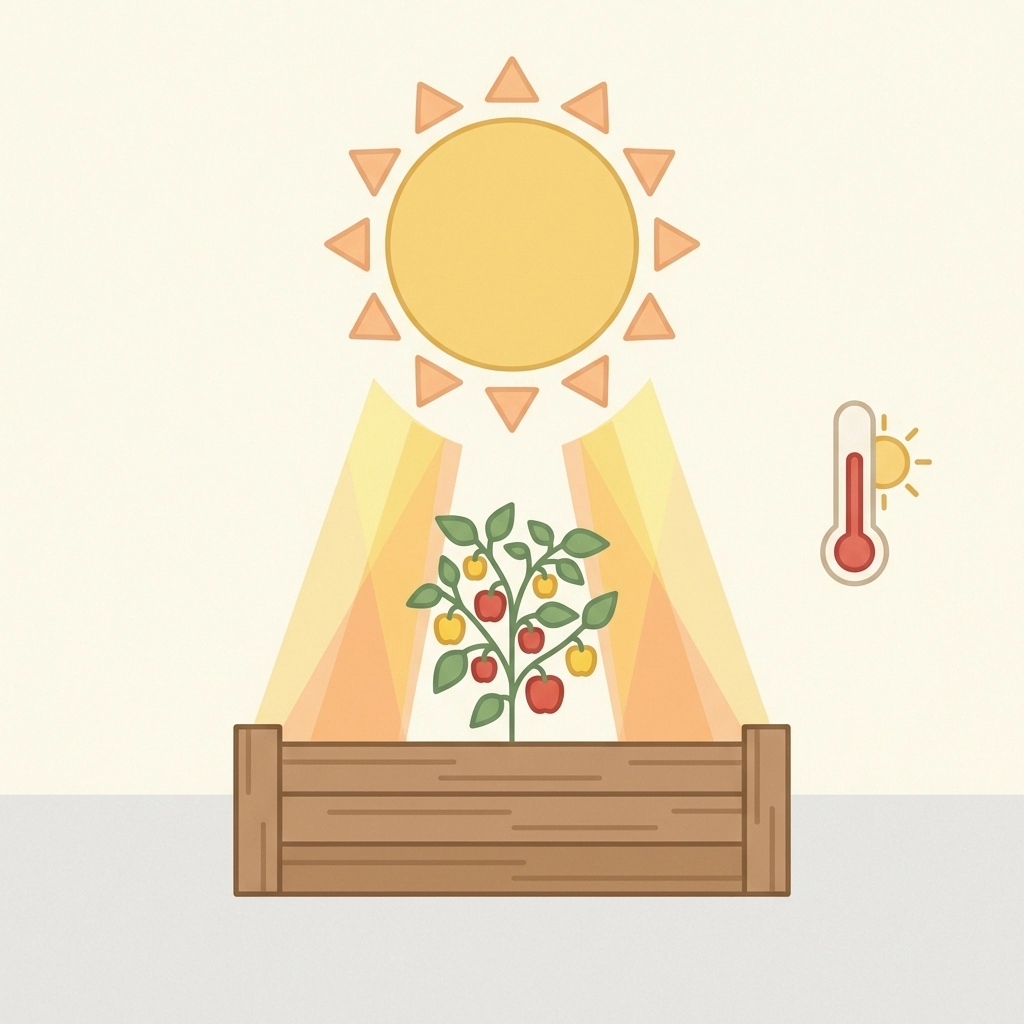
8 to 10 hours of direct sunlight daily.
Peppers originate from Central and South America. Full sun fuels photosynthesis, fruit development, and flavor concentration. Anything less than 6 hours produces weak plants and sparse harvests.
Position raised beds on the south or west side of the property. Avoid spots shaded by trees, fences, or structures during peak sun hours (10 AM to 4 PM).
Morning sun dries dew from leaves. This reduces fungal disease.
Afternoon sun drives fruit maturation. Peppers color faster and develop thicker walls with extended light exposure.
What Temperature Do Peppers Prefer?
Soil temperature between 75°F and 80°F. Air temperature between 70°F and 85°F.
Raised beds warm faster than in-ground gardens. This gives pepper growers an advantage in spring and fall.
Peppers stop setting fruit when nighttime temperatures drop below 55°F or daytime temperatures exceed 90°F. Blossoms drop. Existing fruit stalls.
Black plastic mulch or dark-colored raised bed frames absorb heat and keep soil warm during cool spells. Remove or replace with straw mulch during heat waves to prevent overheating.
Transplant timing matters. Wait until soil temperature reaches 65°F minimum. Two weeks after the last frost date works in most regions. Rushed planting leads to stunted growth and delayed harvests.
How Often Should Peppers Be Watered?
Deeply, two to three times per week.
Consistency produces crunch. Irregular watering causes blossom end rot, cracked fruit, and thin walls.
The goal: moist soil to 6 inches deep. Not wet. Not dry.
Watering guidelines:
- Water in the morning to reduce evaporation and disease
- Apply water at the base, not on foliage
- Let the top inch of soil dry between waterings
- Increase frequency during fruit set and hot weather
- Reduce frequency during cloudy, cool periods
Raised beds dry faster than in-ground gardens. Check moisture levels daily during summer months.
Drip irrigation or soaker hoses deliver water directly to roots. Overhead sprinklers waste water and promote leaf diseases.
Mulch reduces watering frequency. A 2- to 3-inch layer of straw, shredded leaves, or wood chips conserves moisture and moderates soil temperature.
Do Pepper Plants Need Support?
Yes. Most varieties benefit from staking or caging.
Pepper plants become top-heavy when loaded with fruit. Branches snap. Fruit contacts soil and rots.
Support options for raised beds:
- Single stakes: Drive a 3-foot stake 6 inches from the main stem. Tie loosely with soft twine as the plant grows.
- Tomato cages: Work well for bushy varieties. Choose cages with 6-inch openings for easy harvest access.
- Florida weave: Stretch twine between stakes along rows. Suitable for multiple plants in a single bed.
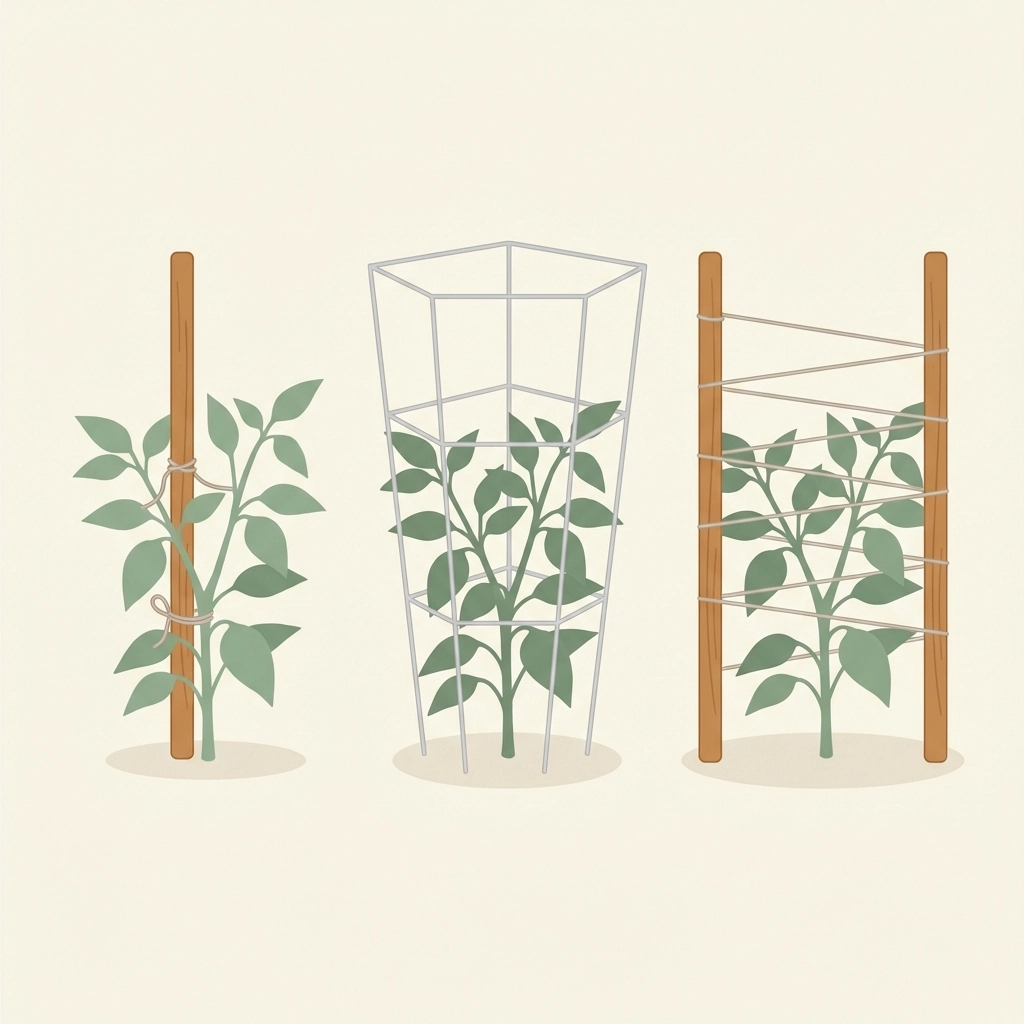
Install support at transplanting time. Adding stakes later disturbs established root systems.
Hot pepper varieties often stay compact and self-supporting. Bell peppers and large sweet varieties almost always need assistance.
Why Are Pepper Seedlings Leggy?
Insufficient light.
Leggy seedlings stretch toward inadequate light sources. Stems become thin and weak. Plants struggle to support fruit later.
Prevention strategies:
- Provide 14 to 16 hours of artificial light for indoor seedlings
- Position grow lights 2 to 4 inches above seedling tops
- Rotate trays daily if using window light
- Maintain temperatures between 70°F and 75°F (warm temperatures plus low light accelerates legginess)
Recovery options:
- Transplant leggy seedlings deeper, burying stem up to the first true leaves
- Pinch the growing tip to encourage branching
- Provide maximum light immediately after transplanting outdoors
Leggy plants catch up with proper care. Fruit production may delay by one to two weeks.
Common Pepper Problems and Solutions
Blossom drop.
Cause: Temperature stress, inconsistent watering, or nitrogen excess.
Solution: Maintain steady moisture and avoid high-nitrogen fertilizers after flowering begins.
Blossom end rot.
Cause: Calcium deficiency triggered by irregular watering.
Solution: Water consistently. Add crusite calcium if soil tests show deficiency.
Sunscald.
Cause: Sudden exposure to intense sunlight on fruit.
Solution: Maintain foliage cover. Avoid excessive pruning.
Aphids.
Cause: Soft new growth attracts these pests.
Solution: Spray with water. Introduce ladybugs. Use insecticidal soap for heavy infestations.
Slow ripening.
Cause: Cool temperatures or excessive nitrogen.
Solution: Wait. Reduce fertilizer. Remove some foliage to increase light penetration to fruit.
When to Harvest for Maximum Crunch
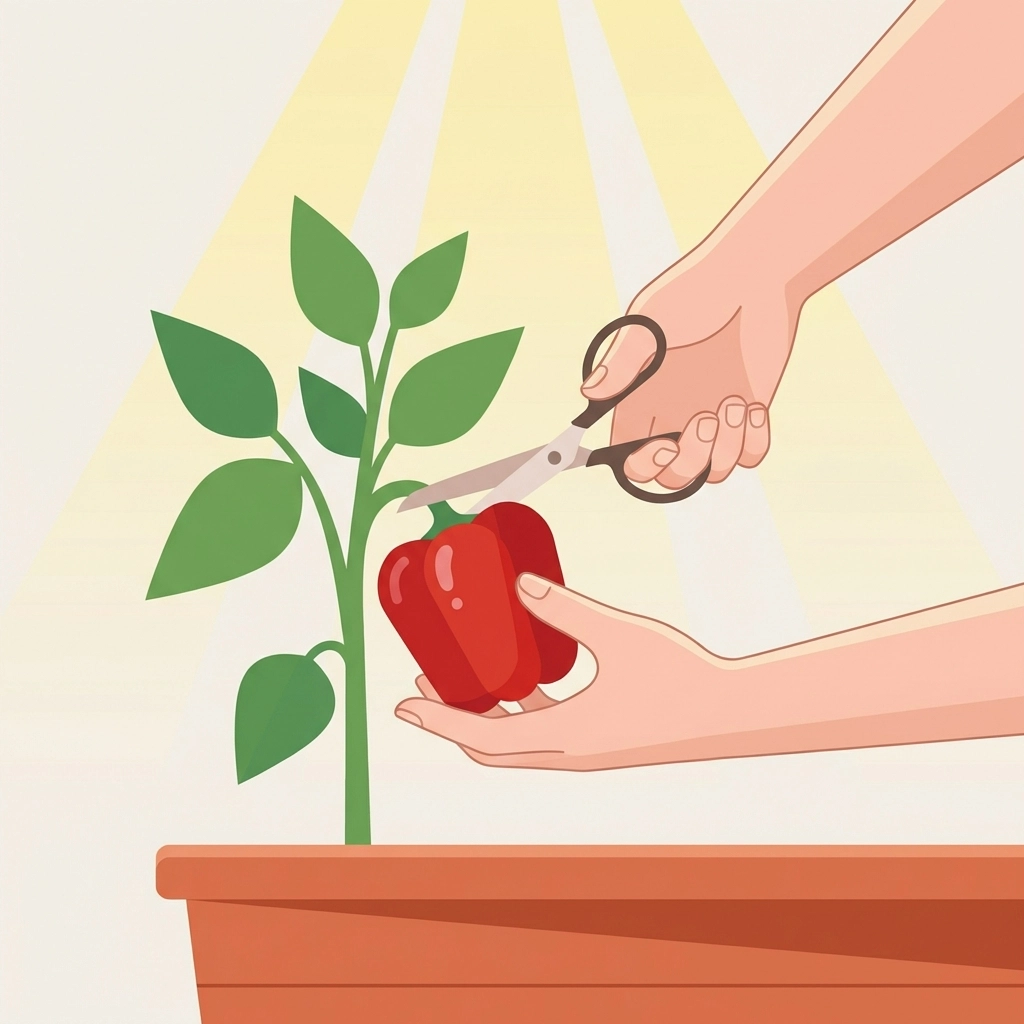
Harvest at full color for peak crispness.
Green peppers have thinner walls and less developed cell structure. Allowing peppers to ripen fully: red, yellow, orange, or chocolate depending on variety: produces maximum crunch.
Harvest indicators:
- Fruit reaches expected size for the variety
- Color is uniform across the entire pepper
- Skin appears glossy, not dull or wrinkled
- Fruit feels firm, not soft or spongy
Use clean scissors or pruners. Pulling peppers damages stems and reduces future yields.
Harvest in the morning after dew dries. Store unwashed peppers in the refrigerator for up to two weeks.
Family Garden Science: The Crunch Experiment
Raised bed pepper growing offers hands-on learning opportunities.
Try this experiment:
- Plant two identical pepper seedlings side by side
- Water one consistently, the other irregularly
- Record observations weekly: leaf color, plant height, flower count, fruit development
- Harvest at the same time and compare texture
The results demonstrate the direct relationship between water consistency and fruit quality. Children observe cause and effect in real time.
Additional activities:
- Measure soil temperature at different times of day
- Count flowers versus fruit that develops (pollination success rate)
- Track days from transplant to first harvest for different varieties
- Taste-test peppers harvested at different color stages
Growing peppers teaches patience, observation, and the science of plant biology. The reward: crunchy, homegrown peppers that outperform anything from a store.