



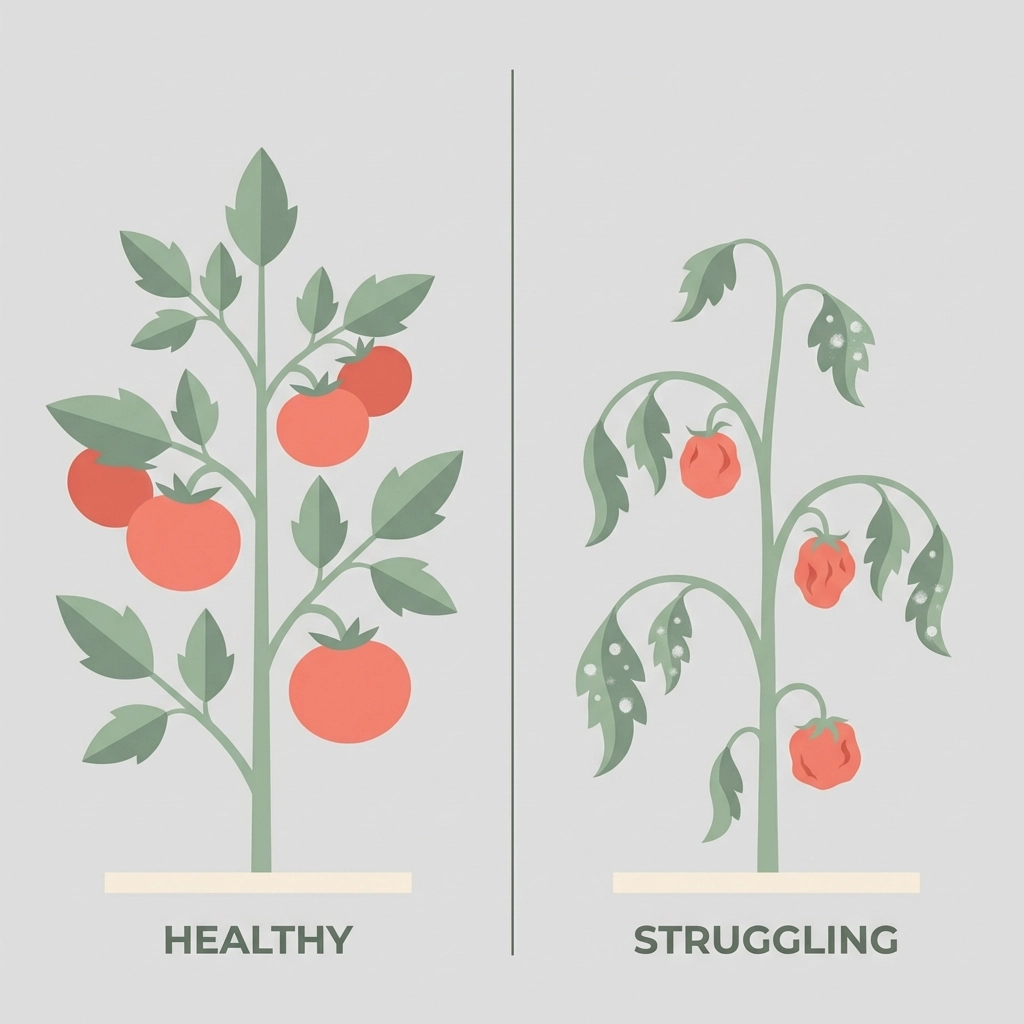
Struggling tomato plants signal a fixable problem. The cause depends on the growing method.
Soil-grown tomatoes face different challenges than hydroponic tomatoes. Nutrient delivery, water consistency, and environmental factors behave differently in each system.
This guide covers the most common issues. Each symptom has a cause. Each cause has a solution.
What Does the Quick-Glance Symptom Chart Show?
The chart below matches visible symptoms to likely causes in both growing methods.
| Symptom | Soil-Grown Cause | Hydro-Grown Cause |
|---|---|---|
| Yellow lower leaves | Nitrogen deficiency, overwatering | Low nitrogen in nutrient solution, root rot |
| Yellow upper leaves | Iron or manganese deficiency | pH imbalance blocking nutrient uptake |
| Blossom end rot | Inconsistent watering, calcium uptake issues | Calcium deficiency in solution, EC too high |
| Leggy stems | Insufficient light, overcrowding | Insufficient light, lights too far from plants |
| Leaf curl (upward) | Heat stress, overwatering | Heat stress, root zone too warm |
| Blossom drop | Temperature extremes | Temperature extremes, pollination failure |
| Cracked fruit | Inconsistent watering | Sudden changes in nutrient concentration |
| Stunted growth | Compacted soil, root bound | Root rot, pump failure, pH drift |
| White powder on leaves | Powdery mildew | Powdery mildew, poor air circulation |
| Brown spots on leaves | Early blight, septoria | Nutrient burn, bacterial infection |
Print this chart. Post it near the growing area.
Why Are Tomato Leaves Turning Yellow?
Yellow leaves indicate nutrient problems or water stress. The location of yellowing reveals the cause.
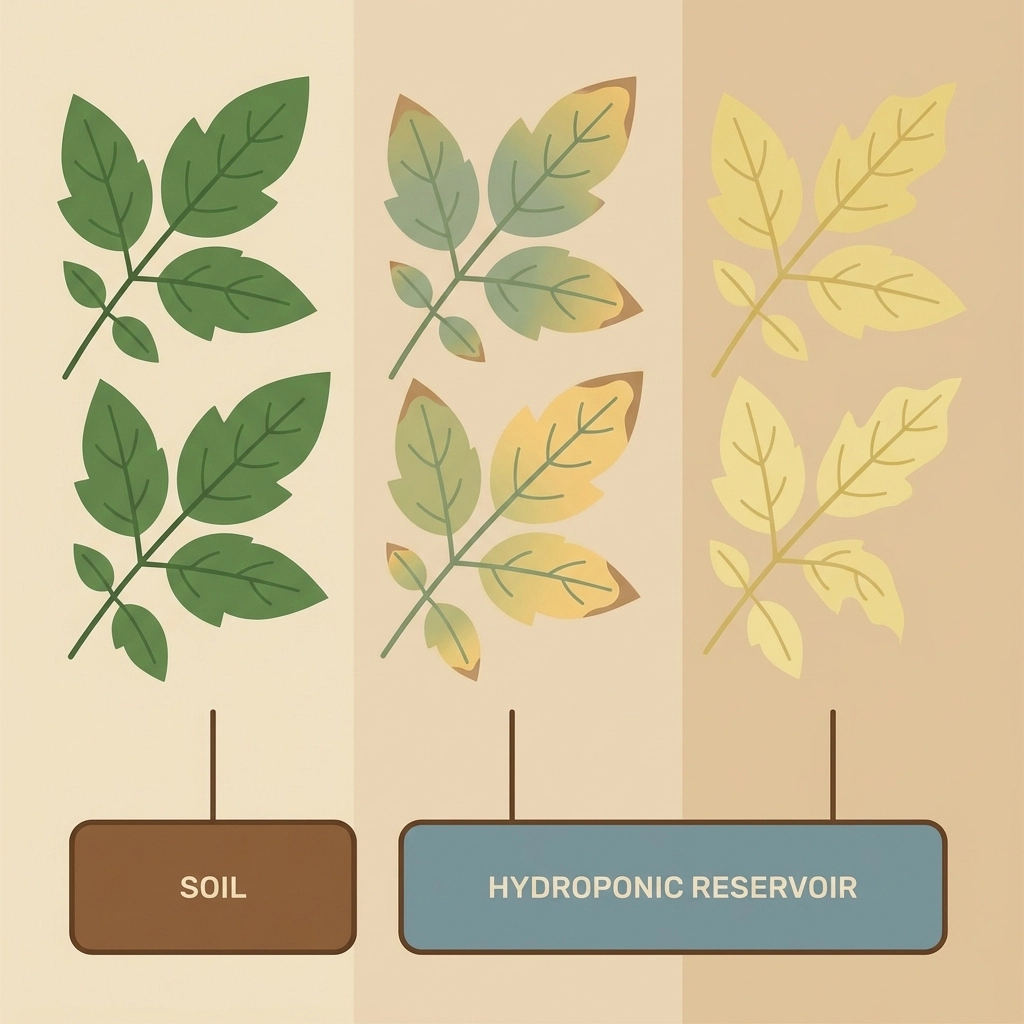
Lower Leaves Yellowing First
In soil: Nitrogen deficiency is the primary cause. Nitrogen moves within the plant. Old leaves sacrifice nitrogen to feed new growth. Container-grown tomatoes experience this frequently due to nutrient leaching from repeated watering.
The fix: Apply balanced fertilizer (10-10-10) biweekly. Test soil before adding amendments.
In hydro: Low nitrogen concentration in the nutrient reservoir causes the same symptom. Root rot also presents this way. Healthy roots appear white. Brown, slimy roots indicate disease.
The fix: Check nutrient solution strength. Inspect roots. Replace solution if contaminated.
Upper Leaves Yellowing First
In soil: Iron or manganese deficiency. High soil pH locks out these micronutrients. Soil pH above 7.0 creates uptake problems.
The fix: Test soil pH. Apply sulfur to lower pH if needed. Target pH 6.2–6.8.
In hydro: pH drift is the usual culprit. Hydroponic systems require pH between 5.5–6.5. Nutrient lockout occurs outside this range even when nutrients are present.
The fix: Check pH daily. Adjust with pH up or pH down solutions. Calibrate pH meter monthly.
What Causes Blossom End Rot?
Blossom end rot appears as dark, sunken patches on the bottom of fruit. The tissue collapses. The fruit becomes inedible.
This is not a disease. This is a calcium disorder.
In soil: Calcium exists in most garden soils. The problem is uptake, not availability. Inconsistent watering prevents roots from absorbing calcium. Drought stress followed by heavy watering creates the classic pattern.
Additional uptake blockers:
- Cold soil temperatures
- Waterlogged conditions
- High concentrations of potassium or magnesium
- Soil pH below 6.0 or above 7.0
The fix: Water consistently. Mulch to retain moisture. Maintain soil pH around 6.5. Avoid excessive potassium fertilizers.
In hydro: Calcium deficiency in the nutrient solution causes direct shortage. High EC (electrical conductivity) also blocks calcium uptake even when calcium is present.
The fix: Use a complete hydroponic nutrient formula with calcium. Keep EC between 2.0–3.0 mS/cm for fruiting tomatoes. Ensure adequate calcium-to-potassium ratio.
Affected fruit cannot recover. Remove damaged tomatoes. Focus on preventing future occurrence.
Why Are Tomato Seedlings Leggy?
Leggy seedlings have tall, thin stems with widely spaced leaves. The plants stretch toward light.
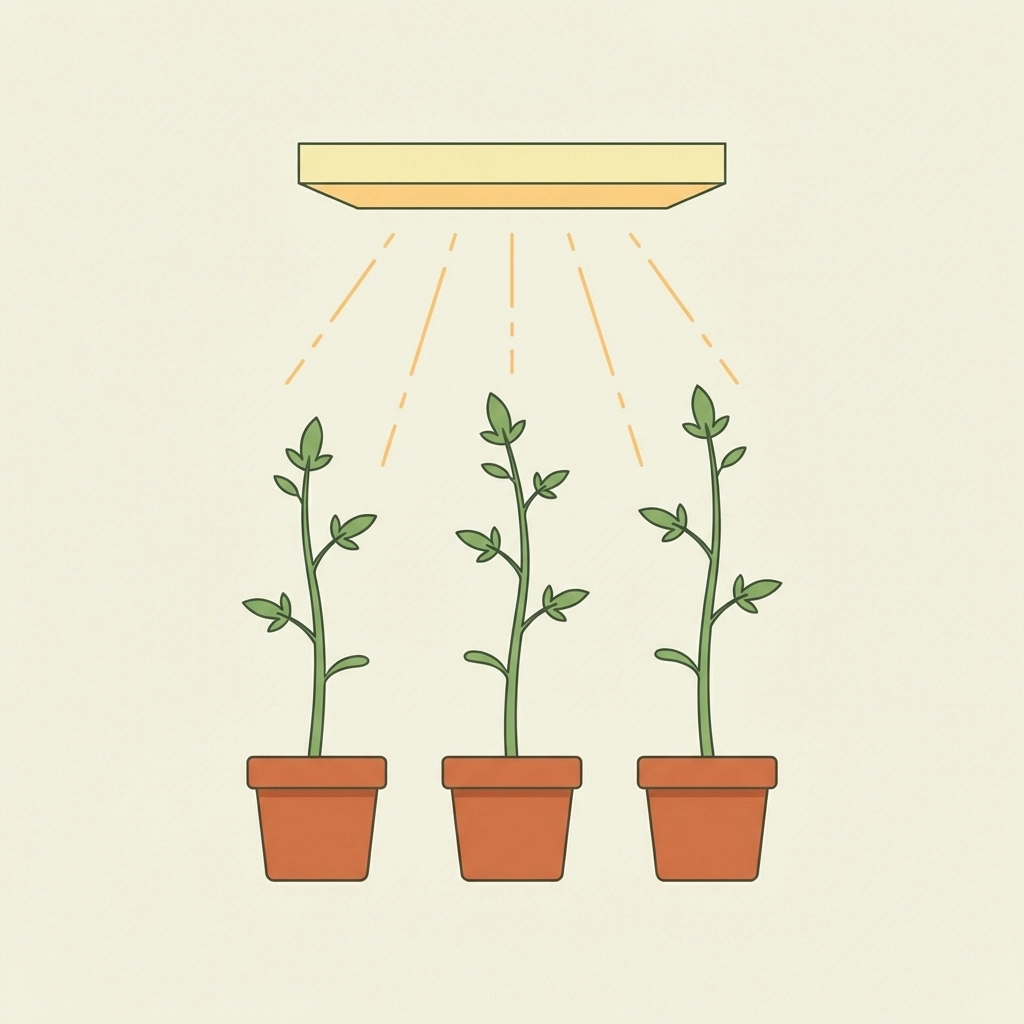
In soil (indoor starts): Insufficient light intensity causes stretching. Windowsill light is rarely adequate. Seedlings need 14–16 hours of strong light daily.
The fix: Position grow lights 2–4 inches above seedlings. Raise lights as plants grow. Provide adequate light duration.
In hydro: The same light deficiency applies. Hydroponic seedlings grown under weak lights or lights positioned too far away will stretch.
The fix: Use appropriate grow lights. T5 fluorescents work for seedlings. LED panels require proper hanging height per manufacturer specifications.
Additional causes in both systems:
- Overcrowding (seedlings competing for light)
- Temperatures too warm at night (promotes stem elongation)
- Starting seeds too early (long indoor period before transplanting)
Leggy seedlings can be planted deeper. Tomatoes form roots along buried stems. Bury up to the first set of true leaves.
What Causes Poor Fruit Set?
Tomato flowers appear but fruit fails to develop. Blossoms drop without producing tomatoes.
Temperature is the primary factor.
Blossoms fail to set when:
- Night temperatures drop below 55°F
- Day temperatures exceed 90°F for extended periods
- Night temperatures exceed 75°F
Pollen becomes nonviable outside the optimal range of 60–85°F.
In soil (outdoor): Plant timing matters. Transplant after nighttime temperatures consistently exceed 55°F. In hot climates, expect reduced fruit set during peak summer heat.
The fix: Time planting for optimal temperature windows. Provide 30% shade cloth during heat waves. Select heat-tolerant varieties for hot climates.
In hydro (indoor): Temperature control is possible but often overlooked. Grow rooms heat up under lights. Poor ventilation traps heat.
The fix: Monitor air temperature at plant level. Use fans for air circulation. Consider air conditioning for summer growing.
Pollination also requires assistance indoors. No wind or insects exist to move pollen.
The fix: Gently shake flowering plants daily. Use an electric toothbrush on flower stems to vibrate pollen loose.
What Diseases Affect Both Soil and Hydro Tomatoes?
Some problems appear regardless of growing method.
Powdery Mildew
White powder coating on leaves. Common in humid conditions with poor air circulation.
In soil: Space plants 24–36 inches apart. Prune lower branches for airflow.
In hydro: Increase fan speed. Reduce humidity. Avoid overcrowding grow spaces.
Both systems: Apply fungicide at first sign. Neem oil works for mild cases.
Viral Diseases
Curled foliage. Mosaic patterns. Deformed leaves.
No cure exists. Remove infected plants immediately. Do not compost diseased material. Disinfect tools with 10% bleach solution.
Prevention:
- Control aphids and whiteflies (virus vectors)
- Remove weeds near growing area
- Select disease-resistant varieties
How Does Troubleshooting Differ Between Soil and Hydro?
Soil systems have buffer capacity. Problems develop slowly. Corrections take time to show results.
Hydroponic systems respond immediately. Problems appear quickly. Corrections work quickly.
| Factor | Soil Approach | Hydro Approach |
|---|---|---|
| pH adjustment | Add amendments, wait weeks | Adjust solution, results in hours |
| Nutrient correction | Side-dress or foliar feed | Change reservoir solution |
| Watering issues | Improve drainage or irrigation schedule | Check pump, timer, water level |
| Root inspection | Difficult without disturbing plant | Easy in most systems |
| Recovery time | Days to weeks | Hours to days |
Hydro growers must monitor daily. Equipment failure creates rapid decline.
Soil growers can check weekly. The growing medium provides stability.
When Should a Plant Be Removed?
Some plants cannot be saved. Recognizing this prevents wasted effort.
Remove plants showing:
- Viral disease symptoms
- Severe root rot (more than 50% of roots affected)
- Verticillium or fusarium wilt (confirmed)
- Stunted growth with no response to corrections after two weeks
Healthy plants respond to proper care within 7–14 days. No improvement indicates a systemic problem beyond correction.
Start fresh. Apply lessons learned. The next crop benefits from the experience.
What Prevents Most Tomato Problems?
Prevention requires less effort than correction.
For soil growers:
- Test soil before planting season
- Water consistently using drip irrigation
- Mulch to maintain moisture
- Rotate crops annually
- Select disease-resistant varieties
For hydro growers:
- Check pH and EC daily
- Maintain clean reservoirs
- Replace nutrient solution weekly
- Inspect roots during routine maintenance
- Keep backup equipment available
Both systems require observation. Daily visual inspection catches problems early.
Healthy tomato plants produce abundant fruit. Struggling plants signal an opportunity to learn. Every problem solved builds growing expertise.