




Can You Garden with Kids in Winter If You Live in Zone 6?
Yes, absolutely! If you’re in Zone 6 (or colder), the easiest way to keep gardening with kids in winter is to grow fast indoor crops: microgreens (7–14 days), oyster mushrooms (2–4 weeks), and simple windowsill hydroponics (2–4 weeks). These projects work in regular homes (no greenhouse), cost very little to start, and give kids something real to observe and harvest while it’s snowing outside.
Here’s the simple game plan:
- Pick one “quick win” (microgreens) so kids stay motivated.
- Add one “wow factor” (mushrooms) because they grow fast and look wild.
- Try one “science build” (a basic hydroponic wick bottle) for roots-and-water learning.
The secret? You don't need a greenhouse, a huge budget, or fancy equipment. You need a few buckets, some jars, a little curiosity, and kids who are ready to get their hands dirty (in the best way possible).
Welcome to the Winter Farm Lab.

Why Zone 6 Families Need Indoor Growing Projects
If you live in USDA Hardiness Zone 6 or colder, you already know the drill. The last frost doesn't reliably pass until mid-May. That means from roughly November through April, your outdoor garden beds are frozen, dormant, or buried under snow.
For kids who love digging in dirt and watching things grow, that's a long time to wait.
But here's what we've learned at our farm: winter isn't a pause button on learning. It's an invitation to explore a different kind of growing. Indoor projects teach children about biology, decomposition, chemistry, and patience, all while producing actual food you can eat together.
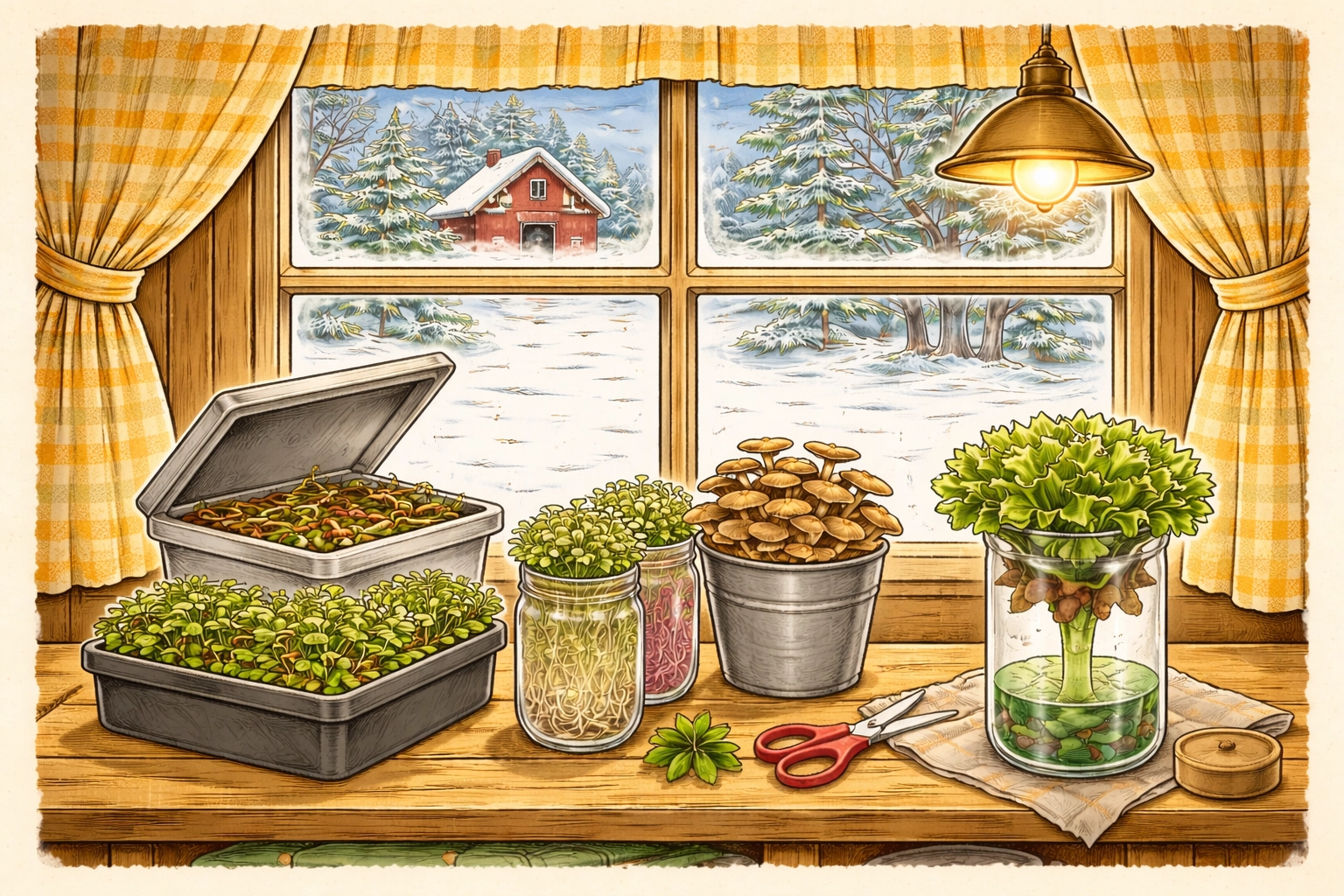
The kitchen counter becomes a science lab. The basement becomes a mushroom cave. And that sunny window? It's now a tiny greenhouse growing fresh greens while the snow piles up outside.
Introducing the Winter Farm Lab
The Winter Farm Lab is our name for turning your home into a living classroom during the cold months. It's not about recreating a summer garden indoors (that's expensive and frustrating). It's about choosing projects that thrive in indoor conditions and match the attention spans and abilities of young scientists.
The Three Pillars of the Winter Farm Lab
Here's what grows beautifully indoors during winter, and what kids ages 3–10 can genuinely help with:
| Project Type | Space Needed | Time to Harvest | Best Ages | Estimated Cost |
|---|---|---|---|---|
| Mushroom Buckets | Corner of a room | 2–4 weeks | 5–10 | Under $25 |
| Microgreens & Sprouts | Kitchen counter | 7–14 days | 3–10 | Under $10 |
| Simple Hydroponics | Sunny window | 2–4 weeks | 6–10 | Under $15 |
Each of these projects requires minimal space (think: a single shelf or a corner of the counter), costs less than a pizza dinner to start, and gives kids something real to observe, measure, and eventually taste.
Mushrooms: The Indoor Fungi Adventure
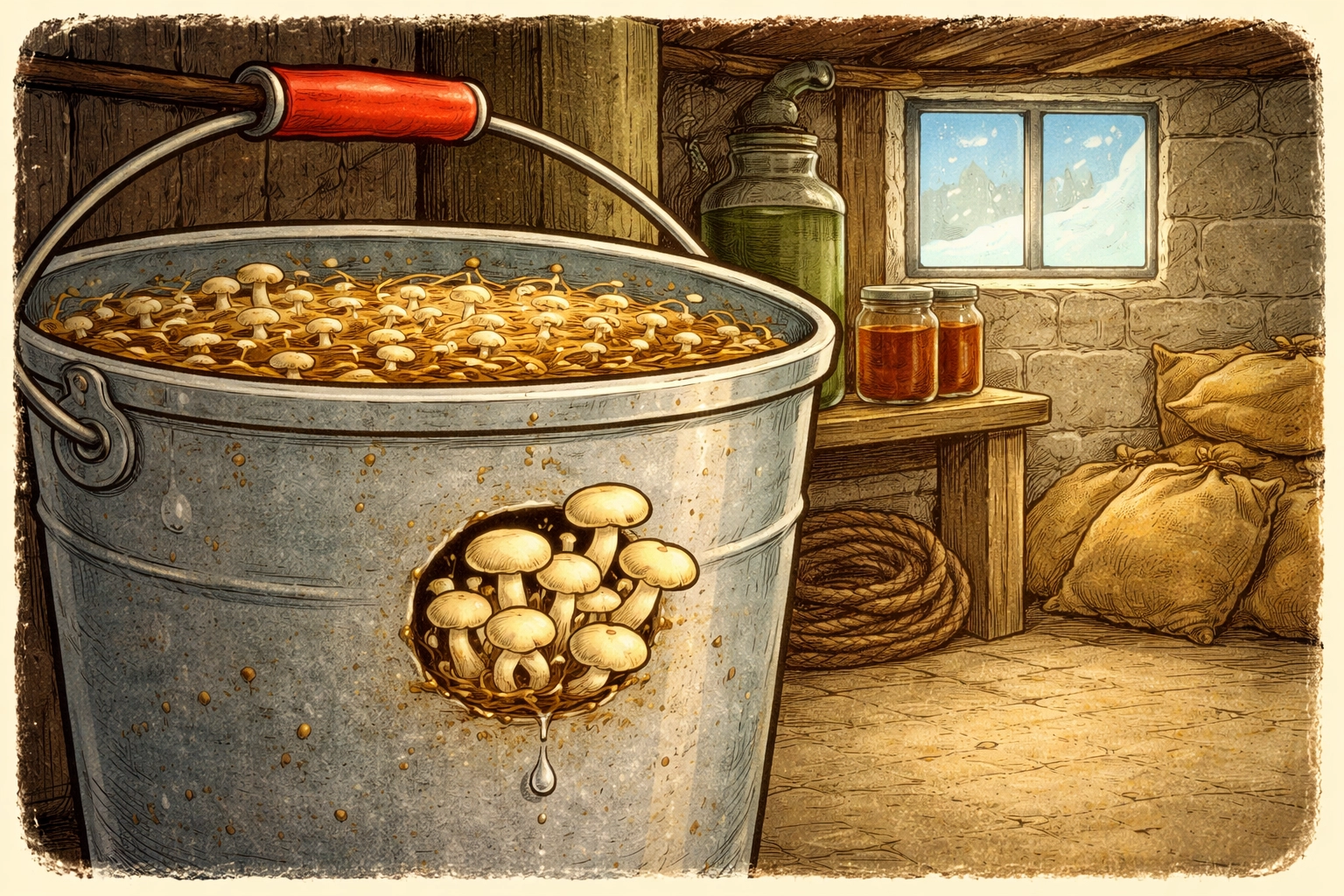
Growing mushrooms indoors might sound exotic, but it's one of the most rewarding winter projects for families. Oyster mushrooms, in particular, are forgiving, fast, and fascinating to watch.
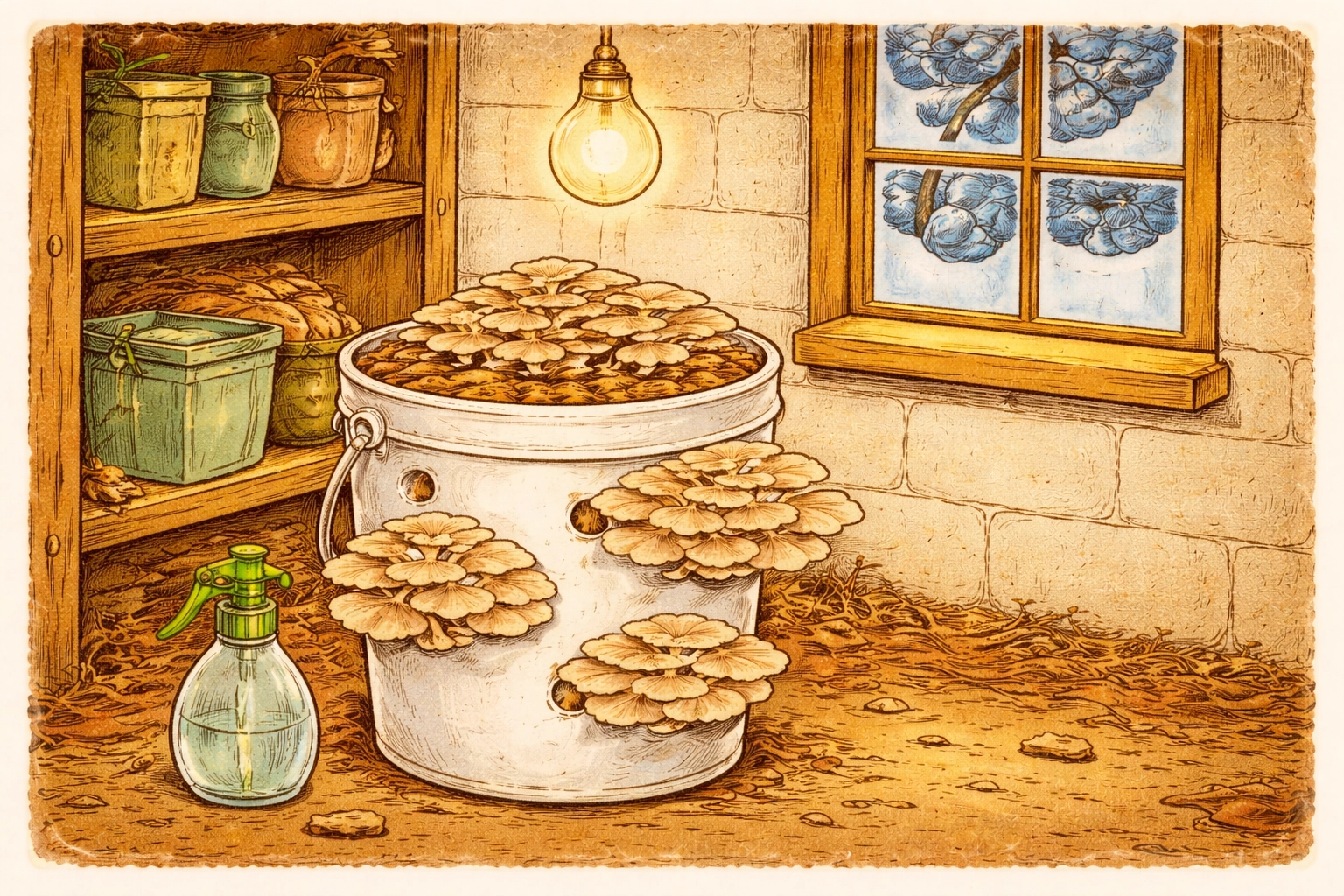
A simple 5-gallon bucket filled with pasteurized straw and mushroom spawn can produce multiple flushes of fresh oyster mushrooms over several weeks. Kids love checking on the bucket each morning, watching the tiny pins emerge, and eventually harvesting their own homegrown fungi.
What kids learn: Decomposition, the role of fungi in ecosystems, patience, and observation skills.
Kid jobs: Misting the bucket, checking humidity, measuring mushroom growth, and harvesting with supervision.
Want to dive deeper into bucket mushroom growing? Check out our full guide on Growing Vertical Mushrooms: An Indoor Fungi Adventure.
Microgreens and Sprouts: The 7-Day Miracle
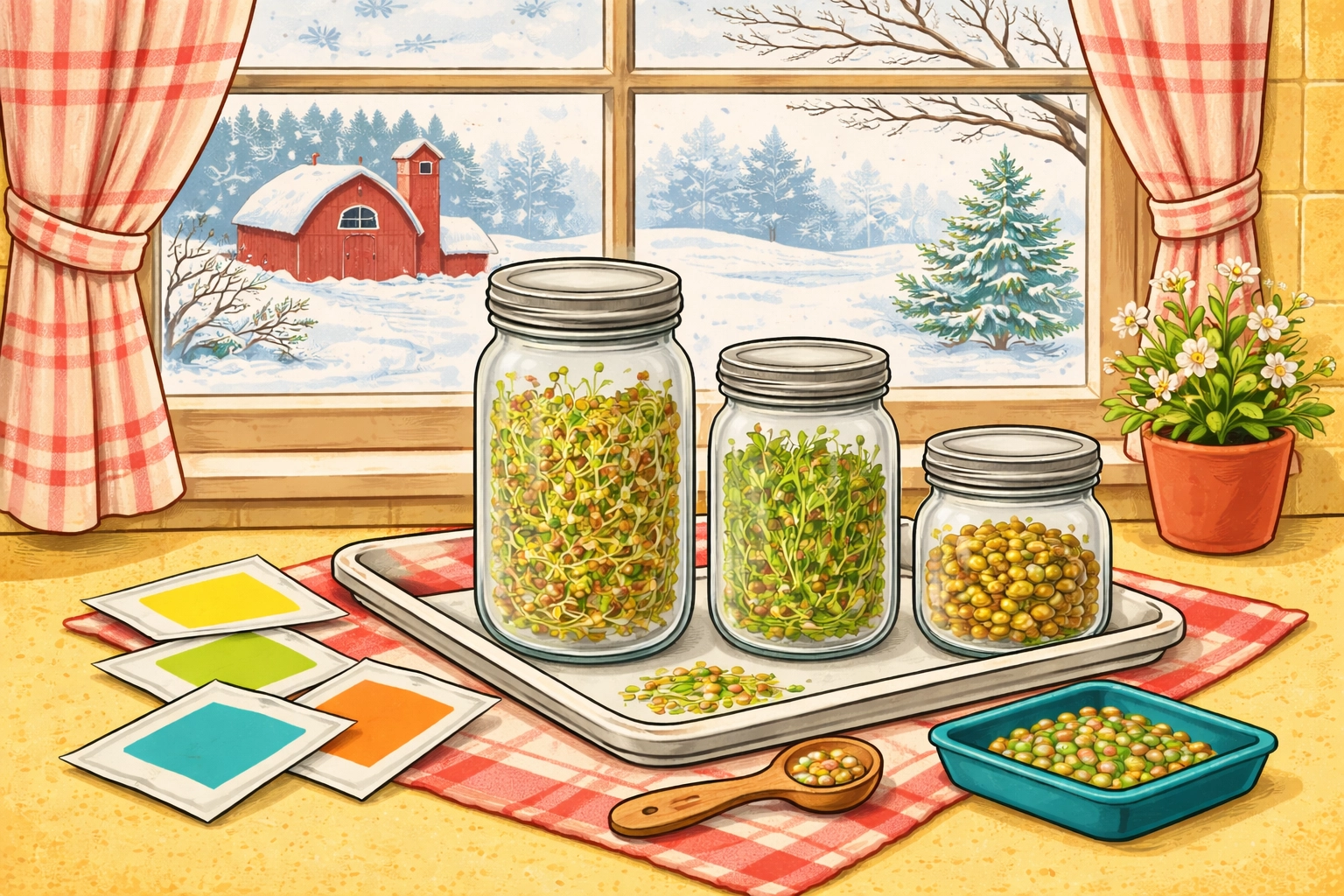
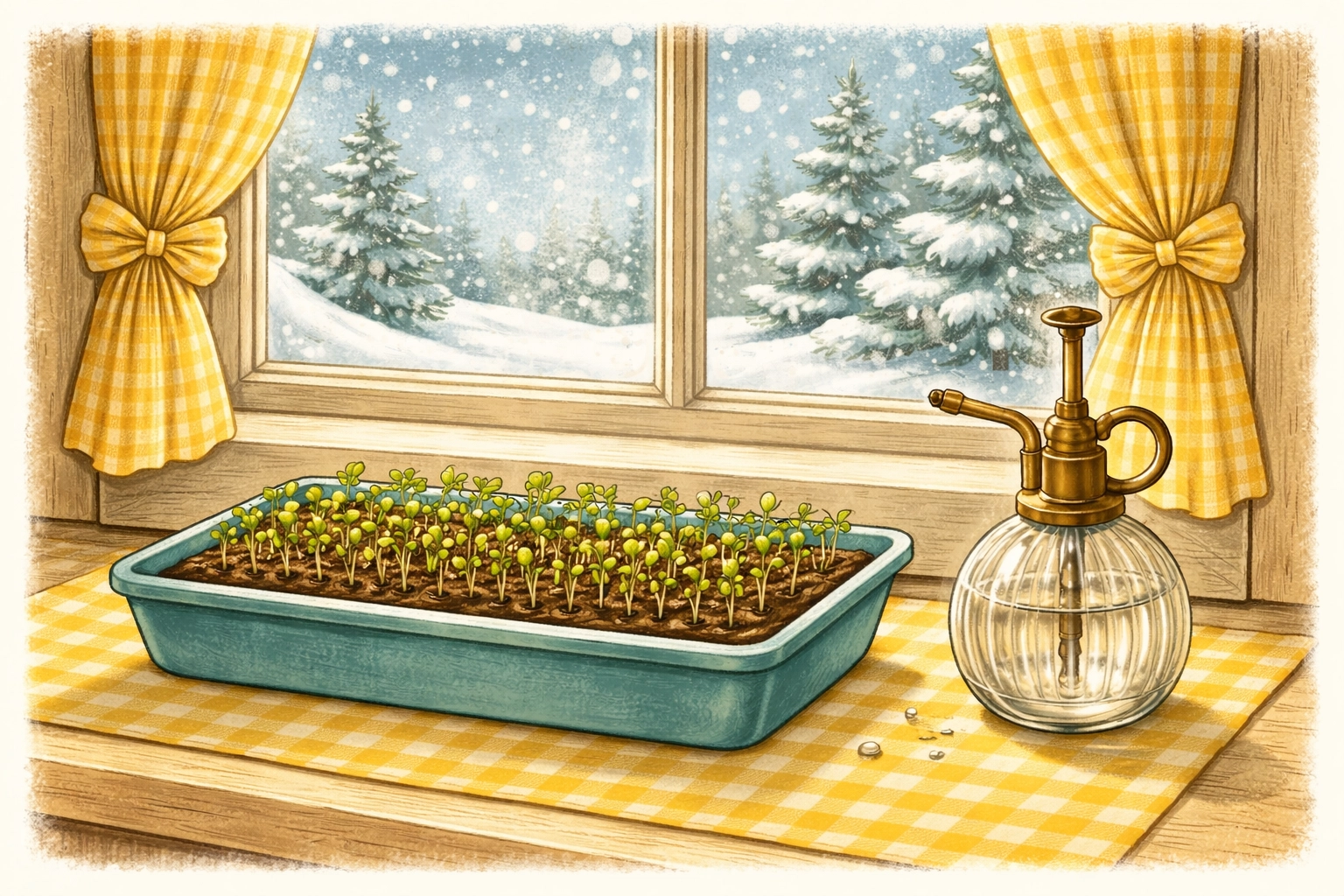
If your kids need quick results (and let's be honest, most kids do), microgreens and sprouts are the answer. These tiny plants go from seed to salad in about a week, making them perfect for short attention spans and impatient gardeners.
All you need is a shallow tray, some potting mix or a growing mat, seeds, and a sunny spot. Radish, sunflower, pea shoots, and broccoli microgreens all grow quickly and taste delicious.
What kids learn: Seed germination, plant growth stages, measurement, and healthy eating habits.
Kid jobs: Misting daily, measuring growth with a ruler, recording observations in a journal, and taste-testing different varieties.
Simple Hydroponics: Growing Without Soil
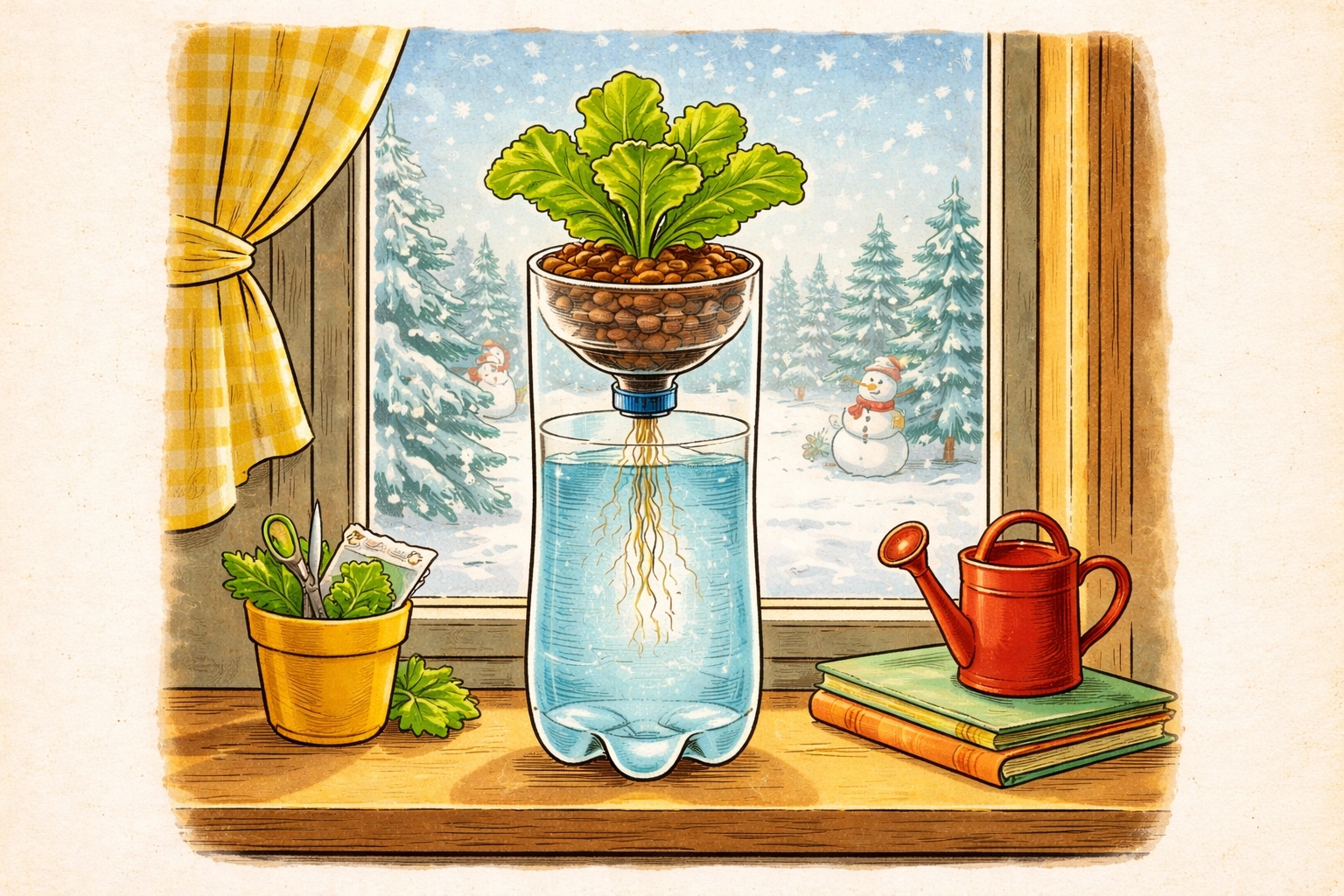
Hydroponics sounds high-tech, but the simplest version, a wick system built from a 2-liter bottle, is something a 6-year-old can help assemble. Plants like lettuce and basil grow beautifully in these mini systems, with roots dangling into nutrient-rich water instead of soil.
This is where winter gardening starts to feel like real science. Kids can observe root growth through clear containers, measure how quickly plants develop, and learn about how plants absorb nutrients without dirt.
What kids learn: Plant biology, nutrient uptake, the water cycle, and basic engineering.
Kid jobs: Checking water levels, adding nutrient solution with supervision, transplanting seedlings, and harvesting leaves.
What's the Best Age for These Winter Projects?
Different projects suit different developmental stages. Here's a rough guide:
Ages 3–5: Sprouts and microgreens are ideal. Quick results, simple tasks (misting, watching), and immediate sensory rewards (tasting!).
Ages 5–7: Mushroom buckets work well with supervision, and kids can start helping more consistently with daily care tasks like misting and tracking growth.
Ages 7–10: All projects are appropriate, including more complex hydroponics. Older kids can take ownership of recording data, troubleshooting problems, and managing entire systems.
The key is matching the project to your child's patience level and fine motor skills, and being willing to work alongside them.
What's the Cheapest Indoor Gardening Project for Families in Winter?
Microgreens win this category hands down. For under $10, you can buy a packet of seeds, use a recycled container as a tray, and grow several rounds of fresh greens. If you already have a sunny window, you don't even need grow lights.
Kitchen scrap regrowing is another nearly-free option, check out our guide to regrowing vegetables from scraps for ideas that cost almost nothing.
Frequently Asked Questions
Can you garden with kids in winter if you live in Zone 6?
Yes! Indoor projects like mushrooms, microgreens, and simple hydroponics let families grow food and learn together all winter long.
What are easy indoor garden projects for kids under 10?
Microgreens, sprouts, mushroom buckets, and 2-liter bottle hydroponic systems are all excellent choices for children ages 3–10.
What's a good “next step” project for kids who already love microgreens?
Try a mushroom bucket (with supervision) or a simple 2-liter bottle hydroponic setup. Both add new science concepts while still giving quick, visible progress.
What's the cheapest indoor gardening project for families in winter?
Microgreens and sprouts cost under $10 to start and produce harvestable greens in just 7–14 days.
From Snow to Salad: Your Winter-to-Spring Plan
The Winter Farm Lab isn't just about surviving the cold months: it's about building momentum for spring. By March, you’ll have a few “wins” under your belt—greens you actually ate, mushrooms you actually harvested, and kids who can explain what roots, spores, and seedlings are doing. And you'll have a family rhythm of observation, care, and harvest that carries right through to May transplanting.
Winter doesn't have to mean waiting. It can mean growing: just in a different way.
References (Peer-Reviewed)
- Microgreens review: https://pmc.ncbi.nlm.nih.gov/articles/PMC9864543/
- Oyster mushrooms (Pleurotus) cultivation review: https://pmc.ncbi.nlm.nih.gov/articles/PMC10907667/
- Hydroponic lettuce & nutrient solution strength (peer-reviewed): https://pmc.ncbi.nlm.nih.gov/articles/PMC7555578/
Tierney Family Farms Disclaimer: Every project shared at Tierney Family Farms is tested with real kids in real kitchens and basements. We prioritize safety, simplicity, and actual fun. That said, always supervise children around water, sharp tools, and anything they might decide to taste before you say it's ready. When in doubt, use common sense, and maybe an apron.