



Yes, you can build a fully functional bird feeder using items from your recycling bin! Plastic bottles, milk cartons, toilet paper rolls, and egg cartons all make excellent bird feeders with just a few simple modifications. Most of these projects take under 30 minutes, cost nothing, and give your family a front-row seat to nature right in your own backyard.
Let's walk through four different DIY bird feeder designs you can make today with materials you probably already have at home.
Why Recycled Materials Make the Best Bird Feeders
Before we grab the scissors, let's talk about why this project matters.
Every year, millions of plastic bottles and cardboard containers end up in landfills. By turning these items into bird feeders, you're teaching kids two powerful lessons at once: caring for wildlife and reducing waste.
Plus, there's something magical about watching a cardinal or chickadee land on something your child made with their own hands. That pride sticks with them.
The best part? These feeders actually work. Birds aren't picky about aesthetics, they care about easy access to seeds and a safe place to perch. Your recycled creations deliver both.
What You'll Need (General Supplies)
Before we dive into specific designs, gather these basic supplies:
- Scissors (adult supervision required for cutting)
- String, yarn, or twine for hanging
- A wooden spoon, stick, or dowel for perches
- Peanut butter (for the toilet roll method)
- Birdseed (any variety works for beginners)
- Weather-resistant paint or markers (optional for decorating)
Now let's build some feeders!
Method 1: The Classic Plastic Bottle Bird Feeder
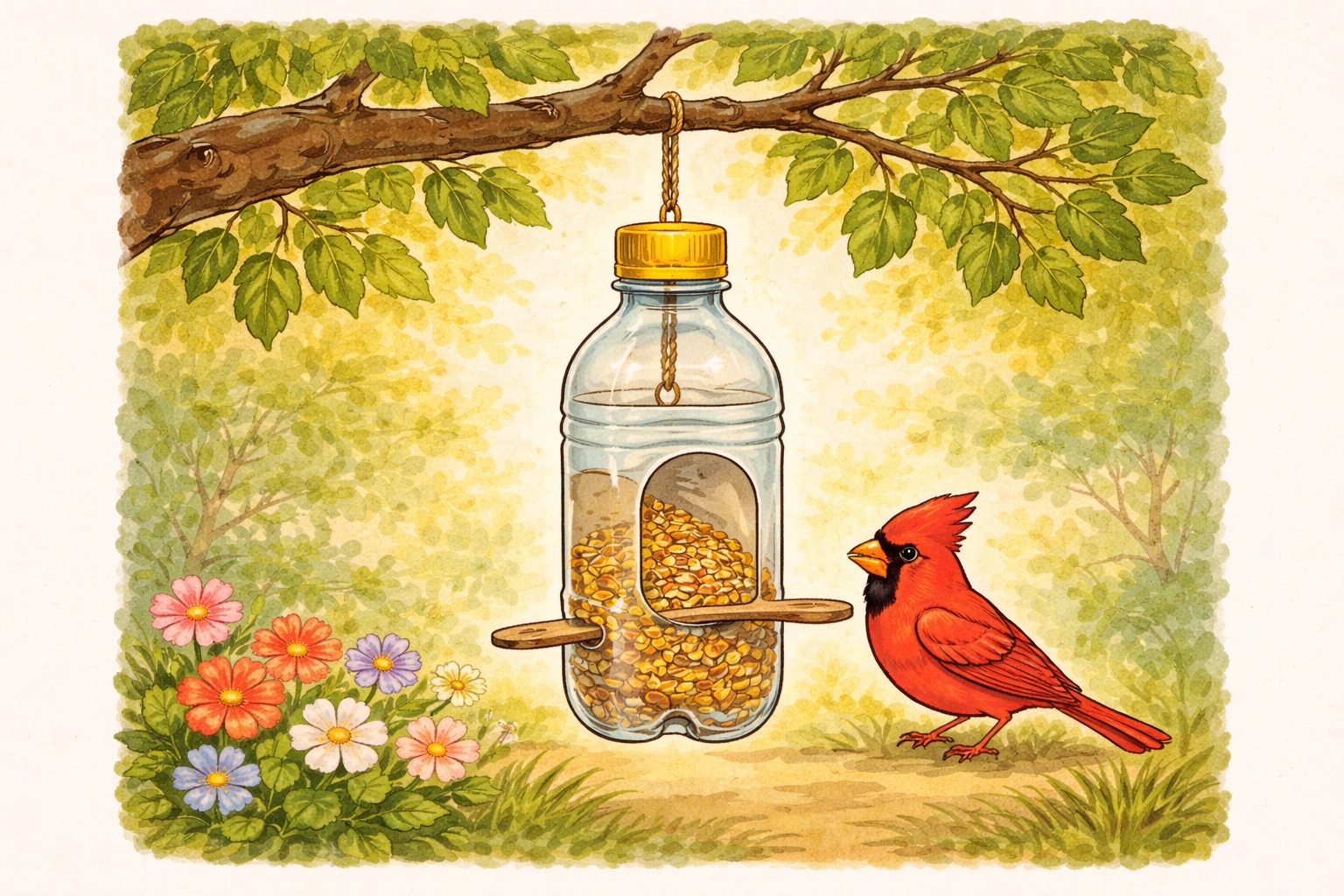
This is the workhorse of recycled bird feeders. A standard 1- or 2-liter plastic bottle transforms into a gravity-fed feeder that holds plenty of seed and protects it from rain.
Step-by-Step Instructions
Step 1: Clean your plastic bottle thoroughly and remove any labels. Let it dry completely.
Step 2: About 3 inches from the bottom of the bottle, poke two small holes on opposite sides using a thumbtack or sharp pencil. Widen these holes with scissors until they're just big enough to slide a wooden spoon or stick through.
Step 3: Push your stick or wooden spoon through both holes. This creates a perch for the birds. The spoon bowl can face slightly upward to catch any fallen seeds.
Step 4: About 4 centimeters above each perch, cut small feeding holes. Make them about 7-8 millimeters wide: big enough for seeds to come through but not so big that they all spill out.
Step 5: Near the bottle cap, poke two holes on opposite sides. Thread your string through these holes and tie securely for hanging.
Step 6: Fill the bottle with birdseed through the top, screw the cap back on, and hang from a tree branch or shepherd's hook.
Pro tip: Poke a few tiny drainage holes in the very bottom of the bottle. This prevents seeds from getting soggy if any moisture sneaks in.
Method 2: The Milk Carton Bird Feeder
Got an empty milk or juice carton? You've got the makings of a charming little bird café. This design is especially great for younger kids because it's easy to customize and decorate.
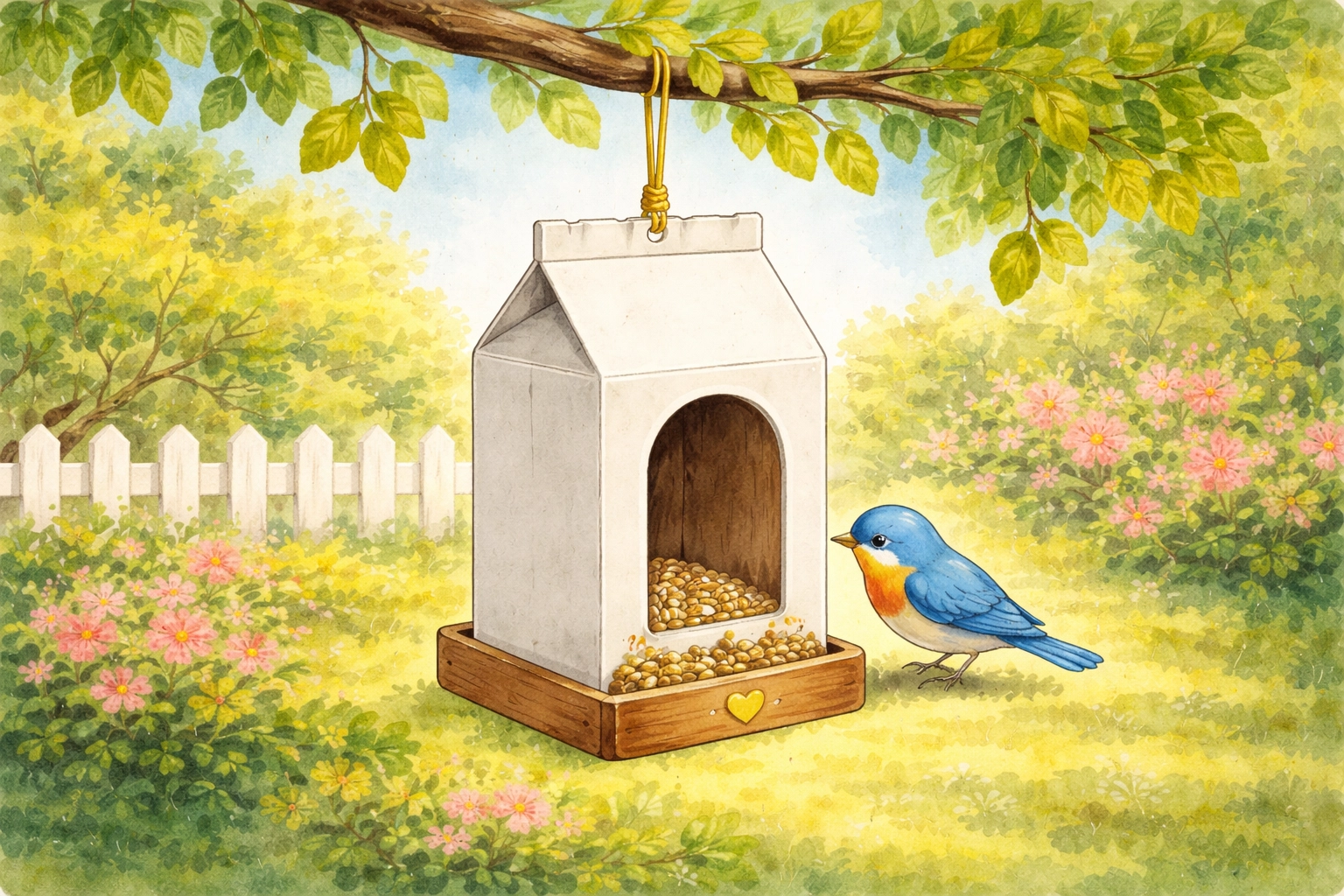
Step-by-Step Instructions
Step 1: Rinse your carton well and let it dry. A half-gallon or quart-size carton works perfectly.
Step 2: On one or two sides of the carton, draw a large arch or rectangle about 2 inches from the bottom. Have an adult cut out these shapes with scissors or a craft knife. These openings let birds hop in and access the seeds.
Step 3: Below each opening, poke a small hole and insert a short stick or dowel as a perch. A pencil works in a pinch!
Step 4: Decorate the outside with weather-resistant paint, markers, or even outdoor stickers. Let kids go wild here: birds don't mind bright colors.
Step 5: Poke two holes in the top of the carton and thread string or yarn through for hanging.
Step 6: Pour birdseed into the bottom of the carton (about 1-2 inches deep) and hang in your yard.
This feeder works best in sheltered spots since it's not as weatherproof as plastic bottles. Under a tree branch or covered porch is ideal.
Method 3: The Toilet Paper Roll Bird Feeder
This is the quickest bird feeder you'll ever make: perfect for a rainy afternoon project that pays off within hours. Fair warning: it's delightfully messy.
Step-by-Step Instructions
Step 1: Gather an empty toilet paper roll, peanut butter, birdseed, and string.
Step 2: Use a butter knife or spoon to spread peanut butter generously all over the outside of the roll. Cover every inch.
Step 3: Pour birdseed onto a plate or shallow dish. Roll the peanut butter-covered tube through the seeds, pressing gently so they stick. Keep rolling until the whole thing is coated.
Step 4: Thread string through the center of the roll and tie the ends together to create a hanging loop.
Step 5: Hang from a branch, fence post, or balcony railing.
This feeder is biodegradable and typically gets gobbled up within a day or two. Make several at once for maximum bird-watching opportunities!
Allergy note: If peanut allergies are a concern, sunflower seed butter or vegetable shortening work as substitutes.
Method 4: The Egg Carton Bird Feeder
Here's a clever way to repurpose those cardboard egg cartons. The individual cups become perfect little compartments for different seed varieties.
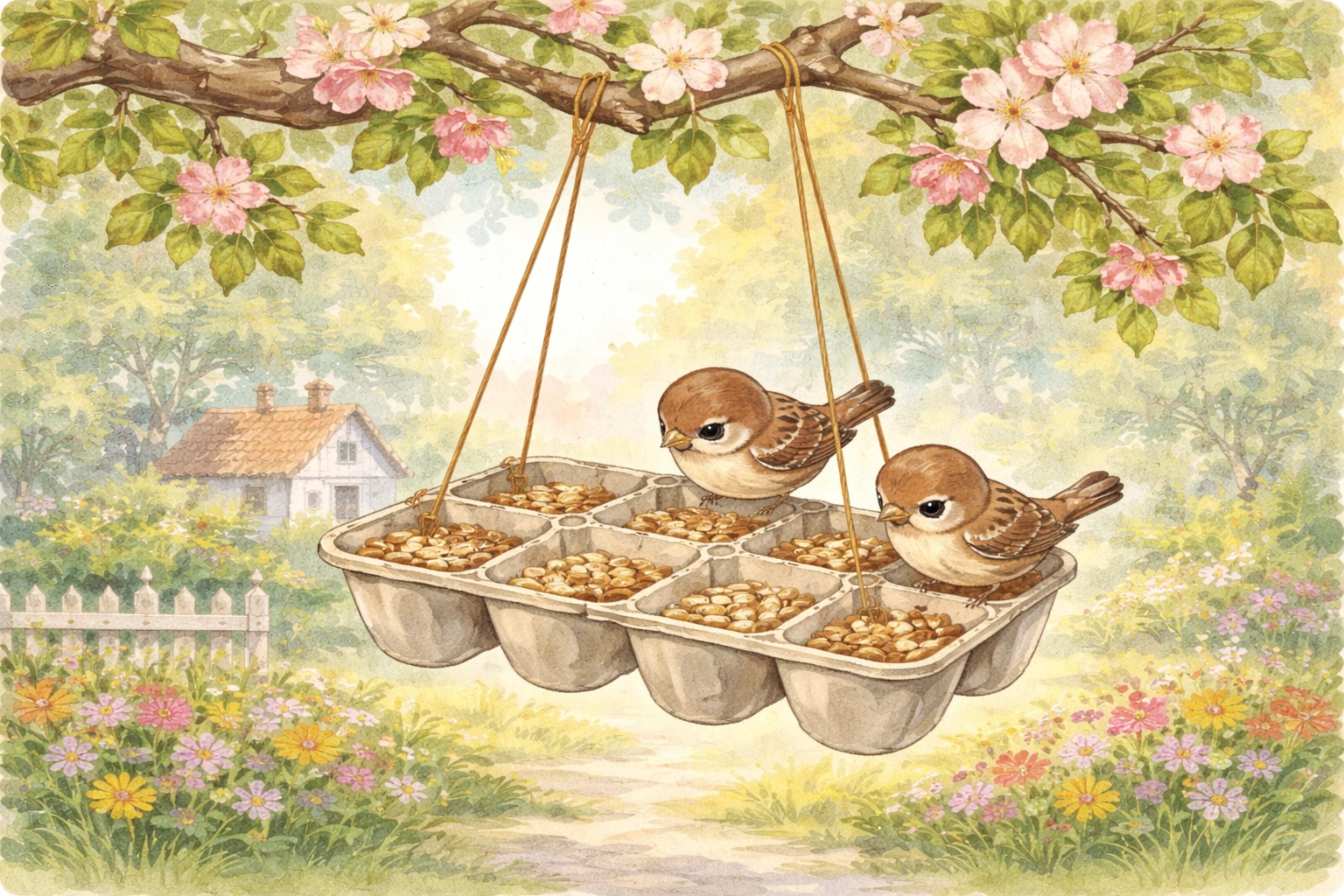
Step-by-Step Instructions
Step 1: Remove the lid from a cardboard egg carton so you're left with just the bottom tray (the part that holds the eggs).
Step 2: Poke small holes in each of the four corners of the carton.
Step 3: Cut two pieces of string, each about 2 feet long. Thread one string diagonally from one corner to the opposite corner, and repeat with the second string. You should have an "X" pattern when you're done.
Step 4: Tie all four string ends together at the top to create a hanging point.
Step 5: Fill each egg cup with birdseed. You can use different types in different compartments to see which seeds your local birds prefer!
Step 6: Hang in a dry spot and wait for visitors.
This feeder works best on calm days since it's open on top. Consider placing it under tree cover to protect the seeds from rain.
Tips for Attracting More Birds
You've built the feeder: now let's get some feathered guests!
Location matters. Hang feeders near trees or shrubs where birds can quickly escape if a predator appears. But keep them far enough from branches that squirrels can't jump aboard (good luck with that one).
Be patient. It usually takes a day or two for birds to discover a new feeder. Once one finds it, word spreads fast in the bird community.
Keep it clean. Check feeders weekly and remove any wet or moldy seed. A dirty feeder can make birds sick.
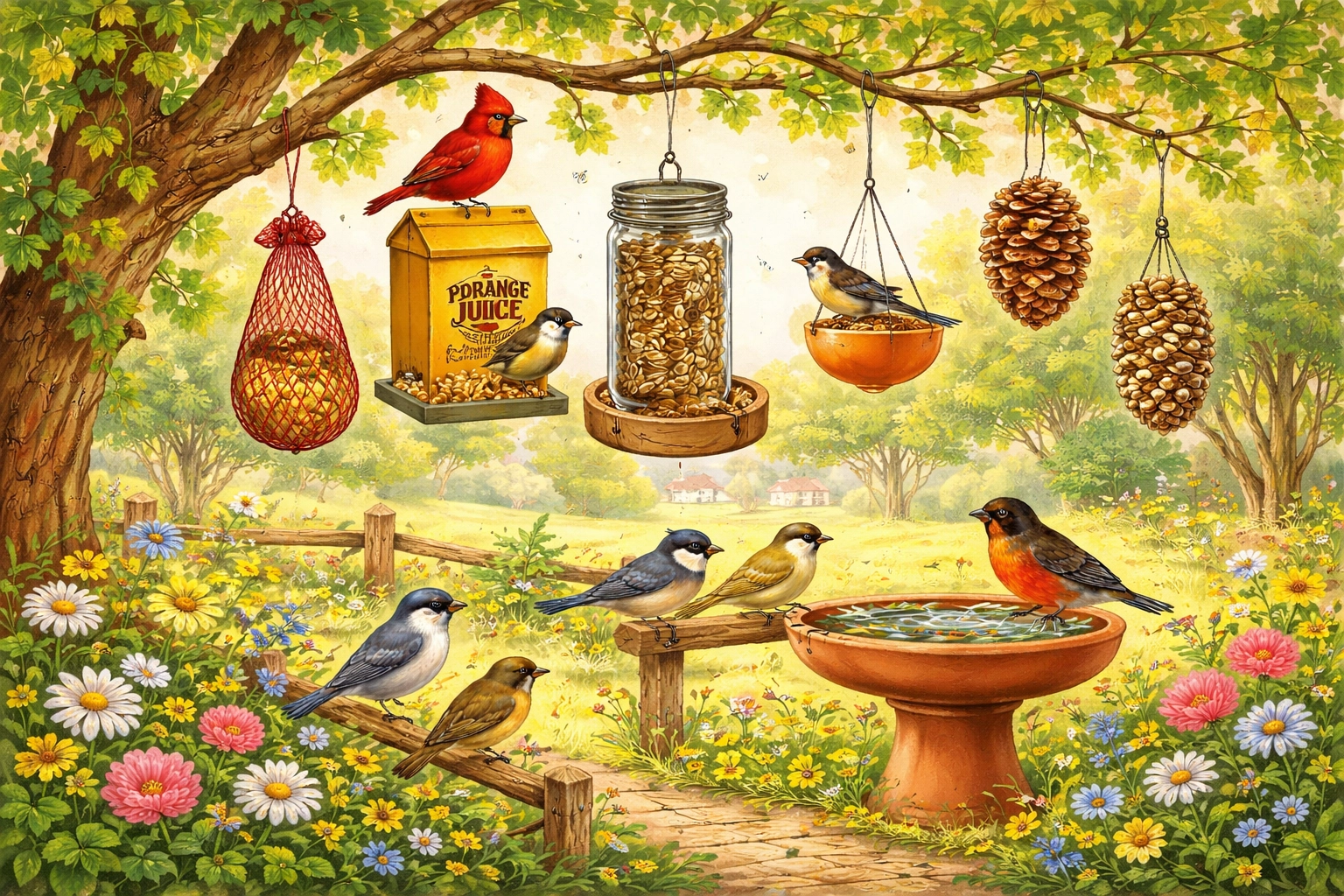
Offer variety. Sunflower seeds attract cardinals and finches. Millet brings in sparrows. Suet appeals to woodpeckers. Experiment to see who shows up!
Safety Reminders for Families
A few quick notes to keep this project fun and safe:
- Adults should handle all cutting with scissors or craft knives
- Wash hands after handling birdseed
- Check feeders regularly for sharp edges that might develop over time
- Keep feeders out of reach of family pets
Your Backyard Bird Sanctuary Awaits
Building a bird feeder from recycled materials is one of those rare projects that checks every box: it's easy, free, eco-friendly, and genuinely educational. Kids learn about recycling, wildlife, patience, and the satisfaction of making something with their hands.
Hang your new feeder this weekend and start a nature journal to track which birds come to visit. You might be surprised how quickly your backyard becomes the neighborhood hot spot for hungry songbirds.
For more family-friendly DIY projects using recycled materials, check out our guide on building a mini windmill from recycled materials or learn how to create a worm composting bin with your children.
Happy building!
FAQ
- What is the best material for a DIY bird feeder? Plastic milk jugs and juice cartons are great because they are easy to cut and hold up well in the rain.
- What kind of birdseed should we use? Sunflower seeds and mixed birdseed are popular with many different types of birds. You can even use peanut butter and birdseed on a pinecone for a simple, natural feeder.
- Where should we hang our bird feeder? Place it near a tree or bush so the birds have a "safe place" to fly if they get scared, but high enough that cats can't reach it. A spot where you can see it from a window is best for birdwatching!
References:
- RSPB: How to Make a Bottle Bird Feeder
- National Audubon Society: DIY Bird Feeder Projects
- The Wildlife Trusts: Garden Bird Feeding Guide