




You can build a self-watering wick system by threading a cotton shoelace from a water reservoir up into your plant's soil, allowing capillary action to deliver moisture directly to the roots: all for around $2-5 using upcycled materials you likely already have at home.
This simple science-powered project is a fantastic way to keep your plants happy while you're away, teach kids about physics, and give those old sneaker laces a second life. Let's dig into how it works and how to build one this weekend!
Why This Project Is Worth Your Time
Forgot to water the basil again? We've all been there. A wick system takes the guesswork (and the guilt) out of plant care by letting your green friends drink when they're thirsty: not when you remember.
Plus, this project hits all our favorite notes:
- Budget-friendly: Typically under $5 with upcycled materials
- Educational: Demonstrates capillary action in real-time
- Kid-approved: Hands-on building with visible results
- Eco-conscious: Repurposes items headed for the trash
If you've enjoyed other easy DIY watering projects, this one takes things up a notch with a bit more science and a lot more "wow factor."

The Science: What Is Capillary Action?
Before we grab our supplies, let's talk about the magic behind the wick system: capillary action.
You've seen capillary action in action (pun intended) every time you dip a paper towel into a spill and watch the liquid climb upward. Water molecules are attracted to certain materials: like cotton fibers: and they essentially "crawl" up against gravity through tiny spaces in the material.
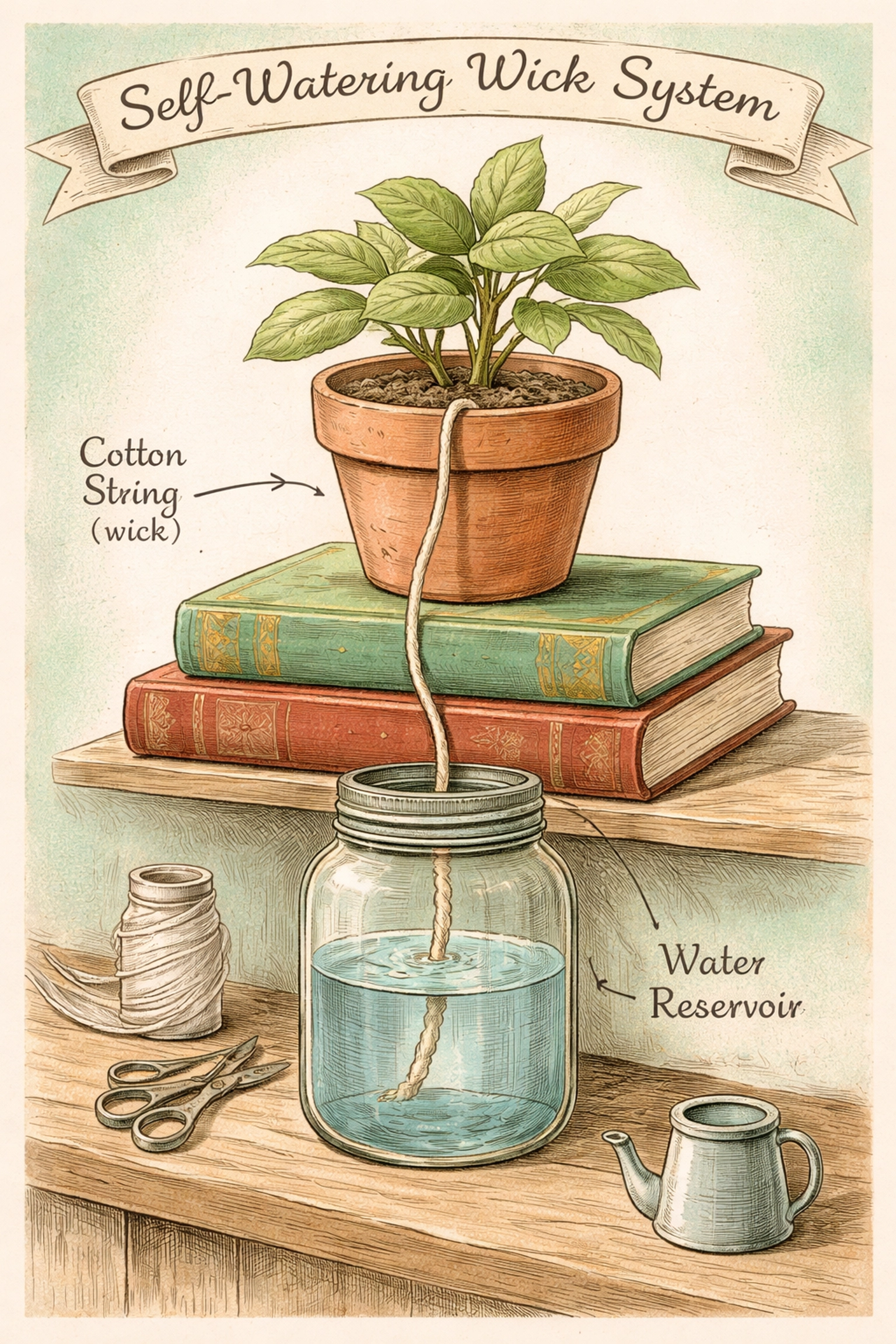
In a wick system, the cotton shoelace acts like a tiny highway for water. One end sits in a reservoir, and the other end is buried in the soil near your plant's roots. As the soil dries out, water travels up the shoelace to replace it. When the soil is already moist? The water stays put. It's like your plant has its own personal butler who knows exactly when to pour a drink.
Why cotton matters: Synthetic shoelaces (like nylon or polyester) don't absorb water well, so they won't wick effectively. Cotton is the key ingredient here, so check those old laces before you start!
Materials You'll Need
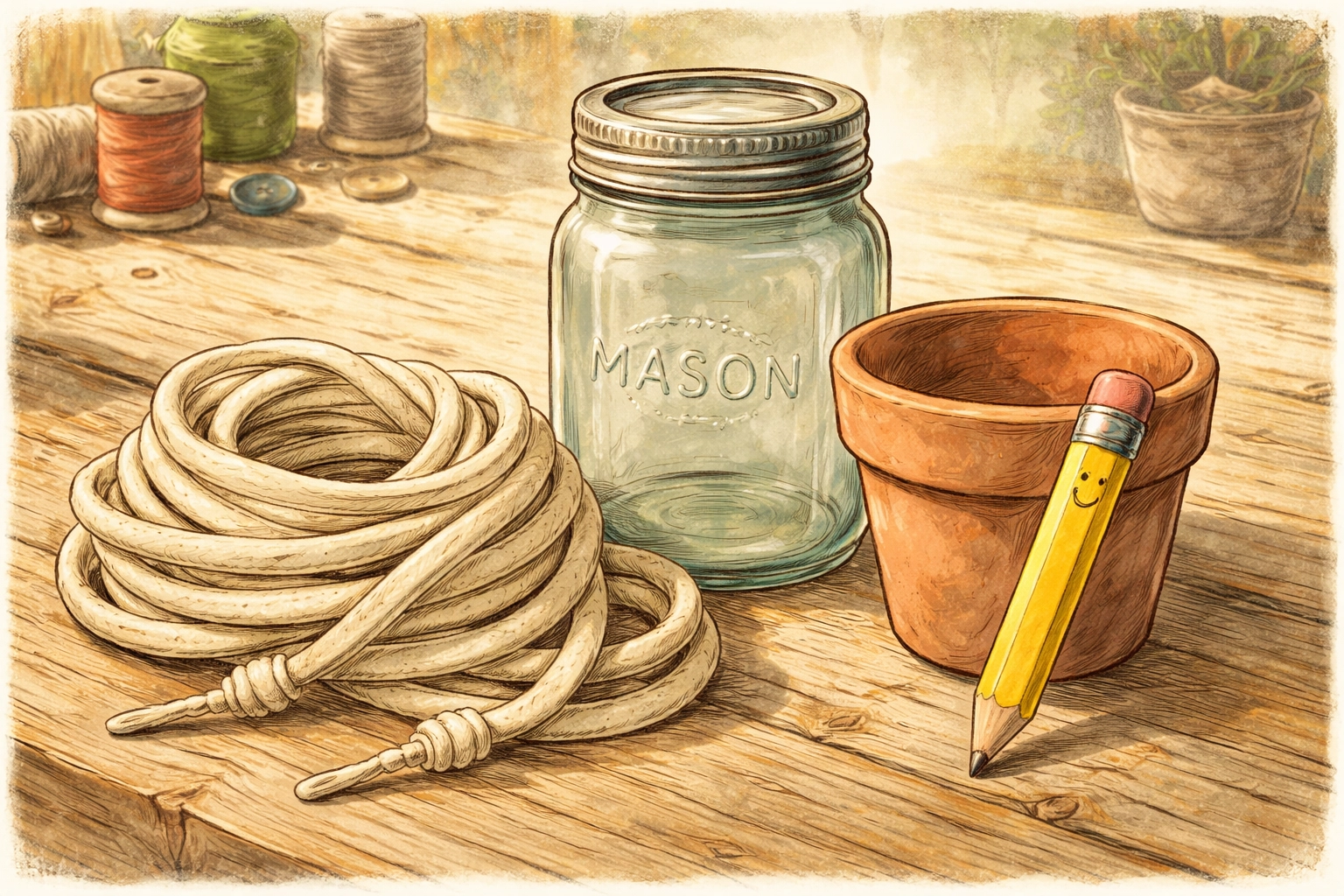
Here's what to gather for this project. Most families can pull this together from items already lying around the house.
| Material | Upcycled Option | Store-Bought Cost |
|---|---|---|
| Cotton shoelaces (1-2 per plant) | Old sneakers, boots, or hoodies | ~$1-2 at dollar stores |
| Water reservoir | Glass jar, plastic bottle, yogurt container | Free if upcycled |
| Plant pot with drainage hole | Tin can, plastic container | Free if upcycled |
| Small weight or bolt | Old nut, washer, or heavy bead | Usually free |
| Pencil or chopstick | From your junk drawer | Free |
| Potting soil | Existing supply | ~$3-5 if needed |
| Small plant or seeds | Kitchen scrap regrow, seed swap | Free to $2 |
Estimated total cost: $0-5 depending on what you already have.
If you're looking for more ways to start plants on the cheap, check out our guide on regrowing kitchen scraps with kids.
Step-by-Step: Building Your Wick System
Ready to build? Let's go step by step. This project typically takes about 15-20 minutes, making it a great weekend activity.
Step 1: Prep Your Shoelace
Grab your cotton shoelace and tie a knot at one end. If you have a small bolt, washer, or heavy bead, tie the lace around it instead: this acts as an anchor to keep the lace from slipping out of your water reservoir.
Pro tip: If your shoelaces are grimy from years of outdoor adventures, give them a quick rinse. They don't need to be spotless, but removing heavy dirt helps water flow more freely through the fibers.
Step 2: Thread the Wick Through Your Pot
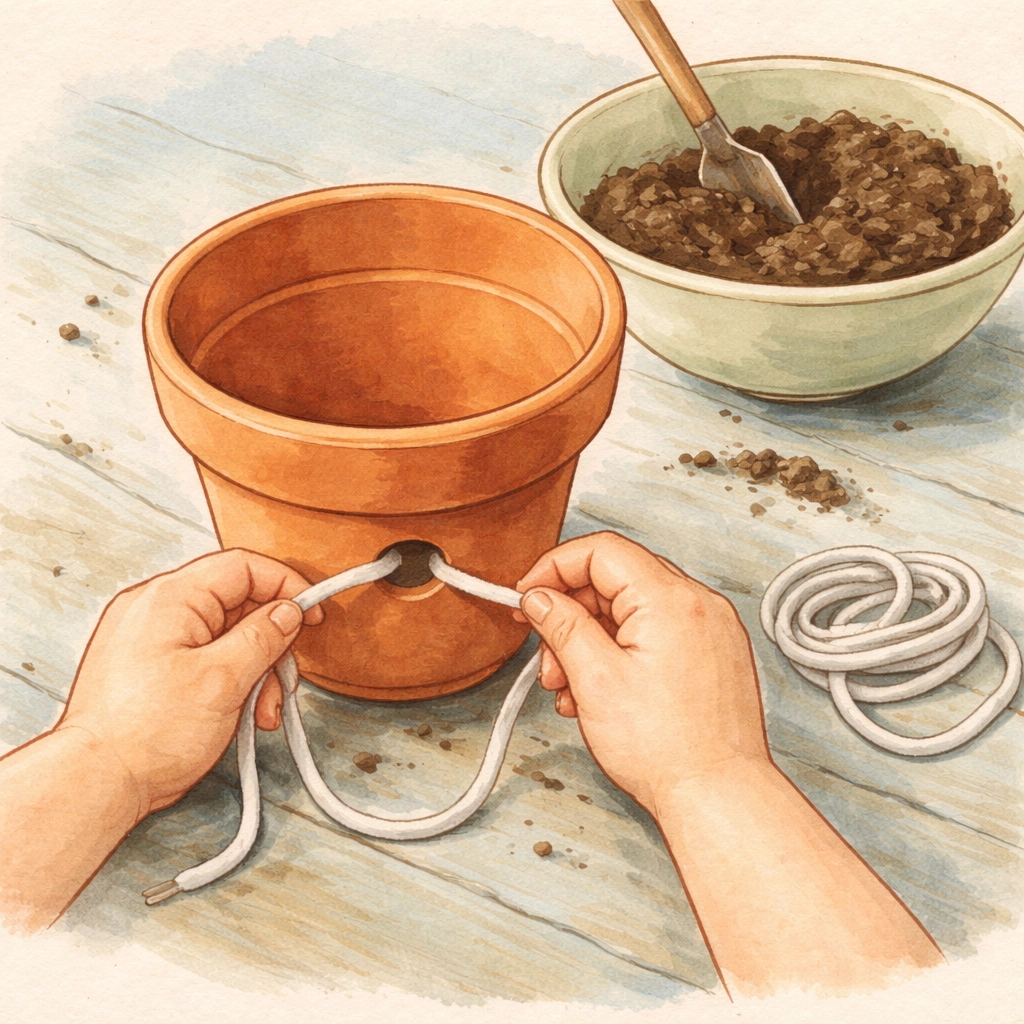
Using a pencil or chopstick, poke a small hole through the drainage hole at the bottom of your plant pot (or create a drainage hole if your upcycled container doesn't have one).
Thread the unknotted end of the shoelace up through the drainage hole and into the pot. You want about 3-4 inches of lace coiled inside the pot where the roots will be, with the rest hanging out the bottom.
Step 3: Add Soil and Plant
Fill your pot with potting soil, making sure the shoelace is positioned to reach the root zone. The lace should be touching the soil throughout: not just sitting on top.
Plant your seedling or seeds as usual. Herbs like basil, mint, and parsley tend to do well with wick systems, as do many houseplants.
Step 4: Set Up Your Reservoir
Place your water reservoir (jar, bottle, or container) below where your plant will sit. The plant needs to be elevated above the water source: a small shelf, stack of books, or overturned container works great.
Drop the hanging end of the shoelace into the reservoir, making sure the weighted/knotted end is fully submerged.
Step 5: Fill and Test
Fill your reservoir with water and give the system a few hours to start working. You can gently water the soil from the top for the first day to help "prime" the wick and establish good contact between the lace and soil.
Within a day or two, you should notice the soil staying consistently moist without any effort on your part!
Tips for Success
A few pointers to help your wick system thrive:
Check your cotton: Synthetic laces simply won't work. When in doubt, do a quick test: dip one end in water and see if moisture travels up the lace within a few minutes.
Keep the reservoir filled: The system only works when there's water to wick! Check levels every few days, especially in warm weather.
Match pot size to reservoir size: A tiny jar won't sustain a large, thirsty plant for long. For bigger plants, use a larger reservoir or multiple wicks.
Positioning matters: The plant should sit higher than the water level. If the reservoir is above the plant, you'll flood the soil instead of wicking.
Start small: Herbs and small houseplants are ideal for learning the system before scaling up.
Troubleshooting Common Issues
The soil stays too dry: Make sure the wick is making good contact with the soil and the reservoir has enough water. You may need to use a thicker lace or add a second wick.
The soil is soggy: Your reservoir might be positioned too high, or the wick is too thick for your plant's needs. Try elevating the plant more or using a thinner lace.
The wick isn't absorbing water: Double-check that it's cotton, not synthetic. Some laces have a waxy coating that blocks absorption: try washing them thoroughly or roughing up the surface a bit.
Algae growing in the reservoir: This is harmless but unsightly. Use an opaque container instead of clear glass to block light, or add a few drops of hydrogen peroxide to the water.
Expanding the Project
Once your family masters the basic setup, you can experiment with:
- Multiple plants on one reservoir: Run several wicks from a large bucket to water a whole herb garden
- Upcycled vertical gardens: Combine this with our plastic bottle greenhouse project for a complete growing system
- Science fair experiments: Test different wick materials, lace thicknesses, or plant types to see what works best
Frequently Asked Questions
Can I use any type of shoelace for a wick system?
Cotton shoelaces work best because the natural fibers absorb and transfer water effectively. Synthetic materials like nylon or polyester typically don't wick water well and may leave your plants thirsty.
How long can a wick system water my plant without refilling?
This depends on your reservoir size, plant type, and environment. A quart-sized jar can often keep a small herb watered for a week or more, but it's wise to check water levels every few days.
Will a wick system work for all plants?
Most moisture-loving plants like herbs, lettuce, and many houseplants do well with wick systems. Plants that prefer drier soil between waterings (like succulents or cacti) may not be the best candidates.
Can kids build this project safely?
This project is generally very kid-friendly, with no sharp tools or chemicals required. Adult supervision is helpful when creating drainage holes in containers.
How do I know if my shoelace is cotton?
Cotton laces usually feel soft and absorbent. You can test by dipping one end in water: cotton will absorb and transfer moisture visibly within minutes, while synthetic materials will stay mostly dry.
Can I use other materials instead of shoelaces?
Cotton string, cotton rope, or even strips of cotton fabric can work similarly. The key is using a natural, absorbent fiber.
Why does my plant need to be higher than the water reservoir?
Capillary action can only lift water so far. Placing the plant above the reservoir ensures the wick can draw water upward through the natural physics of the system rather than relying on gravity (which would cause flooding).
How often should I change the water in the reservoir?
Fresh water every week or two is generally a good practice. If you notice algae growth or an odd smell, change the water and consider using an opaque container.
References
- Research on capillary action and DIY wick watering systems for houseplants.