




The Direct Answer: Yes, you can grow impressively tall sunflowers in a small space, but let's be honest with each other. True "giant" varieties (think 10-14 feet tall) need room to stretch their roots and won't reach their full towering potential in a tiny container. The good news? With the right variety selection, smart container choices, and proper care, you can still grow stunning sunflowers that reach 4-6 feet tall on a balcony, patio, or small garden bed. The secret is managing expectations, maximizing soil nutrition, and giving those roots as much depth as possible.
Why Sunflowers Are Perfect for Kids (Even in Small Spaces)
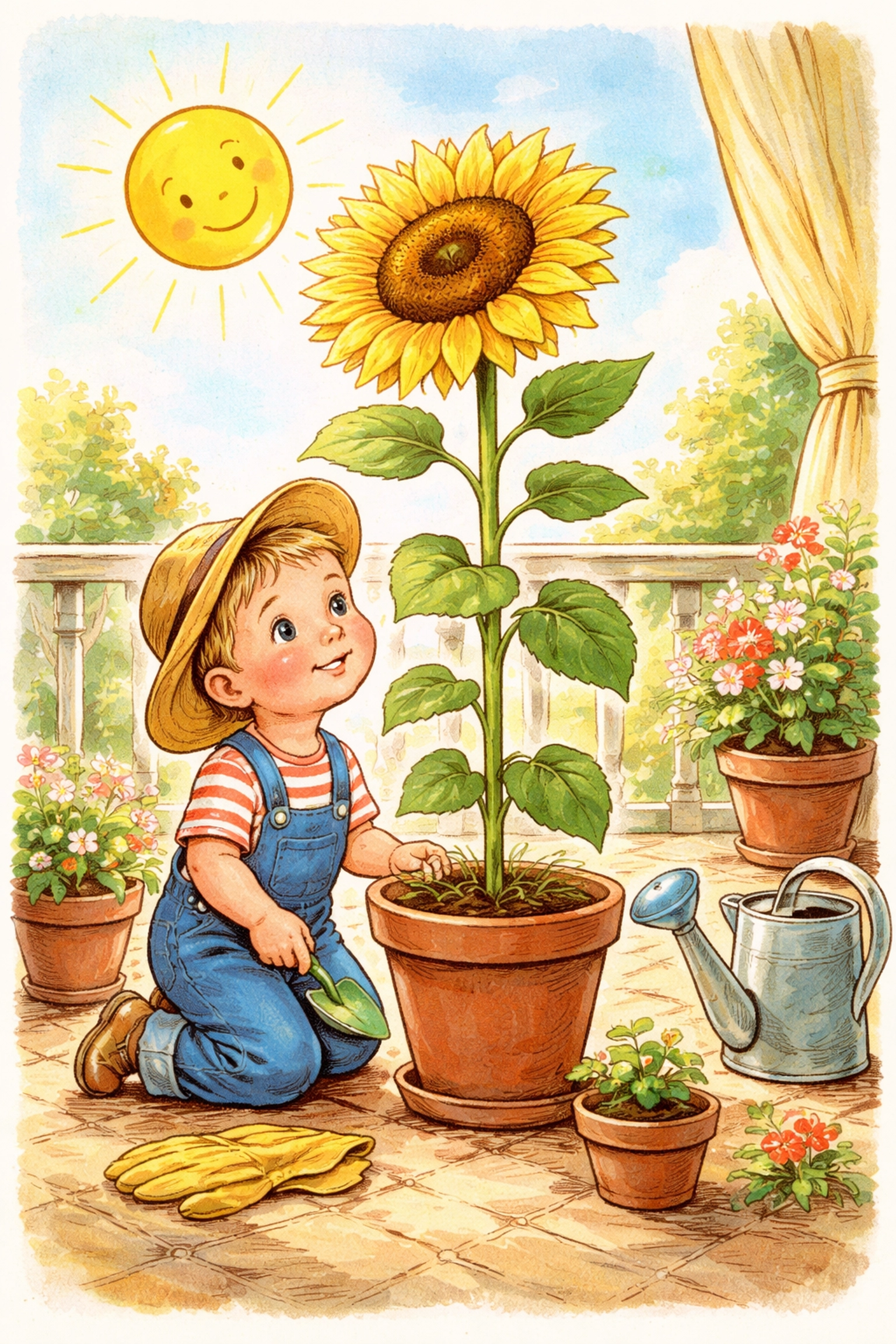
Sunflowers are one of the most rewarding plants for young gardeners. They germinate quickly (often within 7-10 days), grow visibly taller each week, and produce those iconic golden blooms that make kids feel like they've accomplished something magical.
Even if you're working with a small patio, a balcony, or just a sunny corner of your yard, sunflowers can thrive. They're not fussy about soil type, they tolerate a bit of neglect, and they teach kids about phototropism (the way plants follow the sun) in real-time.
What You'll Need: The Budget Breakdown
One of our core beliefs at Tierney Family Farms is that learning shouldn't break the bank. Here's what you'll need to grow sunflowers in a small space, and most of it can be found around the house or picked up cheaply.
| Item | Estimated Cost | Notes |
|---|---|---|
| Sunflower seeds (dwarf or mid-sized variety) | $2–$4 | Look for 'Sunny Smile,' 'Pacino,' or 'Junior' |
| Large container or grow bag (5-gallon minimum) | $0–$5 | Repurpose a bucket or buy a fabric grow bag |
| Potting soil | $3–$5 | Or mix garden soil with compost |
| Compost | $0–$3 | Homemade or bagged |
| Bamboo stake or dowel | $0–$2 | For support as they grow |
| Watering can | $0 | Use what you have |
Total Estimated Cost: $5–$15
If you already have containers and compost on hand, this project can easily come in under $5.
Step-by-Step: Growing Sunflowers in a Small Space
Step 1: Choose the Right Variety
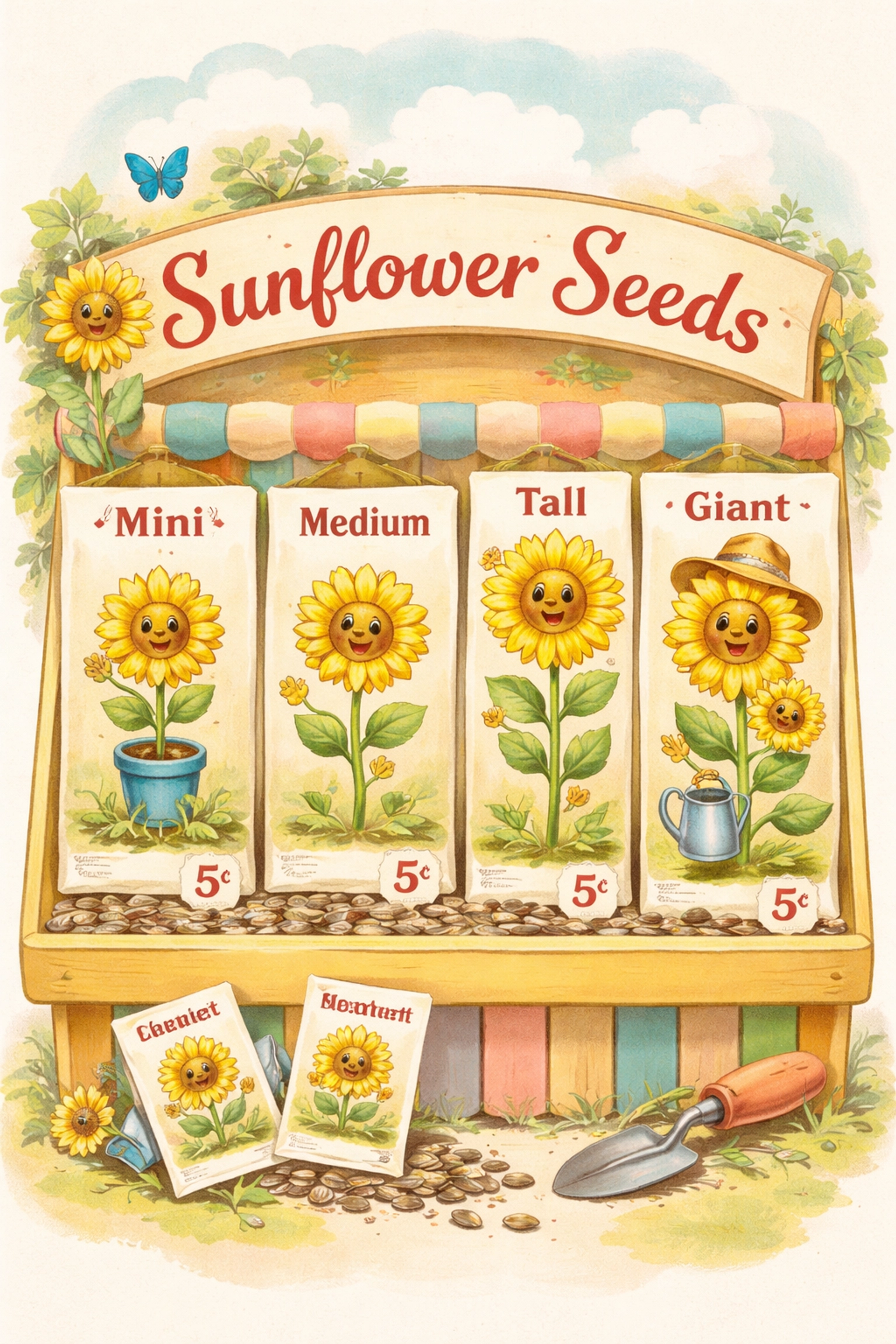
This is the most important decision you'll make. If you're working with limited space, skip the "Mongolian Giant" and "Russian Mammoth" varieties, they can reach 12-14 feet and need extensive root systems to support that growth.
Instead, look for these small-space-friendly options:
- 'Sunny Smile' – Compact plants around 12-15 inches with cheerful 5-inch blooms
- 'Pacino' – Adorable 12-16 inch plants perfect for containers
- 'Junior' – A nice middle ground at 2-3 feet tall
- 'Topolino' – Reaches about 2 feet with multiple blooms
- 'Big Smile' – Around 2 feet tall with classic large flower heads
For kids who really want "tall," try 'Dwarf Incredible' or 'Sunspot', they stay under 3 feet but produce impressively large flower heads that feel giant to a young gardener.
Step 2: Select the Right Container
Here's where many small-space gardeners go wrong: they plant sunflowers in shallow pots. Sunflower roots want to go deep, not wide. A shallow container will stunt your plant's growth significantly.
Container guidelines:
- Minimum 5-gallon container (a standard 5-gallon bucket works great)
- At least 12 inches deep, deeper is better
- Drainage holes are essential (drill them if needed)
- Fabric grow bags work wonderfully and are inexpensive
Pro tip: If you're repurposing a bucket, drill 4-5 drainage holes in the bottom and consider adding a few on the lower sides to prevent waterlogging.
Step 3: Prepare Your Soil
Sunflowers are nutrient-hungry plants. In a container, they can't send roots searching for food, so you need to bring the buffet to them.
The ideal soil mix:
- 2 parts quality potting soil
- 1 part compost (homemade or store-bought)
- A handful of aged manure if available
Fill your container to about 2 inches below the rim. This gives you room to water without overflow and allows you to add mulch later.
If you're planting in a small raised bed or garden corner, work compost into the existing soil to a depth of at least 12 inches before planting.
Step 4: Plant Your Seeds
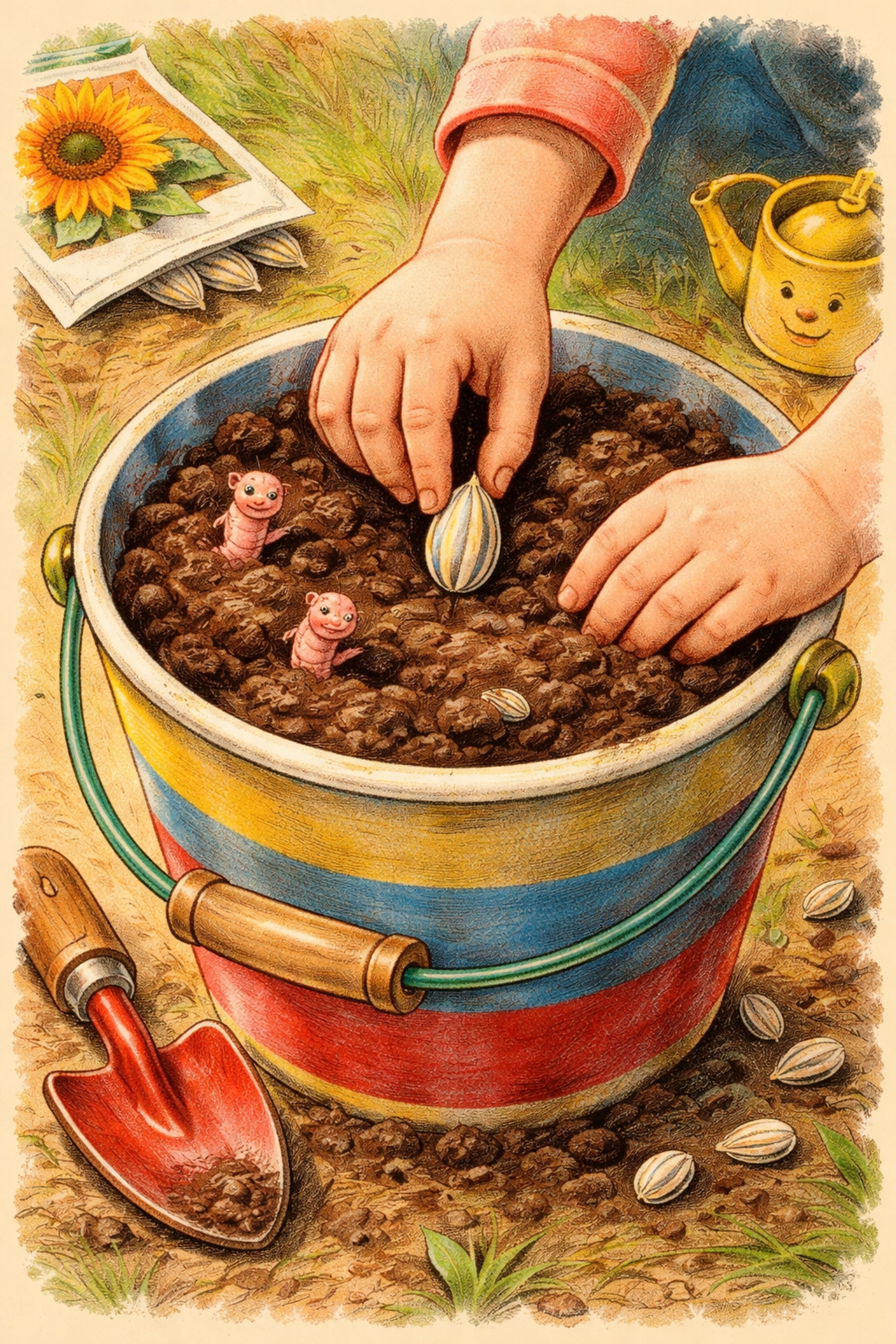
Sunflower seeds are large and easy for little hands to handle, another reason they're perfect for kids.
Planting instructions:
- Poke a hole about 1 inch deep in the soil
- Drop in one seed (pointy end down if you can tell)
- Cover gently with soil and pat down lightly
- Water thoroughly but gently
Spacing matters: If you're planting multiple sunflowers in a raised bed or large container, space them at least 12-18 inches apart. Crowded sunflowers compete for nutrients and produce smaller blooms.
For containers, stick to one plant per 5-gallon container. Two plants in a 10-gallon container can work, but they'll be competing.
Step 5: Find the Sunniest Spot
Sunflowers aren't called "sun" flowers for nothing. They need a minimum of 6-8 hours of direct sunlight daily. More is better.
Place your container in the sunniest spot available, south-facing patios, balconies, or windows are ideal. If you're working with partial shade, your sunflowers will still grow, but they may lean dramatically toward the light and produce smaller blooms.
Step 6: Water Consistently
Container plants dry out faster than in-ground plants, especially in summer heat. Check your soil daily by poking your finger about an inch deep.
Watering guidelines:
- Water when the top inch of soil feels dry
- Water deeply until it drains from the bottom
- Morning watering is best to prevent fungal issues
- Mulch the top of your container with straw or wood chips to retain moisture
Inconsistent watering is the number one reason container sunflowers struggle. If you'll be away, check out our guide on easy DIY ways to keep plants watered when kids are away.
Step 7: Feed Your Sunflowers
About 3-4 weeks after sprouting, your sunflowers will benefit from a feeding. A balanced liquid fertilizer diluted to half strength works well. Feed every 2-3 weeks during active growth.
Avoid high-nitrogen fertilizers, they'll encourage lots of leaves but smaller flower heads.
Step 8: Provide Support
Even compact varieties can get top-heavy when they bloom. Insert a bamboo stake or wooden dowel next to the stem when your sunflower reaches about 12 inches tall. Loosely tie the stem to the stake with soft twine or strips of old t-shirt.
This prevents your sunflower from toppling over in wind or rain, a heartbreaking experience for any young gardener who has watched their plant grow for weeks.
Setting Realistic Expectations
Let's have an honest conversation: if your goal is a 12-foot monster sunflower, a balcony container isn't going to get you there. Those giants need deep, in-ground root systems and plenty of space.
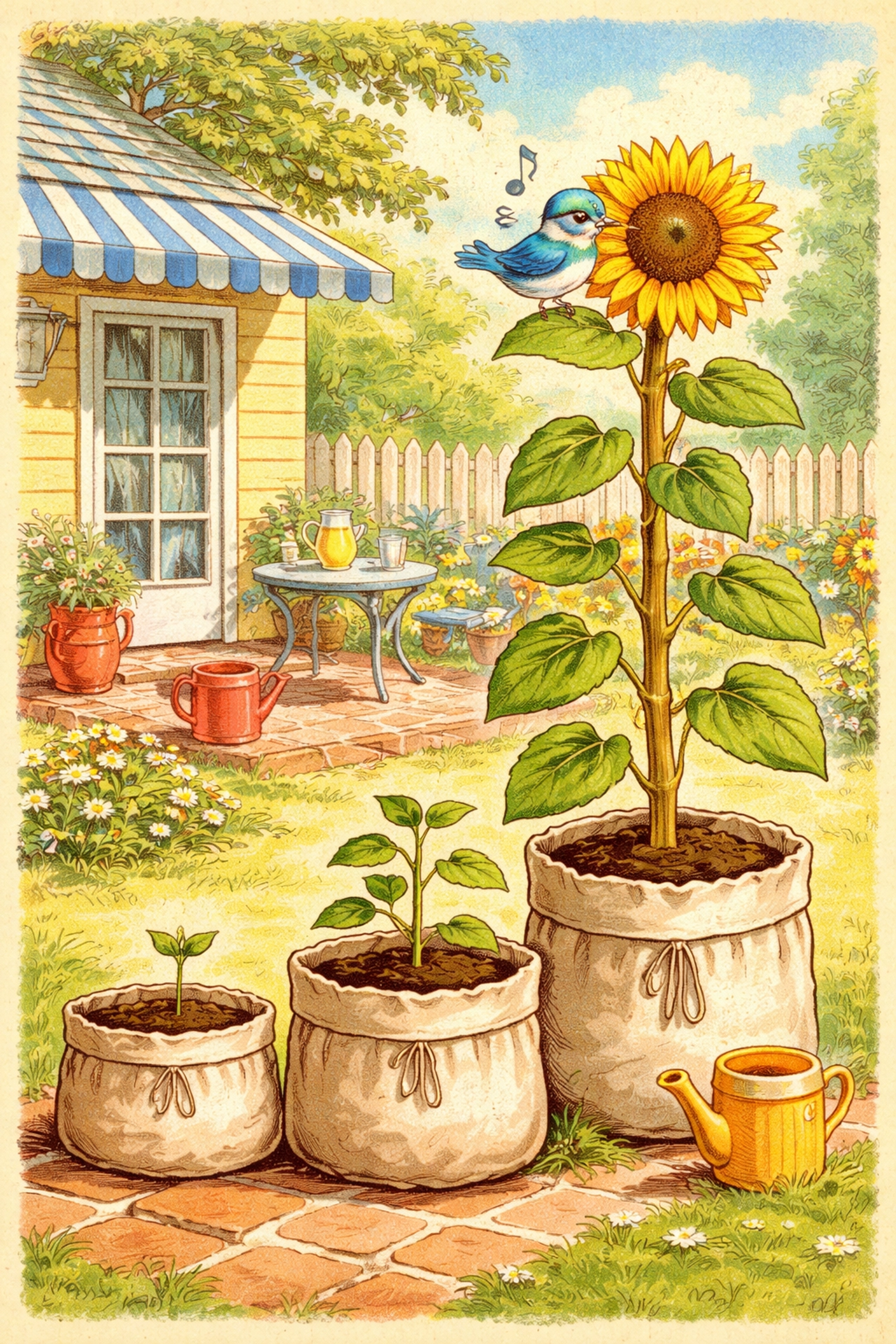
But here's what you can achieve in a small space:
- Gorgeous 4-6 inch flower heads on 2-3 foot plants
- Multiple blooms from branching varieties
- The full experience of watching a seed become a flower
- Seeds to harvest and replant next year (or feed to birds!)
For kids, the magic isn't about winning a "tallest sunflower" contest, it's about the daily excitement of checking on their plant, measuring growth, and finally seeing that golden face open toward the sun.
Frequently Asked Questions
How long does it take for sunflowers to bloom?
Most sunflower varieties bloom 60-90 days after planting, depending on the variety and growing conditions. Dwarf varieties often bloom on the shorter end of that range.
Can I grow sunflowers indoors?
Technically yes, but they really need outdoor sunlight levels to thrive. A very sunny south-facing window might work for dwarf varieties, but they'll likely be leggy and produce smaller blooms.
Do sunflowers come back every year?
Most common sunflowers are annuals, meaning they complete their life cycle in one season. However, you can save seeds from your blooms and plant them again next year!
Why is my sunflower leaning to one side?
Young sunflowers exhibit heliotropism: they follow the sun across the sky. Mature sunflowers typically face east. If your plant is dramatically leaning, it may need more direct sunlight or staking support.
Can I plant sunflower seeds directly from the grocery store?
Roasted sunflower seeds won't germinate. You'll need raw, untreated seeds from a garden center or seed company.
What can I plant with sunflowers in a small space?
Low-growing companions like lettuce, spinach, or marigolds can share space at the base of your sunflower container without competing for light.
How do I know when to harvest sunflower seeds?
Wait until the back of the flower head turns brown and the seeds look plump and developed. You can cover the head with a paper bag to protect seeds from birds as they mature.
Do sunflowers need a lot of water?
They need consistent moisture, especially in containers. Check daily and water when the top inch of soil is dry. They're somewhat drought-tolerant once established but perform best with regular watering.
References
- National Sunflower Association. "Sunflower Production Guide."
- University of Minnesota Extension. "Growing Sunflowers in Home Gardens."
- Royal Horticultural Society. "Sunflowers: Growing Guide."
- Cornell University Cooperative Extension. "Container Gardening Basics."
Ready to explore more hands-on gardening projects with your kids? Check out our full library of STEAM and gardening activities for budget-friendly ideas the whole family can enjoy!