




Yes, you can absolutely grow a vertical lettuce wall on your bedroom door, or any vertical surface with decent light. Lettuce is one of the easiest vegetables to grow at home, and its shallow root system (typically only 2-3 inches deep) makes it perfect for pocket planters, repurposed shoe organizers, or mounted PVC gutters. This project takes up zero floor space, maximizes airflow around your plants, and can produce fresh salad greens in as little as 30-45 days.
Let's walk through exactly how to set this up with your family, step by step.
Why Lettuce Is Perfect for Vertical Walls
Before we grab supplies, it helps to understand why lettuce works so beautifully in vertical systems while other vegetables struggle.
Lettuce has a compact, fibrous root structure that doesn't need deep soil. Unlike tomatoes or peppers that send roots down 12 inches or more, lettuce roots stay shallow, typically in the top 2-3 inches of growing medium. This means pocket planters, fabric pouches, and even hanging shoe organizers provide plenty of room.
Vertical mounting also improves airflow around each plant. Good air circulation helps prevent the fungal diseases that can plague lettuce when leaves stay damp and crowded. When your lettuce hangs on a wall or door, air moves freely between plants instead of stagnating like it might in a dense ground-level bed.
Finally, leafy greens like lettuce, spinach, and arugula don't produce heavy fruit that would drag down a vertical system. The leaves stay light, so your wall garden won't sag or collapse under its own weight.
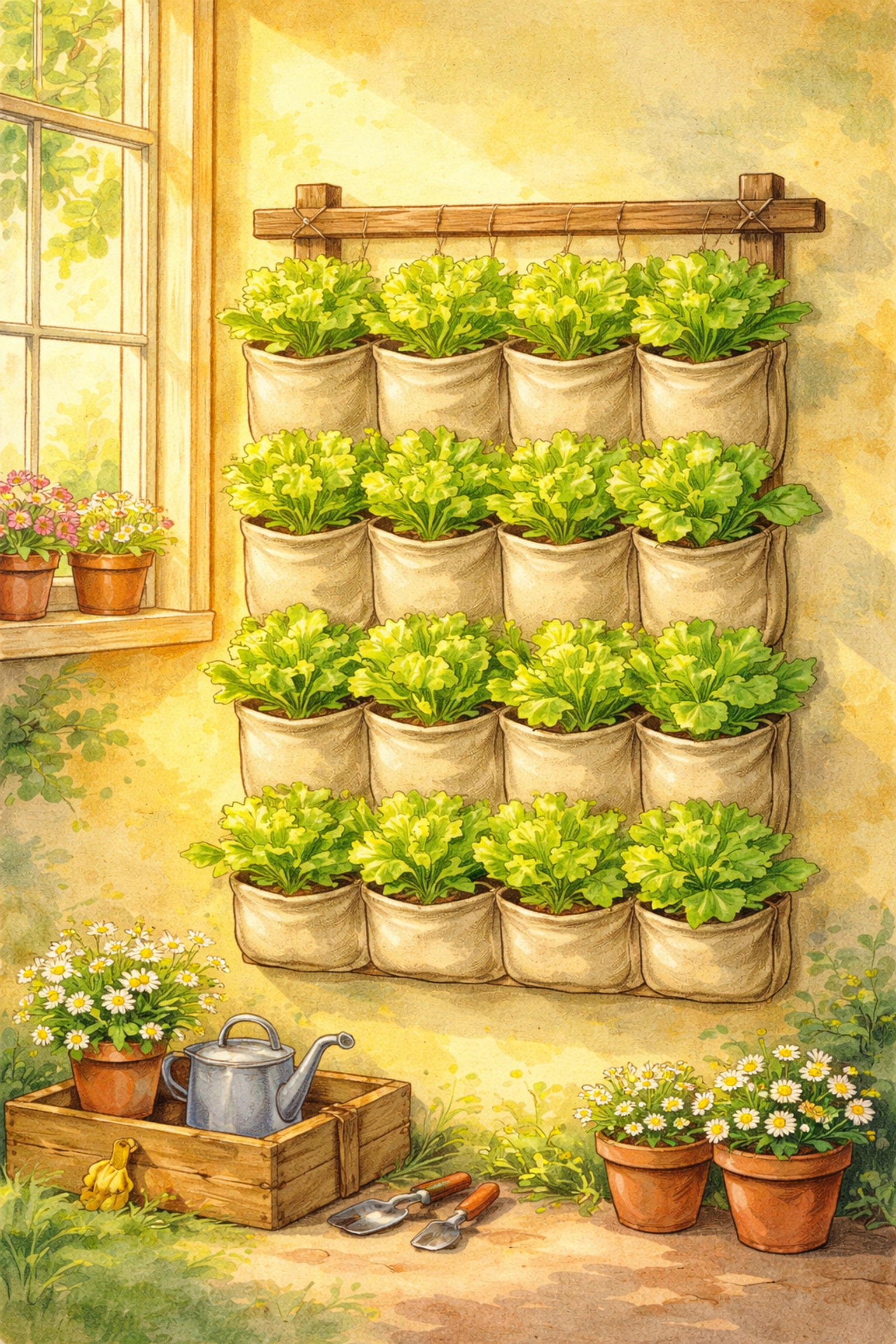
Three Methods for Building Your Lettuce Wall
You have several construction options depending on your budget, available materials, and how permanent you want the setup to be.
Method 1: The Fabric Pocket Garden
This is the most door-friendly approach. Fabric pocket planters (sometimes sold as "vertical garden planters" or "hanging garden bags") feature rows of sewn pouches that hold soil and plants. You simply hang the unit from a door-mounted hook or over-the-door bracket.
What you need:
- Fabric pocket planter with 12-36 pockets
- Lightweight potting mix (avoid heavy garden soil)
- Lettuce seedlings or seeds
- Over-the-door hooks rated for 15+ pounds
Fill each pocket about three-quarters full with potting mix, insert one lettuce seedling per pocket, and water gently. The fabric allows drainage while retaining enough moisture for roots.
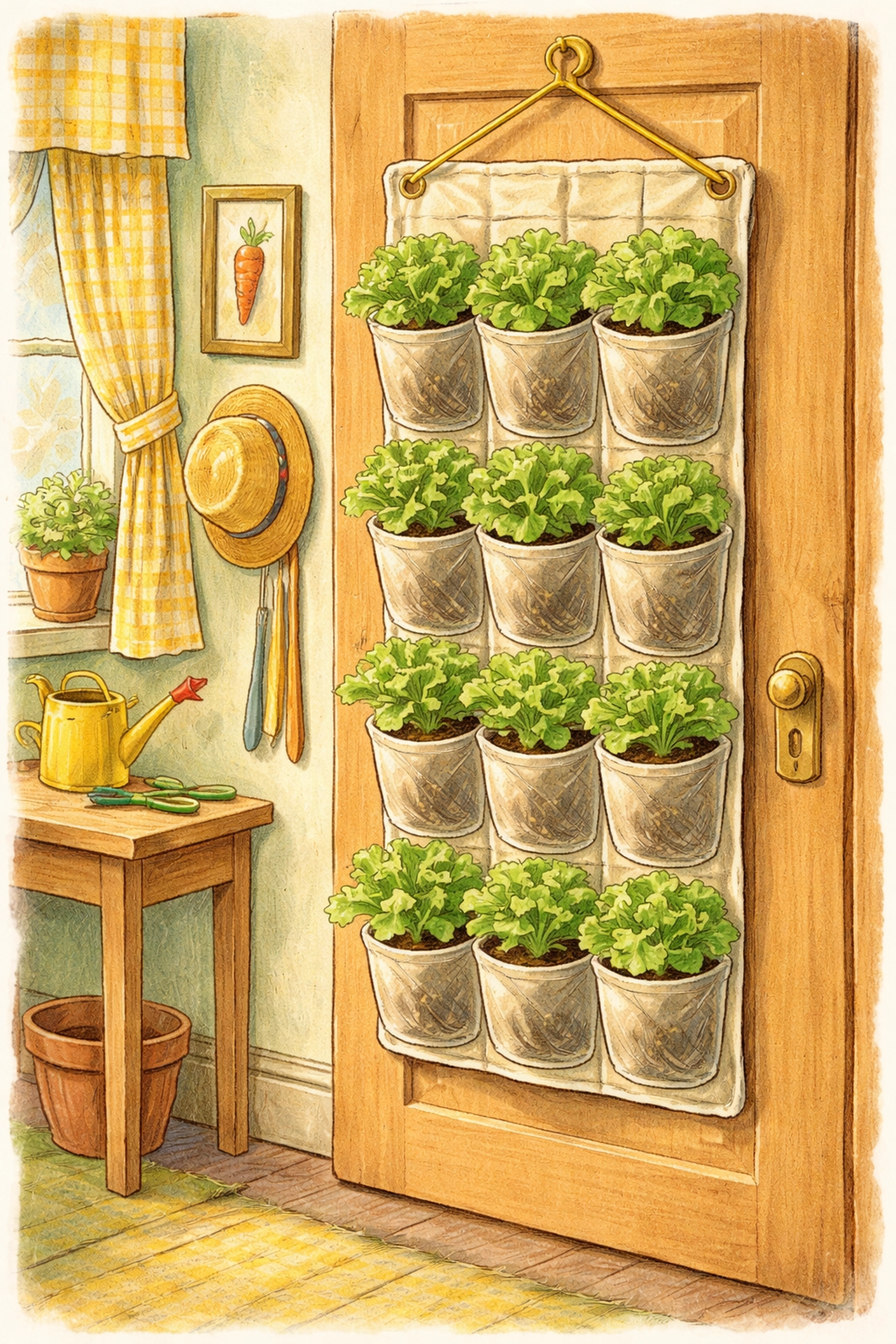
Method 2: The Repurposed Shoe Organizer
A hanging canvas or plastic shoe organizer works surprisingly well as a lettuce wall. The individual compartments are roughly the right size for lettuce's shallow roots.
What you need:
- Clear plastic or fabric over-the-door shoe organizer
- Scissors or a utility knife
- Potting mix
- Lettuce seedlings
- Optional: small drainage holes poked in plastic pockets
If using a plastic organizer, poke 2-3 small drainage holes in the bottom of each pocket to prevent waterlogging. Fill pockets with potting mix, plant one seedling per compartment, and hang on a sturdy door hook.
Method 3: Mounted PVC Rain Gutters
For a more permanent installation (best on a wall rather than a door), horizontal PVC rain gutters create excellent lettuce channels. This method works well in a sunny corner of a bedroom, playroom, or kitchen.
What you need:
- 10-foot PVC rain gutter sections (cut to desired length)
- End caps for each gutter section
- L-brackets or gutter hangers
- Drill with appropriate bits
- Potting mix
- Lettuce seedlings
Cut gutters to your desired length, attach end caps, and drill 2-3 small drainage holes along the bottom of each section. Mount gutters horizontally at staggered heights (leaving 10-12 inches between levels for plant growth), fill with potting mix, and plant lettuce seedlings 4-6 inches apart.
Step-by-Step Planting Instructions
No matter which method you choose, the planting process follows similar principles.
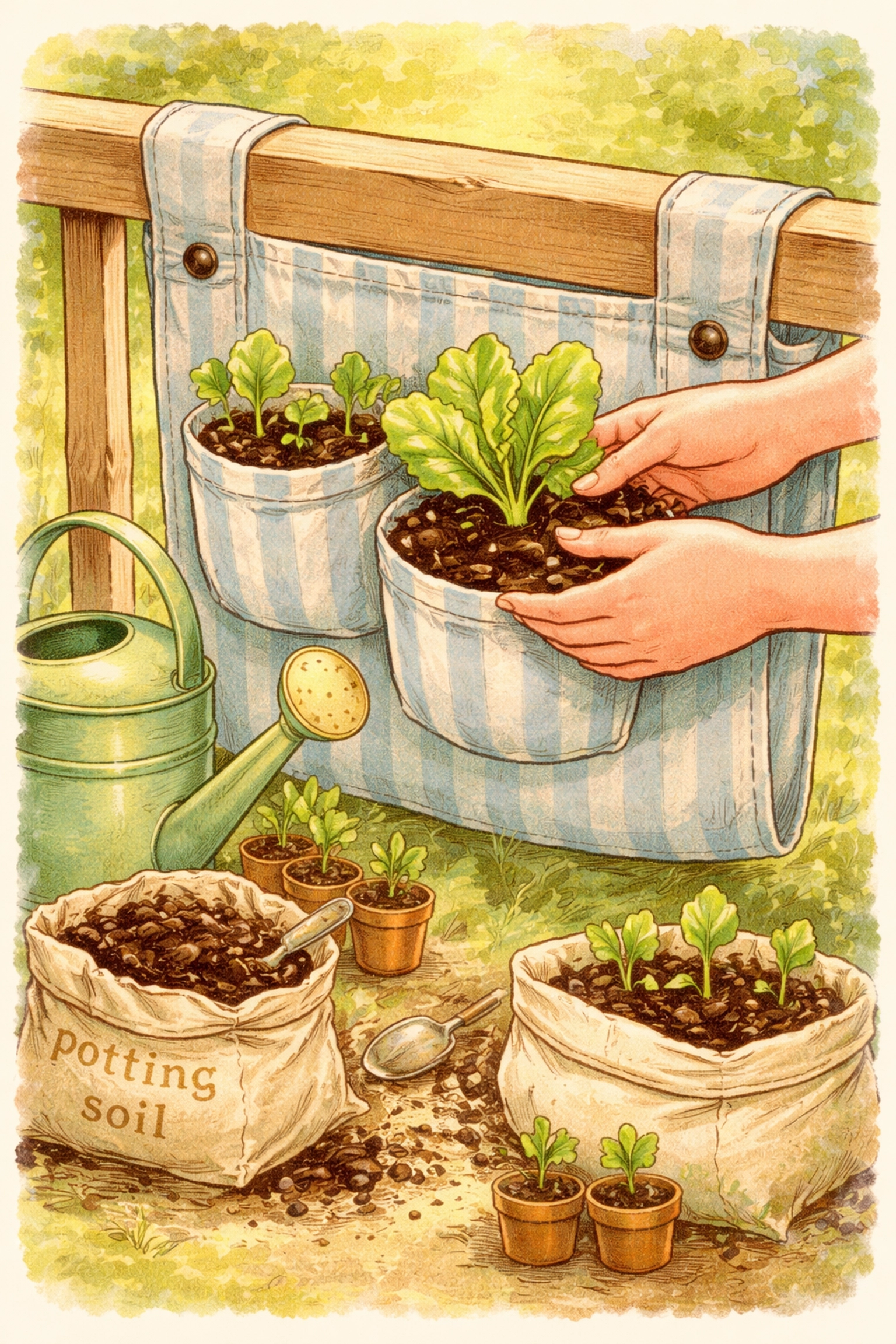
Step 1: Prepare your growing medium. Use a lightweight potting mix, never heavy garden soil, which compacts in containers and drains poorly. If you want to lighten the mix further, blend in perlite at a 3:1 ratio (three parts potting mix to one part perlite).
Step 2: Pre-moisten the soil. Dry potting mix repels water initially. Mix it with water in a bucket until it feels like a wrung-out sponge before adding it to your pockets or gutters.
Step 3: Plant seedlings gently. Remove lettuce seedlings from their nursery containers and gently insert roots into the soil. Don't worry if plants look a bit stressed or droopy at first, lettuce typically recovers within a few days once roots establish.
Step 4: Water carefully. For pocket gardens and shoe organizers, water from the top and allow excess to drain. For gutter systems, water one end and let it flow through. Avoid soaking the wall or door behind your system.
Light and Location Requirements
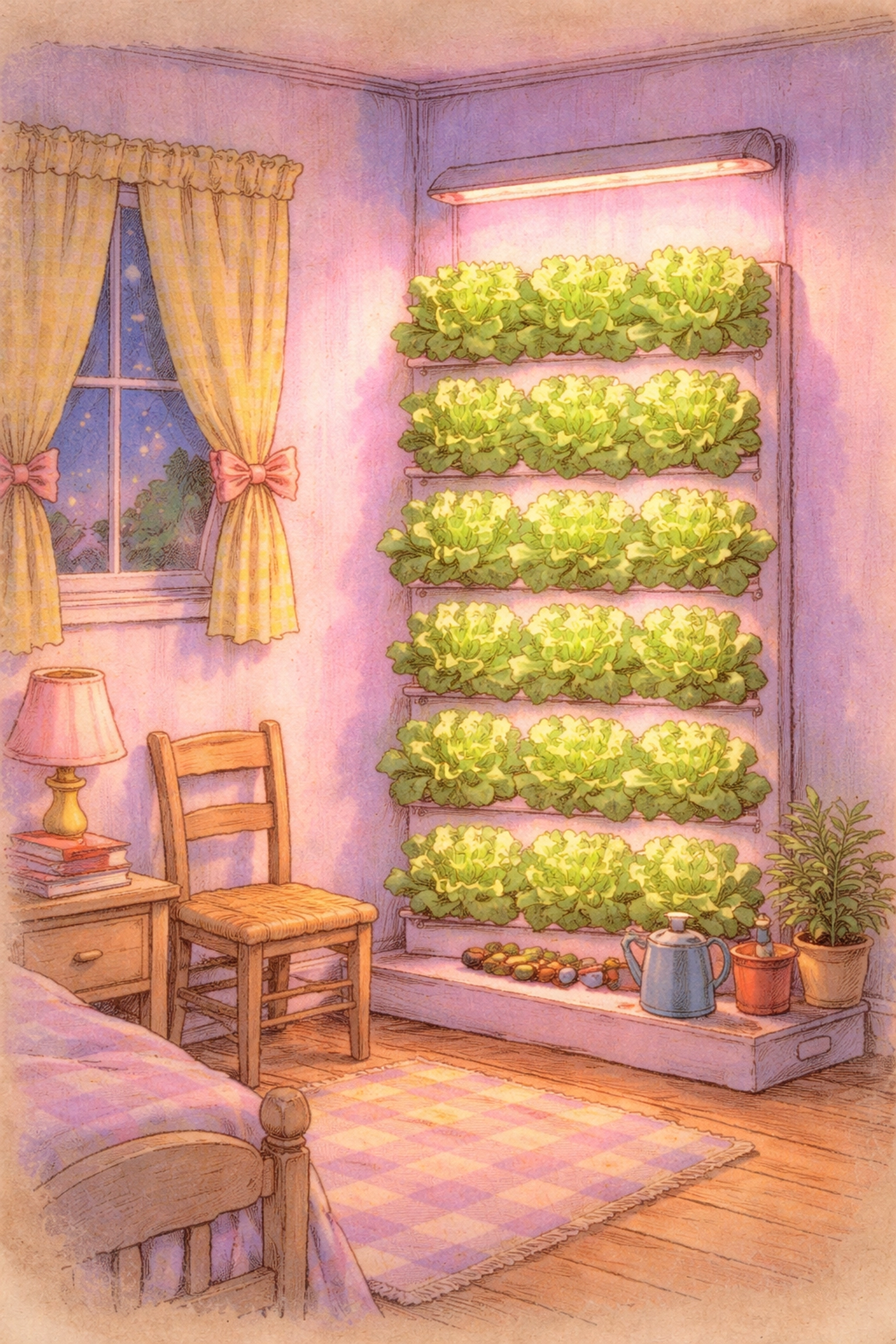
Indoor lettuce needs 10-12 hours of light daily. A bedroom door that receives bright indirect light from a nearby window can work, but most indoor setups benefit from supplemental grow lights.
LED grow lights designed for leafy greens work well and don't generate excessive heat. Mount lights 6-12 inches above your tallest plants and run them on a timer for consistent light cycles.
Lettuce prefers cooler temperatures, ideally between 60-70°F. Avoid placing your lettuce wall near heating vents, radiators, or south-facing windows that get intensely hot in summer. If temperatures consistently exceed 75°F, lettuce may bolt (send up flower stalks) and turn bitter.
Watering Your Vertical Garden
Vertical systems dry out faster than ground-level gardens because gravity pulls water downward and air circulates around all sides of the container. Check moisture levels daily by sticking your finger about one inch into the soil.
For consistent watering without daily attention, consider adding a simple drip irrigation line with tubing and small drippers connected to a reservoir. Alternatively, some gardeners install a wicking tube, a vertical strip of absorbent cloth that draws water from a reservoir at the top and distributes it gradually through the growing medium.
If you're looking for more hands-off watering solutions, check out our guide on keeping plants watered when kids are away.
Harvesting Your Wall-Grown Salad
Most lettuce varieties are ready for "baby green" harvest in 30-45 days. For a full head, wait 45-60 days depending on variety.
Use the "cut and come again" method: snip outer leaves with clean scissors, leaving the center growing point intact. The plant will continue producing new leaves for weeks. This extends your harvest significantly compared to pulling the whole plant at once.
Budget Breakdown
| Item | Estimated Cost |
|---|---|
| Fabric pocket planter (24 pockets) | $15-25 |
| OR Shoe organizer | $8-15 |
| OR PVC gutters + hardware | $20-35 |
| Potting mix (1 cubic foot) | $8-12 |
| Lettuce seedlings (6-pack) | $3-5 |
| LED grow light (optional) | $25-50 |
| Over-the-door hooks | $5-10 |
| Total (budget option) | $25-45 |
| Total (with grow light) | $50-95 |
Frequently Asked Questions
Can I grow lettuce on any door?
Yes, as long as the door receives adequate light (natural or artificial) and you use appropriate hanging hardware. Hollow-core doors may need reinforced hooks for heavier setups like gutter systems.
How often should I water my vertical lettuce?
Check daily. Most vertical systems need watering every 1-2 days, though this varies with humidity, temperature, and container material.
What lettuce varieties work best?
Loose-leaf varieties like oak leaf, butterhead, and romaine adapt well to vertical growing. Avoid iceberg types, which form tight heads and take longer to mature.
Will my lettuce get enough light indoors?
Without supplemental lighting, only very bright rooms work. Most indoor lettuce walls benefit from 10-12 hours under LED grow lights.
Can kids help with this project?
Absolutely. Filling pockets, planting seedlings, and daily watering are all kid-appropriate tasks that teach responsibility and plant science.
Growing vertically is one of the best ways to maximize small spaces: curious about other compact growing options? Explore our post on how much space you need for a productive hydroponic garden.